Summary

... Read More

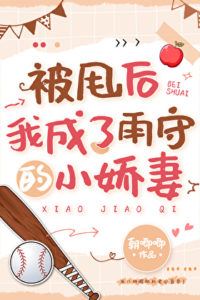
Xu Wan, a former modern corporate worker who died from overwork, transmigrated into the body of the legitimate daughter of the Minister of Justice. Although she initially celebrated her escape from a miserable life as a workplace slave, her joy was short-lived. The original host had suffered abuse from a stepmother since childhood and was forced into a marriage with the Yangyuan Marquis Manor. Her potential grooms were either illegitimate or had concubines, but the only acceptable option was the missing eldest son of the Marquis, Zong Zhao, who had disappeared on the battlefield eight years ago. Xu Wan chose this marriage because the groom was presumed dead, granting her financial independence and freedom from servant bullying. She underestimated the challenges ahead, particularly the groom's eight-year-old son, Zong Jincheng.

The wedding day turned into chaos when the young master replaced the ceremonial rooster with a hen and rigged firecrackers, humiliating Xu Wan in front of the entire capital. Instead of enduring it silently, Xu Wan reacted with her modern decisive nature, drawing swords and chasing the boy through the manor. The elderly Marquis and Marchioness, who had orchestrated the marriage based on a dream, intervened. Recognizing that Xu Wan could match wits with their reckless grandson, they handed her the household keys and tasked her with managing the manor and ensuring Jincheng achieved top honors in the imperial examinations. In exchange, Xu Wan received a monthly allowance of three hundred taels and a bonus of up to one hundred thousand taels for academic success.

Xu Wan immediately began asserting her authority. She cut off the young master’s funds, leaving him unable to pay for meals or socialize, and confiscated his valuable possessions. When Jincheng attempted to instigate trouble by sending servants to create disturbances in the manor, Xu Wan efficiently handled the crises by threatening to sell or punish the implicated maids, thereby neutralizing his schemes without raising her voice. She also reduced his servants from six to one, forcing him to rely on his remaining loyal attendant. Despite his defiance and attempts to regain power, Jincheng found himself increasingly isolated and controlled.

On the third day, Xu Wan returned to her family home, with Jincheng accompanying her against his will. During the feast hosted by her stepmother, Madam Liu, and sister Xu Lian’er, who masked their hostility with false warmth, Jincheng attempted to embarrass Xu Wan. However, Xu Wan deftly turned the tables, praising Jincheng while subtly exposing the hypocrisy of her natal family. Jincheng, realizing he had been used as a pawn to antagonize his stepmother’s relatives, became furious at theXu family rather than seeing his own manipulation. The outing strengthened the uneasy alliance between stepmother and stepson, as both recognized their shared adversary in the scheming women of the Minister’s household.

Back at the Marquis Manor, the power struggle continued. Xu Wan maintained strict control over household affairs while simultaneously monitoring Jincheng’s behavior. She identified his love for martial arts but respected the Old Marchioness’s ban on it due to the family’s tragic military losses. Recognizing that traditional education had failed due to his lack of foundation, Xu Wan studied the curriculum herself to prepare for tutoring him. The narrative establishes a dynamic where Xu Wan uses her modern efficiency and financial leverage to tame the unruly child, setting the stage for a complex relationship built on mutual benefit and reluctant respect.

Latest Release
DateGroupRelease
2026-09-26akknovel c269
2026-09-26akknovel c268
2026-09-26akknovel c267
2026-09-26akknovel c266
2026-09-26akknovel c265
2026-09-26akknovel c264
2026-09-26akknovel c263
2026-09-26akknovel c262
2026-09-26akknovel c261
2026-09-26akknovel c260
2026-09-26akknovel c259
2026-09-26akknovel c258

Community Reviews

Rating(4.1 / 5.0, 42votes)
5 stars
17(40%)
4 stars
11(26%)
3 stars
14(33%)
2 stars
0(0%)
1 stars
0(0%)

Popular reviews

... Read More
Let me just appreciate for a moment how vividly described this character is. The author didn't just tell us he's cute — they painted him. Snow-white tiger fur cape. Shaking his round head like a big white clumsy cat. Nose slightly red from the cold, small face white and pretty, almost invisible dimple near his mouth. I can SEE this boy. He looks like a wealthy little snow lion cub who thinks he's a fierce predator. And then the scene at the Minister's Mansion — the crowd of commoners pressing against the gate like they're at a royal birth announcement, the sedan chairs lifting off, the whole procession moving toward the mansion. The gossip mill already churning out fake headlines about drama at the homecoming feast. One person imagines the Minister's backyard catching fire. They're already writing the storytelling scripts in their heads before anything has even happened. This world feels SO alive — the rumors travel faster than the carriages, the commoners are basically the ancient equivalent of internet comment sections, and Xu Wan is fully aware of it all and using it to her advantage. The contrast between the cold winter outside and the fake warmth of Madam Liu's greeting is also doing a lot of visual and emotional heavy lifting.
... Read More
Okay so can we talk about how absolutely CALCULATING Xu Wan is in this section? Like, everyone expects her to be some fragile pushed-around wife, but NO. She let the commoners spread rumors that she mistreats her stepson on PURPOSE. When Cui Zhi is panicking about how this reflects on her family, she just goes "let them spread it" and proceeds to lay out the entire strategic reasoning like it's nothing. She wants to appear weak so her stepmother gets complacent, and she's already thinking ahead about how her new position as Madam protects her younger sister's marriage prospects. That's four moves ahead on the chessboard while everyone else is still figuring out where the pieces go. And then the masterpiece moment — when they arrive and Madam Liu is putting on her fake-Buddha performance, all smooth and warm about how proud she is. Meanwhile Zong Jincheng is standing there coughing like a madman trying to get attention, and Xu Wan just... adopts him. "Zong Jincheng, my son." Like it's the most natural thing in the world. The boy's face goes from red to purple. The absolute power move of claiming him as HER son right in front of his biological grandmother who's clearly scheming. This plot is so tight and every beat lands. I need to know what happens next at that feast.
... Read More
I cannot stop laughing at Zong Jincheng kicking that door and finding it already open. Already. Open. The author had me wheezing. This boy storms back to the manor absolutely fuming, gathering all his strength to kick the door down in a display of teenage rage, and what does he find? The door standing wide open. He kicks nothing. Nearly falls face-first. And then — and THEN — he straightens his clothes and walks in like absolutely nothing happened because nobody saw him fail at kicking a door. This single moment tells you everything about this kid. He's proud to a fault, deeply image-conscious, and utterly incapable of admitting he's been outplayed. But he's also... kind of pathetic? In a fascinating way. His grandparents spoiled him rotten — never reprimanded him, never said no — and now he's colliding with someone who doesn't care about his status or his smile. Xu Wan sees right through him. She calls him a little troublemaker to herself and immediately formulates a strategy that takes advantage of every weakness she knows about him. Their dynamic is gold. He expects authority figures to cower before his title; she treats him like a negotiation partner who happens to be annoying. When he demands his money back, she fires off that line about how his friends can treat him now since he treated them so often — turning his own logic against him. She respects his sharp tongue enough to note it: "Tsk, you're quite good at making serious accusations, aren't you?" But respect doesn't mean backing down. That's the essence of their relationship right there — a constant push-pull where neither side yields. "You made me lose face, so you've crossed the line. It can't be undone, and it's unforgivable." That's not just a plot point — that's Xu Wan establishing the rules of engagement. She won't be pushed around, and she's making sure he knows it.
... Read More
The household keys. Let me just sit with that image for a moment. The single most loaded object in a traditional Chinese household—and it lands in the hands of a woman who didn't ask for any of this. She wanted a quiet life. She married into a marquis manor hoping to lay low, and instead she's been handed the instrument of total domestic authority on her wedding day. That's not just plot convenience; that's thematically massive. The jade bracelet is equally significant. The Old Marchioness removes her own favorite bracelet and slips it onto Xu Wan's wrist while simultaneously producing the housekeeper's keys. Two symbols of power, transferred in one gesture. The bracelet represents emotional belonging—acceptance into the family. The keys represent actual power—control over the household. She gets both, which means she's being positioned as the new matriarch, whether she wants it or not. Zong Jincheng's fear of the stepmother is the thematic heart here. 'Once your stepmother marries in, your good days will be over.' This is his lived reality, his inherited trauma from whatever he's observed or been told. The story is setting up the classic stepmother trope and then immediately subverting it—because this stepmother's first instinct is to RUN FROM RESPONSIBILITY, not seize power for its own sake. The missing eldest son, the dead second son, the illegitimate child brought back into the fold—these are all symbols of a fractured family trying to hold itself together. The Old Marquis and Old Marchioness are clearly making a calculated decision, possibly tied to that dream mentioned. They're placing their hopes in an outsider, a woman from a lower-status family, which speaks to how desperate this household must feel beneath its noble exterior. And Xu Wan, the modern soul trapped in this world, keeps trying to apply modern logic—'there must be additional conditions'—to a system that operates on completely different rules. The tension between her desire for individual comfort and the collectivist demands of this household structure is where the deeper meaning lives.
... Read More
This passage is richer than it first appears if you look at what the author is doing symbolically. The deep purple outfit Xu Wan chooses for her return to her family's home—purple has always been a color of power and authority in Chinese tradition, and the text specifically notes it 'symbolizes the absolute status of the marquis's wife, exuding a sense of authority just by its presence.' But here's the thing: she WIELDS this authority through money management, not through traditional marital devotion. She's redefining what it means to be a marquis's wife on her own terms. Then there's the contrast between Zong Jincheng's courtyard—full of birds trapped with cats, pebbles kicked thirty-three times—and the study, where books are 'organized by difficulty level' and pristine pages haven't been touched. One space is chaos masked as activity; the other is order that nobody uses. The manor itself is vast and wealthy but emotionally empty. The Old Marchioness has all the power but uses it to protect rather than nurture. Zong Jincheng has every servant he needs but none of them dare speak honestly. And Xu Wan, the newcomer, is the only one actually seeing things clearly—she reads the situation, understands the grief behind the bans, recognizes the kid behind the tyranny. The return-home scene at the end reinforces this theme: she walks out 'in dignified and elegant manner,' wearing her authority like armor, while the capital whispers behind her back. She's entering a world that judges her, and the chapter ends on that note of impending confrontation. The whole thing feels like it's asking: what does it mean to be powerful in a system that doesn't want you there?
... Read More
Oh my god, the character dynamics in these chapters. I need to process this. Xu Wan is absolutely fascinating to watch unfold. She's not just smart—she's observant in a way that borders on predatory. When she notices Cui Zhi's hesitation in the face of Hong Shao's threats, she immediately understands the underlying power structure: the young master is a taboo subject, his belongings treasured by the old madam, and any punishment connected to him becomes politically complicated. Most people would either ignore this subtlety or be intimidated by it. Xu Wan reads it instantly and uses it to her advantage. But here's what really got me—the relationship between Xu Wan and Zong Jincheng. This child is supposed to be antagonistic, right? He's the legitimate grandson, she's the new wife, and he's clearly been conditioned to resist her. Yet there's something almost affectionate in how the narrative frames her interaction with him. She calls him a 'little demon lord' but also finds him amusing, like a 'silly little frog.' There's genuine warmth underneath the verbal sparring. And Zong Jincheng himself—he's brilliantly written as a child who's been overeducated in entitlement but undereducated in actual reasoning. The scene where he tries to pull rank but can't even say his own title directly ('my father's favorite maids') instead of 'your master' is devastatingly funny. He's trying so hard to sound authoritative, but everything he says betrays his dependence on others' power. The author gives us this moment where Xu Wan almost laughs at him, and it reveals something crucial: she doesn't see him as a threat. She sees him as a child who needs to learn respect. That's a very different energy from what we might expect from a 'new mistress versus rebellious child' dynamic. It makes me wonder what their relationship will look like further down the road.
See all reviews

Custom lists

See all custom Lists