The Man Who Was Scummed (Quick Travel) - Reviews

The Man Who Was Scummed (Quick Travel)
+Add to Custom List
Sort
Add review
... Read More
I need to talk about Wen Ran because this chapter absolutely exposes him and honestly? I love it. He calls He Yu after the breakup. Not because he misses him — well, maybe a little — but because he's worried about the power dynamics. "It's just not like him" to be this cold. And then He Yu says he's withdrawing completely, and Wen Ran's immediate instinct isn't to sit with that pain. It's to REFRAME it. You Yi literally hands him the reinterpretation on a silver platter: "I suspect that he may be repeating his old tricks this time, so don't be discouraged. If you continue to care about him secretly, he may come back immediately." And Wen Ran takes it. He TAKES IT. "The more Wen Ran thought about it, the more he felt that this was the case. He Yu must be playing hard to get." BRO. He Yu literally said "I will completely withdraw from your life" and Wen Ran is over here treating it like a strategic game he can win by waiting it out. Then he starts whispering Pei Jinzhi's name. Over and over. Like incantation. Like he's trying to convince himself. Meanwhile, Pei Jinzhi's section is fascinating because it reveals something about HOW he sees He Yu. He has this whole backstory — they hadn't seen each other since He Yu was in high school, there's a ten-year age gap, and Pei Jinzhi has been hearing about He Yu from the He family. His brother He Yunsong apparently complains about him constantly. And Pei Jinzhi categorized him: "he labeled He Yu as a love brain in his heart." But then — and this is the part that got me — "Yesterday, He Yu completely broke his inherent prejudice against him." Whatever happened yesterday, it shifted something in Pei Jinzhi's perception. And the way the narration describes He Yu's eyes — "his dark green eyes were as beautiful as ever, like a cold lake in the mountains, which made people reluctant to disturb and not willing to cause any unpleasant ripples" — this is Pei Jinzhi noticing something he hadn't before. The coldness. The distance. The power. And then we cut to He Yu walking into his own company and all these employees are just... starstruck. He's not the love-struck idiot anymore. He's the boss. The text doesn't tell us what happened yesterday, but every character in this chapter has had their understanding of He Yu shattered in different ways.
... Read More
The way this batch moves from scene to scene is incredible. We start in Lin He's mansion—tense, claustrophobic, internal monologue heavy. Then we cut to Lu Meng and Jia Yi outside, frantic and loud. Then Qin Yu walking away, calm, victorious. Then Xun Ling appears like a ghost from the past. Then—bam—the demon world, silent and eerie. Then back to Chengming Palace for a bath. The jumps are sharp but they work because each scene ends on a emotional note that makes you NEED the next one. The Qin Yu-Xun Ling confrontation is the centerpiece and the author knows it. Everything before it builds toward it. Lin He's refusal sets up Qin Yu's satisfaction. The outside scene establishes the jasmine grass stakes. Then Xun Ling arrives and all the tension pivots to that exchange. The paragraph where Xun Ling is waiting for judgment, heart beating fast, feels like an eternity. And then Qin Yu's reply—cold, precise, final—lands like a hammer. The ending with Qin Yu asking for a bath is such a deliberate tonal shift. After all that drama, he just... wants a bath. It's almost comically mundane. But it also signals something: Qin Yu is untouched by the chaos he's orchestrated. He's above it all. Jiao Yi scurrying around preparing his bath while the world burns outside? Iconic. The silent demon world scene at the end is a cliffhanger dressed as atmospheric description. I need the next chapter immediately.
... Read More
I think the central symbol of this entire chapter is the alias itself. Xie Qiu, Jun Shi, Yin Li—all of them were masks worn by the Demon Lord, and Qin Yu knew every single one. The fact that he waited months to reveal his knowledge isn't just plot mechanics; it's a statement about identity and power. Who gets to know the truth? Who gets to choose when to reveal it? The one who controls the narrative controls the relationship. And then there's the kiss mark on Su Zian's neck—a brand of vulnerability in a world that demands invulnerability. Qin Yu sees it and says nothing, but the act of seeing is itself a judgment. Su Zian's entire arc is about using his body as both weapon and currency, and the kiss mark is proof that he's not entirely in control of either. But the symbol that haunts me most is Chi Huai's body being turned to ashes. The Demon Lord publicly declares his son was a rebel, a traitor, and reduces him to nothing. Is this grief or strategy? Both? The ashes represent how quickly love can be rewritten into shame when it serves a larger purpose. The chapter keeps asking: what is real when everything—identity, loyalty, even death—can be performed?
... Read More
Let me just appreciate the visual language in this chapter because it's sneaky good. There's this one detail I keep coming back to—after Qin Yu leaves, the Demon Lord 'stroked the place where Qin Yu kissed' with a complicated expression. That single gesture carries more atmosphere than any description of the palace itself. You don't need the author to tell you what the Demon Palace looks like; you feel it through the emptiness where Qin Yu just was. Then there's the transition to the mortal world, where Su Zian is standing near a town, demonic energy radiating off him like heat from asphalt in summer. The text describes his collar loosening and revealing a kiss mark—and suddenly the cultivation world feels dirty and human, not some pristine ethereal realm. Qin Yu sees it and doesn't say a word. The silence between them is louder than any scene description could be. And the sect competition! Half a chapter passes and we're suddenly in a stadium of cultivators, Yu Sheng laughing in the stands thinking he'll finally beat Qin Yu. The world feels lived-in because it keeps expanding beyond the romantic entanglements. There's politics, competition, public opinion—Chi Huai's body turned to ashes, rumors flying everywhere. The cultivation world has weight to it, and I can see it all clearly. The image of the Demon Lord admitting he crushed his own son's body to ashes is one of the most striking I've read this year.
... Read More
"Scumbags don't deserve to eat my roasted rabbit meat." First of all, Xie Qiu is the main character I didn't know I needed. But secondly — the plot here is doing SO MUCH WORK in what seems like a casual encounter. Qin Yu's internal monologue when he sees Su Zian is where it gets interesting. He pieces together the rebirth logically: in his previous life, Su Zian wouldn't have been qualified to enter the Nine-Layer Secret Realm, he never came looking for him at Wanghan Peak, yet here he is, all these anomalies stacking up until Qin Yu finally confirms it. And then the real twist — Su Zian didn't go after Chi Huai this time. He went after Qin Yu instead. That changes everything. It means Su Zian already knows something about his death, and Qin Yu immediately recognizes he can use this. The author is setting up this whole web of secrets and leverage without even trying hard. The pacing is deceptively calm on the surface — everyone's just standing around a rock in a secret realm — but underneath, alliances are being rewritten, past betrayals are being reassessed, and someone is about to get kicked out of the realm for being too weak to survive. Classic setup for the next major arc.
... Read More
There's something deeply unsettling about this whole scene when you really sit with it. Let me unpack what I think the text is actually saying underneath all the face-slapping drama. The bleeding forehead. Su Zian knocks his head until blood oozes out and everyone—including himself—is performing this martyrdom. But it's empty sacrifice. He's hurting himself for a cause he can't articulate. That's the core image of this entire passage: self harm as performance, devotion as strategy. The blood is real but the intention isn't. And Qin Yu—"Han Rong," the demon eliminating Taoist, the one who killed the Wushan Patriarch. His legend is built on action, on results, on actual deeds. Su Zian's worship is built on stories, on reputation, on the comfortable narrative of who this man is without knowing what he actually did. There's a theme here about the difference between consuming someone's myth versus understanding their substance. The system inside Su Zian is also worth examining symbolically. It represents his previous life's knowledge—his meta awareness, his sense of entitlement to a certain outcome. But knowledge without understanding is just noise. The system screams and jumps up and down but can't save Su Zian from his own ignorance. It's almost like a parasite that's keeping its host alive but not helping him actually survive. "He did it on purpose"—the system says this about Su Zian's sympathy seeking. But the irony is that Su Zian himself may not even know he's doing it on purpose. That's the deeper theme: how performance becomes so habitual that the performer loses track of whether they're acting or not.
... Read More
I'm laughing because of course Wen Ran is still in this story. Of COURSE after getting absolutely destroyed by the studio boss, losing Bai Haoyu, and spending half a year tumbling through disaster, his solution is to circle back to his original target like none of this happened. The man has zero self-awareness and it's almost impressive. But here's what keeps me on edge: Pei Jinzhi finding out about Wen Ran's manipulation. That's the real stakes moment, not just romantic tension. Qin Yu knew the whole time and stayed silent about it—"I knew it a long time ago." That's a loaded confession. He's carrying resentment he never voiced, and Pei Jinzhi has to reckon with the fact that his partner endured that alone. The external conflict with Wen Ran is almost secondary at this point. The real question is: what happens when Wen Ran shows up at the studio, ready to play victim? Qin Yu says Feiyue Studio is a "rotten pot with a rotten lid" and he plans to just wait and watch. That's not ignorance, that's strategy. But you know Wen Ran isn't going to stay contained. The setup for the next confrontation is already in motion, and I can't look away.
... Read More
The chapter ends on this note that genuinely worries me and I need to process it. Up until Wen Ran shows up, the stakes are intimate and personal—will Qin Yu admit his feelings? Will Pei Jinzhi keep dancing around them? It's sweet, it's tense, it's good. And then suddenly there's this other guy who has been literally camping outside Pei Jinzhi's building for a week, who knows about Qin Yu from the past, and who just offered to do "any request" for a spot at the agency. "Wen Ran saw that Pei Jinzhi raised his eyebrows slightly after hearing his words and there was a bit of inexplicable emotion in his eyes when he looked at him." INEXPLICABLE EMOTION. That's not a blank rejection. That's not even the indifference he showed to everything else. Pei Jinzhi reacted. And Wen Ran, in his desperation, immediately started drawing up future plans in his head. The stakes just shifted from "will they or won't they" to "oh no there's someone else in the room and they're dangerously attached." Wen Ran isn't just an ex—he's a stalker-adjacent figure with professional ambitions and zero boundaries. And he knows Qin Yu. He's going to use that connection. What's scary is that Pei Jinzhi didn't just kick him out cold. There was hesitation. There was that eyebrow raise. And in storytelling, hesitation is where danger lives. The author is setting up this triangular tension and I am HERE FOR IT but also genuinely concerned for Qin Yu's peace of mind. This chapter just went from cozy romance to something much more complicated and I'm not sure I'm ready.
... Read More
You know what I've been thinking about? Wen Ran's relationship with YOU YI. Because honestly, that's the most disturbing dynamic in this entire book. Not even close. Wen Ran comes home, SMASHES everything, and his FIRST impulse is to blame You Yi. Not himself. Not his own choices. The guy who's apparently living under HIS roof, at HIS mercy. And You Yi — who has every reason to push back, to say no, to set a boundary — just... rolls over. "Yes, it's all my fault. You're right, Ranran." And the narrative explicitly tells us he thinks "if you didn't have such an idea about this at the beginning, it would be useless for me to tell you" but he says it anyway. This is codependency carved in stone. And Wen Ran's relationship with Qin Yu? Even worse, because it's layered with romantic history that makes the manipulation deeper. "You always thought I was playing hard to get?" — wait, WHO told him that? Right. YOU YI. Of course. The same person he's now blaming for everything. Qin Yu sees right through it though. He doesn't fall for the victim act. He names it: "To be frank, you have never loved me at all?" Oof. That's not an accusation, that's an observation delivered with zero drama, and it cuts way deeper than any yell could. Meanwhile Bai Chen is just... there. Watching. Not interfering. Not making a move. The restraint is what makes it powerful.
... Read More
Okay so let me just... the structure here is actually kind of brilliant and I need to unpack it because it hit me differently. Chapter opens with Wen Ran calling He Yu — and immediately something feels OFF. The narration tells us right away this isn't normal: "Now that he suddenly heard it, Wen Ran couldn't help but feel uneasy." Uneasy? He's calling his ex and he's already sensing the ground shift. Then He Yu drops that line: "I have decided that from today on, I will not pester you anymore, and I will not think about chasing you back again, I will completely withdraw from your life. You must be happy with this!" And hangs up. Wen Ran's reaction is everything. He throws the phone. You Yi tries to rationalize it — "I suspect that he may be repeating his old tricks this time" — referencing the corridor-all-night incident from before. And Wen Ran... buys it. He convinces himself He Yu is playing hard to get. Then his mind drifts to Pei Jinzhi, and he starts whispering that name over and over like a mantra. Then BOOM — POV switch to Pei Jinzhi. Completely different tone, completely different world. He's looking at acquisition docs for Minghe, his assistant Qian Li is taking notes, and Pei Jinzhi is literally thinking about He Yu. About how he used to label him a "love brain" because of all the gossip from the He family. But then: "However, Pei Jinzhi frowned slightly. Yesterday, He Yu completely broke his inherent prejudice against him." What did He Yu do yesterday? The text doesn't say. That's the hook. That's the author slapping us with a cliffhanger inside a chapter that already had a cliffhanger. Then one more POV shift — straight into He Yu's body, walking into his company, feeling every eye on him. "Not to mention in our company, if you ask me, there is no one better looking than Mr. He in the entire circle!" The employees are gossipping about him like he's some kind of myth. Three sections, three POVs, and each one reframes the previous one. Wen Ran thinks he knows what's happening with He Yu? He doesn't. Pei Jinzhi thought he knew He Yu too? Wrong. He Yu walking into that building? He's not the same person anymore. The plot isn't just moving forward — it's rotating, showing us the same situation from angles that keep changing what we think we understand.
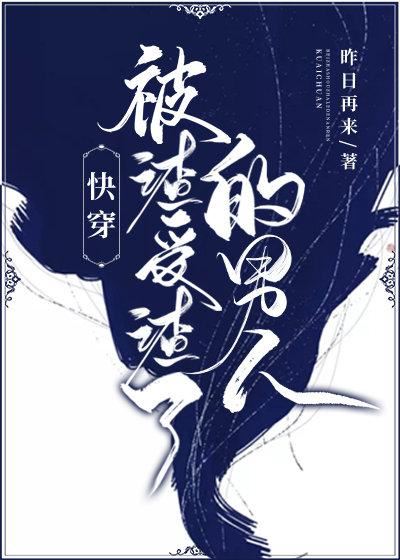
... Read More
Okay so let me just... the sheer level of manipulation in these chapters is absolutely breathtaking. Lin He thought he was playing Qin Yu, Qin He thought he was playing Lin He, and Qin Yu was playing literally everyone while sitting perfectly still. The author had me re-reading sections just to track who was using whom. What really got me is Lin He's whole arc — he's trying to conquer Qin Yu AND eliminate Qin He in one move, essentially playing both sides like some kind of master tactician. But here's the thing: Qin Yu KNEW. He orchestrated the entire thing. He alienated Lin He from Lu Meng and Jia Yi, led them into gambling debt, arranged for Han Yan to leak information about Mo Lin's injury. Every single move Lin He thought was his own was actually guided by Qin Yu's careful hand. "As everyone knows, the mantis stalks the cicada and the oriole is behind." This line hit so hard because it wasn't just a reference — it was the entire plot in miniature. And then Qin Yu basically admits he sometimes SECRETLY HELPED Lin He make things go smoother, removing guards from Yueqing Palace, making sure he could identify Qin He. The man is watching his own pawns play a game and finding it mildly entertaining. Then there's the Qiu Ju scene with Jiao Yi — completely different energy but equally revealing. Jiao Yi knelling down, voice shaking, asking whether His Highness will accept Lin He's confession, and Qin Yu's reaction? He's NOT indifferent. He gets possessive. He PULLS Jiao Yi up by the lapel. "Are you not with me all day?" The guy who just coolly dismantled multiple people's schemes is suddenly flustered and jealous over someone taking a day off. And the system calling out that Jiao Yi's blushing and that it's a deliberate lie... Qin Yu IS aware. He KNOWS he's being performative even in intimate moments. How messed up is that?
... Read More
Okay so this entire chapter is basically one giant setup and payoff and I am HERE FOR IT. Let me walk through why the structure works so well. The plot opens with Qin Yu deliberately manipulating the situation by asking someone to call Pei Jinzhi — but we don't know who Pei Jinzhi is yet. The author is basically saying: 'Hey, this guy matters, trust me.' And then he wastes no time in delivering on that promise. Pei Jinzhi walks in and the entire energy of the room shifts. One moment people are loose and chatty, the next they're terrified. That's not just a character entrance — that's a PLOT MOVE. What I love is how the author uses the party guests as a Greek chorus. They keep gasping, swearing, screaming into their phones. Every reaction shot from the extras amplifies the main event without us needing internal monologue from Qin Yu or Pei Jinzhi. The reveal that Pei Jinzhi is 'the business tycoon who just returned to China' comes at the absolute end, which is the perfect cliffhanger placement. It recontextualizes everything we just watched. Also worth noting: the subplot of Bai Chen is doing quiet work here. Every time Pei Jinzhi does something — arriving, taking Qin Yu, dismissing the driver — Bai Chen's uneasiness grows. That's not nothing. That's the foundation for a love triangle or rivalry arc, and the author is building it scene by scene without announcing it. The main conflict here is interesting too: is Qin Yu playing a game, or is he genuinely trying to assert something? Because he's acting spoiled and coquettish, but there's also this edge of calculation in it. He wants to see what happens. And Pei Jinzhi? He's indulgent but there's a possessiveness underneath that's not exactly innocent. 'He probably wouldn't even know when he was sold' — that line is NOT sweet, friends.

Leave a comment

You must be logged in to leave comments. or
