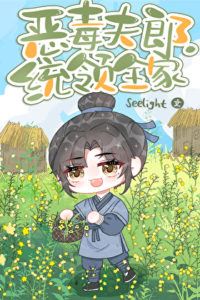
The Malicious Husband Dominates The Family
Novel Info

Summary

... Read More
Miao Ying, a lonely modern man who died saving a child, transmigrates into the body of a man with the same name who had just been pushed off a cliff by a thug. The original Miao Ying was a scoundrel who married into the Huo family for money, stole from them, and attempted to elope with another man. When the new Miao Ying wakes up, he finds himself in a dilapidated home with a family that despises him. Huo Xing, his taciturn husband, plans to divorce him immediately after his injuries heal.

Initially, Miao Ying attempts to feign amnesia to escape responsibility for the original owner's crimes, but the Huo family remains hostile. Grandmother Li scorns him, and father Huo San drunkenly attacks him. However, Huo Xing shows unexpected kindness, bringing him food and medicine. Miao Ying realizes he must change their perception to survive. He begins contributing to the household by cooking a pickled vegetable fish dish that delights everyone, including the previously disdainful Li Hongying.

As Miao Ying recovers, he identifies the family's poverty as the core problem. The Huo family relies on Huo Xing's hunting, but winter game is scarce. Miao Ying proposes a business venture: using his modern knowledge of design to create unique embroidered handkerchief patterns for Grandmother and Li Hongying to produce. He draws Q-version animal designs—cats, dogs, ducks—that are novel and appealing. The family produces over a dozen handkerchiefs, which they take to the county town to sell.

At the market, Miao Ying negotiates a better price than the standard five wen, securing fifteen wen per handkerchief. He then stages a street performance, pretending to be a sickly young man from a wealthy residence to generate demand among fashionable shoppers. The handkerchiefs sell out quickly, and the shopkeeper offers him a recurring contract for new designs. This marks Miao Ying's first successful integration into the family's economic life.

Throughout these events, the relationship between Miao Ying and Huo Xing evolves. Huo Xing, initially distant and focused on divorce, begins to show care—carrying Miao Ying when he is weak, buying him medicine, and working hard to support him. Miao Ying, in turn, grows attached to the family, finding warmth and purpose he never had in his previous life. He makes a shuttlecock for young Huo Xiaobao, earning the child's affection and the term "sister-in-law," which he awkwardly accepts.

The story establishes Miao Ying's determination to repay the Huo family for their kindness and to build a better life with them. Despite the original owner's betrayal and theft, the family's willingness to help him heal and support his business ideas suggests a path toward genuine reconciliation. Miao Ying's modern skills in cooking, design, and negotiation become tools for survival and family bonding in this ancient setting.

Latest Release
DateGroupRelease
2026-08-11shanghai fantasy c74
2026-08-11shanghai fantasy c73
2026-08-11shanghai fantasy c72
2026-08-11shanghai fantasy c71
2026-08-11shanghai fantasy c70
2026-08-11shanghai fantasy c69
2026-08-11shanghai fantasy c68
2026-08-11shanghai fantasy c67
2026-08-11shanghai fantasy c66
2026-08-11shanghai fantasy c65
2026-08-11shanghai fantasy c64
2026-08-11shanghai fantasy c63

Community Reviews

Rating(4.2 / 5.0, 5votes)
5 stars
2(40%)
4 stars
2(40%)
3 stars
1(20%)
2 stars
0(0%)
1 stars
0(0%)

Popular reviews

... Read More
The stakes here are deceptively simple. Miao Ying is dying. Not dramatically—just slowly, from blood loss and infection, in a world where a doctor's visit costs fifteen coins and medicine is a luxury. Huo Xing has a plan: heal him, give him the divorce letter, send him away. But every action undercuts that plan. Huo Xing risks his life hunting in winter. He finds the herbs. He shoots a pheasant in a season when prey is scarce. He watches Miao Ying breathe and feels relief. Meanwhile Miao Ying's conflict is internal: he knows he's a guest in someone else's life, that his presence is draining resources, that he should be grateful but also should leave. Yet he keeps staying. He cooks. He makes toys. He calls Li Hongying "Mom." The external stakes are survival—will the medicine work? Will Huo Xing bring back more game? But the real tension is emotional: how long can Huo Xing maintain the fiction that this is temporary, and how long can Miao Ying pretend he doesn't want to belong here? The author never lets us forget that a divorce letter is waiting, but it feels increasingly impossible that either of them will actually follow through.
... Read More
This is the kind of pacing that sneaks up on you. Nothing explodes. No dramatic confrontations. Just a guy recovering from near-fatal injuries while his husband plots to divorce him, and somehow it's more tense than any battle scene. The author controls the tempo like a master. Start with the clinic visit—quick, almost comedic with the pregnant man reveal—then drop the emotional bomb of Huo Xing leaving for days to hunt because they can't afford medicine. Cut to Miao Ying alone, pale and transparent in the sun, and you're already invested. The chicken arrival scene is pure comfort food narrative, and then the shuttlecock making, the cooking, the family eating together—each beat smaller and quieter than the last, building toward that final walk in the moonlight. It's anti-climactic in the best way. The real drama isn't what happens, it's what's NOT happening: Huo Xing hasn't mentioned divorce once in days. He brought back a pheasant. He's watching Miao Ying breathe. And Miao Ying, who planned to survive by being useful, has accidentally become irreplaceable. The pacing trusts the reader to feel the weight of silence.
... Read More
Let me just say this: the prescription scene is one of the most thematically loaded moments I've read recently. Miao Ying reads the herbal names—Sheng Di, Shu Di, Bai Shao—and Huo Xing is shocked. He thought Miao Ying was just performing literacy to survive, but the guy can actually READ. This tiny detail cracks something open in Huo Xing's worldview. And then there's the EJAO. The expensive medicine they can't afford. The old hunter taught Huo Xing not just to hunt but to gather herbs—so the very skills that sustain this family are the same ones that might save Miao Ying's life. Fate, or whatever you want to call it, operates through practical means. The shuttlecock is another symbol I can't stop thinking about. A copper coin (value, structure), chicken feathers (something discarded, something free), fabric scraps (leftovers, imperfection)—combined into something that brings pure joy to a child. Miao Ying's entire existence in this new world is like that shuttlecock: assembled from fragments, held together by necessity, but ultimately creating something beautiful. And the line "fate must have favored him" when Huo Xing wonders if Miao Ying is really who he says he is—fate as accident, fate as survival, fate as the quiet accumulation of small choices.
... Read More
The image of Miao Ying leaning against that pillar under the eaves, sunlight hitting him so he looks almost transparent, like he might vanish—this stayed with me for hours. The author doesn't over-describe the world but every detail lands. The clinic with the elderly doctor, the prescription written in traditional characters, the fact that Huo Xing's purse is literally empty when he takes Miao Ying there. The mountain hut where Huo Xing sleeps without lighting a fire because he's so exhausted. The circles of unknown plants around the hut that bloom yellow in spring—this is a world that exists beyond the page, with seasons and cycles and ecology. And the vegetable garden scene at the end, with the frost-like moonlight on the ground, Miao Ying sitting on the field ridge hugging his knees, staring at radishes, feeling this sudden wave of contentment because he finally has a family after crossing over. The author writes poverty without pity—just facts. Straw and corn cobs for fuel. Mixed grain noodles that aren't chewy. Chicken feet and necks for soup. But somehow it never feels miserable. It feels real. And that final image of two shadows stretching long behind Miao Ying and Li Hongying walking back from the field—that's a photograph I could frame.
... Read More
Okay I need to talk about this one moment. The shuttlecock. Miao Ying takes chicken feathers, cuts holes in fabric scraps, finds a square-holed copper coin, and painstakingly makes a toy for Huo Xiaobao. Not because he has to. Not because Huo Xing asked him to. But because he SAW the kid staring and he KNEW how to make a six-year-old's face light up. And when Huo Xiaobao runs to his mother and says "sister-in-law made it for me"—I literally gasped. The word "sister-in-law" makes Miao Ying stiffen because he's still not used to being called that as a MAN, which is both funny and kind of heartbreaking. He's in a body that isn't his, married to a man who wanted to divorce him, in a family that resents him—and yet he's already weaving himself into their lives through tiny acts of care. The chicken scene too. He watches Li Hongying about to throw away the innards and blurts out "Mom, this can be eaten." That word "Mom" just falls out of his mouth naturally. He's been here four days and he's already calling her that. Meanwhile Huo Xing is up on the mountain hunting in winter, not coming home for days, and Miao Ying is over here building a family. The tension between what Huo Xing thinks (I'll heal him and set him free) and what's actually happening (Miao Ying is becoming part of this family whether anyone planned it or not) is everything to me.
See all reviews

Characters

See all characters

Custom lists

See all custom Lists