Summary

... Read More
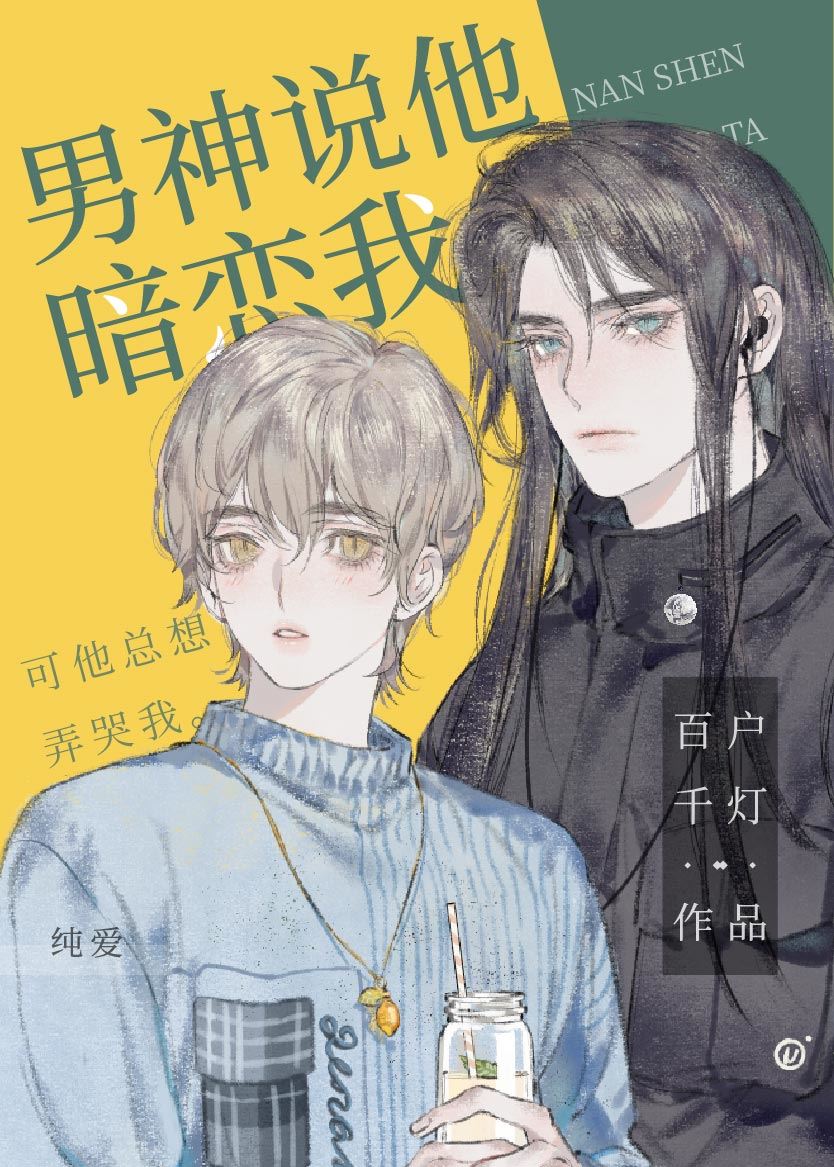
Shi Qingning, a man suffering from terminal congenital heart disease, undergoes what should be a fatal surgery but instead awakens in the body of a fifteen-year-old boy with the same name who recently survived the procedure. He finds himself in a world that mirrors a sadistic novel he previously read, where the original owner was an obsessive, sickly young master from the wealthiest family in Haicheng who was disastrously infatuated with Jian Ren, a playboy exiled from the influential Capital Jian family. The young master had attempted suicide twice—first by jumping, then by refusing medical care after the surgery—driven by despair over Jian Ren's indifference.Rather than wallow in the original owner's tragic path, Shi Qingning approaches this new existence with cold calculation. His primary objectives are twofold: survive in this body, which is healthier than his own but still requires careful management, and alter the catastrophic fate awaiting the novel's true protagonist, Bai Yexi. Bai Yexi is a musical genius with dark green eyes and long black hair, currently trapped as a servant in Jian Ren's bar after being abducted as a child. In the original story, Bai Yexi is systematically destroyed by a series of abusive suitors, ending in murder.Shi Qingning attends Jian Ren's birthday party at 'The Player' bar, not to reconcile with his crush, but to sever ties completely. When Jian Ren attempts to assert dominance by claiming the waiter Shi Qingning spoke to as his own, Shi Qingning humiliates him publicly. He then exposes a flaw in Jian Ren's guitar performance, revealing the piece was plagiarized from 'Croatian Rhapsody.' When Jian Ren threatens to never see him again if Shi Qingning leaves, the young master records the threat, takes his leave politely, and walks out, effectively ending the toxic dynamic in front of witnesses.On his way out, Shi Qingning encounters Bai Yexi standing near a wall, illuminated by a passing light beam. The contact triggers a flood of memories for Shi Qingning, confirming the boy's identity as the novel's protagonist. Despite his frail condition causing nosebleeds and headaches, Shi Qingning recognizes that Bai Yexi is the key to understanding the story's core. He notices Bai Yexi's beautiful, pianist-ready hands and his defensive, withdrawn posture. After Jian Ren's men attempt to rough up Bai Yexi for failing to deliver the correct guitar, Shi Qingning has his own bodyguards intervene, displaying martial skill far beyond his sickly appearance.Outside the bar, Shi Qingning approaches Bai Yexi, who is wary and hostile. Shi Qingning offers a deal: he wants a piano partner for practice and believes Bai Yexi's talent is wasted on manual labor. He offers market-rate payment and contact information, giving the boy space to consider the offer without pressure. Bai Yexi, suspicious but perhaps recognizing a genuine lack of malice, does not refuse. As Shi Qingning departs, he calls out "Mint"—a reference to the homophone for Bai Yexi's name. In the car, Bai Yexi watches until the vehicle disappears, then wraps a silver chain around his wrist like a harness, a gesture of self-restraint observed by Shi Qingning's bodyguard, Sun Ming. The story shifts from romantic obsession to a strategic alliance, with Shi Qingning determined to protect the genius musician from the fate destined to destroy him.

Latest Release
DateGroupRelease
2026-09-26knoxt c12
2026-09-26knoxt c11
2026-09-26knoxt c10
2026-09-26knoxt c9
2026-09-26knoxt c8
2026-09-26knoxt c7
2026-09-26knoxt c6
2026-09-26knoxt c5
2026-09-26knoxt c4
2026-09-26knoxt c3
2026-09-26knoxt c2
2026-09-26knoxt c1

Community Reviews

Rating(3.9 / 5.0, 146votes)
5 stars
48(33%)
4 stars
43(29%)
3 stars
50(34%)
2 stars
5(3%)
1 stars
0(0%)

Popular reviews

... Read More
Okay so can we talk about how the author described this villa? Because it genuinely gave me chills in the best way. The fact that they moved to an ENTIRE NEW neighborhood just so the young master could recuperate properly? That's not just wealth, that's a whole different level of obsessive care. And the detail about the artificial lake behind the house—I literally stopped reading and pictured it. Dozens of rooms, rehab facilities built to professional medical standards, neighbors a kilometer apart. This isn't a house, it's a fortress of luxury built around one sick boy. But here's what got me: when Shi Qingning explores and realizes none of it feels familiar to him, there's this heartbreaking contrast between the opulence and his isolation. He's surrounded by everything money can buy, but he can't run, can't jump, can't leave these four walls. The author basically constructed an entire sensory prison and called it a home. The smokeless aromatherapy, the mint essential oil in that crystal diffuser—it's all so vividly rendered that I could practically smell it. "A refreshing light fragrance permeated the air" and suddenly I'm right there breathing in crushed mint leaves. And then Bai Yexi's eyes. The description was SO specific—dark green, not bright emerald like westerners, more like turquoise under moonlight. I had to pause because the author put that much care into describing someone's eye color? That tells me this character matters. A lot. The villa, the illness, the isolated setting—it all feeds into this atmosphere of beautiful, suffocating loneliness. Who wouldn't want to escape this gilded cage?
... Read More
Can we just talk about the piano stool for a second? I swear this single object contains more romantic subtext than half the drama series out there. Shi Qingning orders a custom bench — his original intention was literally just to buy one FOR Bai Yexi, picking the mint pattern because, well, it's *his* thing — and then discovers it came back with BOTH mint and lemon branches intertwined. His immediate reaction: ...“It does look good.” Then the pause. The softer, more vulnerable admission: “But why are they entangled together?” That question isn't really about the design, is it? It's about what THIS means. Two separate identities merged into one decorative piece, sitting in THEIR shared space, and Shi Qingning knows it on some level even if he won't say it out loud. And then there's Bai Yexi. Oh man. Watch him adjust the height and keep his hand on that pattern for what feels like an eternity. “Shi Qingning wondered if he had watched him play the piano too much, that he had now gotten obsessed with them.” His fingers are described as long and slender, and the narration tells us that Bai Yexi's touch on the wooden stool was “like a gentle caress, fondling a precious piece of art.” PRECIOUS PIECE OF ART. The person he's caressing might as well be Shi Qingning himself at this point. The most devastating character moment though? When Shi Qingning invites him to stay. “The bed in my room is big, it can definitely fit the two of us.” From Bai Yexi's POV, the narrator zooms in on Shi Qingning's eyelashes — “longer and curled, with the corners of his eyes drooping slightly, making him look sincere as well as a little pitiful.” And Bai Yexi's response? “No need.” Soft. Final. Devastating. Meanwhile Mother Shi drops this casual bomb: “For the last two days in the hospital, with Xiao Bai there, Xiao Ning slept very peacefully…” And right then — BANG — Shi Yi appears like a walking storm front. The contrast between these two brothers couldn't be starker. One creates safe, warm spaces; the other measures everything like a threat assessment. What I keep coming back to is how Shi Qingning's entire arc in these chapters revolves around the tension between wanting to protect Bai Yexi and not knowing how to ask him to just STAY. He buys shared items. He negotiates with his mother. He finds excuses to keep him close. But when actually given the opportunity to have him there, Bai Yexi walks away. Not dramatically. Just… quietly. And that quietness hurts more than any confrontation could.
... Read More
These chapters have some of the most vivid sensory writing I've read in a while. Let me just say: the author knows how to paint with words. Start with the hospital scene. It's rendered in this flat, harsh light — the kind of fluorescent hospital hum that makes everything feel temporary and unstable. The bed frame, the curtain being pulled open, the silence after Jian Ren curses himself out. This isn't a romanticized medical setting. It's clinical and unwelcoming: "This fucking shabby hospital, even after treating for so many days, my leg still hurts." Then the shift to the piano room and the villa — and suddenly the texture changes. Winter clothes. Thick sleeves. The silver chain hanging like a shooting star on either side of the glasses frame. These aren't just costume descriptions; they're emotional signals. Bai Yexi is armored. The mask, the glasses, the layers — each one a barrier between him and the world. The lotus seed soup scene is where the sensory details become almost unbearable. The soup is "fragrant and sweet, and the temperature was just right." Everything is warm and domestic and perfect — which makes the reveal hit harder because the contrast is so sharp. You're lulled into comfort and then the porcelain spoon trembles. And that bruise description — "Like the center of a whirlpool, the core of a flower, on this cold winter night, slowly unfolding a scarlet red halo." This is possibly the most beautiful and horrifying image in the entire novel. The word "unfolding" makes it feel alive, almost botanical, like something organic and inevitable growing worse in real time. The cold winter night outside and this red wound blooming under winter clothes — the environment and the body are mirroring each other. The piano room itself feels lived-in too. Two-hour lessons, the old lady's professional assessment, the music being printed — these small details build a world that exists beyond the dramatic moments. It's not a backdrop; it's a home. And that's what makes the threat feel so personal.
... Read More
Okay so let me tell you about the plot structure here because it's honestly kind of clever. You have this main thread about Shi Qingning going to this birthday party at The Player bar, but woven through it are these smaller threads that all connect in interesting ways. There's the mother-son moment at the beginning — Mother Shi being this fragile, desperate version of herself, forcing a smile even though her kid just had a nosebleed — and then it cuts to the bar where all these people are gossiping about Young Master Shi. What I found fascinating is how the author uses gossip as exposition. Everyone's speculating about Shi Qingning's appearance, his condition, whether he actually tried to kill himself before. And Jian Ren, who's been silently listening this whole time, finally drops the bombshell: 'He didn't really die.' Just that. Three words that recontextualize everything. The subplots are feeding into each other — the past attempt at suicide, the new invitation, the hospital incident that happened 'a few days ago' that required surgery. And then there's the bodyguard POV which adds another layer: we learn Shi Qingning was switched from old bodyguards to new ones because apparently there was some kind of assassination-level threat. The plot is building this tension about what exactly happens at this birthday party, and whether this invitation is really about romance or about something darker. Who invited whom? Who's manipulating whom? The narrative keeps flipping perspective, and I love that because it means we're getting the full picture of what's happening between these two men — Jian Ren's calculating side versus the genuine fascination he seems to have.
... Read More
"In a cold and windy night, a tall and thin figure walked alone on the dim street." That opening line is so deceptively simple. The streetlamp light, the long dark hair against his thin back, the complete silence except for wind—that's a full cinematic shot in three sentences. And then the contrast. Cut to a warm house, honey water steaming with fresh mint leaves floating on top, a boy who just got discharged from the hospital feeling exhaustion that isn't pain but something softer. The worldbuilding here works because it doesn't explain itself. We don't get exposition about the Jian family dynasty or why Shi Qingning is in the hospital or what city this is set in. We get sensory details that do the heavy lifting: the steel rods shining under night light, the bodyguards in black suits, the middle-aged aunt rubbing the hem of her clothes nervously. The author trusts the reader to feel the world through texture instead of explanation. That's masterful stuff.
... Read More
This section is a masterclass in slow-burn revelation, and I'm genuinely impressed by how the author constructs the plot twist. The entire sequence operates on two levels—on the surface, we're watching a medical examination scene that could have been filler, but underneath, everything is building toward Shi Qingling's horrifying realization. Let me trace the plot mechanics here. The chapter opens with sensory disorientation: Shi Qingling can't hear his own voice, his body is stiff and twisted, his fingertips numb. This isn't just atmospheric—it's the author planting the reader in Shi Qingling's confused perspective, making us experience the dawning horror alongside him rather than being told about it. The plot structure here is brilliantly layered. First, we see the doctor examining Bai Yexi's arm. Then, through Dr. Zhao's clinical questions, we learn about the bruising, the blood extraction, the platelet count. This medical information is actually plot information disguised as exposition. When Dr. Zhao mentions "autologous backup"—the practice of collecting a patient's own blood in advance for rare blood types—the reader is supposed to connect the dots with Shi Qingling. And that's when the real twist hits. Shi Qingling remembers: the An family's son has needed blood since childhood, but they only acted urgently now? No—the author is suggesting the An family knew about Bai Yexi's rare blood type all along and were using him as a long-term blood supply. The phrase that stops me cold: "Humanoid blood bag." Four words that recontextualize every interaction Bai Yexi had with the An family up to this point. The plot device of the "novel within a novel" is used effectively here too. Shi Qingling realizes he was "tricked by the novel"—the original story presented the An family's actions as coincidental emergency, but the truth is far more calculated and cruel. This meta-layer adds depth to the mystery without feeling forced. What I found most effective about the pacing is how the author withholds the full implication until the very end of the scene. Even after Dr. Zhao leaves, Shi Qingling is still processing, still cold, still staring at Bai Yexi's masked face. The chapter doesn't end with resolution—it ends with the question hanging in the air: why would anyone be so cruel?
See all reviews

Custom lists

See all custom Lists