Summary

... Read More

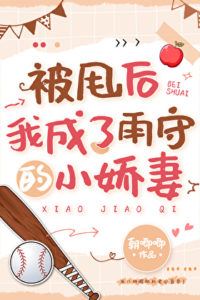
Yu Mozhi is a celebrated film emperor in the entertainment industry who has risen from poverty to fame through sheer determination. Despite his professional success, he maintains a cold and aloof public persona, having severed ties with his neglectful family years ago. His life is upended when a small, dirty child named Yu Mianmian appears at his luxury estate, calling him "Daddy." Mianmian is actually a three-year-old girl who was formerly a koi spirit in the Heavenly Pond, raised by Immortal Mo, the spiritual predecessor of Yu Mozhi. After a disaster in the spirit world, Immortal Mo lost his memories and was reborn as a human, while Mianmian, guided by a sentient jade pendant, descended to the human world to find him.

At the police station, Yu Mozhi learns that Mianmian is the daughter of his deceased relative, Yu Jingxing, who had a history of abusing the child. With no other guardians available and Mianmian having instinctively chosen Yu Mozhi as her protector, the police persuade him to take temporary custody. Although Yu Mozhi initially intends to place her in an orphanage or with a nanny, Mianmian’s persistent affection and vulnerability soften his resolve. She clings to him, declaring that she will protect and take care of him, sharing half of her innate luck with him. This emotional breakthrough marks the beginning of their cohabitation.

Yu Mozhi moves to a quieter residence to avoid the scrutiny of his scandal-plagued career. He is currently embroiled in a vicious conspiracy by his agency, Years Flowing Like Water Company. The company’s young master, Jiang Nianyue, and his manipulative fans have fabricated evidence of contract breaches and bullying, leading to a massive public smear campaign that has halted Yu Mozhi’s work. Despite the professional crisis, Yu Mozhi finds himself adapting to fatherhood. He clumsily learns to cook, dress, and care for Mianmian, whose innocent and cheerful nature gradually melts his emotional barriers. Mianmian, unaware of the adult complexities, views Yu Mozhi as her all-powerful father and goes to great lengths to support him, from buying him medicine to scolding his phone for displaying negative news.

The narrative shifts as Yu Mozhi’s former agent, Liu Wu, and a young actor named Yue Han join him. They discuss strategies to counter the agency’s schemes and establish an independent studio. Yu Mozhi plans to gather evidence of the company’s fraud to terminate his contract legally. Meanwhile, Mianmian’s presence becomes a stabilizing force in his life. She brings warmth and purpose, transforming his solitary existence into one filled with responsibility and affection. The story highlights the contrast between the cutthroat entertainment industry and the tender, domestic moments shared between Yu Mozhi and Mianmian.

As Yu Mozhi navigates the dual challenges of clearing his name and raising a child, his relationship with Mianmian deepens. She continues to call him Daddy, and he eventually accepts the title, recognizing the bond they share. The story sets the stage for Yu Mozhi’s professional comeback and his ongoing journey as a guardian, balancing his career resurgence with the joys and challenges of parenting a unique and spirited child.

Latest Release
DateGroupRelease
2026-08-11shanghai fantasy c200
2026-08-11shanghai fantasy c199
2026-08-11shanghai fantasy c198
2026-08-11shanghai fantasy c197
2026-08-11shanghai fantasy c196
2026-08-11shanghai fantasy c195
2026-08-11shanghai fantasy c194
2026-08-11shanghai fantasy c193
2026-08-11shanghai fantasy c192
2026-08-11shanghai fantasy c191
2026-08-11shanghai fantasy c190
2026-08-11shanghai fantasy c189

Community Reviews

Rating(4.7 / 5.0, 6votes)
5 stars
4(67%)
4 stars
2(33%)
3 stars
0(0%)
2 stars
0(0%)
1 stars
0(0%)

Popular reviews

... Read More
Let me just sit with this for a moment. Yu Mozhi is a man who has built his entire career on image and control, and now he is dealing with: (1) a toxic entertainment company that has branded him with false scandals, (2) an army of organized, violent fans who will literally hunt him down, (3) the decision to go independent and potentially lose everything he's worked for, and (4) a small child who trusts him completely and whom he is now responsible for protecting. The stakes have never been higher, and the author makes this painfully clear in Chapter 18 when Liu Wu literally spells it out: "If this illegitimate child situation got out, how would there be any road left to walk? You might as well have given us a heads-up, so the rest of us could make our escape early too!" What makes the conflict so compelling is that it operates on two levels simultaneously. The external conflict—the war with the company and Jiang Yuenyue—is high-stakes career drama. But the internal conflict, the one that actually keeps me up at night, is simpler and more terrifying: can this man who has never cared about anyone but himself learn to be someone worthy of a child's absolute trust? When Mianmian links the phone with "people who bully Daddy" and instinctively tries to protect him, she's not just a plot device. She's the moral center of the entire story, and her safety is the thing that makes every external conflict personal. The suspense is maintained brilliantly because the author never lets us forget that the fans are out there. The phone ringing in the background of a breakfast scene isn't just noise—it's a reminder that the outside world is always one ring away from crashing into their fragile new normal.
... Read More
Okay, let me just say this out loud: the author absolutely knows how to drop a plot grenade and watch everyone scramble. Yu Mozhi texts Liu Wu "Raising a kid" and the entire narrative pivots on that single phrase. First, it's ambiguous—could be a pet, could be something else. Then Mianmian herself blurts out "Uncle, Mianmian isn't a pet!" and suddenly the plot has exploded into a whole new direction. Liu Wu's internal monologue is priceless: "This was like the haters were saying they wanted to sleep, and you personally handed them a pillow. They wanted you dead, and you handed them a knife??" What I love about this plot movement is how it ties together two seemingly separate threads—the industry conflict with Jiang Yuenyue and the personal storyline with the child. Before this, they felt like parallel tracks. Now they're braided together. The illegitimate child angle isn't just drama for drama's sake; it raises the stakes for Yu Mozhi's already-tense situation with the company. Every plot twist here feels earned because it grows organically from character decisions, not from authorial manipulation. The question hanging over everything now is: how does Yu Mozhi protect this child while going to war with an entire entertainment company and their army of fanatic fans? That's a plot setup I am fully invested in.
... Read More
"What a performance, this 'not talking'!" I cannot stop thinking about this moment. The shop owner sees through Yu Mozhi's stoic act immediately and decides Yu Mozhi's face isn't what earns him the free porridge—it's the baby's. And Yu Mozhi has to stand there, mask on, watching his own companion's cuteness do the heavy lifting. There's something so tender about the power dynamic shift here. This man who's used to "paying with his face" in the industry suddenly can't use his own face at all. He has to rely on someone else—this tiny, vulnerable child—to navigate the world for him. And then Mianmian's reaction when she finds out Daddy is "sick." She climbs onto a bench, clumsily pours cold water, and says with absolute seriousness: "Daddy, here's some water for you. The doctor auntie said you need to drink more water to get better faster!" She had been upset moments before, threw a little tantrum, and now she's forgotten all about it because her whole world has shifted to caring for him. That's the kind of emotional whiplash that only a child can deliver, and it hits Yu Mozhi like a freight train. He freezes. He just stands there holding her while his whole chest apparently cracks open. The relationship between these two has gone from reluctant caretaker situation to something that looks dangerously like love, and it happened in the span of a bowl of porridge and a cup of cold water.
... Read More
There's a scene in these chapters where Mianmian is eating the eight-treasure porridge and Yu Mozhi is feeding her the jianbing guozi, and it is somehow the most cinematic thing I have ever read. Let me paint it for you: dark red porridge smeared around a fair little face, her short legs swinging off the edge of the sink, her big round eyes focused entirely on the act of eating like it's the most important thing in the world. Yu Mozhi watching her like she's some kind of miracle. The phone ringing in the background like a threat from the outside world, and him carrying her into the bathroom to shield her from it. The contrast between the domestic warmth of that breakfast scene and the cold, hostile entertainment industry looming outside is devastating. The porridge shop owner's little gesture—giving free plain porridge because "Grandma won't be happy" otherwise—adds this layer of everyday kindness that makes the world feel lived-in and real. It's not a glamorous setting. It's a street-side breakfast stall and a modest apartment. But the author makes it feel like the center of the universe, which is exactly where it should be. This is a story about finding home in the most unexpected places, and the sensory details—the warmth of the porridge, the sound of the phone ringing, the texture of Mianmian's fluffy hair against Yu Mozhi's palm—all of it builds a world that feels achingly real.
... Read More
I need to be honest with you guys—the pacing in these chapters is a rollercoaster, and not always in a good way. Let me break it down. The chapter openings are where the author absolutely excels. Chapter 15 starts mid-scene with Yu Mozhi already holding Mianmian, no exposition dump, just drops you into the emotional current. Chapter 16's title "Literal Meaning" is a perfect hook—you immediately want to know what literal meaning he's referring to. Chapter 17's title "With a Crack, My Heart Shattered" sets up the emotional payoff before we even get there. These titles work as mini-cliffhangers that pull you forward. But then there's the middle section—Liu Wu's phone call runs a bit long. I get it, you need to establish the industry conflict and introduce Yue Han as a potential ally, but the back-and-forth about starting a studio could have been trimmed by a third. I found myself skimming slightly. That said, the author recovers beautifully with Mianmian's interruption. The shift from business discussion to "Uncle, Mianmian isn't a pet!" is such a sharp tonal pivot that it immediately re-engages you. The chapter endings are consistently strong—each one lands on an emotional beat or a revelation that makes you immediately click to the next chapter. The structure overall follows a pattern of: domestic warmth → external threat intrudes → emotional resolution → new threat established. It's reliable, and reliability in pacing is honestly underrated.
... Read More
I am not okay with how good Liu Wu's dialogue is. Like, genuinely. The man walks into a potential crisis situation and his entire personality comes through in every single line. "Bro, Mo-ge, where the hell are you? I'm not siding with the company, okay? At least pick up the phone and tell me what you're doing! You disappearing like this is way too scary!!!" Three exclamation marks. Three. The man is vibrating with anxiety and it's the funniest thing I've ever read. And then his reaction to hearing Mianmian's voice: "I just heard the sound of an enormous increase in workload. With a crack, my heart shattered." I laughed out loud. I actually laughed out loud on the subway. But what's really impressive is how distinct every character's voice is. Yu Mozhi's dialogue is sparse, controlled, almost clinical—"Raising a kid." Four words that carry an entire plot twist. Mianmian's speech is full of repetition and earnest declarations: "Miánmián! Miánmián will answer the call for Daddy!" The narrative voice itself has this wry, affectionate tone that comments on the characters without breaking immersion. The author's voice as narrator is basically the friend who's sitting next to you reading the book and making running commentary. It's warm, slightly sarcastic, and never condescending. My only complaint is that I wish Yue Han got more dialogue—he sounded like he could be hilarious based on that one energetic outburst.
See all reviews

Characters

See all characters

Custom lists

See all custom Lists