Summary

... Read More

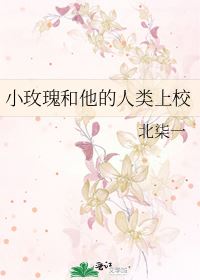
Su Ran is a sentient rose seedling who survived a catastrophic global event known as the aberration, which mutated Earth's flora and fauna into dangerous, often predatory entities. After being separated from his rose family by a six-winged bird, he finds himself stranded in a damp, monster-infested cave. As a juvenile plant, Su Ran requires nutrient beads to survive and mature, but his primary asset is a healing ability gained during a previous mutation, which allows him to revive withered plants and heal injuries. He uses this power to gain the trust of local cave dwellers, including a giant beetle and an ancient vine, who promise to bring him nutrient beads in exchange for his help.

The fragile peace is shattered when a massive shadow monster patrols the cave, causing Su Ran's new friends to flee in terror. Forced to venture out alone, Su Ran encounters the beetle again, who guides him to a hidden nutrient bead. However, retrieving the bead triggers a cave-in, and in the chaos, Su Ran falls into a human military vehicle. He is discovered by Colonel Si Chengyan and his subordinate Qiao Ran, who are investigating a series of inexplicable mutations. Si Chengyan, a stoic and highly skilled military officer, initially treats Su Ran as a potential threat but quickly realizes the small rose is benign and capable of human speech, a rare trait among aberrant creatures.

During their investigation, the military's armored vehicle mutates into a monstrous entity with compound eyes and spiked tires, attacking them. Si Chengyan destroys the vehicle to survive, but is subsequently wounded by a tentacled beast emerging from a green lake. Su Ran, despite his fear and exhaustion, uses his healing power to save Si Chengyan's life. This act of kindness solidifies a bond between them. After recovering, Si Chengyan offers Su Ran a place at the human base, sparing him from the harsh wilderness. Su Ran accepts, but must leave his beetle and vine companions behind, as they are classified as intermediate aberrations and pose a security risk in human territory.

Si Chengyan and Su Ran are deployed to the Manluote Region, a city facing a mysterious infection crisis where communication has failed and aberrant creatures are rampant. Upon arrival, they join a support mission led by Monte, the regional executive officer. The situation is dire; the city is shrouded in fog, and mutated beasts patrol the ruins. Su Ran accompanies the medical team, using his healing abilities to aid injured soldiers and civilians. He registers with the title "Colonel Si's Cute Little Rose," asserting his connection to the Colonel and displaying a jealous streak when other trainees receive Si Chengyan's attention.

The core conflict escalates when Su Ran and the medical team enter the inner city, now a graveyard of collapsed buildings and blood-soaked streets. They discover that the infection is not limited to biological organisms; inanimate objects are also mutating and gaining consciousness. A statue in the city square, previously thought safe, comes to life and fuses with a wounded priest, absorbing his body and transforming him into part of its stone form. This revelation overturns the human understanding of infection, which was previously believed to occur only between living beings. Su Ran, trapped in the chaos, manages to contact Si Chengyan via a walkie-talkie, only to find the device itself beginning to mutate, cracking and scanning him with glowing lenses. The story ends with Su Ran facing a new, incomprehensible threat as the boundaries between life, death, and object continue to dissolve in the aberrated world.

Latest Release
DateGroupRelease
2026-08-11shanghai fantasy c54
2026-08-11shanghai fantasy c53
2026-08-11shanghai fantasy c52
2026-08-11shanghai fantasy c51
2026-08-11shanghai fantasy c50
2026-08-11shanghai fantasy c49
2026-08-11shanghai fantasy c48
2026-08-11shanghai fantasy c47
2026-08-11shanghai fantasy c46
2026-08-11shanghai fantasy c45
2026-08-11shanghai fantasy c44
2026-08-11shanghai fantasy c43

Community Reviews

Rating(4.4 / 5.0, 5votes)
5 stars
2(40%)
4 stars
3(60%)
3 stars
0(0%)
2 stars
0(0%)
1 stars
0(0%)

Popular reviews

... Read More
"I'm used to it. Many squads are wiped out daily. In this environment, we can only accept it." This line from Si Chengyan. That's it. That's the whole review. No, seriously, this one line tells you everything about this character and this world. He's not boasting, he's not being dramatic. He's stating a fact with this flat, matter-of-fact tone that makes it infinitely more haunting. The dialogue throughout this section is deceptively simple. Su Ran speaks like a child—short sentences, questions, exclamations. "What was that about?" "Are there any other dangers?" "Really?" It's not baby talk, but it's genuine curiosity from someone who's never left his cave world. And Si Chengyan? His lines are clipped, practical, but never cold. Even when he's offering Su Ran water, it's not grandiose—just "There's still a bit of water in here. If you need it, you can use it." The beauty is in what's NOT said. Su Ran never asks Si Chengyan his name directly. Si Chengyan never tells him. They just... exist together. The dialogue between them is full of these gaps, these unspoken understandings that feel more real than any elaborate conversation could. Qiao Ran's dialogue is different—more explanatory, more worldbuilding through casual chat. But even his lines feel natural, like someone filling silence rather than delivering exposition.
... Read More
I need to talk about the pacing in this section because the author absolutely nails the rhythm here. We spend time in this quiet, almost tender moment—Si Chengyan watering Su Ran, the little rose feeling safe, the two of them building some weird cross-species friendship—and then BAM. Gunfire. Octopus. Blood. The transition is so sudden it made me actually gasp. The author uses this technique repeatedly. Remember how the chapter starts with Su Ran running from something, then cuts to the armored vehicle exploding? That's the author saying "pay attention, things move fast here." And then later, just as Su Ran is thinking about parting ways and feeling nostalgic, the biological instinct chill hits and the octopus attacks. It's like the world itself won't let you relax. But what I love most is how the healing scene is paced. The author slows everything down—Su Ran's concentration, the fading white light, the wound closing scar by scar. It's the opposite of the fight scene's breakneck speed, and that contrast makes both moments hit harder. The exhaustion after the healing feels earned because we felt every second of Su Ran pushing himself. The chapter ends on this perfect note: Su Ran thinking he's found hope, then seeing the barren wasteland. Cliffhanger? Absolutely. But it's an emotional cliffhanger, not just a plot one. You're left wanting to know what happens next, but also feeling the weight of this world.
... Read More
"In the thick fog, he saw a massive black shadow, resembling an octopus, rushing out from the green lake, its tentacles attacking the fallen Si Chengyan." Okay, can we just talk about how this cave feels like a living, breathing character? Like, it's not just some generic dungeon the author threw in as a backdrop. The author keeps layering in these details that make you feel the humidity, the darkness, the way sound bounces off wet stone. The green lake, the purple-glowing mushrooms, the fog that rolls in and out—it's all so atmospheric. You don't just read about this place, you feel like you're standing there in the damp cold. And the world outside the cave? That reveal at the end where Su Ran thinks he's seeing a grassland home but instead finds barren land with white smoke rising from cracks? Chilling. The author sets you up with hope—"fertile soil and tall trees to shield from the wind and rain"—and then yanks it away. That's not just a plot twist, that's worldbuilding that hurts. It tells you everything about this world in one devastating image: there's no safe haven, even for a little rose. The contrast between the cave's relative safety (mushroom umbrellas, plant friends, water) and the wasteland outside is masterful. It makes the world feel vast and dangerous without ever needing to describe every corner of it. You understand the stakes through what Su Ran sees and doesn't see.
... Read More
The stakes in this section are layered in the best way. On the surface, it's survival—don't get eaten by monsters, don't get infected, don't die. But the real conflict is deeper: Su Ran has to choose between self-preservation and risking everything for someone who barely knows him. When Si Chengyan is wounded, Su Ran has seconds to decide. He could run. He could hide. Instead, he grabs Si Chengyan's sleeve and climbs up—"very seriously, as if using all his strength"—and tries to heal him. The text makes it clear: if this goes wrong, they both die. "Whether it was him or Si Chengyan, if something went wrong, they might both lose their lives." That's genuine tension. Not just "will he succeed?" but "what if his power doesn't work on humans?" And the external stakes keep rising too. The armored vehicle mutated. The octopus attacked. Si Chengyan is wounded. The base is waiting for answers. Every scene raises the question: what happens next, and can they survive it? But here's what makes me care most—it's not just about physical danger. It's about trust. Su Ran trusts Si Chengyan enough to heal him. Si Chengyan trusts Su Ran enough to let him try. In a world where everyone is prey or predator, that trust is the highest stake of all.
... Read More
There's this one image that won't leave me: Su Ran's white glow spreading across Si Chengyan's wound, the blood staining his leaf, the way the light fades as his strength fades with it. It's healing, yes, but it's also sacrifice. The little rose gives something of himself to save someone who could have killed him on sight. Water is the big symbol here, running through everything. Si Chengyan shares his water—not just any water, but the last bit in his bottle—with a creature that could have been his enemy. And Su Ran, in turn, shares his healing light. It's this beautiful cycle of giving that feels radical in a world where everything is about survival. The Mutation Research Institute's classification system is another layer I can't stop thinking about. "Most, including your kind, are benign aberrant creatures and don't need to be eradicated." The fact that the world has to CREATE categories to determine who lives and who dies says everything about how broken this world is. And then the system itself admits classifications can change—"some benign aberrant creatures might be classified as dangerous." Who decides? Who has that power? That's the real horror lurking beneath the surface. And Su Ran's final realization—that his home isn't where he thought it was—feels like the ultimate symbol of lost innocence. He wanted to go back to nature, but nature itself has been wounded. The white smoke rising from cracks isn't just scenery; it's the world's wound made visible.
See all reviews

Characters

See all characters

Custom lists

See all custom Lists