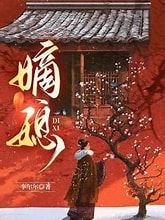
The Legitimate Daughter-in-law
+Add to Custom List
Novel Info

Summary

... Read More

Xie Rongying, the eldest daughter of the wealthy Xie merchant family, marries into the prestigious but financially ruined Marquis Yongyi household. Her marriage is a strategic alliance arranged by both families to secure political influence and financial stability. However, Xie Rongying has returned to this moment with memories of her previous life, where she spent fifty years as a dutiful, submissive wife, only to be exploited by her mother-in-law, Madam Jiang, and her husband, Qin Junyi. In her past life, she covered the household's massive debts with her dowry, lived as a widow for decades, and died alone and despised. Determined to change her fate, she enters the marriage with a cold, calculating mindset, refusing to play the role of the obedient daughter-in-law.

Upon arriving at the Marquis residence, Xie Rongying immediately rejects the household accounts Madam Jiang hands her, citing her poor health. When Madam Jiang attempts to punish her by making her stand in the freezing cold, Xie Rongying collapses, drawing the attention of the Marquis Yongyi, who has just returned from the frontier. Instead of showing weakness, Xie Rongying uses the incident to expose the severe financial mismanagement and deficits within the Qin family, presenting the ledgers directly to the Marquis. This bold move shifts household authority from Madam Jiang to Madam Zhou, the Marquis's longtime companion, and forces the Marquis to involve the second and third branches of the family in resolving the debt.

Qin Junyi, who harbors resentment toward Xie Rongying because he was forced to marry her instead of the woman he loves, confronts her about her sudden change in behavior. He accuses her of hypocrisy, but she dismantles his moral high ground, revealing that he is an unfilial son and a disloyal man who sacrificed his true love for status. Their confrontation escalates when Qin Junyi attempts to assault her in a fit of rage, but she defends herself, causing him to injure himself. Xie Rongying then coldly offers to lend the family money through her father, requiring a formal IOU, stripping the marriage of any romantic illusion and reducing it to a transactional arrangement.

Meanwhile, Xie Rongying secretly meets with her Fourth Uncle, Xie Yi, a talented but idle member of her family. She reveals her knowledge of his secret past and urges him to seek military command at the border, recognizing the impending war as an opportunity for the Xie family to gain political merit and elevate their status. This alliance marks her first step in reshaping the power dynamics between the Xie and Qin families. Back in the Marquis residence, Madam Jiang plots to control Xie Rongying by promising Qin Junyi that he can be with his true love if he helps resolve the household's financial crisis. Qin Junyi agrees, planning to use Xie Rongying's wealth and then abandon her, but she remains unmoved by his schemes.

The story unfolds as a tense battle of wits within the aristocratic household. Xie Rongying refuses to be a victim, instead leveraging her family's wealth and her foreknowledge of future events to protect herself and undermine her enemies. She navigates the hostile environment with cold precision, exposing the Qin family's corruption and refusing to let them exploit her dowry. As the Marquis Yongyi faces pressure from the emperor to repay state debts and the border tensions rise, the fragile balance of power within the household begins to shift. Xie Rongying's refusal to conform to traditional expectations sets the stage for a prolonged conflict where she must outmaneuver a family that views her as a mere financial resource.

Key turning points include Xie Rongying's public exposure of the household accounts, which strips Madam Jiang of her authority, and her refusal to reconcile with Qin Junyi, which shatters the illusion of a harmonious marriage. Her secret alliance with Fourth Uncle Xie Yi introduces a new variable, suggesting that the Xie family may soon rise in political standing, potentially surpassing the declining Qin family. The narrative explores themes of revenge, survival, and the subversion of gender roles in a patriarchal society, as Xie Rongying transforms from a passive victim into an active agent of her own destiny.

As the winter deepens, the Marquis Yongyi household becomes a battleground of secrets and schemes. Xie Rongying's enemies underestimate her resolve, believing she will eventually submit to family pressure. However, her past-life experiences have hardened her, and she is willing to burn bridges rather than repeat her previous suffering. The story follows her strategic maneuvers as she secures her position, protects her assets, and prepares for the political upheavals that lie ahead, all while maintaining a facade of calm dignity in the face of relentless hostility.

Latest Release
DateGroupRelease
2026-08-11shanghai fantasy c137
2026-08-11shanghai fantasy c136
2026-08-11shanghai fantasy c135
2026-08-11shanghai fantasy c134
2026-08-11shanghai fantasy c133
2026-08-11shanghai fantasy c132
2026-08-11shanghai fantasy c131
2026-08-11shanghai fantasy c130
2026-08-11shanghai fantasy c129
2026-08-11shanghai fantasy c128
2026-08-11shanghai fantasy c127
2026-08-11shanghai fantasy c126

Community Reviews

Rating(4.3 / 5.0, 6votes)
5 stars
3(50%)
4 stars
2(33%)
3 stars
1(17%)
2 stars
0(0%)
1 stars
0(0%)

Popular reviews

... Read More
The dialogue in this text is sharp enough to draw blood. Let me just highlight a few lines that stayed with me. The brother-in-law's outburst is pure, unfiltered rage: "Wasn't living out your old age in Longxi enough? Why return to Bianjing? You brought your current wife and children—what about sister-in-law? She's not dead yet!" This single paragraph does so much work—it reveals the entire backstory in three sentences, establishes the moral bankruptcy of the Qin family, and sets up the confrontation before we even see it happen. The author trusts the reader to connect the dots, and that's what makes it so effective. Xie Rongying's voice is equally distinctive. Her line to Nanny Yuan—"Before I married into the Yongyi Marquis Manor, was there no one to manage its affairs?"—is perfect. It's polite on the surface but devastating underneath. She's not refusing to help; she's pointing out that the manor had perfectly functional people before she arrived, and now they're trying to dump their mess on a young bride. The subtext is screaming. And her conversation with Yunniang at the end of Chapter 2? "Where is there true happiness under the sun? In the end, it's always 'the rabbit dies, the dog is cooked; the donkey is killed once the millstone is turned.'" This is the moment where her worldview crystallizes. She's read the stories, she's seen the patterns, and she's decided not to play the game. Her voice here is resigned but defiant—a rare combination that makes her incredibly compelling. The narrative voice itself is worth noting. It's restrained, almost clinical in its descriptions, which makes the emotional moments hit harder. When the old woman laughs and the sound is described as "a dry, low laugh," it's understated but devastating. The author doesn't need to tell us she's heartbroken—we can feel it in the silence between the words.
... Read More
I just finished these two chapters and I need a minute. The structure is so deliberate and so effective that I want to unpack it. Chapter 1 opens in media res—with an old woman walking through snow, already at the end of her rope. The pacing is slow, almost glacial, matching the weight of her fifty-year suffering. Every step she takes toward the ancestral hall feels like a lifetime. The author doesn't rush this. We feel the cold, the pain in her legs, the hesitation of Yue'er. And then, inside that hall, the pacing SNAPS. The dialogue between the brothers comes fast and angry, the tablet falls, the confrontation explodes, and within pages we're watching an ancestral hall burn to the ground. The shift from slow, deliberate movement to sudden, chaotic violence is jarring in the best possible way. Then Chapter 2 flips the timeline back to the Ninth Year of Chengde, and suddenly the pacing changes again. It's quieter, more restrained, but the tension is still there—simmering beneath every exchange. Xie Rongying's conversation with Nanny Yuan is a verbal duel, and the author stretches it out just enough that you can feel the power shifting between them. When Xie Rongying decides to refuse the household accounts, it's a small act of rebellion, but it feels enormous because we've just seen where this woman ends up. The structure creates a kind of dramatic irony that's almost unbearable. We know the young, sharp-witted bride will become the old, burning widow. Every smart decision she makes in Chapter 2 is shadowed by the knowledge of what's coming. The author is playing with time like a musician plays with tempo—slow, fast, slow, building to a crescendo that we can feel approaching even though we've already seen the ending. And that ending—her last words, the grin, the collapsing beam—what a way to close Chapter 1. It's a cliffhanger that's also a conclusion. She dies, but she wins. And then we cut to a young woman waking up in a warm room, completely unaware that her life is about to become a living hell. The contrast is devastating.
... Read More
The ancestral tablets. I need to talk about these. They appear in Chapter 1 like ghosts—rows of them, cold and silent, representing everything that bound Xie Rongying to a life she never chose. The Qin family's honor, the chastity memorial arch, the expectation that she would wait faithfully for a husband who was already dead to her—or rather, alive but choosing someone else. These wooden plaques are the physical manifestation of the patriarchy that consumed her. And when she strikes them down? That's not just anger. That's a woman finally refusing to worship at the altar of her own destruction. Fire is the other big symbol here, obviously. The fire starts from a knocked-over candle—such a small, accidental thing—and suddenly the ancestral hall is consumed. The dry wooden tablets catch fire instantly. It's almost poetic justice, isn't it? The very objects that represented her shackles become fuel for her rebellion. She laughs behind the flames, lucid and vicious, and the beam collapses on her spine. She dies burning, but she dies free. The old man beneath her is terrified, and she grins. That image—her grinning through the pain as the man who stole her life watches it all burn—is one of the most powerful I've read in a long time. And then there's the snow. The bitter winter that buried Bianjing, the Eastern Courtyard thick with cold and neglect. Snow is often associated with purity and chastity in Chinese literature, and Xie Rongying was the embodiment of that expectation. But the snow here is cold and desolate, not pure. It mirrors her inner landscape—frozen, isolated, buried alive. When she finally walks through it to the ancestral hall, it's like she's walking out of her own grave. The author also uses the manor itself as a symbol. "A towering tree standing between heaven and earth—seemingly unshakable, yet its roots and core had long been eaten away by rot." The Yongyi Marquis Manor is the Qin family, built on lies and sustained by the Xie family's wealth. It's gilded surface and rotten core. And Xie Rongying sees it clearly from the start.
... Read More
I need to just sit with how much I despise Qin Junyi after reading these two chapters. The man is a monument to selfishness wrapped in the skin of a nobleman. On their wedding night—just one night—he tells her flat out: "Our marriage is a transaction. Bearing children for the Qin family is your duty." He doesn't even bother with pretense. He looks at this young woman, marries her for her family's influence, and then never steps foot in her room again. Fifty years. FIFTY YEARS. He lets her live as a widow, lets her guard the chastity arch, lets her family and the world praise her virtue, while he's off in Longxi living his best life with his real love and their children. And when she confronts him at the end, his first instinct isn't remorse or regret—it's defensiveness. "What's our sacrifice compared to that?" He frames HER sacrifice as nothing. Her entire life, her youth, her dignity, her fifty years of lonely等待—none of it matters to him because he got what he wanted. The brother-in-law even has to tell him to shut up because the Xie family is still powerful. This man has no shame. None. But what's fascinating is Xie Rongying. In Chapter 1, she's an old, broken woman—but the moment she learns the truth, something ignites. The cloudy eyes sharpen. The raspy voice becomes clear. She's not the victim anymore; she's the executioner. And in Chapter 2, we see the young version of her—already sharp, already calculating. When Nanny Yuan tries to guilt her into managing the household accounts, she tears apart the whole premise in seconds. "Before I married into the Yongyi Marquis Manor, was there no one to manage its affairs?" She sees the trap and she refuses to walk into it. The relationship between them is built entirely on lies, but Xie Rongying's transformation from victim to avenger is the most satisfying character arc I've encountered. She goes from hunched and trembling to standing over a burning man, grinning. That's not just revenge—that's liberation.
... Read More
Okay, let me just say this opening chapter is a masterclass in how to hook a reader. We start with an old woman, broken and bitter, stumbling through snow to confront the husband she mourned for five decades. And then—BAM—he's alive. With a whole other family. The way the author layers the revelation is so satisfying. First we hear the brothers arguing outside, like we're eavesdropping on a secret that isn't ours to hear. Then the tablet falls. That sound—"the sound of a tablet falling made both men shiver"—chills me every time. It's such a small detail but it carries the weight of a lifetime of deception. And then the fire. Oh god, the fire. She doesn't just confront him, she BURNS the ancestral tablets. The symbolism is almost too on-the-nose but I can't complain because it works. "They're just pieces of wood, yet they shackled my entire life!" She's not just destroying wood, she's destroying the entire system that ate her alive. The chastity arch, the duty, the fifty years of waiting for a man who was happily living it up in Longxi with his real family. The plot twist hits like a truck and then she takes him down with her. Her last words—"Don't give me a chance. If you make my life miserable, I will make sure you die for it"—are so perfectly venomous. I love her. I hate her. I want to be her. Then Chapter 2 flips back to the Ninth Year of Chengde and we see a young Xie Rongying, sharp and calculating, already seeing through the manor's rot. The parallel between the young wife and the old widow is devastating. She's reading stories about wives who give everything and get discarded, and I'm sitting here thinking—does she know? Does she already sense what's coming? Or is this the author showing us that this woman was always destined for this fate, no matter how clever she is?
... Read More
The stakes in this story are enormous, and the author builds them so carefully. On the surface, it's a woman discovering her husband faked his death and lived a whole other life without her. But dig deeper and it's about everything: her dignity, her family's honor, her place in history, the meaning of a life spent in service to people who never valued her. In Chapter 1, the conflict is personal but it escalates terrifyingly fast. Xie Rongying hears the truth, confronts her husband, and within minutes the ancestral hall is on fire. The physical danger is real—beams collapsing, flames spreading—but the emotional stakes are what make this scene unbearable. She's not just fighting for revenge; she's fighting for the right to have existed. Every tablet she destroys is a symbol of the identity she was forced to wear. And when she says "Don't speak to me of generosity. And don't give me a chance," she's drawing a line that can never be uncrossed. Chapter 2 shifts the conflict to a different register. Young Xie Rongying is already in a battle—against the manor's expectations, against her mother-in-law's schemes, against the invisible chains of being a new bride in a corrupt household. The account books are a weapon, and she refuses to pick them up. "She even considered using her dowry to cover those debts"—this detail is crucial. She was willing to spend her own money to save a family that would later destroy her. But something changed. What did she see? The tension between these two chapters is incredible. We know what the young wife will become—the old woman in the snow, burning everything down. Every smart move she makes in Chapter 2 takes on a tragic irony. She's already seeing the trap, but she can't escape it. The stakes keep rising because we know where this story is headed, and there's nothing we can do to stop it.
See all reviews

Characters

See all characters

Custom lists

See all custom Lists