The Lazy Daily Life of a Little Noblewoman - Reviews

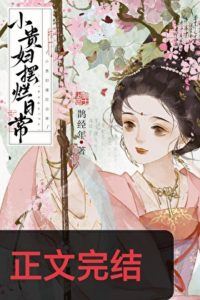
The Lazy Daily Life of a Little Noblewoman
+Add to Custom List
Sort
Add review
... Read More
The pacing in this chapter is deliberately controlled, almost meditative. It starts with exposition—Jiang Wensheng explaining the political stakes of the banquet, Shen Yunying's confusion, the beef feast that momentarily distracts her. These opening scenes move quickly, almost frantically, as if the narrative is catching its breath before settling into something slower and more deliberate. Then the chapter shifts. The carriage ride, the arrival at the palace, the Empress's speech—all of it moves with a languid quality that mirrors Shen Yunying's own experience. She's not part of this world, and the prose reflects that. The author lets us wander alongside her, past the night pearls embedded in the path, into the peach grove, to the pavilion. It's a slow walk that becomes a slow revelation. The structure then pivots to Yan Peifeng's perspective, and suddenly the pacing tightens. We learn about the chess game, the arrangement, the Crown Prince's outrage. This section moves faster because it's about calculation and control. Then it slows again when Yan Peifeng begins painting—each brushstroke deliberate, each moment suspended. The chapter ends with the Emperor and Empress watching from above, their concern palpable, their ignorance complete. The structure mirrors the emotional arc: from noise to silence, from public performance to private truth.
... Read More
This chapter is a masterclass in how a seemingly simple setting can carry enormous narrative weight. The Flower Appreciation Banquet is introduced as a matchmaking event, but the real plot engine is Yan Peifeng's deliberate manipulation of it. He doesn't want to marry—he's using the Crown Prince as a human shield, having arranged for him to be occupied by chess for an hour so no one will approach him. That revelation about the chess game is a fantastic twist. You realize Yan Peifeng is calculating, not shy. He orchestrated this entire day from behind the scenes. Meanwhile, Shen Yunying's accidental discovery of the peach grove feels like fate, but it's really just the author setting up a collision between two characters who have been circling each other. The eunuch Gu Dong is the perfect plot mechanism here—he's the bridge between the two worlds, delivering information to Yan Peifeng while also enabling Shen Yunying's presence. When he reports back about her wanting to stay, Yan Peifeng's reaction is subtle but telling. He doesn't send her away. He paints her into his world. The Emperor and Empress's parallel storyline adds another layer. They're watching from the Hundred Views Tower, hoping to find a suitable match for Yan Peifeng, completely unaware that he's actively avoiding the very thing they want. This dramatic irony is delicious. The reader knows something the parents don't, which creates tension without any action at all.
... Read More
I need to talk about the emotional undercurrent of this entire chapter, because it's way deeper than it first appears. Sure, on the surface it's a marriage arrangement plot, but the emotional engine driving everything is the Emperor's grief for his sister, Princess Jiarong. Let me quote the opening: 'Yan Peifeng's father had shielded the Emperor, taking a fatal sword strike in his stead. His health declined steadily thereafter, and after six years of struggle, he passed away.' That's it. That's the entire emotional foundation. The Emperor isn't forcing Yan Peifeng to marry because he's a controlling tyrant — he's doing it because he lost his sister and he's terrified of losing more. He and Princess Jiarong 'relied on each other, sharing a deep bond' when they were young. That line hit me like a truck. These two survivors — a prince and a frail princess — leaning on each other in a dangerous court, and now she's gone and he's making sure her son has someone to care for him. The Emperor's impulsiveness, his chattering mouth, his slapping-the-table anger — it's all grief dressed up as authority. And Yan Peifeng? He's not a reluctant bridegroom; he's a man who understands exactly what his uncle-the-Emperor is doing. When he says 'Aunt, your nephew has already made his choice. If it doesn't work out, it simply means fate hasn't arrived,' that's not defiance — that's someone who's been carrying weight his whole life and is finally being told he can rest. The emotional beat I couldn't stop thinking about: the Empress wanting to be cautious while the Emperor wants to act NOW. She's protecting him from regret; he's protecting her memory from being forgotten. And Shen Yunying, completely unaware of all this, kneeling to receive a decree that will define the rest of her life. Her dazed reaction — 'Was that really worth the punishment of an imperial marriage decree?' — is so perfectly human. She was just trying to eat a peach.
... Read More
The flower and willow metaphor that Shen Yunying drops casually is clearly the thematic key to everything happening in these chapters. "When you plant flowers with intent, they may not bloom, but when you plant willows without thought, they may flourish." This is the entire story in one sentence. Shen Yunman is planting flowers with intent—she's meticulously scheming, investing twenty thousand taels, planning poetry meetings, calculating percentages of success. And yet? Her mother's scheme with the screen backfired, Madam Wen is furious, and the Old Madam is already looking at alternative marriage prospects involving the Crown Prince. Meanwhile Shen Yunying is planting willows. She's doing nothing, eating pastries, saying she'll just "pass the time here." And yet her mother is already securing a match with someone described as broad-minded and carefree, someone who won't restrict her. The symbolism extends to the pastries themselves—the Thousand-Layer Brocade symbolizing steady advancement, the Pine Nut Lily Pastries wishing for longevity. Even the food is coded with meaning about what these families want for their daughters. But the real question the text keeps asking is: who actually has agency in this world? Shen Yunying claims fate will handle it. But her mother is already making decisions for her. The Old Madam is already considering the Crown Prince. Every character thinks they're planting willows, but they're all trapped in someone else's garden.
... Read More
I'm not even gonna pretend I'm not obsessed with Yan Peifeng's character development in these chapters. The man is a whole psychological case study. Let me start with this moment: he catches Yinping about to shake Shen Yunying awake and physically blocks her hand, saying "Wake the mistress in a quarter of an hour." The servant's internal reaction—"The young master was showing concern for Shen Yunying"—is funny because Yan Peifeng himself probably doesn't even understand why he did that. He's confused by his own behavior. And then there's the ancestral hall scene. He's supposed to tell his dead mother about his new wife, and instead of just saying something, he pushes the task onto Shen Yunying: "Let your daughter-law speak." The narration says "pushing his own task onto his newlywed wife was not the behavior of a gentleman" but he conceals it quickly. This is a man who is genuinely uncomfortable with emotional vulnerability and keeps deflecting. Yet he also can't stop staring at her while she sleeps. The Emperor's dialogue with the Empress is hilarious and reveals so much about Yan Peifeng's position: "Of course, it was his! If it were my wedding night, would I stay up all night? Even if I wanted to, you wouldn't be able to keep up, Empress!" The Emperor is literally projecting his own desires onto his son. Yan Peifeng is trapped between his family's expectations, his own emotional confusion, and a wife he barely knows. Meanwhile Shen Yunying is playing the perfect daughter-in-law while internally plotting her escape routes from childbirth. Their dynamic is so rich and I can't stop thinking about it.
... Read More
The pacing in these chapters is absolutely relentless and I have never been more satisfied. Let me break down why this works so well. The chapter opens with a relatively slow, almost domestic scene — the Emperor showing Yan Peifeng portraits, the Empress worrying, the political calculations behind the marriage search. It feels like a setup, right? You're settling in, absorbing the world, watching these imperial figures do their thing. And then — WHAM. Yan Peifeng points at a portrait and the marriage is decided. The Emperor drafts the edict on the spot. Wang Gonggong is sent rushing. The investigation happens in a breath. And meanwhile, across the palace, Shen Yunying is literally just eating pastries and hiding a peach. The juxtaposition is genius. The author cuts between the imperial court (high stakes, fast decisions, political maneuvering) and the banquet (casual, almost comedic, Shen Yunying's internal monologue about peach varieties) and the tension builds through contrast rather than action. When the decree actually arrives at the Shen mansion, it hits like a physical blow — 'Even after Wang Gonggong had left, Shen Yunying remained in a daze.' The pacing then slows down for the family reactions, letting each character have their moment: the First Madam's laughter, Shen Yunnian's quiet calculation in the ancestral hall, Shen Yunman's darkening expression. But then — just when you think the chapter is winding down — the Second Madam whispers something sinister to her daughter, and the chapter ends on a note of impending conflict. The structure here is basically: setup (marriage search) → catalyst (the pointing) → chaos (the decree) → fallout (family reactions) → hook (Shen Yunman's malice). Every beat serves the next, and there's not a single wasted moment. I read this in one sitting and immediately wanted the next chapter.
... Read More
This chapter is a masterclass in dramatic irony and unspoken tension. On the surface, everything is going perfectly—Yan Peifeng and Shen Yunying are the picture of marital bliss, the Emperor is overjoyed, the grandmother is pleased. But underneath all of that, every character is carrying a secret anxiety that the author never lets us forget. Shen Yunying's internal conflict is the most layered: she's exhausted from the wedding rituals, traumatized by the previous night's consummation ("there was no pleasure in it at all"), calculating her options for avoiding childbirth, and simultaneously trying to make a good impression on her new family. The stakes for her are enormous—her entire future depends on navigating this household successfully, and she has no real allies yet. Yan Peifeng's conflict is more internal but no less intense. He feels "a sense of defeat he had never felt before" and is struggling with the gap between his expectations and reality. The Yan family's tradition of single-line inheritance means the entire clan's future rests on his shoulders—Grandmother Yan literally thinks "Perhaps the Yan family, in their grandson's generation, could break the tradition of single-line inheritance?" That's a huge stake. The Emperor's pressure is external and immediate—he's so excited about the wedding that he "couldn't sleep all night" and is already planning generous rewards. Shen Yunying's thought when leaving the palace captures it perfectly: the palace walls felt imposing, and only lightened when they were gone. The conflict here isn't a battle or a betrayal—it's the slow, grinding pressure of expectation pressing down on two people who barely know each other, and that's somehow even more tense.
... Read More
Okay so let me just say this: the plot twist where Shen Yunying gets chosen is absolutely chef's kiss. Think about it. The Emperor literally slaps the table, points at a random portrait, and goes 'her, then.' No investigation, no real consideration. And somehow, through a chain of completely accidental events — a bribed eunuch, a hidden peach, a poem she didn't even submit — Shen Yunying ends up with an imperial marriage decree to Yan Peifeng. The narrative logic here is kind of beautiful in its chaos. The author sets up this elaborate Flower Appreciation Banquet where everyone thinks the Crown Prince is the main event (chess by the lake, all the girls fawning over him), and then BOOM — Yan Peifeng was the real target all along, and the prize goes to the girl who was just standing there eating jade dew cakes. What I love most is how the Emperor's impulsiveness drives the entire plot forward. He's not a calculated schemer; he's a guy who just wants his favorite general to settle down and not let Princess Jiarong's bloodline die out. That single motivation — born from love for his deceased sister — creates this domino effect that reshapes everyone's life. The Shen family's political calculations, Shen Yunman's jealousy, Yan Peifeng's quiet compliance — it all stems from one impulsive pointing finger. And the subplot about Shen Yunzhi having ruined her own prospects by going to Yong'an Marquis Mansion? That's the perfect counterweight. It shows us that in this world, every choice has consequences, and Shen Yunying's 'mistake' of not submitting a poem actually becomes her greatest advantage. The plot is tight, the cause-and-effect chain is satisfying, and I couldn't stop turning pages.

Leave a comment

You must be logged in to leave comments. or
