Summary

... Read More
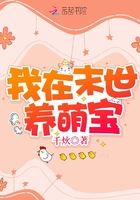
The story begins with the reincarnation of a female surgeon into the womb of the Jiang family in the Da Xia Dynasty. Her previous life was marked by orphanhood, early academic excellence, and a heroic death saving children from a fire, for which she received recognition from the state special department. After her death, an old Taoist priest inserted a red lotus jade stone into her forehead, granting her the Fuyong Spiritual Realm. This inner world contains medical facilities, an inexhaustible supply of medicine, and vast fields of medicinal herbs and high-yield crops. She is born as Jiang Yuqing, the first girl in her paternal grandfather’s lineage in over two hundred years. Her birth is accompanied by miraculous signs: golden light illuminates the delivery room, plants grow and fruit instantly, and rain ends a severe drought.

Her family, despite their poverty, embraces her with overwhelming love. The patriarch, Old Jiang, and his wife, Old Lady Hu, are doting, as are her father Jiang Wenyuan, a scholar, and her mother Lu, a kind woman from a educated family. Jiang Yuqing grows up in a supportive environment with seven older brothers. She discovers she can extract items from her spiritual realm, initially retrieving a massive red lingzhi mushroom that the family sells for a significant sum. This windfall allows the family to send all the grandsons to school, ending their struggles with poverty and fulfilling the father’s academic ambitions. The county magistrate, Qin Jue, attends her one-month celebration, impressed by the family’s fortune and kindness, and gifts her a valuable jade pendant. He also brings his young son, who forms an early bond with the baby.

The family’s happiness is tested when hostile relatives from the mother’s side appear. Zhu, the second daughter-in-law, has a dysfunctional maternal family. Her aunt, Luo, and uncle, Blind Zhu, arrive uninvited during Jiang Yuqing’s hundred-day celebration. They behave rudely, eating greedily and mocking the family. During a chaotic altercation, Luo throws chopsticks that accidentally strike Jiang Yuqing in the face. Enraged, the family drives the offenders away, but the incident reveals underlying tensions and external threats. Jiang Yuqing, now able to communicate subtly with her family, remains a central figure of blessing and fortune. The narrative highlights her dual existence: a normal child in the mortal world while secretly managing the resources of her spiritual realm to aid her family’s prosperity.

Latest Release
DateGroupRelease
2026-09-26akknovel c192
2026-09-26akknovel c191
2026-09-26akknovel c190
2026-09-26akknovel c189
2026-09-26akknovel c188
2026-09-26akknovel c187
2026-09-26akknovel c186
2026-09-26akknovel c185
2026-09-26akknovel c184
2026-09-26akknovel c183
2026-09-26akknovel c182
2026-09-26akknovel c181

Community Reviews

Rating(4.1 / 5.0, 40votes)
5 stars
17(43%)
4 stars
11(28%)
3 stars
12(30%)
2 stars
0(0%)
1 stars
0(0%)

Popular reviews

... Read More
"Good girl, Grandpa said he'll send your big brothers all to school. Isn't that good?" "Ah oh oh!" The little baby earnestly answered, of course it's good. I just— I can't. I keep coming back to this tiny exchange and my chest hurts in the best way. A one-month-old baby who can't even hold her head up properly, making these adorable sounds, and somehow she already understands that school is a GOOD thing. The narrative even tells us straight up: "However poor, one must not skimp on education or be harsh with children." This family's values are baked into them at this point, inherited and chosen both. But the real emotional punch comes from Jiang Yuqing's cries: "Ah oh, ahh yaya! Go to school, good! Send big brothers all to school! Knowledge changes destiny! Grandpa is amazing!" The author writes these as the baby's thoughts translated into baby noises, and it's absolutely precious. A toddler mentally cheering on her brothers going to school while the old grandma takes her and plays with her—that scene has such warmth radiating off the page. It's not dramatic, it's not tear-jerking in a painful way, it's just... this quiet, steady love that holds the whole family together. And underneath it all, there's this current of hope that's almost painful. They've been poor for so long. The lingzhi changed everything overnight, but what changed deeper is that they believe the future can be different. The mother thinking "if this was my previous world, the big brothers would have entered school long ago"—that hint of another life, another world, adds this bittersweet ache. She knows what they missed out on, and now she's making sure the next generation doesn't. Isn't that what family is really about?
... Read More
I have to say, Old Jiang is hands down the most solid patriarch I've seen in a long time. The man plans ahead—every single move has a purpose. He uses the lingzhi money for the one-month banquet to show gratitude to the clansmen, he sets aside funds for Third Son's exams, and then casually drops that ALL his grandkids will go to school. All of them. Not just the top students, not just the boys who show promise—he means the ones who can barely recite the first ten lines of the Three Character Classic too. That's not just generosity, that's vision. He's playing the long game for the entire clan. And the way he interacts with everyone in that family meeting scene is chef's kiss. He defers to his daughters-in-law first: "You don't have any objections, right?" Like he's checking in, making sure they're on board before he moves forward. Then he goes straight into the big announcement about education with this fire in his voice—"All of our grandchildren, every single one, I will send to school!"—and it hits different when you realize this is a man who grew up poor and knows exactly what opportunity looks like. But here's what really got me: Lu's backstory. The man who raised her, Old Scholar Lu, he failed the exams not because he wasn't good enough but because life kept slapping him down—grandfather died, grandmother died, he caught a cold that nearly killed him. And instead of bittering, he opened a school. He poured everything into the next generation. Jiang Wenyuan being one of his successful students and then marrying his daughter feels almost poetic. That lineage of teachers and students carrying into family bonds—it gives the whole Jiang family this deep root system that isn't just about blood, it's about knowledge being passed down like treasure. How many more layers is this author hiding under the surface?
... Read More
Okay let me just say this outright: this chapter is basically a giant slice-of-life portrait and somehow it works. The plot isn't doing anything flashy — no assassinations, no secret betrayals, no dramatic reversals — but it's built around this one really interesting premise: a modern woman reincarnated into a newborn baby girl in a traditional family, and she has to watch everything unfold while being totally powerless. That's actually a fascinating narrative device. The fact that she was born with a lotus mark on her forehead and the whole clan went along with giving her a male generation name? That's classic setup energy. Someone planted something there and I'm convinced it's going to matter later. And honestly the subplot of the maternal family being wealthier and more generous with gifts compared to the paternal side? That's a tiny thread but it feels like the kind of detail an author plants intentionally. The three-day celebration, the naming, the spring plowing beginning — all of this moves the story forward in a domestic way rather than a dramatic way, and I'm here for it because it makes the world feel real instead of forced.
... Read More
The opening sensory experience of being in the womb is honestly one of the most creatively limiting scenes I've ever encountered. Dark. Warm. Can't move much. Can hear but not speak. It's claustrophobic in the best possible way—you feel every frustration the protagonist feels because the writing makes YOU experience the confinement. "She tried waving her limbs, only to fail." That's it. That's the scene. And it works. But then the spiritual realm drops and the author completely flips the script. Half an acre of spiritual spring water. Rivers radiating outward. Black farmland with rice heavy enough to bend. Medicinal herbs stacked seven or eight layers high—ginseng as thick as a baby's arm, lingzhi at least a thousand years old. A white jade beast with forked horns and a horselike mane standing guard. This isn't just a pocket dimension; it's a full cultivation novel starting zone disguised as a cheat code. And the contrast! You've got this impoverished farming family worrying about irrigation because it hasn't rained since December, and their unborn child has access to literally infinite water in her spirit realm. The dramatic irony is delicious. Every time the family discusses carrying water buckets, we the readers are like: babe, you literally have a spring behind your forehead. The Da Xia Dynasty setting is sparse but effective—less than a hundred years old, feudal, common people stable but not rich. The two-hundred-year curse of no female births gives the Jiang family this mythic weight. And that fog wall at the edge of the spiritual realm? Classic hook. The author isn't showing us everything, and I respect that. The world feels alive because it's built through absence as much as presence—we know what's NOT there (rain, a girl in the family, the protagonist's ability to act) and that shapes everything.
... Read More
I need to talk about Grandpa Jiang immediately because WOW. The scene where he comes home from the fields, washes his hands and tidies up FIRST before going to see the baby, and then if she's awake he plays with her and calls her 'Good baby' sentence by sentence — and she responds with 'Ah wo' and his wrinkled face lights up like a sunflower. I literally had to put the book down. This man is described as stern when the boys mess up, but with this baby he's just pure softness. And Old Lady Hu — sharp-tongued but clearly the emotional anchor holding this whole family together for decades. The fact that Lu's mother-in-law and sisters-in-law refuse to let her do hard chores because she just gave birth, leaving her to embroider instead, and Lu feels guilty enough to earn silver to compensate? That's a whole layer of emotional complexity right there. A new mother in a traditional household who's already overthinking her worth. And then there's the maternal family showing up with a mule cart full of gifts — the longevity lock, the tiger head hat, the rabbit fur cape — it's not just worldbuilding it's love made physical. These people dote on their daughter and granddaughter openly and it's so wholesome it hurts. Meanwhile Elder Brother Jiang Wenkang, this tough escort-trained guy who everyone fears, is literally terrified to hold the baby because he's afraid he'll hurt her. That image of a big rough man being gentle beyond his own expectations? Chef's kiss.
... Read More
The dialogue in this chapter is so sharp I can hear every voice in my head. Luo's entrance line alone tells you everything: 'Oh, so the head of the household really moved up in the world, looking down on us poor relatives.' The sarcasm is dripping. You don't need any narration to know this woman carries deep resentment and has rehearsed this confrontation a hundred times in her head. And her voice NEVER changes—she goes from sarcastic remarks to hoarse yelling to flinging chopsticks, and it all sounds consistent. This is a person who weaponizes volume. Then there's Blind Zhu, and his dialogue is equally revealing. 'Mother-in-law, don't mind. My sister-in-law has a foul mouth and can't speak properly. If she said anything unpleasant, don't take it to heart. Just let it go. Look, it's noon already... Shall we... Hehe!' The awkward pause, the desperate laugh, the immediate pivot to food. This man has zero backbone and he knows it. His dialogue is all hedging and deflection. Old Lady Hu's lines are ice-cold precision: 'Oh, who else but my sister-in-law? What wicked wind blew your family here today?' She doesn't raise her voice once. She just... parries. And then later, 'Go get the hoes, beat these shameless lowlife scoundrels out'—that shift from cold politeness to full warfare is devastating. Zhu's monologue while wielding the hoe is pure catharsis. Every line is raw: 'You can't stand seeing me do well, wishing I was dead, right?' This isn't dialogue—it's a woman exorcising years of trauma in real time. And the kids! 'Who are you? Eating with your hands is so disgusting!' Simple, direct, utterly unfiltered. Perfect child voice.
See all reviews

Custom lists

See all custom Lists