The Innocent Cockroach Finds Love! - Reviews

The Innocent Cockroach Finds Love!
+Add to Custom List
Sort
Add review
... Read More
Let me just say — the visual imagery in these chapters is RIDICULOUS. A crystal transparent box. Pure gold handcuffs. A luxury villa. A windowsill where a cockroach goes to stare at birds. This world feels SO specific and so bizarre that I immediately bought into it. The author didn't waste time explaining WHY this wealthy man would keep a cockroach as a pet. We just accept it and move on, which is honestly the best approach for absurd fiction. My favorite scene is definitely when Zhang Zhang is lying on the windowsill looking at birds, lost in thought, missing her cockroach brothers and the sewer days. There's something almost poetic about a tiny insect contemplating freedom through glass while actual birds fly outside. It's got that cinematic quality — like a wide shot slowly pushing in on a small figure against a vast world. And then there's the study scene where Fu Yiting is reading a novel called "Battle Royale: The Social Misfits' Boss Blew Up!" while imagining corporate growth strategies. The meta layer of a workaholic reading about working harder WHILE holding a living cockroach captive is genuinely funny worldbuilding. Every detail reinforces this weird power dynamic between wealth, control, and companionship. The scream echoing through the Fu family villa when Fu Yirou discovers the "living cockroach incubator" — THAT was a scene. I could picture the whole house shaking with that shriek.
... Read More
Okay so this is genuinely one of the wildest plot devices I've seen in a while. A literal cockroach being the key to controlling someone... let me break this down because it's got layers. On the surface, you've got this domestic drama — Fu Yirou wants to date some 'gangster' named Zhang Zhang, her mom is furious, and the family can't crack her. Standard rebellious daughter storyline, right? But then BOOM — the book reveals that Zhang Zhang is actually a cockroach, and that's when everything flips. The whole setup recontextualizes. It's not a romance arc, it's a... something else entirely, and I am HERE for the confusion. But then it gets deeper. The Fu Yiting backstory sequence — the kidnapping, the warehouse, the original cockroach — this isn't just random worldbuilding. It's the KEY to understanding why this whole situation works. Fu Yiting has a GOLDEN COFFIN for a cockroach. Like, think about that image. He kept a dust-covered cage under his bed for YEARS waiting to find a replacement. That's not obsession, that's something else, and the book is feeding us clues slowly. The plot structure here is doing something really clever: it starts as what seems like a light romantic comedy (rebellious girl, gangster boyfriend, disapproving family) and then peels back layer after layer to reveal it's actually something closer to magical realism with serious emotional underpinnings. The kidnapping flashback is the hinge — everything before it feels different once you know why Fu Yiting owns a gold cage for a bug. And that final line — 'You have one last chance to leave' — is a cliffhanger that perfectly bridges the present timeline with the backstory. We're left wondering: leave what? Leave Fu Yirou alone? Or is there some larger game being played that we haven't seen yet? The only thing I'm slightly unsure about is whether the tonal whiplash between the comedic porridge scene and the intense kidnapping flashback is intentional or accidental. But honestly, it works for me — it keeps me off-balance, which means I can't predict where this is going.
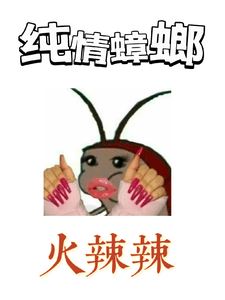
... Read More
'Dear little cockroach, can I dance with you?' I am not okay. I repeat, I am NOT okay. The fact that this man, a CEO-type figure who threatens people into submission, speaks to a cockroach with this tender, low magnetic voice is the most unhinged romantic gesture I have ever encountered and I love it. Like—think about the contrast. He's slapping everyone's face at the banquet by choosing to dance with an insect instead of Wang Zhiyan, but the real emotional weight is in how he treats Zhang Zhang. When she gets drugged and starts twitching, his entire demeanor shifts from cold dominance to pure panic. 'Little cockroach, you must not let anything happen to you!' Okay. Okay. I'm sitting here with my hands over my mouth. The author really understood that the most powerful love declarations aren't always between two humans. There's something so pure about this—it's not about status or beauty or social climbing, it's just 'you are mine and I will burn the world before I let you come to harm.' And Fu Yiting meant it. He didn't hesitate for a second. Left the banquet, called his assistant, rushed home, threatened a veterinarian into a five-minute turnaround. That's not just devotion, that's obsession wrapped in sincerity. Meanwhile Wang Zhiyan is over there planning romantic manipulation with drugged cakes and Fu Yiting is over here genuinely caring about an insect's wellbeing. The emotional hierarchy in this story is WILD.
... Read More
Let's talk about the dialogue here because Zhang Zhang silently communicating with Fu Yirou through facial slaps is the funniest thing I've read this year. "Do you want to eat?" Pah! "You want to find Fu Yiting?" Pah! "Are you sick?" Pah pah pah! This back-and-forth is pure gold. Each wrong guess gets more slaps and Fu Yirou's internal screaming is so vivid you can hear it. And Fu Yiting's lines are perfectly clipped and cold—"You're lying." Three words that shut everything down. No explanation, no softening. Just brutal accuracy. Meanwhile Fu Yirou's shift from sheepish excuses to full-blown confrontation feels so real. She goes from "I saw it was going to rain" to "I did it, so what!" and you can feel her losing patience with the performance. The narrative voice itself is also worth praising—it slips between perspectives seamlessly, sometimes into Zhang Zhang's cockroach brain, sometimes into Fu Yirou's panic, and the shifts are so natural you don't even notice them happening. There's a section where it says "My head is itchy" and then immediately pivots to Zhang Zhang's POV, and it works because the confusion mirrors what the character is experiencing. This author knows how to let the narration breathe with the characters.
... Read More
"It turns out that Fu Yiting kept me here just to make me his substitute… Then I have to leave!" This line. THIS LINE made me actually gasp out loud. Because here's this poor little cockroach who thought she was being adopted into luxury, who was enjoying the windowsill views and missing her sewer brothers, and then the guy she kind of admired just casually shatters her entire self-worth in one sentence. "You are just a substitute cockroach." And the narration says Zhang Zhang "seemed to hear the sound of her heart breaking." A COCKROACH. Having a broken heart. Over a HUMAN WHO LOCKED HER IN A BOX. The emotional whiplash from "I'm living in a handsome guy's house hehe" to existential devastation in THREE DAYS is unmatched. But here's what gets me — the story NEVER lets us forget that Zhang Zhang is also a character with genuine feelings. She misses her brothers. She regrets being impulsive. She has core socialist values apparently. She's not just a plot device, she's a FULLY FLEDA SENTIENT BEING trapped in someone else's vanity project. The romance angle here is... complicated. Is it love? Is it possession? Is it loneliness masquerading as control? I can't decide if this is the most toxic relationship in fiction or the most realistically portrayal of codependency.
... Read More
The dialogue in this book is doing some very interesting things, especially when you consider that one of the main 'characters' literally cannot be understood by any human. Fu Yiting's voice is immediately distinguishable — cold, controlled, every word deliberate. Even in anger he doesn't raise his volume. When he threatens Fu Yirou about the porridge, he says it 'slowly and deliberately.' When he speaks to Zhang Zhang ('This will be your home from now on'), it's domineering but almost tender underneath. His dialogue has weight. Every sentence feels like he's measured it before letting it out. Fu Yirou's dialogue is all exclamation marks and frustration. 'You don't understand anything at all!' and 'Ahhhhhhh!!!' — she's loud, reactive, emotional. The contrast with her brother is sharp and effective. You could swap their dialogue and neither would work because their voices ARE their personalities. But the most interesting choice is how the author handles Zhang Zhang. She's supposed to be speaking — 'Hi~little beauty~' — but NO ONE understands her. The text explicitly tells us this. So we're reading dialogue that exists in a vacuum, and we have to trust that the NARRATOR is translating her intentions rather than her words. When she 'mimics the gangster she saw today' and 'makes a heart shape with its antennae,' these aren't spoken lines — they're actions the author is describing as communication. It's a bold choice that makes the reader a participant in understanding her. The narration itself has a voice too — dry, slightly sarcastic, willing to comment directly ('Which boss doesn't have a white moonlight in his heart?'). It's not omniscient in the traditional sense; it's more like a friends-reading-aloud-to-you voice. Sometimes it breaks the fourth wall, sometimes it winks at the reader. I'm not sure every narrative choice lands, but the overall voice is confident and fun.
... Read More
What is this story REALLY about? On the surface it's a romance between a girl and a cockroach—which already tells you it's not taking itself literally. But dig deeper and the symbolism is rich enough to fill a thesis. The cockroach itself is the central symbol. In most narratives, cockroaches represent filth, infestation, something to be exterminated. Fu Yiting literally killed the cockroach clan to possess Zhang Zhang. But Asi—the cockroach who loves her gently, who brings her cakes, who dances with her under the stars—reclaims the symbol entirely. The cockroach becomes a vessel for tenderness, devotion, selflessness. When Fu Yiting wishes to become one, he's not degrading himself—he's embracing the very thing he once destroyed. That's redemption through identification. Then there's the white moonlight and cinnabar imagery the text explicitly flags. White moonlight = unattainable idealized love. Cinnabar = passionate, dangerous, vivid love. Fu Yiting lost both. His regret isn't just about losing Zhang Zhang—it's about failing to be worthy of either kind of love because his possession destroyed both. Memory loss as theme is fascinating too. Zhang Zhang forgetting her past allows a clean slate, a chance to love without the baggage of trauma and control. But Fu Yiting remembers EVERYTHING and that memory is his punishment and his path to transformation. The meteor—typically a symbol of fate or cosmic intervention—becomes the mechanism that answers prayer. Is love powerful enough to rewrite reality? The story seems to say yes, but at what cost? I keep coming back to that final question: did Fu Yiting become a cockroach as an act of love, or as the ultimate act of possession? The ambiguity IS the point.
... Read More
The way this chapter transforms each location into something unhinged is honestly cinematic. Let me paint you the scenes because they hit different: The bathroom — butler scratching his backside, realizes something's wrong, looks down, and suddenly a WHOLE SWARM is coming at him. He flees without his pants. This is not a drill. The kitchen — servant cutting cabbage, knife hits something, reveals a cockroach split in half with goo everywhere. She throws everything away, picks up a new cabbage, and there's another one on the board with its legs crossed like it's waving. Hi, indeed. Fu Yirou's bathroom — rose petals floating, she thinks they're low quality, reaches out, and they're wings. Seven or eight cockroaches emerge from the bathwater. The horror of stepping into your bath and finding enemies instead of relaxation. And Fu Yiting's study — he's reading this book called Battle Royale: The Boss of Society's Misfits Just Blew Up! (which I am absolutely digesting right now) and a giant cockroach drops between the pages. He slams the book shut. One cockroach sealed. But the rest are already winning. The villa goes from elegant home to full containment breach. Every room has its own flavor of nightmare.
... Read More
I need to talk about the atmosphere in these chapters because wow, this house is creepy and I love it. The villa is located in deep mountains and old forests, which immediately sets this isolated, gothic tone. Fu Yiting's room is this sealed-off space where the window never needs opening, crystal containers sit under thick books like hidden treasures, and when he sweeps everything off his desk in a rage, the clattering noise echoes in a way that makes me feel like the house itself is watching. And then there's the contrast with Fu Yirou's bedroom—dozen insecticides lined up, waiting. The butler patrolling like a guardian of secrets. Everything about this estate screams repressed, controlled, haunted. Even Zhang Zhang's perspective adds this bizarre surreal layer—she's tiny, crawling through hair like waterfalls, seeing the world from impossible angles. When she learned that puppet-move from a mouse in a five-star restaurant kitchen, it's such a weird, specific detail that makes the world feel lived-in and strange. This isn't a normal family home. It's a gilded cage with secrets buried in every room, and the mansion itself seems to be holding its breath, waiting for the next thing to break.
... Read More
I have to talk about this one line because it perfectly captures Fu Yiting's voice and honestly the author's narrative style too: '三分讥笑,三分薄凉,四分漫不经心'—three parts sneer, three parts coldness, four parts indifference. This is the kind of detail that makes the dialogue section so memorable. Fu Yiting literally describes his own tone like that. And it's accurate! Every line he speaks in this chapter has that exact quality. 'You better behave and adapt to your Fu family cockroach role'—said with total nonchalance. 'I won't hold today's events against you. But there won't be a next time.' Casual threat. The cockroach dialogue is also surprisingly distinct—'Boss! I missed you so much!' versus 'Man, I'm going to fight you!' versus 'I'll kill you!'—each group has a slightly different energy even though they're all cockroaches. And Fu Yirou's lines are sharp and dismissive: 'Don't meddle in things that you shouldn't be involved in.' She sounds exactly like a rich young lady who's used to getting her way. The author gives every character a recognizable voice and the dialogue never feels generic. Even the narration has personality—it's not dry. There's humor woven in naturally, like when Fu Yirou thinks 'If twenty thousand can get rid of this cockroach, it's worth it!' That's pure comic relief inside a tense scene.
... Read More
Every time I think I know what's at stake in this story, the book proves me dangerously wrong. On the surface, this is a business cooperation between the Fu and Wang families. A banquet. Handshakes. Wine. But the subtext is where the real tension lives, and it's suffocating. Mr. Wang explicitly told Fu Yiting he needed to bring a female companion. Why? And then immediately after, his daughter appears like she was summoned by magic. This wasn't a coincidence — it was a SETUP. The entire banquet was designed around this moment, and Fu Yiting walked into it thinking he was just doing business. But here's what keeps me up at night: what does Mr. Wang actually want? The text says his cooperation was "very successful" and went "very smoothly." Too smooth? When deals go that effortlessly, there's usually a price attached that nobody mentions until it's too late. And Fu Yiting — he's not naive. He knew something was off enough to bring Zhang Zhang as his companion, to let her shine in those diamonds and show the world what he's protecting. This is him drawing a line in the sand before the real battle even starts. He's saying: I come with something unexpected, and you don't know what I'm capable of. The stakes just climbed from "business deal" to something far more personal. If Mr. Wang has designs on Fu Yiting's independence — or worse, on Zhang Zhang herself — then that elegant banquet is about to become a trap. And I am absolutely not ready for what happens when it springs.
... Read More
Okay so let me just process this for a second. The plot structure here is actually kind of brilliant because it gives us TWO endings instead of one, and they contrast each other in such a deliberate way. The first thread—Zhang Zhang's amnesia, meeting Asi, falling in love, the whole 'ordinary cockroach that loves you' bit—is basically a fairy tale. It's sweet, it's almost too perfect. Then it immediately pivots to Fu Yiting's section, and WHAM. Everything you thought you knew about this story just got flipped on its head. The real plot twist isn't even a twist—it's a mirror. Fu Yiting wanted to possess Zhang Zhang, imprisoned her, killed her kind just to keep her close. And now? Now he becomes the very thing he feared. He literally becomes a cockroach because a meteor granted his wish. The circularity of that is chef's kiss. Also, the fact that when he wakes up, Zhang Zhang says 'I saved you'—is this redemption? Or is this just another form of captivity? The text leaves it ambiguous and honestly I respect that. It doesn't hand us a neat bow. The main storyline builds tension through regret rather than action. There's no big battle, no climax—just a man kneeling in a temple until midnight. And somehow that's MORE tense than any fight scene could be. The subplots (Asi's backstory, the cockroach clan massacre) all converge at that meteor moment. Tight writing.

Leave a comment

You must be logged in to leave comments. or
