The Husband I Worked So Hard to Save Is the Mastermind
Novel Info
  • Author:
  • Status:Ongoing

Summary

... Read More

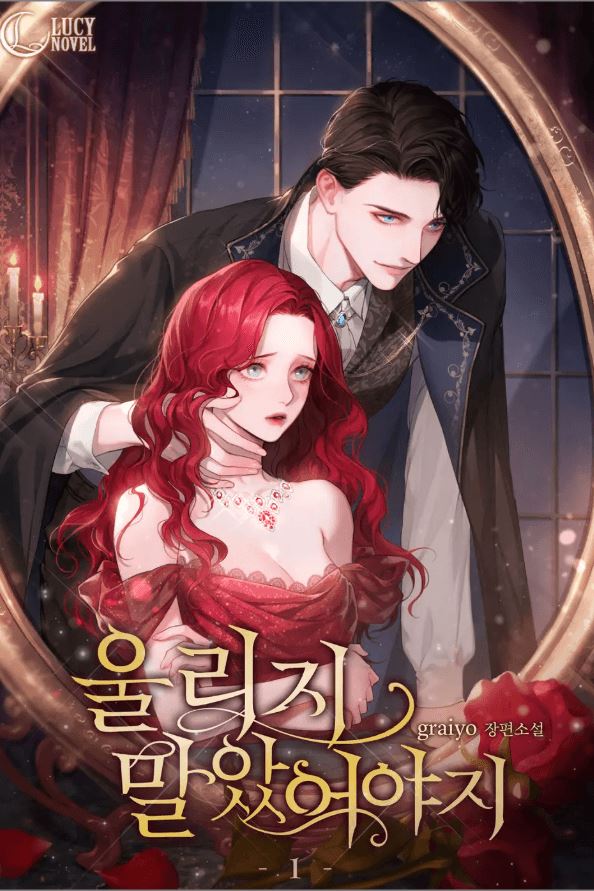
Yoonchae is a young woman whose father was a con artist and gambler dedicated to exposing corrupt wealthy individuals. After their mother died, she grew up hiding her identity while working multiple jobs to save money for her education. During a sudden attack by thugs seeking revenge against her father, she flees but is struck by a vehicle. Instead of dying, she awakens in the world of a dark romance novel titled "Emilia Loves a Bad Man." She finds herself in the body of Lea Azanie, the grand duchess who is historically infamous for murdering her husband, Grand Duke Hedegen, with poisoned tea and subsequently being executed on the guillotine. The original story depicts the Grand Duke as a brutal war hero and the Azanie family as abusive tyrants who subjected Lea to years of physical and psychological torture.

Upon waking, Yoonchae learns that seven doctors have diagnosed her with amnesia due to the head injury she sustained during the assassination attempt. Grand Duke Hedegen, a cold and ruthless man who despises his wife, initially believes she is faking her condition to avoid punishment for the crime. Despite his suspicion, he refuses to hand her over to the Imperial Police Investigation Bureau, claiming the right to interrogate and punish her himself. This decision places Yoonchae in a precarious position where she must survive under the constant threat of execution or torture while trying to prove her innocence. The Azanie family, particularly her mother Countess Azanie and sister Lily, visit the castle under the guise of concern but secretly abuse Yoonchae, threatening to kill her if she reveals their crimes. They attempt to take her away to eliminate her, but the Grand Duke intercepts them, further isolating Yoonchae within the castle walls.

As Yoonchae navigates her new reality, she discovers a mysterious status window that appears in a newspaper, offering her a chance to uncover the secret of her birth in exchange for resources she currently lacks. The system instructs her to survive first. Realizing that the Grand Duke intends to divorce her once he determines she is not an accomplice, Yoonchae devises a plan to secure a divorce settlement. She aims to rebuild her reputation as a charitable and devoted grand duchess, hoping to gain public sympathy and legal grounds to claim compensation similar to another noblewoman in the empire. To achieve this, she must endure the hostility of the castle staff and the relentless scrutiny of her husband while concealing her true nature as a modern woman from a different world.

The tension between Yoonchae and Grand Duke Hedegen escalates during their interactions. He subjects her to psychological games, testing her loyalty and sanity, while she struggles to maintain her composure and act the part of a confused, submissive wife. Despite his cruel demeanor, there are moments where he displays unexpected concern, such as when he notices bruises on her leg and investigates their origin. However, he dismisses her claims of abuse, suggesting she may have inflicted the injuries upon herself. Their relationship remains fraught with suspicion and power imbalances, yet Yoonchae uses these dynamics to her advantage, occasionally leveraging his protective instincts to shield herself from external threats. As she integrates into the grand ducal household, she begins to uncover deeper secrets about the novel's plot and her own identity, setting the stage for a complex struggle for survival and autonomy in a hostile aristocratic society.

Latest Release
DateGroupRelease
2026-10-03dusk blossoms c108
2026-10-03dusk blossoms c107
2026-10-03dusk blossoms c106
2026-10-03dusk blossoms c105
2026-10-03dusk blossoms c104
2026-10-03dusk blossoms c103
2026-10-03dusk blossoms c102
2026-10-03dusk blossoms c101
2026-10-03dusk blossoms c100
2026-10-03dusk blossoms c99
2026-10-03dusk blossoms c98
2026-10-03dusk blossoms c97

Community Reviews

Rating(0 / 5.0, 30votes)
5 stars
0(0%)
4 stars
0(0%)
3 stars
0(0%)
2 stars
0(0%)
1 stars
0(0%)

Popular reviews

... Read More
Can we just take a moment for the Grand Duke's dialogue? The man speaks maybe ten words total in this entire chapter and I have NEVER laughed and cried more. "You seem to like reading. There are many books placed here and there. Is it okay if I read one too?" "It doesn't look like you're asking for permission." "You're already reading it." I REPEATED THIS BACK AND FORTH LIKE FIVE TIMES. This man is a SARCASTIC GENIUS. He says he's already reading it while literally holding the book in front of his face upside down or something, and Lea is over here PANICKING because she's tapping the cover instead of turning pages. The way the author writes their exchange feels so natural—like two people who are constantly one step ahead of each other. Every line has that double-layered meaning where they're talking about books but really talking about trust, control, power. And then Lea's voice? Oh my god. Her dialogue is pure chaos energy: "Stop telling me to get out and show me! Am I fire? Why do you keep telling me to get out!" THIS IS THE FUNNIEST LINE IN THE BOOK. She's standing there, mid-criminal-stalking, about to discover his dark secret, and she's just... annoyed at his repetitive vocabulary? The contrast between the situation and her reaction is COMEDY GOLD. The narrative voice in general is so distinctive—I can hear Lea's internal monologue from a mile away. She's dramatic, impulsive, self-deprecating, and wildly optimistic all at once. When she's following the Grand Duke through the corridor, her thoughts go from "I hope it's a woman! Then I won't have to find one for him" to "Should I pretend to accept his mistress while showing more devotion to him" in the span of two paragraphs. That's not narration, that's a full-on mental breakdown with jokes interspersed.
... Read More
I've been thinking about the imagery in this chapter and there are SO many layers I want to unpack. Light is everywhere. The glowing book. The antique lamp. The bluish dawn light through muslin curtains. The flickering fireplace. But here's the thing—the light NEVER casts shadows. Lea explicitly notices this: "despite the bright light, no light or shadow was cast on the vase." That's not an accidental detail. The magic in this world doesn't follow normal physics, and that unsettled feeling—that something is OFF about reality here—is exactly what the author wants us to feel. Then there's the darkness of the corridors. Lea describes it as "frightening as an endless cave" and the Grand Duke moves through it like a "terrifying grim reaper carrying death," disappearing into shadow and reappearing under faint lamps. This is visual poetry. He is literally a man of contradictions—bright and dark, alive and death-adjacent, powerful and wounded. And the blood. Oh, the blood. A crimson cloth thrown into flames, devoured by fire. The Grand Duke discards evidence of his injury like it's nothing, but we KNOW it matters. Blood = vulnerability. And this man who projects absolute control cannot afford to be seen as vulnerable. Yet Lea sees it anyway. She SEES him when no one else does. The book itself is another symbol that won't let me go. "Immutable Strategies—Historical Edition"—a book about strategies that never change, placed in a world where everything IS changing. And then there's the MAGICAL book that gives Lea a message she can't ignore. Two books. Two kinds of knowledge. One tells you how the world used to work; the other tells you how to survive it right now. I keep coming back to that image of the blood-stained cloth burning in the fireplace. What else is being destroyed here? What secrets are being consumed by flame?
... Read More
Okay so let me just say this negotiation scene is absolutely brilliant plotting and I genuinely gasped at how layered it is. On the surface, it looks like a simple deal: she gives him information about a potential accomplice, he gives her protection. But reading between the lines—and I mean REALLY reading, because this author does NOT hand you anything outright—the protagonist is actually playing a double game that made my heart race. She's feeding Carlo bits of information to make herself seem useful enough to keep alive, while simultaneously scheming to get divorce settlement money so she can flee the entire mess. The moment she says "I'll accept my punishment willingly. But until then, you need to protect me. As my husband." — CHILLS. Absolute chills. She's buying herself time with words that sound like devotion but are actually calculated survival tactics. And Carlo? He sees right through it. You can tell he knows she's playing him, but he's allowing it anyway because this is ALSO useful to him. The mutual manipulation here is what makes this chapter so addictive. I stayed up way too late reading because I needed to know who was actually outsmarting whom. Every time I thought she was gaining ground, he'd twist it around. And that ending? "Just wait. I will definitely establish my position and leave this place with..." THE CLIFFHANGER. I literally shouted at my phone.
... Read More
THE STAKES ARE RISING AND I CANNOT BREATHE. Let's talk about what's actually at risk here, because this scene is doing MORE work than you might think on first read. On the surface, it's a romantic moment—she finds him injured, she wants to help, he pushes her away. Classic enemies-to-lovers beat. But underneath that, there are REAL dangers lurking. First: Who is hurting the Grand Duke? Someone is attacking him at dawn, and he's serious enough about keeping it secret that he's burning evidence. If Lea gets too close to this discovery, she becomes a target too. The anonymous helper told her NOT to sleep—was that genuine advice, or is the helper manipulating her into dangerous territory? Second: Lea's position in this castle is already precarious. She's disliked, unwelcome, possibly imprisoned in all but name. Following a man around at 4 AM looking suspicious? If anyone catches her, she could be locked away for good. She literally thinks about this: "they might lock me not in a hospital room but in a dungeon." Third, and this is the emotional stakes: Lea CARES. That's the whole conflict. She WANTS to help him. She's literally asking "where are you hurt?" while he's YELLING at her to leave. Her compassion is her weakness here—it makes her reckless. And his refusal to let her near his pain is his fortress. But fortresses crack, and this one is already cracking. The cliffhanger isn't just "what happens next"—it's "what happens when the person who's supposed to be your enemy is the only one who sees you bleeding?" That's the real tension, and it's making me lose my mind.
... Read More
I need to talk about that bathtub scene because it's doing so much symbolic work that the author probably doesn't even realize how good it is. Lea steps into cold water—literally and metaphorically. No steam, no warmth, just shock. This is a woman who has inherited someone else's body, someone else's reputation, someone else's enemies, and the cold water is the physical manifestation of that total alienation. She's in a grand duchess's body but she doesn't belong in any of it. And the bruises! "My shins, sides—no part of me was unscathed. Remarkably, they were all in places that would be covered by a dress." This isn't just backstory about Countess Azanie's abuse—it's a symbol of how the original Lea was systematically erased. Hidden violence, hidden victimhood, hidden from view just like the bruises under clothing. The mother beat her where no one would see, and now the transmigrated Lea has to wear those marks invisibly while playing a role she didn't choose. Then there's the newspaper—glowing, pulsing, offering a "transaction." This is the story's central metaphor in object form: information has a price, survival requires trade, and the original Lea's life was the currency. The "secret of birth" the system dangles is thematically loaded too. Who is Lea, really? Is she the woman who tried to assassinate the Grand Duke? The daughter who was abused by her own mother? Or someone entirely different waiting to be discovered? The story refuses to let us settle on any single answer. The pink hair is another symbol I can't stop thinking about—"I touched my rose-tinted pink hair"—a striking visual that marks her as unnatural, other, someone who doesn't quite fit this world. Beauty that reads as wrong.
... Read More
The opening wound-treatment scene is genuinely cinematic. I keep coming back to this image: morning sunlight streaming through an open window, catching the Grand Duke's muscles, and her staring like she's looking at "a giant statue created by a master artist in a museum." The contrast between that almost reverent description and the clinical reality of her disinfecting his wound is so well done. The silver tray, the tweezers, the powdered medicine—it all feels tangible. Then there's the office scene where she finds him backlit against wide windows, "looking like a shadow in the distance." That visual alone tells you everything about their dynamic: he's powerful, untouchable, looming. But the atmosphere shifts completely when Norbert offers her tea. Suddenly there's warmth—plush sofa, warm tea in a pretty cup, a butler who actually smiles at her. It's a tiny moment but it makes the castle feel lived-in rather than just a backdrop for tension. The servants treating her like a ghost versus Norbert's quiet kindness creates this sense that the castle has its own social ecosystem that she's desperately trying to navigate. And that ending with Norbert and Carlo's conversation about how she's changed? It adds this layer of mystery about the world itself—like the castle is watching her transform and the other inhabitants are noticing too.
See all reviews

Custom lists

See all custom Lists