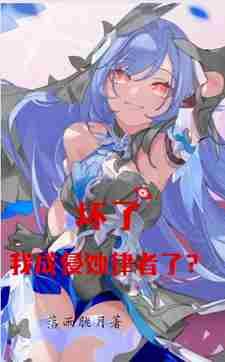
The Hunter Who Inherits Disaster
+Add to Custom List
Novel Info

Summary

... Read More

Jin So-yu is an E-rank Hunter living in the lawless zone of Yulwon, a decimated city where monsters roam freely after the collapse of government infrastructure fifty years prior. Alongside his younger sister Park Hyo-jin, he cares for fifteen orphaned children in a crumbling building that has become a target for beast attacks. With their funds dwindling and the safe zones beyond their financial reach, So-yu decides to undertake a dangerous mercenary mission through a brokerage office to raise the money needed to evacuate the children. He joins a party led by a D-rank broker to clear a D-rank Ruins Dungeon, unaware that the expedition is a trap set by a C-rank Hunter named Nam Oh-sung.

Inside the dungeon, the true nature of the mission is revealed. The dungeon is actually B-rank, and Nam Oh-sung sacrifices the other Hunters, including the entire party, to open a sealed door using human blood as a key. Left for dead among dozens of Pitch-Black Rats, So-yu reaches the brink of death. At that critical moment, he hears a mysterious voice and receives a system notification. The unstable System connecting to him changes, replacing itself with a new entity called 'Ophelia.' He awakens the class 'Successor,' gaining access to Qi, a power derived from life force rather than mana. This new ability grants him accelerated growth and the skill 'Acceleration,' allowing him to survive the rat swarm and confront Nam Oh-sung.

So-yu manages to defeat the treacherous Nam Oh-sung, killing him with the help of the same rats the murderer intended for him. However, upon returning home, he discovers that the Gwangjo Guild, Nam Oh-sung's employer, refuses to pay the remaining twenty million won contract fee, leaving him and his siblings still trapped in the lawless zone. Despite this setback, So-yu begins to train rigorously, utilizing his Qi to heal rapidly and enhance his combat prowess. He detects a significant shift in the local beast population, with wolves gathering in unusual numbers under the command of a silver wolf leader.

During his night watch, So-yu faces a large pack of Half-Moon Wolves, including the silver alpha. Utilizing his new powers, he slaughters dozens of beasts, demonstrating a combat efficiency far beyond his E-rank status. The silver wolf retreats, recognizing So-yu as a threat, but the encounter confirms that the beasts are becoming more organized and coordinated. After the fight, So-yu slips away at dawn to scout the residential area where the wolves have made their den. He discovers a massive gate has formed in the heart of the neighborhood, guarded by the silver wolf.

This revelation indicates that the lawless zone is undergoing a dramatic transformation, with beast populations surging and new gates appearing. So-yu realizes that staying in the orphanage is no longer a viable option, as the growing threat endangers the fifteen children he protects. The story concludes with So-yu acknowledging that his previous goal of simply earning enough money to move to a safe zone is insufficient given the escalating danger. He must now grow stronger and find a way to secure a future for his siblings in a world that is becoming increasingly hostile and unstable.

Latest Release
DateGroupRelease
2026-10-01jadescrolls c6
2026-10-01jadescrolls c5
2026-10-01jadescrolls c4
2026-10-01jadescrolls c3
2026-10-01jadescrolls c2
2026-10-01jadescrolls c1

Community Reviews

Rating(0 / 5.0, 9votes)
5 stars
0(0%)
4 stars
0(0%)
3 stars
0(0%)
2 stars
0(0%)
1 stars
0(0%)

Popular reviews

... Read More
I need to talk about the movie scene. Specifically, the scene within the scene, because I think the author dropped a grenade and most readers might not even notice it went off. Jin-cheol and Ye-ji are watching Hunter of the Beginning—a movie about heroes who sacrificed themselves to protect humanity. The dialogue on screen is painfully earnest: "To protect people from beasts. That is what a Hunter is." And So-yu watches it, feels the cringe, and walks away. Why? Because the movie is a lie. Or rather, it's a simplified version of a truth that this world has already corrupted. The world of this story isn't the world of that movie. In the movie, Hunters are celebrated. In So-yu's world, half the district has been abandoned by its guild because it wasn't profitable. The concept of "protecting people" has been replaced by "protecting investments." The wolf howls outside the orphanage window while the heroic movie plays onscreen—that contrast isn't accidental. It's the author laying bare the gap between the myth and the reality. So-yu walks out of that room not because he finds the movie boring, but because he can't unsee what the movie is hiding. And then there's the red Qi wrapping around his body as he trains alone in the yard. "Red haze shimmered." Red—blood, yes, but also vitality, life force. The System describes Qi as power drawn from "the life force of the body." This isn't magic from the sky. This is *him*. His own body, his own suffering, his own will converted into power. The opposite of the movie's narrative, where heroes receive power from external sources and noble causes. The apples on the shelf, the family photo, the kids playing jacks—all these mundane, domestic images sit in direct opposition to the violence So-yu just survived. The author keeps returning to this contrast. Home versus danger. Warmth versus the cold wind. The movie poster versus the wolf outside. I think the deeper question the story is asking is: what does it mean to be a hero when heroism has no institutional support, no recognition, and no guarantee of survival? So-yu's answer is silent. He just keeps training.
... Read More
Okay, let's talk about the pacing in this section because I need someone to validate what I just experienced. The chapter opens with a survival scenario so desperate I was literally holding my breath—Jin So-yu on the verge of death, E-rank Pitch-Black Rats closing in, and then *bam*, the System activates. Fast-forward ten seconds and he's swinging a sword through creatures that were minutes ago tearing him apart. The shift from prey to predator is not gradual—it's a hard cut, like the genre of the entire story changes in a single frame. "Blood sprayed, bodies rolled. I kept swinging. No matter how many, the E-rank Pitch-Black Rats couldn't stand against me now." This sentence hit me because it's so matter-of-fact. There's no inner monologue about morality, no hesitation—just the cold observation that he won. The author trusts the reader to sit with that discomfort. Then the structure pivots to Nam Oh-sung, and here's where I started leaning forward. Two powered individuals in one room, neither backing down, the dialogue crackling like live wire. "How dare you get the real reward?" becomes this escalating duel of wills. The Lightning Lance volley is described in a way that makes you feel the ground shaking under your feet, and then So-yu's Acceleration skill kicks in and suddenly you're seeing a blur. What I found most impressive about the plot architecture here is the escalation ladder: despair → power-up → doubt → resolve → confrontation → victory → quiet aftermath. It's almost textbook, but executed with such rhythm that it never feels formulaic. The chapter ends not on the fight but on So-yu checking his status window—a deliberate narrative breath after chaos. And then immediately following that, we cut to his siblings dragging him out of bed. The tonal whiplash is intentional, and it works. Who doesn't want to read more after that?
... Read More
I need to talk about Hyo-jin first, because she's doing some heavy emotional lifting here. The scene where So-yu unravels his bandages to show her they've healed? That's such a small moment, but it says everything about their relationship. She worries, he brushes it off, she rolls her eyes—that's a real sibling dynamic, not some manufactured drama. But the quiet parts hit hardest. When Hyo-jin asks, "Oppa, we'll be okay, right?" and her voice is trembling? I felt that. She's trying to stay strong for the kids, but she's watching their home crumble around them. And So-yu? He lies to her. He says everything's fine when he knows it's not. That guilt he carries—pretending while both of them are at their limit—is agonizing to watch. The departure scene wrecked me slightly. She doesn't stop him. She just watches him go, sharpening her dagger. That single detail says she's choosing to survive too, just in her own way. It's not passive acceptance—it's solidarity. And then the dungeon, where So-yu's desperate thoughts aren't about himself but about his promise to return. If he fails, he's not just dying—he's breaking a vow to fifteen kids who depend on him. That reframes every fight scene. He's not fighting for glory or money. He's fighting because someone needs him to come home. That's why the System's arrival hits differently too. It's not just power-up fantasy. It's the universe finally responding to someone who begged hard enough. I cried a little at that. Maybe weirdly.
... Read More
The external conflict is clear—beasts, lawless zones, the struggle to survive. But the real stakes here are personal. So-yu isn't fighting for humanity's future. He's fighting so fifteen kids don't starve or get eaten. That's a narrower, sharper kind of desperation that hits harder. Inside the dungeon, the stakes escalate quickly. Nam Oh-sung isn't just a betrayer—he's someone who's done this before. Hundreds of corpses. A pattern. The door demands human sacrifice, and he's happy to comply. The conflict isn't man versus beast; it's man versus man, where the other guy has been doing this for a long time. So-yu's internal conflict matters too. He's an incomplete Awakening—no class, no skills, no mana. He can't grow stronger no matter how much he struggles. That's a profound existential stake. If the System doesn't come, he dies powerless. The System arriving isn't just a plot convenience; it's the difference between accepting fate and seizing agency. The final image—Qi bursting outward, driving the rats back—represents the shift from victim to fighter. He was going to die protecting his siblings' memory. Now he might actually survive to keep his promise. That's stakes evolution in three chapters.
... Read More
Okay so this opening just absolutely grabbed me. The plot kicks off with such a strong emotional anchor—we're immediately introduced to Jin So-yu and his fifteen orphan siblings, and I'm already emotionally invested. The way the author sets up the stakes is brilliant. These kids are trapped in a lawless zone after the safe zone collapsed. Fifty million won can't evacuate them. That's a ticking clock right there, and it makes every decision So-yu makes feel weighted with consequence. Then we get the dungeon entry, and I thought it was going to be straightforward mercenary work—until Nam Oh-sung flips the script. The betrayal is nasty, but honestly, it's the kind of twist that makes you want to read the next chapter immediately. Who is this guy? Why does he need human sacrifices? What's behind that bloody door? The narrative arc from Chapter 1 through 3 is tight. We go from domestic tenderness to dungeon tension to outright horror to supernatural reward. That's a hell of a rollercoaster for three chapters. The author plants little breadcrumbs early—the weird voice at the gate, the System connection problem—and then pays them off when Ophelia appears. It feels earned rather than random, which matters because I've read novels where the system drop feels unearned and cheap. I'm genuinely curious about the subplot threads: the mysterious voice, the spellbook Nam Oh-sung uses, the hundreds of corpses beyond that door. Each one opens a new question without overwhelming the main storyline. That's good structural discipline.
... Read More
Let me ask you something: what happens when the institutions that exist to protect people decide you're not worth protecting? That's the question hanging over every page of this section. Not literally—I mean that's the emotional truth the author is building toward. Look at the rat fight. Jin So-yu is surrounded, outmatched, and the only thing that saves him is aSystem intervention at the moment of death. Not a hero. Not a guild. Just... luck. A joke, as he himself puts it: "It was the kind of joke even third-rate stories wouldn't bother with." Then Nam Oh-sung shows up and the stakes get personal. This guy killed nine Hunters and casually dismisses them as "trash." His logic is sociopathic but consistent: in this world, weak people die and strong people take what they want. He's not a cartoon villain—he's a logical product of the system. When he offers So-yu a deal, when he tries to negotiate, when he screams and pleads—each shift reveals a man who has never had to answer to anyone. The confrontation itself is where the tension peaks. Lightning Lances filling the air, So-yu moving faster than ever before, the knife thrown, the fist connecting with bone. Every beat raises the question: can he actually win? And the answer isn't just about strength—it's about will. So-yu chooses to fight when running would be smarter. "The moment I did, he would turn on Hyo-jin and the children." That's not a tactical decision. That's a moral one. And it's what separates him from everyone else in this world. But then—and this is the part that keeps me up at night—after the fight, after the victory, So-yu checks his phone and discovers the twenty million won he needs still isn't coming. Gwangjo Guild controls half of Yulwon. They can simply refuse to pay, and there's nothing he can do. The physical threat is gone. The systemic threat remains. That's a conflict no amount of Qi can solve. I was genuinely sweating through the rat fight, but the real dread settled in during that quiet phone-checking moment. Because that's not a cliffhanger you can punch your way out of. That's the world itself saying: you survived today, but tomorrow is a different problem.
See all reviews

Custom lists

See all custom Lists