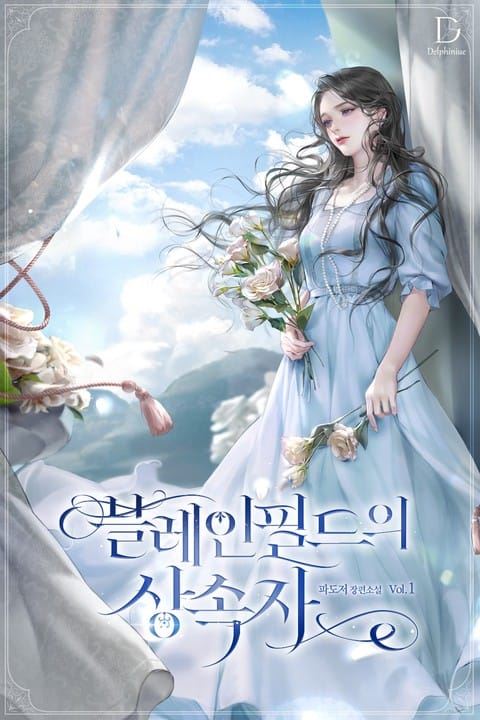
The Heir of Blainefield
Novel Info
  • Author:
  • Status:Ongoing

Summary

... Read More
Alexa Winterbourne serves as the manager of the Everhart Department Store, a position entrusted to her by her adoptive father, Harrison Winterbourne. Her professional life is stable until Duke Raymond Belsmire, the man she once lived with as a stepdaughter, unexpectedly visits the store as a customer. The reunion reveals unresolved tension from their past. Years earlier, Alexa’s mother, Isabella, married the widowed Duke and moved into the Belsmire estate with young Alexa. The household was cold and unwelcoming. Raymond, then the heir to the dukedom, treated Alexa with open hostility, viewing her presence as an intrusion on his heritage and status. Their interactions were marked by sharp words and emotional distance, culminating in a painful confrontation in the greenhouse that left Alexa feeling unworthy of belonging.The marriage between Isabella and the Duke did not last, ending in divorce that subjected Alexa to social scorn and rumors regarding her legitimacy. She left the nobility behind to rebuild her life under her mother’s surname, eventually finding purpose and leadership at the department store. Harrison, who loved Isabella deeply, raised Alexa as his own and provided a loving home free from the prejudices of the aristocracy. Despite this stability, Alexa faces pressure to marry, as Harrison believes a suitable husband will secure her future and protect the family’s interests. He offers her the department store on the condition that she marries well.Raymond, now the youngest and wealthiest duke in Rosnair, is similarly pressured by relatives to marry for alliance rather than affection. He maintains a facade of indifference toward society’s matchmaking efforts, yet he finds himself increasingly curious about Alexa’s transformation. Their encounters shift from formal and cold to subtly charged with unspoken history. Raymond observes Alexa’s competence and grace in her professional sphere, noting a resilience that contrasts with the insecure girl he once dismissed.As Alexa prepares to enter high society again under the guidance of her chaperone, Aunt Olga, she navigates a world that remains hostile due to her mother’s scandalized past. At the Silverbell Ball, Alexa attracts attention, including that of the Crown Princess, who recognizes Alexa’s rare sapphire necklace, "Tears of the Sea Fairy." This recognition grants Alexa a degree of social protection, though it also draws jealousy and scrutiny from other noblewomen. Meanwhile, Raymond attends the ball partly to fulfill social duties and partly because of political intrigue involving the visiting Crown Princess of Vasa.The core conflict revolves around Alexa’s struggle to balance her identity as a successful businesswoman with the expectations of aristocratic marriage. She must confront her past trauma while dealing with the renewed presence of the man who once rejected her. Raymond, in turn, grapples with his rigid noble upbringing and his growing fascination with Alexa’s independence. Their relationship is further complicated by external forces, including social gossip and familial obligations. As both characters navigate their respective worlds, their paths continue to intersect, suggesting a gradual dismantling of old resentments and the possibility of redefining their relationship from former step-siblings to equals. The narrative follows their cautious steps toward understanding one another, set against a backdrop of economic change and social hierarchy.

Latest Release
DateGroupRelease
2026-10-03dusk blossoms c120
2026-10-03dusk blossoms c119
2026-10-03dusk blossoms c118
2026-10-03dusk blossoms c117
2026-10-03dusk blossoms c116
2026-10-03dusk blossoms c115
2026-10-03dusk blossoms c114
2026-10-03dusk blossoms c113
2026-10-03dusk blossoms c112
2026-10-03dusk blossoms c111
2026-10-03dusk blossoms c110
2026-10-03dusk blossoms c109

Community Reviews

Rating(0 / 5.0, 35votes)
5 stars
0(0%)
4 stars
0(0%)
3 stars
0(0%)
2 stars
0(0%)
1 stars
0(0%)

Popular reviews

... Read More
This batch is DRENCHED in symbolism and I think the central metaphor is right there in that greenhouse: flowers. Alexa admires them. Raymond destroys them. The white lisianthus — chosen by the Duchess, carefully grown by gardeners — gets poured onto wet dirt and then Raymond's black shoes crush what's left. It's such a loaded image. These flowers represent everything Alexa is trying to claim: belonging, beauty, a place in this world. And Raymond systematically demonstrates why she'll never have it. But here's what's interesting — Raymond ALSO tends the greenhouse. He's not just destroying; he's the one who knows the flowers, who grew them, who understands them. The same hands that can nurture can also ruin. That duality is so much of who he is. Then there's the water. Alexa gets drenched, her dress soaked, her hands dirty. Water as punishment, yes, but also water as a strange kind of baptism — she's being washed clean of any illusion that she belongs at Blainefield. The diary she reads later confirms this: "Blainefield never accepted Alexa and Isabella. That thorough rejection left scars." The contrast between the sunny study at Winterbourne and the cold greenhouse at Blainefield is basically the thesis of the whole story written in imagery. Warmth versus cold. Acceptance versus rejection. The sunlit golden hour on Alexa's hair versus the crushed petals on a dark floor. And the Vasa oil — a new kind of wealth, underground, bubbling up. Could that parallel Alexa's own rising? She's from humble origins, and the world hasn't figured out her value yet. I'm here for where this is going.
... Read More
I just re-read all the dialogue in these chapters three times and I have a theory: every single conversation in this book is a performance, and the characters are all exhausted from keeping up their acts. Take Olga first. Her voice is INSTANT recognizably. 'Isn't that the kind of rough match only barbarians watch?' 'No noble with dignity would go to watch that.' She speaks in pronouncements. Full stops. No hesitation. Every sentence is a verdict. And the hilarious thing is that she genuinely believes she's being helpful. 'I'm only allowing it because it's Miss Mackenzie's invitation. Luke Harding wouldn't seat Harrison's daughter among greasy men.' She thinks she's protecting Alexa from danger. What she's actually doing is boxing her into a gilded cage. But Olga's dialogue never sounds villainous. It sounds like a mother who loves her niece so fiercely she's willing to reduce her to a marriage strategy. That's the author's genius—giving her the voice of someone who is both the antagonist AND the caretaker. Then Dominic's voice cuts through completely different. Snappy, defensive, laced with this dry humor that barely conceals his anxiety. 'You said you're not sticking with Aunt today, right?' 'So she left you in my care.' 'A member of the Winterbourne family waving Belique's flag? That disaster must be avoided.' He's teasing, he's worried, he's trying to sound casual about everything while his internal monologue is literally 'she's going to leave me and I don't know what to do.' The gap between his spoken words and his thoughts is where the comedy lives, but also where the tragedy hides. And Raymond! Oh, Raymond's voice is so controlled it's almost inhuman. 'I understand Miss Winterbourne doesn't often attend social events.' Calm. Measured. Deflecting criticism with plausible words while his eyes keep betraying him. Even his inner thoughts are filtered through decorum: 'The innocent optimism she'd shown at Blainefield—if that alone was present, Alexa could easily fall in love with anyone the meticulous Countess introduced.' He's analyzing her like a strategic problem, not a person he cares about. But the fact that he's analyzing her at all tells you everything. Every character sounds like they're speaking in code. And that's what makes the dialogue so devastating to read.
... Read More
Let me just say this: the pacing in this batch is absolutely ruthless and I love it. Chapter 27 opens with Alexa and Olga in this quiet, claustrophobic conversation where the power dynamic is established in three sentences. No fanfare, no drama—just a cold woman and a dutiful niece, and we understand instantly that Alexa's autonomy is an illusion. Then we cut to Raymond on the riverbank, and suddenly we're in a completely different tonal register—sunlight, water, athletic youth, nostalgia. It's a breath of fresh air after the oppressive interior scene, and it serves a purpose: it gives us a male perspective character who exists outside the Winterbourne web of manipulation. Then Chapter 1.9 drops us into the ball with this extraordinary descent-down-the-stairs moment that feels like a cinematic wide shot. Every detail—the gasps, Dominic's frozen expression, the sapphire dress spreading like a flower bud—is crafted to make us feel Alexa's exposure. And then the pacing starts to tighten like a noose. The whispers start. The Crown Princess arrives. Olga maneuvers. The necklace is recognized. By the end of Chapter 1.10 we're sitting on a powder keg and the author has just struck a match. What's brilliant is that none of this feels rushed despite covering a enormous amount of ground. The transitions between scenes are clean, the perspective shifts are purposeful, and the chapter endings hit like little hammer blows. I went from "oh this is a nice ball scene" to "someone is setting this girl up to fail and I need to know what happens next" in the span of three chapters.
... Read More
Okay so I need to talk about this greenhouse moment because honestly I am still fuming. Alexa is over here trying SO HARD to be nice, complimenting the flowers, genuinely interested in Raymond's hobby, and what does he do? He dumps a bucket of cold water on her. Like... what did you expect to happen there? She was literally just being kind and he responded by traumatizing her. But here's the thing that actually made me stop and think about it — Raymond says something that reframes everything: "Quietly, secretly. You want to make room for a new son to be born." That line hit me like a truck. It shows he has this entire paranoid worldview where every kind gesture is actually a calculated move. Alexa doesn't even believe him when she tries to defend herself, but the fact that it plants doubt? Oof. And then the way this connects to the bigger picture — we learn later that Raymond is already pushing back against the idea of remarriage. He's not just being mean for no reason. He's sitting in this house that isn't really his, with a stepmother who was discarded after three years, and now this girl from the bottom of society is walking around in his mother's flower room. Of COURSE he's hostile. But that doesn't make dumping water on someone acceptable. There's the line: "These flowers were carefully grown by the gardeners" and then Raymond crushing them with his shoe afterward? That's the author weaponizing symbolism right in front of us. Also the Charlotte Fraser subplot is weaving in nicely. She's got history with Raymond — they were almost engaged, her family cut him off, and now she's bringing him an invitation to a ball with a foreign princess. The political layer about Vasa oil drilling? This story is building out so many threads at once and I'm here for it.
... Read More
There are moments in this book where the author just paints with words and I am obsessed. "As time passed, the afternoon sunlight from the window cast a warm glow on Alexa's black hair. Pretending to read documents beside her, Dominic occasionally glanced at Alexa's profile, veiled in gold." I said that out loud. I actually said it out loud. This is the kind of prose that makes me want to reread passages slowly. The contrast between Blainefield House and the Winterbourne townhouse is also doing so much work. Blainefield feels cold, rejecting, threatening — the greenhouse scene is all white petals scattered on wet dirt, a metal bucket crashing, Alexa's dress soaked below the knees. No warmth there. But the Winterbourne home is sunny studies, tea, magazines, Dominic appearing behind her sofa like a big protective dog. The author doesn't need to say "Blainefield was oppressive" — they show it through Alexa's physical reactions: her shoulders stiffening, her trembling hands, the way she paled. And the Vasa elements are starting to paint an even larger world. The Silverbell Ball emblem — a small bell and two feathers entwined. A foreign princess arriving. Oil drilling in Vasa. This isn't just a stuffy British-adjacent romance setting anymore; the author is expanding the map and I love seeing the scope grow. The department store scene with Alexa working is also a really smart worldbuilding choice. It grounds her in the modern(ish) economy and gives her an identity separate from noble women. She checks her own advertisements. That's such a specific, lived-in detail.
... Read More
This passage contains one of the most devastating metaphors I've read in a while: 'A bird that has flown away leaves a feather where it once perched. To those who disliked the bird, the feather's presence is nothing but an uncomfortable provocation, proof of an unwelcome deviation.' Isabella is the bird. Alexa is the feather. And the nobles want to burn the feather because its existence proves that Isabella's choice—to leave a prestigious marriage for love, to remarry a common businessman—was real and lasting. Alexa's very presence in Rosnair society is an argument against everything these women believe about duty, reputation, and female compliance. The bracelet operates as a parallel symbol. It's small, seemingly worthless as jewelry, but 'surely meaningful' because Alexa wore it at her social debut. Raymond recognizes this—'She had always liked to attach significance to small things since she was a child.' The bracelet represents Alexa's entire philosophy of finding meaning in personal moments rather than social approval, and Raymond's decision to hoard it is an attempt to control her narrative, to hold her history hostage. There's also the theme of inherited positions—both literal and metaphorical. Olga wants to insert her second son into Alexa's place, to redirect the wealth and power that naturally belongs to Isabella's daughter. The department store, the dowry, the social debut—all of these are meant to flow through the right channels. But Alexa, the 'feather,' keeps accumulating unexpected connections: Mackenzie's friendship, Harrison's genuine affection, even the bracelet that might become her leverage someday. The world these characters inhabit demands that women be positioned correctly—in the right rooms, married to the right men, occupying the right social spaces. But every small act of authenticity (a shared joke about football, a genuine conversation between two outsiders, a bracelet worn for memory not display) threatens to destabilize the entire order.
See all reviews

Custom lists

See all custom Lists