Summary

... Read More
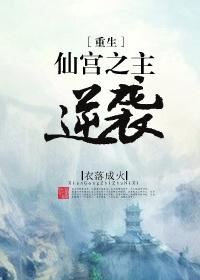
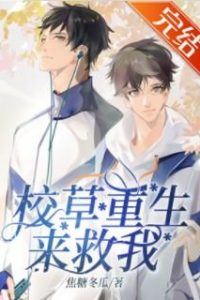
Yu Tianze was a prodigious cultivator in the Jiuyang Sect, recognized as the most talented disciple in ten thousand years with his Thunder and Fire spiritual roots. He reached the Nascent Soul stage before the age of one hundred, dedicating his entire life to his master, Ming Yuan. Despite Ming Yuan's mediocre aptitude, Yu Tianze treated him with absolute filial piety, sharing every treasure he acquired and using his own mental power to create illusions to aid his master's comprehension. He refused to establish his own peak residence to remain close to Ming Yuan, sacrificing his own cultivation potential for decades. His loyalty extended to the sect, where he served as a warrior in numerous battles, enduring severe injuries and betrayals in the name of justice and gratitude.The turning point in Yu Tianze's life occurred when he discovered an ancient Immortal Palace in a secret realm. True to his word, he reported this discovery to Ming Yuan, intending to hand over the inheritance to the sect after sorting its contents. He also sought to give Ming Yuan a spiritual relic within the palace to enhance the master's poor aptitude. However, Ming Yuan betrayed him. After receiving the relic, Ming Yuan revealed the location of the Immortal Palace to Chen Yiheng, the son of the Sect Master, who harbored romantic ambitions toward Ming Yuan. Led by Chen Yiheng, a group of over a dozen Nascent Soul cultivators and a Spirit Transformation expert ambushed Yu Tianze. They sought to seize the Immortal Palace for themselves, fearing Yu Tianze might hide treasures despite his promises. In his final moments, Yu Tianze realized that the demon spirits he had treated kindly were the ones who delayed his escape, ensuring his death. He died alone, betrayed by the master he revered and the sect he served.Upon dying, Yu Tianze was reborn a century earlier, back to the moment he had just obtained the Spirit Infant Fruit. In his previous life, he had given this fruit to Ming Yuan, enabling the master's breakthrough to the Nascent Soul stage but suffering crippling injuries in the process. This time, Yu Tianze rejected his past stupidity. He reclaimed the fruit and retreated into seclusion to heal his wounds completely. During this period, he brutally subdued the three demon spirits who had previously betrayed him, establishing absolute control over their lives and deaths. He severed his emotional ties to Ming Yuan, deciding that the master-disciple bond was broken the moment he died.After recovering, Yu Tianze visited Ming Yuan one last time. He coldly informed his master of his intention to move out and establish a new residence on Feixiao Peak, removing himself from Ming Yuan's shadow. He also publicly accepted a new disciple, Sun Yiwei, effectively transferring the burden of filial duty away from himself and onto someone else. This move shocked the sect and angered Ming Yuan, who struggled to understand why his devoted disciple had changed so drastically. Yu Tianze then proceeded to Feixiao Peak, clearing a mountain top and constructing the Thunder Fire Hall, declaring his independence from the sect's politics and his master's influence.During his solitude, Yu Tianze encountered a young, frail boy named Mu Zirun in the nearby forest. Mu Zirun was an outer sect servant with four spiritual roots, surviving on meager rations and enduring abuse. Yu Tianze recognized Mu Zirun from his previous life; although Mu Zirun was a minor figure, he was the only cultivator who had shown Yu Tianze mercy during his final ambush, allowing him a chance to escape before Yu Tianze's ultimate self-destruction. Remembering this act of kindness, Yu Tianze decided to take Mu Zirun under his wing. He brought the boy back to his peak, providing him with proper clothing, shelter, and abundant resources. Yu Tianze appointed Mu Zirun as his servant, tasked with preparing meals and maintaining the hall, while granting him access to advanced cultivation methods and artifacts. This marked the beginning of Yu Tianze's new path, focused solely on his own strength and protected by a loyal companion who owed him his life.

Latest Release
DateGroupRelease
2026-09-25knoxt c34
2026-09-25knoxt c33
2026-09-25knoxt c32
2026-09-25knoxt c31
2026-09-25knoxt c30
2026-09-25knoxt c29
2026-09-25knoxt c28
2026-09-25knoxt c27
2026-09-25knoxt c26
2026-09-25knoxt c25
2026-09-25knoxt c24
2026-09-25knoxt c23

Community Reviews

Rating(0 / 5.0, 29votes)
5 stars
0(0%)
4 stars
0(0%)
3 stars
0(0%)
2 stars
0(0%)
1 stars
0(0%)

Popular reviews

... Read More
Let me tell you, Yu Tianze is the most gut-punching rebirth protagonist I've read in forever. Not because of some cool power system or harem potential—though he's got the Thunder Fire spiritual roots, Nascent Soul stage, and an Immortal Palace inheritance—but because of how thoroughly the author destroys his worldview in the first four chapters. The relationship with Ming Yuan is absolutely horrifying when you look at it backward. This guy treated his master like a literal father. "One day as a teacher, lifetime as father"—he didn't just say it, he lived it. Went through heaven and earth for treasures, guarded him like a paranoid bodyguard, lived in a bare stone cave instead of taking a better peak residence, created illusions to help his master comprehend cultivation because his master wasn't talented enough. And what did Ming Yuan do? Sold him out to over a dozen Nascent Soul cultivators and an ascension-level killer for a secret treasure. But here's what gets me—the most disturbing part isn't even the betrayal itself. It's how naturally Yu Tianze had internalized this as normal. The senior brother telling new disciples about how 'admirable' Master Ming Yuan is, how his temper can only be controlled by a kind person—it's all so casually reverent. The sect sees Yu Tianze as their thug, their golden weapon, and they're perfectly happy with that arrangement. Now he's back a hundred years earlier, holding the Spirit Infant Fruit that in his past life he gave away while dying, and his response is pure, cold rejection. He doesn't just keep it for himself—he sneers. He burns the demon spirits not out of cruelty but as a declaration of war against his entire former self. I need to know what happens next. Is this going to be a story about Yu Tianze systematically dismantling every person who wronged him? Or does he find something worth caring about again? The way he controls those demon spirits with purple flame... there's a depth to his power that feels like it mirrors his emotional state. Cold on the outside, burning on the inside.
... Read More
This pacing is absolutely ruthless and I love it. Chapter 1 opens with a walk. A simple walk on a mountain path. But within the first few paragraphs, we're getting worldbuilding through osmosis—Jiuyang Sect, Nascent Soul stage, Yinxiao Peak, the cultural expectation of respect for teachers—without a single info-dump. The senior brother和新 disciple conversation is masterful because it accomplishes three things at once: establishes Yu Tianze's reputation, reveals the sect's attitude toward him (he's their weapon, nothing more), and gives us a window into Master Ming Yuan's public image as the kindest person alive. Then chapter 2 pivots hard. The moment Yu Tianze reaches the split in the path—left to Minghua Mansion, right to his cave—and chooses the right path with a mocking smile, that's the exact moment the entire story's axis shifts. The narrative doesn't waste a single paragraph. One step, a smile, and we're in. The rebirth backstory that follows is dense but never drags because it's structured as a series of escalating revelations rather than a chronological summary. We learn about his filial piety, then his injuries, then the Spirit Infant Fruit, then the Immortal Palace, then the betrayal—all of it building toward that devastating final line where we understand that over a dozen Nascent Souls and an ascension-level cultivator were mobilized specifically to kill him. Chapter 4's time skip to 'Three months later' is clean and effective. No transition prose, no filler. Just thunder, purple light, and the introduction of the demon spirits as a new power dynamic. The fact that the chapter ends mid-sentence with 'Zhengga...' feels intentional—the author wants us desperate for chapter 5. What really works is that the emotional whiplash never catches up to the plot. The betrayal lands, we process it, and then immediately we're watching Yu Tianze demonstrate absolute dominance over three demon spirits. There's no wallowing, no extended mourning period for his old self. The pacing reflects his psychology: move fast, don't look back.
... Read More
This is a masterclass in efficient chapter structure. In roughly two thousand characters the author accomplishes so much narrative movement. We start with a spectacle—this purple-robed youth carrying a scrawny kid while outer disciples whisper and gawk. Immediate hook. Then we descend into the squalor of Mu Zirun's actual home life. The pacing slows down here intentionally, making us sit with the discomfort of broken furniture and thin bedding. This is where the reader is supposed to feel sympathy. Then the pivot—Yu Tianze snaps, grabs the kid, and the pacing SLAMS into overdrive. Purple light surges. They are gone. The sect is thrown into uproar. Meanwhile we cut to Ming Yuan's mansion where a completely different anxiety is brewing—his teacup literally falls to the ground when he hears this news. Three parallel threads of tension now: Mu Zirun's confusion, the sect's gossip, and Ming Yuan's suspicion. Then we follow them back to the Thunderfire Hall and the pacing settles again into this intimate almost comedic bathing scene. The chapter ends with Mu Zirun in a magically-fitting robe, unsure whether to trust this impulsive new situation. It moves fast but never rushes, and every beat earns its place. I want to know what happens next—the hot spring scene is both funny and tense because we don't know if this is genuine care or just another complicated power move in a cultivation world.
... Read More
Ming Yuan is one of those characters who terrifies me precisely because he doesn't seem like a villain. The image of him watering flowers in an elegant white shirt, calm and serene, is almost tender—except we know he ordered the ambush that killed his own disciple. What makes this relationship so devastating is the asymmetry of investment. Yu Tianze gave everything: his cultivation, his treasures, his Immortal Palace contents, his emotional loyalty. He even stayed with Ming Yuan when the sect offered him a chance to change masters, choosing companionship over convenience. Ming Yuan, meanwhile, appears to have taken everything for granted. The passage reveals he only formed his golden core because of the treasures Yu Tianze acquired, extended his lifespan through accumulated wealth, and rose from forgotten inner sect nobody to true immortal—all while watching his disciple die without apparent moral conflict. The text never shows us Ming Yuan's interiority, which is a deliberate and powerful choice. He exists only through Yu Tianze's perspective, making him simultaneously real and unknowable. The three demon spirits add another layer to this relationship web. They're described as having trembling voices when they try to explain that Master Ming Yuan ordered them to delay Yu Tianze. They didn't betray him willingly—they were caught between two loyalties and chose survival. Yu Tianze's decision to now control them permanently ('they lived if he wanted them to live, and died if he wanted them to die') suggests he's projecting his own powerlessness onto them, replicating the very dynamic that destroyed him. Their last conversation before the seclusion period—where they mention 'Master Ming Yuan ordered' and 'he should go to Minghua Mansion to see him'—is haunting in its casual cruelty. These small beings, caught between masters, become instruments of betrayal not through malice but through hierarchical obedience. Yu Tianze's coldness toward them mirrors Ming Yuan's coldness toward him.
... Read More
The pacing here is glacial and deliberate, which might frustrate readers who want immediate action but rewards those who sit with emotional complexity. We open mid-crisis—Yu Tianze has just recovered from three months of seclusion after being murdered—and the author immediately slows us down. He walks to Minghua Mansion. He notices the flowers, the orderly plants, the wooden demon spirits at the door. The physical journey mirrors his psychological one: he's moving toward the person who killed him, and the author makes us walk every step alongside him. The flashback about Yu Tianze's origins arrives at exactly the right moment—not too early, not too late. It comes after we've seen his present-day coldness but before we witness the confrontation itself. This positioning is crucial: it forces us to reconcile two images of the same man, the devoted disciple and the vengeful survivor. The transition back to the present is equally well-timed, anchored by Yu Tianze's physical reaction—seeing Ming Yuan's calm face and finding he can't speak. The structure builds like a held breath. There are no action set pieces in this passage, no battles or dramatic revelations. The tension comes entirely from what's unsaid. Yu Tianze wants to ask 'Why?' but doesn't. Ming Yuan smiles as if nothing happened. The demon spirits tremble but don't explain further. This restraint is the author's greatest strength—the passage understands that the most devastating moments in stories aren't the explosions, they're the silences between people who once loved each other. The final line cuts off mid-thought, which is either a cliffhanger or simply the end of a section. Either way, it leaves Yu Tianze suspended between wanting answers and accepting that answers won't undo what happened.
... Read More
This passage is structured like a masterclass in controlled pacing. Let me break down why it works so well. The first half is dialogue-heavy, almost breathless. Yu Tianze fires off instruction after instruction—room, talisman, storage bag, token, demon spirits, study access—and each one is shorter than the last, creating a cascading effect where the reader, like Mu Zirun, is overwhelmed by the sheer volume of benefits being handed over. The repetition of Mu Zirun's respectful 'Yes' responses acts as a metronome, giving the scene rhythm even as the information pours faster and faster. It's almost comedic in its accumulation. Then Yu Tianze says he's entering seclusion and turns to leave, and—here's the structural pivot—Mu Zirun tugs his sleeve. The entire pacing of the scene shifts. What was rapid-fire dialogue suddenly becomes intimate, quiet, almost tender. The author uses a physical gesture (the sleeve grab) as a fulcrum to change the emotional temperature of the scene. Yu Tianze's pause, his confused 'What is it?', the cough, the hesitant question—all of these micro-beats stretch time in a way that makes the reader feel like they're witnessing something private. The second half of the passage switches entirely to Mu Zirun alone in his room, examining his new life. This is where the pacing breathes. The inventory list (thirty-five bottles, eight robes, twenty-nine artifacts...) serves as both worldbuilding and character revelation. We're not just learning about the world; we're seeing Mu Zirun process his own luck. His reaction—'Wait, something's off here'—is such a perfectly timed comedic beat after all that reverence. The golden finger exposition at the end could have easily dragged, but the author trims it ruthlessly. Each function gets one or two sentences. Decompose, synthesize, appraise, query. Boom, boom, boom, boom. Then we cut off mid-sentence as Mu Zirun contemplates synthesizing fasting pills. The structural choice to end on anticipation rather than completion is exactly right—it turns the end of this passage into a springboard for everything that comes next.
See all reviews

Custom lists

See all custom Lists