Summary

... Read More

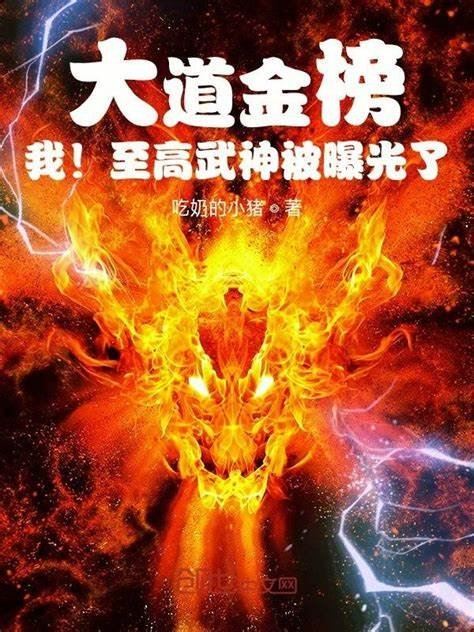
In 221 BC, Ying Zheng successfully united the six states and declared himself the First Emperor of Great Qin, ending five hundred years of warfare. During his coronation ceremony, a mysterious golden scroll descended from the heavens, emitting dazzling light and terrifying sword qi that caused swords across the world to tremble. The scroll revealed itself to be the Divine Sword List, a manifestation of the Great Dao capable of ranking all weapons and granting extraordinary rewards to their wielders. The appearance of this phenomenon shocked experts from the Hundred Schools of Thought, including Guiguzi, the Yin-Yang School, and the Confucian and Taoist sects, signaling a profound shift in the world's balance of power.

The Divine Sword List began to reveal the rankings of the top hundred divine swords, with rewards ranging from grandmaster pills to high-grade heaven-rank sword techniques. The distribution of rewards was determined by the unique properties of each sword and the status of its wielder. Among the known famous swords, Zhang Han’s Dragon Soar sword ranked fortieth, while Gai Nie’s Yuan Hong sword took the thirteenth place. However, the most shocking revelation occurred when Ying Zheng’s own Heavenly Question Sword, the weapon that had helped him unify the world, was ranked only eleventh. This placement stunned the empire, as no one could conceive of a sword surpassing the First Emperor’s divine weapon.

As the list continued to unfold, it became evident that the top ten positions were occupied by unknown divine swords that had not appeared in any existing sword manuals. The ninth through first places were all claimed by a single mysterious figure known only as the Martial God. The swords included the Evil-Repelling Sword, the Fire Kirin Sword, the Sky Fury Sword, the Hero Sword, the Frost Overpowering Sword, the Phoenix Blood Sword, the Netherworld Sword, the Peerless Good Sword, and finally the Divine Dragon Sword at the number one spot. Each of these weapons possessed unique and terrifying abilities, such as mind control, demonic corruption, and bloodthirsty growth.

The rewards associated with the Martial God’s swords were unprecedented in the history of martial arts. The top five ranks offered divine-rank treasures, including the Life-Creating Pill at third place, which could resurrect the dead and restore perfection. The second-place reward was the Three Revolutions Fortune Pill, granting an additional hundred years of cultivation and lifespan. The first-place reward was the Dragon Core, a high-grade divine treasure that granted immortality, invincible strength, poison immunity, rapid healing, and potential stimulation. This discovery sent shockwaves through the world, igniting extreme greed and ambition among rulers, sect leaders, and assassins.

The First Emperor, Ying Zheng, whose health was declining despite his absolute power, saw the prospect of immortality as his greatest hope. He decreed that if the Martial God could offer the Dragon Core, he would be enfeoffed as the King of Qin and become a sworn brother to the Emperor, sharing the rule of the empire. Zhao Gao and other officials eagerly mobilized the Net organization to locate the Martial God, recognizing the strategic importance of controlling such a powerful figure. Simultaneously, leaders of the Mohist, Yin-Yang, Farming, and Confucian schools dispatched their best agents to track the locations indicated by the falling rewards.

Among those affected by the list was Han Xin, the owner of the Hidden Dragon sword ranked fiftieth. Unlike the ambitious hunters chasing the top ten, Han Xin remained indifferent to the chaos, preferring his quiet life of fishing over the pursuit of power and pills. His stoic nature contrasted sharply with the fervor consuming the rest of the martial world. Meanwhile, the disappearance of the Jing Ni sword from the expected rankings indicated that its wielder, protected by a divine archer twenty years prior, had grown strong enough to rank twelfth, further puzzling the observers.

The distribution of rewards began immediately after the list was finalized, with beams of light marking the locations of the sword wielders across the continent. This natural guidance mechanism allowed the various factions to pinpoint the exact whereabouts of the martial artists, turning the world into a hunting ground for talent and treasure. The stage was set for a new era of conflict, where the Martial God and the holders of the top divine swords became the primary targets of every major power in the unified empire.

Latest Release
DateGroupRelease
2026-10-01lightnovelasia c283
2026-10-01lightnovelasia c282
2026-10-01lightnovelasia c281
2026-10-01lightnovelasia c280
2026-10-01lightnovelasia c279
2026-10-01lightnovelasia c278
2026-10-01lightnovelasia c277
2026-10-01lightnovelasia c276
2026-10-01lightnovelasia c275
2026-10-01lightnovelasia c274
2026-10-01lightnovelasia c273
2026-10-01lightnovelasia c272

Community Reviews

Rating(4 / 5.0, 24votes)
5 stars
9(38%)
4 stars
5(21%)
3 stars
10(42%)
2 stars
0(0%)
1 stars
0(0%)

Popular reviews

... Read More
There's something really distinctive about how this author writes dialogue and narrative voice, and I've been turning it over in my head. The opening line—'A Poison-Repelling Pill? Not bad!'—that's Red Training speaking, and it immediately tells you everything about her character. She's seductive, dangerous, elegant in a red dress with a poisonous snake on her shoulder, and her reaction to a heaven-defying pill is basically 'not bad.' That's a person who has seen enough poison in her lifetime that even a pill granting immunity to all poisons below Heaven-Rank barely registers. The contrast between her visual description and her casual dialogue is sharp and effective. Then you've got Wu Kuang, whose lines are pure fury: 'Who is Hidden Dragon? They actually rank ahead of me?' followed by 'Damn it! How hateful!' It's raw, unfiltered, and distinctly different from Red Training's cool detachment. The author doesn't waste words making them sound alike—you can tell who's speaking just from the dialogue alone. But the line that stayed with me is Han Xin's internal thought: 'Besides, does a Great Grandmaster Pill have the fragrance of fish? If I don't catch any fish, I'll go hungry today.' The shift from epic martial arts prose to this almost comedic inner monologue is jarring in the best way. It breaks the fourth wall of genre expectations without actually breaking it. The author is clearly winking at us here, saying 'yes, this is a cultivation novel with cheat-level rewards, but this character treats it like a Tuesday.' Xun Zi's voice is another standout. When asked about the missing swords, he just says: 'The world is vast, and there are countless wonders. A person's life in this world is but a drop in the ocean. Not knowing does not mean it doesn't exist. Just keep watching and you will know.' It's calm, philosophical, and delivers a profound message in almost deceptively simple language. The author knows exactly when to lean into poetic gravitas and when to undercut it with humor, and that balance is what makes the reading experience so engaging.
... Read More
Okay so let me just say—Ying Zheng in this whole sequence is fascinating because you can literally see his priorities shift in real time. First, he's all business during the Divine Sword List ceremony, watching those rewards vanish mid-air. Then? The moment he hears the Martial God might be right next to Xianyang, everything changes. The man literally can't keep his composure. He wants to go himself, Li Si and Feng Quji are literally begging him not to, and he just waves them off like they're annoying mosquitoes. That's not a calculated ruler—that's a man whose hand is forced by the promise of immortality. And Zhao Gao? Oh man, Zhao Gao is doing that thing where he's terrified of the guy who shot arrows before but now he's trying so hard to prove himself. 'This servant will definitely capture him and retrieve the Jingni Sword!' But I could tell from the narration—his heart was racing. He's playing a dangerous game, trying to impress a paranoid emperor while knowing full well what he's up against.
... Read More
Okay so this opening hit me like nothing else. Let me just say it: the moment that golden scroll splits the sky over Xianyang, I was absolutely glued to my seat. The author doesn't just describe a phenomenon—they reconstruct the entire world around it. "Boom! The firmament trembled. The starry sky swayed." Two sentences. That's it. Two sentences and suddenly the cosmos itself is shaking. And you know what? I could feel it. Not metaphorically—I physically felt the ground beneath me wobble. The cinematic quality of this passage is insane. You're not reading about history; you're watching a movie where the camera pulls up, up, up into the clouds until all you see is golden light tearing across the heavens. And then—the real brilliance. The author doesn't stop at the imperial court. No no no. Cut to Guigu, this old farmer-man with a hoe, looking up. Cut to the Yin-Yang School's Yue Shen spitting blood from the pressure of heaven's secrets. Cut to Zhang Liang in his manor plotting rebellion while staring at golden light. The scroll appears once, but we see it through FIVE or SIX different eyes, each in their own space, each with their own relationship to that light. "With its appearance, I faintly feel that the world seems to be undergoing a great change..." Guiguzi says this, and honestly? He's right. The worldbuilding here isn't about describing castles and maps—it's about making you understand that a single event in the sky touches EVERYONE differently. The farmer feels it. The emperor fears it. The rebel hopes for it. The cultivator tries to divine it. That's what makes this world feel ALIVE. Every corner of it breathes. The sensory detail is also chef's kiss. The golden light "dyeing the sky" and then the rosy radiance that makes "plants swayed, and living beings cheered." It's almost too vivid. I had to put the book down for a second because my brain was processing too much imagery at once.
... Read More
Let me get philosophical for a second because this novel is doing something deeper than "wow cool sword rankings." The golden scroll appears above the newly unified empire. What does it symbolize? Power. Ranking. ORDER imposed on chaos. The scroll doesn't just list swords—it lists them with REWARDS. Every position has a consequence. 100th place gets a Mid-Grade Black-Rank Pill. What does the TOP spot get? The text doesn't say, and that silence IS the message. "The Golden List is a manifestation of the One That Escaped from the Great Dao, capable of recording all things in the world, even living beings, and ranking them." Ranking. That's the core word. The universe itself—THE GREAT DAO—has been reduced to a LEADERBOARD. Everything and everyone gets a PLACE. This is the ultimate expression of human desire: not just to be powerful, but to be RANKED. To know your position. To climb. And watch how every faction reacts: Ying Zheng wants immortality (transcending the list entirely). Zhang Liang wants to weaponize it (breaking the list). Guiguzi wants to understand it (reading the list). Yue Shen tries to divine it (predicting the list). They're all the same hunger dressed in different clothes. "What ordinary people seek is nothing more than fame, fortune, power, and martial arts. Once on the list, one would become famous throughout the world in one fell swoop." The scroll is a mirror. It doesn't create desire—it REFLECTS it. And the author keeps asking: when heaven itself becomes a marketplace, what happens to the human soul? The sword qi makes every blade tremble toward the sky. Even INANIMATE objects want to ascend. That's not worldbuilding—that's a thesis statement about the nature of ambition itself.
... Read More
There's something deeply symbolic about those rewards disappearing in mid-air. Think about it—the Divine Sword List is supposed to be divine judgment, right? A system meant to reward the worthy and expose the worthy. But the rewards literally cannot be seen until they land in someone's hands. Everyone can only guess where the wielders are. The system creates uncertainty even as it claims to reveal truth. And then Xiao Meng, the Heaven Sect Leader, actually articulates this perfectly: 'The Great Dao is fifty, the Heavenly Evolution is forty-nine, and humanity escapes one.' She frames the vanishing as intentional design—a test, not a flaw. The 'line of life' exists precisely because the system refuses to be fully mapped. Meanwhile, everyone else is scrambling like animals over scraps, and Zhao Wu is literally lounging on a beauty's lap while the entire world converges on his location. The contrast is almost comedic, but it's also thematically sharp. The powerful think they're hunting prey when really they're all pawns in a game whose rules they barely understand. The imagery of light disappearing mid-air, of swords and pills materializing only in the worthy's grasp—it's the author saying something about how true power operates invisibly, how the universe rewards quietly while the loud and desperate chase after crumbs.
... Read More
"The Heavenly Question didn't even make it into the top ten, what kind of divine weapons are in the top ten?" Let me just scream this into the void because this is the single best stakes escalation in the entire chapter. Ying Zheng. The First Emperor. The guy who unified six directions, established the Great Qin Empire, whose virtue surpassed the Three Sovereigns — his legendary Heavenly Question Sword is ranked ELEVENTH. Not forty-first. Not a surprise entry. Eleventh. And everyone in the world is having a collective meltdown over it. But here's what makes this genuinely tense: the author doesn't just say "wow top ten must be super strong." They build it. You watch the list go from eighteenth place (Low-Grade Heaven-Rank techniques, ice swords and dragon arts) and then suddenly at fifteenth place it jumps to mid-grade heaven-rank, and by the time you're reading the rewards for the top five, everyone's speculating about Divine-Rank treasures. The escalation is methodical and it makes your palms sweat. Then the tenth reveal hits — and the description literally says the sword qi "seemed to pierce through the universe, directly cutting into people's souls." Two divine swords, not one, and they can manifest projections visible to the entire world. What's underneath those top ten? The speculation from Master Guigu and Xun Zi and Donghuang Taiyi about whether they're divine swords from the Archaic Era — lost, forgotten weapons from an age before recorded history — adds this layer of cosmic dread. Because if those exist, then the entire power structure of this world is about to get flipped, and every faction knows it. Yan Dan literally thinks about overthrowing Qin if he gets top-ten rewards. Gai Nie can't contain his excitement to watch his Yuan Hong face off against whatever's in the top ten. The stakes have gone from "let's collect some sword techniques" to "the balance of power in civilization is about to shift forever" and it's happening in real time as we read.
See all reviews

Custom lists

See all custom Lists