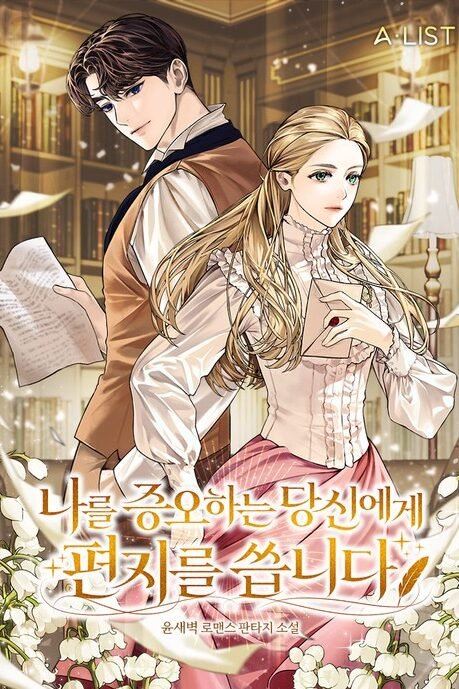
The Grand Duke is Obsessed with the Fake Villainess
+Add to Custom List
Genres:
Tags:
Novel Info
  • Author:
  • Status:Ongoing

Summary

... Read More

Selina Arsen, the legitimate daughter of Count Arsen, leads a precarious existence within her wealthy merchant family. Estranged from her father who remarried a commoner named Flora, Selina endures relentless bullying from her stepbrother Brandon and half-brother Sebastian. To escape this toxic home environment, she entered the imperial academy as a scholarship student, graduating as valedictorian to secure her position as acting head of the family. Three years ago, she entered a contractual engagement with Lord Morgan Patel to protect her family’s trading interests, though she harbors no romantic feelings for him. Her social reputation, however, is already fragile, labeled as cold and untouchable by high society.

The central conflict ignites when Crown Prince Eric recruits Selina to play the role of a villainess in his pursuit of Ingrid Hazel, a kind baron’s daughter of low birth. Under a secret contract, Selina pretends to bully Ingrid, allowing Eric to intervene heroically and win her affection. In exchange, Eric promises Selina exclusive trading rights for three items from the empire. Selina complies to secure her financial future and her family’s guild, enduring public scorn and the gradual erosion of her reputation. The scheme works for Eric and Ingrid, whose romance becomes a celebrated symbol of love transcending status, but it isolates Selina further, leading to her breaking engagement with Morgan Patel due to false rumors of malice.

The crisis escalates dramatically during an imperial ball hosted for Princess Helena of the Furon Empire. A dress intended for the princess is found torn to shreds, and all evidence points to Selina. Confronted by the furious princess and a crowd of accusing nobles, Selina finds herself without an alibi. Eric, desperate to maintain his public image as the romantic hero and protect his secret dates with Ingrid, refuses to support her, signaling for her to handle the situation alone. Ingrid even contributes to the accusation, feigning victimhood. Selina faces potential diplomatic ruin and the loss of her family’s standing.

A key turning point occurs with the arrival of Grand Duke Zenus Justia, the empire’s war hero who possesses a mysterious dragon power that grants him immense strength but shortens his lifespan unless he marries his destined companion. Zenus, who has watched Selina since she was a child, unexpectedly intervenes. He publicly claims that Selina was with him at the time of the incident, effectively exonerating her. When questioned privately, Zenus proposes marriage to Selina to restore her honor and take responsibility for their time spent together. Selina, recognizing the political and social utility of such a union, agrees to consider it, despite her initial shock.

Following the ball, Selina confronts her family’s internal threats. Flora and Brandon attempt to seize the acting head position now that her engagement is broken, but Selina decisively counters them. She melts the engagement tokens in front of both the Arsen and Patel families, finalizing the breakup while simultaneously safeguarding the joint trade agreement. She asserts her dominance, promising to restore her reputation within three months by marrying into a higher-ranking family. Her actions neutralize her stepmother’s schemes and reaffirm her authority within the household.

The story direction shifts as Selina pursues a strategic engagement with Zenus to salvage her status. She invites him to a private meeting and proposes a contract engagement lasting two years, after which they will break it off. This arrangement would provide her with the social cover needed to rebuild her reputation and secure her family’s business interests without the pressure of a permanent marriage. Zenus, however, is visibly hurt and confused by the proposal, as he seeks a genuine connection. His father, Philip, intervenes, advising Zenus to pursue Selina earnestly. The narrative sets the stage for a complex romantic development where Selina’s calculated maneuvers clash with Zenus’s growing emotional investment, while underlying political tensions between the empires continue to loom.

Latest Release
DateGroupRelease
2026-10-03dusk blossoms c64
2026-10-03dusk blossoms c63
2026-10-03dusk blossoms c62
2026-10-03dusk blossoms c61
2026-10-03dusk blossoms c60
2026-10-03dusk blossoms c59
2026-10-03dusk blossoms c58
2026-10-03dusk blossoms c57
2026-10-03dusk blossoms c56
2026-10-03dusk blossoms c55
2026-10-03dusk blossoms c54
2026-10-03dusk blossoms c53

Community Reviews

Rating(0 / 5.0, 49votes)
5 stars
0(0%)
4 stars
0(0%)
3 stars
0(0%)
2 stars
0(0%)
1 stars
0(0%)

Popular reviews

... Read More
I keep coming back to this one idea: the dragon's power is literally about control. Zenus can make people sleep with a word. He's used it to kill enemies. It's dominance in its purest form. And yet it doesn't work on Selina. Not because she's stronger, but because she's his *companion*. The irony is delicious — the very thing that makes him dangerous to everyone else is the thing that creates an exception for her. This goes deeper than just romance tropes though. The whole novel seems obsessed with what kind of power is legitimate. The Emperor has political power but can't control Zenus. Zenus has supernatural power but chooses not to use it on Selina. Eric has royal blood but is being puppeted by his advisor Sam. Even Count Arsen, who seems like a loving father, is simultaneously maneuvering Flora toward Brandon like a chess player. Nobody has clean power in this world — everyone's authority is conditional, negotiated, contested. The prenuptial contract is the perfect symbol for all of this. Selina picks it up and calls it 'a waste to leave behind' — she's literally carrying the Emperor's attempt to control her fate in her corset as she escapes. But she's also turning it into her own weapon, a document that could protect her instead of bind her. The object of her oppression becomes her shield. That's not just clever plotting, that's thematic precision.
... Read More
Zenus kneeling on one knee inside a luggage compartment of a moving carriage. That image is going to haunt me. It's so undignified and perfect and practical all at once — he can't exactly spread out, the space is cramped, but he's committing to the gesture anyway because that's who he is. He doesn't do things halfway, even when logistics are against him. But the scene that actually lives rent-free in my head is the ending — Selina opening the window at the inn saying she wants fresh air, and Zenus appearing at her door in literally three seconds because he heard her through the wall. 'It's me, Lady. I'll escort you.' Not 'are you okay?' Not 'what do you need?' Just... I heard you, I'm here, let's go together. The way he's already calibrated to her rhythms, already treating her presence as his default setting. And then the lake. Moonlight shimmering on water, five minutes of walking, and she brings up his fear of lakes like it's nothing casual. Like she's noticed something about him that nobody else has and she's just... testing the waters. The whole scene feels so quietly cinematic — no dramatic music, no guards chasing them, just two people who've run a marathon together and finally get to breathe. The worldbuilding details (the temples, the imperial blockade, the carriage system) fade into the background and it's just them in this stolen pocket of peace. I love how the author uses setting to reflect emotional state — the palace was chaos and noise, the carriage was cramped but intimate, and the lake is open and still.
... Read More
The Emperor's observation about Count Arsen is one of those lines that sounds like casual criticism but is actually the thematic keystone of the entire arc. 'A man who once held a sword is now selling swords. Don't you understand what that means?' On one level, the Emperor is reading this as deception — why would a loyal knight abandon his post and hide behind commerce? But the deeper reading is so much richer. Arsen didn't just quit being a knight; he chose to survive differently. He took a blade meant for the Emperor and absorbed it, lost the use of his arm, and then rebuilt his life around trade instead of war. The swords he sells now are the same weapons he once wielded for honor and duty. There's a profound irony in a man who gave his body for loyalty being treated as untrustworthy because he refused to die for it a second time. Meanwhile, Selina is making her own parallel choice — she could have submitted to the imperial family's plans and preserved her status quo, but instead she's walking into danger with someone who has dragon's power, choosing uncertainty over captivity. Both of them are people who were supposed to play their assigned roles and decided no. The Emperor sees betrayal. I see the only honest thing either of them has done.
... Read More
I need to just say this out loud because I am absolutely FUMING — Eric is not a good person and Selina knows it. Like, she KNOWS it and she's still entangled with him? That line where he's frantically signaling her with his eyes that she CANNOT reveal who she was with, and then later the narration says he was planning to bail — I literally gasped. And the worst part? Selina's internal monologue about how his nickname "the Lucky Crown Prince" has never felt more apt. Others take the blows meant for him, others do the work, and he claims the merit. That's not just a clever observation, that's a CHARACTER DIAGNOSIS. But honestly, the moment that broke me was when Ingrid leaves crying and Eric provides an imperial carriage AND earnestly instructs the coachman to take good care of her — all while Selina is sitting there realizing she'll have to CLEAN UP AFTER HIM AGAIN. She's been carrying this relationship alone this entire time. And Zenus? What is his deal? He shows up, publicly claims Selina was with HIM, protects her honor, and then THREE PEOPLE REMAIN IN THE LOUNGE and he's like "oh by the way marry me and I'll take responsibility." Is this chivalry or is this a trap? Because from Selina's POV — she's already suspicious. "We're not close enough for him to lie for me like this." Smart girl. And Morgan Patel — oh god, Morgan. The guy who announced he wanted to break their engagement and then immediately tried to force Selina into a confession like a total asshole? Will Chase calling him a coward while challenging him to a duel? I LOVE WILL CHASE. He's the adjutant who handles all of Zenus's social interactions because Zenus apparently hates people. The dynamic between them is chef's kiss.
... Read More
The dialogue in this section is genuinely exceptional because every character has a voice so distinct you could tell who's speaking blindfolded. Let me give you the clearest examples. Eric sounds exactly like a spoiled nine-year-old Crown Prince: 'You must speak formally to me. I'm the Crown Prince.' Then later, 'So what if he dies! I win anyway.' The casual cruelty of a child who's never been told no. And his line about Selina going around the lake so he can 'talk to him' — that possessive, entitled energy is perfectly calibrated. Selina, even as a child, has this incredible mix of bravery and sass. 'How dare you, how dare you hit the Crown Prince?' she says after slapping him. And when Eric refuses to help: 'Fine, whatever. Watch if you want.' She's not having his nonsense for one second, and her dialogue reflects that. She's direct, action-oriented, and completely unimpressed by hierarchy. Zenus is fascinating because his dialogue shifts dramatically depending on who he's talking to. With Eric: quiet, mumbled, 'Don't know.' With Selina as adults: 'I want you so much that I wish to marry you as soon as possible.' The gap between the boy who couldn't speak properly and the man who speaks his desires so plainly is staggering. And the narrator's voice! Lines like 'Such a pathetic dog' and 'His Majesty wouldn't leave a place that bore the stain of the Crown Prince almost killing the Grand Duke' carry this perfect blend of emotional rawness and political commentary. The author's narrative voice doesn't judge outright but lets the facts do the damning. Even small exchanges crackle: 'Friends don't speak formally to each other. I hereby swear never to be your friend again and will speak formally.' This back-and-forth between child-Zenus and child-Selina is genuinely funny and reveals their entire dynamic in three lines.
... Read More
The opening is a MASTERCLASS in hooking me in. We drop into a scene where: - A princess is furious - A dress is destroyed - An engagement is crumbling - The crown prince is refusing to help - The protagonist is being publicly blamed for something she didn't do In the first paragraph. ONE PARAGRAPH. And I was already hooked. Then the flashback to three years ago hits, and instead of slowing things down, it actually makes the opening feel EVEN MORE urgent. Now I'm reading every line of their contract negotiation knowing what's coming. Knowing that Selina will sign this, knowing that two years later she'll be abandoned at a ball. It's tragic storytelling—dramatic irony done right. The pacing within the flashback is also tight. The contract discussion moves quickly—you can feel Selina's resistance turning into reluctant agreement, and the author doesn't over-explain it. Three paragraphs and we're done. Good. But here's what I noticed about the structure: every major scene ends on a beat that propels us forward. The ball scene ends with "If you ha—" (the text cuts off, obviously, but you feel that cliffhanger energy). The fountain scene ends with Selina leaving and bumping into someone she doesn't identify—classic setup for a new character entrance. The engagement breakup ends with Morgan looking at her like he always suspected she'd fail him. The only slight issue? The transition between the present-day crisis and the three-year flashback is a little abrupt. "It all began three years ago" works but feels a tiny bit conventional. That said, the content inside the flashback is strong enough that I'm not complaining. Overall, the pacing is relentless in the best way. Every scene has momentum. Nothing feels padded. I read all seven chapters in one sitting and I regret absolutely nothing.
See all reviews

Custom lists

See all custom Lists