The General’s Maidservant - Reviews

The General’s Maidservant
+Add to Custom List
Sort
Add review
... Read More
There's this recurring image of eyes throughout these chapters that I can't stop thinking about. Suian's "large and bright" eyes that radiate "a light of longing"—longing for what exactly? Survival? Her father? A life that isn't being sold? Chu Yi sees those eyes and thinks of "two black pearls resting on white silk." That image is so loaded. Black pearls are rare, valuable, but they're also trapped inside something hard and closed. White silk is purity, wealth, fragility. She's both precious and imprisoned in that comparison. And then the literal act of looking—Suian keeping her eyes wide to meet every gaze during the selection, then later keeping her eyes fixed on the floor when addressing the mistress. The power dynamics of where you're allowed to look in this world. The mistress asking "What is so good about you?!" and Suian answering with her loyalty—that's not just dialogue, that's a thematic statement about what a person of her station is permitted to offer. The steamed corn bun she's clutching in Chapter 1 is another detail that stuck with me. Half a bun. She's already hungry before the selection even begins. And the literacy—the Four Books, the Analects—that's her actual currency in this world. Her father taught her to read so she could survive. The recurring motif of education as both salvation and chains is just... layered. This story isn't just about a girl selling herself. It's about what we trade for survival and whether the price ever really comes out right.
... Read More
"Don't even think about manumission." I need to talk about this line. I read it three times. Three times. Because on the surface it's cruel — Chu Yi is basically saying you belong to me, don't you dare leave — but the way the scene plays out around it is so complicated that I can't even decide if I'm rooting for Suian to stay or run. Let's look at what happens before that line. Chu Yi is examining her, looking her up and down, and the text says: "Suian was terrified by his gaze but dared not retreat even a step. She only felt layers of sweat on her back, and as the wind blew, she shivered with cold." That image of her standing there, sweating, shivering, not moving — it's not romantic. It's not even particularly tender. But then the author describes her smile right after, when he tells her she can stay in the small study courtyard: "Her features were naturally clean and delicate, and this smile was like a sky after rain — clear and bright, without a trace of impurity." And Chu Yi's internal thought? "Keeping such a foolish simpleton by his side might not be so bad after all. At the very least, she wouldn't dare lie to him." I'm not sure if that's supposed to be sweet or deeply unsettling. Maybe both. The whole dynamic between them is this weird push-pull where he exerts control and she finds tiny ways to resist — like muttering "What's so great about being tall?" under her breath after he pushes her forehead. She's always calculating, always watching him like a weather vane. "The real challenge is figuring out how to subtly flatter her superior, especially when that superior's temper was as unpredictable as the weather." But here's what keeps me up at night: when Wang Ziyu gets the poetry slips, Suian feels reluctant to part with them — not because she doesn't love Chu Yi, the text explicitly says, but because she can't bear to see her hard work given away so casually. That line hit me like a truck. She poured herself into those slips, and he treated them like pocket change. And she still bowed and saw him off. I don't know what this relationship is becoming, but I know it's not simple.
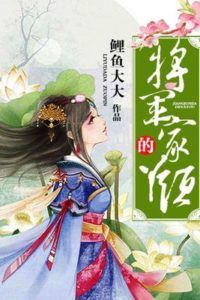
... Read More
I need to talk about this ONE scene where Suian is hiding her yawns and the Ninth Master notices. It's seemingly tiny but it reveals EVERYTHING about their dynamic. Remember when Mr. Lin was lecturing and Suian was dozing off? The text says: "Suian thought this was for the best. Otherwise, if he glanced down and saw his student yawning or dozing off, how disheartening it would be—enough to turn one's hair gray prematurely." HA. She's literally thinking about her boss's emotional state while trying not to fall asleep. That's dedication or insanity, I can't tell. But here's the thing that got me — the Ninth Master PAUSED at the doorway before leaving and said something she didn't hear. What did he say?! The author just leaves it there and I am SCREAMING. He's been watching her. He KNOWS she dozes off. And yet he insisted on keeping her after she got cane strikes for yawning. His cousin called her a "good reading companion—quiet and studious" and the Ninth Master called his cousin a hypocrite. Why? Because he KNOWS she's not studious at all. He knows the truth and he kept her anyway. And then there's Suian's internal monologue about how they get along BECAUSE neither of them wants anything from each other. She doesn't want to be his tongfang. He doesn't want a woman in his quarters. Their mutual understanding is literally the foundation of their relationship. It's kind of beautiful in a painfully awkward way.
... Read More
The sensory details in this chapter are unreal. I can literally feel the difference between south and north — Lin Songfeng's genuine awe at the estate's lake, Chu Yi's quiet irritation at his brother's unsophisticated admiration, the way the courtyard is laid out with eight or nine rooms on the north side, charcoal already piled by the kitchen for winter. This isn't just set dressing; it's a world that breathes. The estate behind the inner residence, the faint murmurs from next door in the evening, the fading light Suian uses to ponder her thoughts — every detail places me inside this household. And then there's the paper-making scene. Suian working until her back aches, placing slips under molds, pressing stones down. I've never read a description of handmade paper production that made me feel the weight of labor so viscerally. The mansion provides paper and brushes; she can draw floral patterns for the ladies' courtyards but can't sell them. The boundaries of her world are physical and social, and the author makes you feel every inch of them. Even the pastries Ziyu shares — red date cake, chrysanthemum embroidery patterns — these small objects carry the weight of a culture and a class system. This is worldbuilding that doesn't announce itself; it just surrounds you.
... Read More
There's a symbol hiding in plain sight: the chrysanthemum. Suian calls them "wild and unruly" and doesn't understand why everyone likes them. But think about it — chrysanthemums bloom in autumn, they're tough, they survive frost, they don't ask for permission to be beautiful. That's Suian. She's been called ambitionless, but her ambition is just different — it's not for power or status, it's for freedom. The paper she makes, the patterns she draws, the three years of patient labor — these are all acts of quiet resistance. And then there's the transmigration motif. Suian's memories of her past life are "crystal clear" — the admission letter, the farewell to her family, the fall down the stairs, the distorted faces. But she's also learned to survive in this new world. The tension between who she was and who she's become is the novel's central philosophical question: can you keep your soul when the world keeps breaking you? The answer so far seems to be: not completely, but you find ways. The charcoal by the kitchen, the ice-skating festivities Lin Songfeng has only read about, the eighty-one poetry slips Suian is forced to prepare — all of these are small cages, and all of them are being endured.
... Read More
Okay so this whole tongfang maid setup is actually such a clever plot device. I mean, on the surface it's just 'the madam wants to keep a loyal servant close,' but really it's the inciting incident for everything that follows. Suian thinks she's being set up for a promotion, but she's actually being trapped into a situation where she can't leave anymore. And Chu Yi? Oh he knows exactly what's happening. The way he sneers inwardly about 'taking this wretched girl into his chambers for the sake of his reputation' — that's not just a passing thought, that's a plot pivot. He's deciding to use her as a prop to protect his image. Meanwhile Suian is over here counting her two taels of savings like that's going to solve anything. The irony is delicious. She's been planning her escape for years, saving every copper coin, and now the very person she's trying to avoid is the one who holds the key to her freedom. And then Mr. Lin's family shows up — Lin Songluan, who clearly has eyes for Chu Yi, and Suian immediately senses the threat. The scene where she hands the bundle back to Young Master Lin and deliberately emphasizes 'Ninth Master' is such a smart move. She's drawing a line in the sand without saying a word. But here's what really got me: the author doesn't tell us what Chu Yi is actually thinking. We only get his sneers and his internal monologue about 'a woman's heart being as deep as a needle in the sea.' That's deliberate narrative withholding. We're supposed to be confused about his intentions, just like Suian is. And that confusion? That's where the tension lives.
... Read More
This chapter is a masterclass in slow-burn tension. On the surface, it's a family arrival scene — Lin Songfeng's clan settles into a northern estate, Chu Yi plays the reluctant host, everyone smiles politely. But peel back one layer and there's another. The real plot engine here isn't the relocation; it's the discovery that Mrs. Lin's family is leveraging a connection to the marshal through Mrs. Lin's younger sister — a fact that could unravel everything Old Madam has tolerated. Auntie Fang overhearing this by accident is such a clean, almost cinematic plot device. It's the kind of moment where the reader thinks: oh, so THAT's why Old Madam's coldness has been simmering this whole time. The chapter also threads Suian's personal arc — her transmigration backstory, her three-year grind toward manumission, her quiet rebellion against being called "ambitionless" — alongside the household politics. Two plots, one chapter, and they're about to collide. When Ninth Master appears at the end in his red cloak, I swear the air changes. The chapter closes not with resolution but with a door cracking open. Brilliant.
... Read More
Let's talk about Suian, because this chapter is HER origin story in disguise. Three years as a maid, sold herself to save her father, and she hasn't forgotten who she was — a military school student, spirited, brave enough to expose scammers, brave enough to fall down stairs and wake up in another world. That backstory alone makes her one of the most layered characters I've read in ages. But what really sold me is how she navigates this household. She's not ambitious in the traditional sense — she doesn't scheme, she doesn't flatter, she doesn't play the game. And yet, she survives. Ziyu notices this. Ziyu thinks: "Her way of speaking and acting is something ordinary maids could never learn." That's not praise for her obedience — it's praise for her social intelligence. She eats the red date cake, she mutters about chrysanthemums looking "wild and unruly," she pretends not to notice Ziyu's teasing — all of it is armor. And when Auntie Fang brings her the gossip, Suian doesn't just listen; she calculates. Who to tell, how to frame it, how to protect herself. She chooses Ziyu over direct reporting because she understands the power dynamics. This is a woman who has been playing chess while everyone thought she was just sweeping the board.
... Read More
I need to talk about the scene where Suian sits on that wooden stool, massaging her shoulders, staring blankly into the fading light. She ate two steamed buns at lunch because she was too angry to eat properly. She's exhausted, her back hurts, and she's not even hungry. And yet — and this is the part that got me — she's not bitter. She's grateful that the household paid for her father's treatment. She believes in giving and receiving in return. She thinks being "content with one's lot" is fine. This is a woman who has been broken and rebuilt herself so carefully that even she doesn't realize how much she's carrying. The emotional core of this chapter isn't the political intrigue or the transmigration backstory — it's Suian's quiet, almost invisible resilience. When Ziyu pushes the pastry plate toward her, Suian squints her eyes in delight and covers her mouth while eating. That small gesture — covering her mouth, like she's embarrassed to enjoy something — tells you everything about who she is. She's used to taking the smaller portion, the lesser reward, the thankless task. And when she eats the red date cake, she does it like it's a secret pleasure she doesn't deserve to admit. I loved her. I really, truly loved her in that moment.
... Read More
On the surface, this chapter seems low-stakes. A guy gets drunk, a girl eats cabbage, some visitors show up. But if you actually PAY ATTENTION, the conflict here is ABSOLUTE THUNDER. Let's break it down. Suian's entire existence in this household is a high-wire act without a net. She's a servant in the study courtyard, which is apparently where unwanted or less-favored people end up. Wang Ziyu's maid turnover rate is the highest in the capital — that's not a detail, that's a WARNING. Suian knows this. She's actively choosing to be invisible, to not be a tiger, because the alternative is being consumed. Then Lin Songluan shows up. A guest. A lady. Someone with actual social power who could decide Suian's fate with a single word. And Ziyu — Old Madam's senior maid — appears out of nowhere. Suddenly Suian is navigating a minefield where every greeting could be a trap, every smile could be misinterpreted. But the REAL stakes are with Chu Yi. He's sleeping in the same courtyard as Suian. He's eating her food. He's declaring he'll sleep in her room (even if it was a misunderstanding). And at the end, Suian is COVERING FOR HIM to Ziyu, lying that he asked her to keep watch. What is she risking here? What happens if Ziyu reports this to the Old Madam? The tension isn't in explosions and battles — it's in the fact that one wrong word, one misplaced glance, and Suian's carefully constructed survival strategy could collapse entirely.
... Read More
Okay so let me just say—this opening chapter is a masterclass in tension. You have Suian, this girl who literally sold herself to buy medicine for her dying father, standing in a slave market looking like a starving bird, and the reader is just screaming at her to PLEASE get picked. And then she gets rejected TWICE. Twice! My heart was in my throat. The tooth-mother's expression getting grimmer with each rejection, Suian's courage literally deflating like a punctured balloon—I was genuinely anxious for her. But then the Ninth Master walks in. And here's the thing that made me sit up: Chu Yi doesn't just randomly pick her. He picks her AFTER he publicly humiliates all the other girls, which means Suian is the only one left who actually WANTS to be chosen. That's not luck—that's survival instinct. She stared right back at him like she was saying "I will never crawl into anyone's bed" and it worked. The plot could've gone so many other directions—maybe he picks someone else, maybe the tooth-mother gives up—but the author kept us on the edge by making every rejection feel final right before the breakthrough. Also, the deposit contract detail? Brilliant. Suian takes the deposit and immediately gives it to Li Song for her father's medicine, fully expecting to be stuck there if no one buys her. She's playing the long game even in desperation. That's a character who thinks three steps ahead while her stomach is literally cramping from hunger. The plot moves fast but never feels rushed—each rejection builds the pressure, and the resolution with Chu Yi feels earned rather than convenient.
... Read More
I have to say, the pacing in these chapters is chef's kiss. The author knows exactly when to slow down and when to let things breathe. Look at how Chapter 3 opens — it starts with Suian already in motion, cleaning the desk, heading to Grand Madame's courtyard. No exposition dump, no "previously on." We're just thrown into her world and we figure things out as we go. That's confident writing. Then the scene at Zhengyang Hall — it unfolds like a real conversation. Old Lady Wang arrives, Chu Yi interrupts with his Nine Linked Rings, the Ninth Master enters with his entourage. It's chaotic and layered, and the author never loses track of who's where or what's being said. The transition from the formal discussion about Suian's fate to the practical matter of Mr. Lin's family arriving is seamless. But the REAL pacing masterstroke is the ending. Suian finishes her furniture list, goes to Ziyu, and Ziyu gives her "that meaningful smile again." The hairs on Suian's neck stand up. And then the chapter just... stops. No resolution. No comfort. Just Suian holding that list, knowing something is coming, and having to pretend she doesn't. The tension here is unbearable and I loved every second of it. It's the literary equivalent of someone leaning in to tell you a secret and then stopping mid-sentence.

Leave a comment

You must be logged in to leave comments. or
