Summary

... Read More
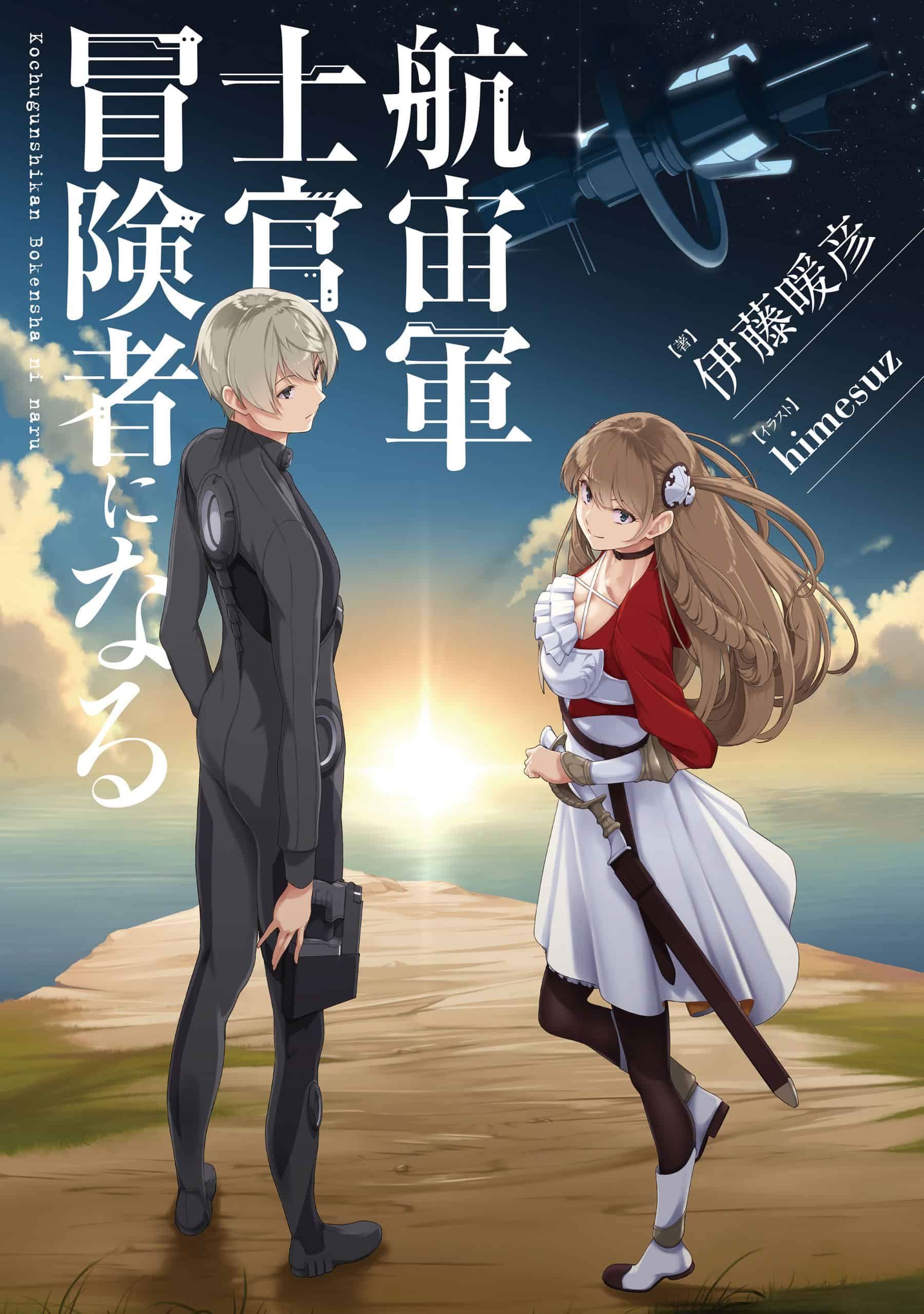
Humanity has been locked in a brutal, thousand-year war with the Bugs, insectoid lifeforms known for their cruelty and overwhelming numbers. The conflict began on the colonial planet Vesta, where an entire population of 200,000 was slaughtered. Decades later, in the year 2258, the Imperial Galactic Navy battleship Iris Conrad departs on a critical reconnaissance mission to locate the homeworld of the Bugs, hoping to end the war by destroying their source. The ship is crewed by over twelve hundred personnel, including Lieutenant Alan Corinth, an intelligence officer assigned as one of the few qualified technicians capable of maintaining the vessel's complex mainframe.During a hyperspace journey, the Iris Conrad suffers a catastrophic and unexplained attack from four different coordinates. The assault destroys the bridge, engine section, cryo-sleep bays, and hangar, killing nearly every crew member instantly. Alan Corinth survives only because he is performing maintenance in the shielded cleanroom, which retains independent gravity and life support. As the sole survivor, the ship’s artificial intelligence, Iris, invokes military code to temporarily promote Alan to acting captain. With the ship’s engines destroyed and the vessel falling toward an unknown planet, Iris calculates a fifty-four percent chance of survival if they can repair the ship. She instructs Alan to escape in a pod while she initiates emergency repairs using the ship’s remaining modular sections and autonomous drones.Alan ejects in the escape pod and survives a turbulent atmospheric entry, crashing into a lake on a temperate, Earth-like planet. Upon reaching shore, he discovers footprints that resemble human prints but belong to green-skinned, four-toed humanoids. After a brief, fatal encounter with five aggressive creatures who destroy his water supplies, Alan realizes he is not alone. He establishes a base near a rocky hill, procures food by hunting local wildlife and gathering edible plants, and begins to adapt to his survival situation. Meanwhile, Iris manages to detach damaged ship sections and launch drones and robots to assist in repairs and search for Alan. Approximately eighty percent of the deployed units survive re-entry, providing Alan with technological assets such as tractors, excavators, and reconnaissance drones.While exploring the landscape, Alan follows a set of wheel tracks and discovers a road, indicating the presence of intelligent civilization. He pursues the tracks and witnesses a carriage overturn after an ambush by wolf-like creatures. He intervenes, using his pulse rifle to eliminate the attackers. Among the survivors is a young woman named Cleria, who has lost her left arm and right foot. Alan performs emergency surgery, using his nanomachine-infused blood to stop her bleeding and apply rare metal tablets to accelerate regeneration. Cleria, who speaks a language Alan does not understand, communicates through gestures. Together, they bury the deceased members of her party. Cleria vows to repay Alan’s debt by invoking the name of her goddess. The story concludes with Alan and Cleria beginning to bridge the communication gap, setting the stage for an alliance between the stranded soldier and the native survivor as they face the unknown dangers of the planet.

Latest Release
DateGroupRelease
2026-10-01light novels translations c349
2026-10-01light novels translations c348
2026-10-01light novels translations c347
2026-10-01light novels translations c346
2026-10-01light novels translations c345
2026-10-01light novels translations c344
2026-10-01light novels translations c343
2026-10-01light novels translations c342
2026-10-01light novels translations c341
2026-10-01light novels translations c340
2026-10-01light novels translations c339
2026-10-01light novels translations c338

Community Reviews

Rating(3.9 / 5.0, 42votes)
5 stars
12(29%)
4 stars
14(33%)
3 stars
16(38%)
2 stars
0(0%)
1 stars
0(0%)

Popular reviews

... Read More
Okay, let me just say this right off the bat — the way this chapter handles the aftermath of a fight is genuinely one of my favorite things about the story. Most novels would just gloss over the looting scene, maybe throw in a quick sentence about gathering supplies and move on. But here? We get a full, almost satisfying inventory process. Salt. Pepper. Cooking implements. A blanket. Even the awkward moment with the women's underwear that gets tossed at Cleria. It feels so mundanely real, like these people are actually trying to survive, not just powering through plot points. But what really hooked me this time is the pacing shift. We go from the chaos of the carriage attack to this quiet, methodical scene of sorting supplies, and that contrast does so much narrative work. It tells us they're not alone anymore — Lord Corinth is there, making decisions, proving his worth. And then the sword scene hits like a gut punch. Lord Corinth drawing Captain Antes' sword and unleashing that devastating technique? That was a minor plot explosion disguised as character moment. The author is clearly building toward something bigger, and every small detail — the healing, the supplies, the new ally — feels like pieces clicking into place. The revelation that Nanom can accelerate healing given enough nutrients is also a fantastic plot device. It opens up a whole new strand of tension — not just finding enemies, but finding FOOD. That's a brilliant survival-game logic that keeps stakes fresh even when combat isn't constant.
... Read More
I need to talk about the waterfall scene because honestly it's one of the most vivid moments in the whole book. The protagonist has been walking along the river for over an hour, and then suddenly—hearing a gushing sound, rounding a bend, and there it is. More than thirty meters tall, something he's only ever seen on holobit before. The way the author describes it is deceptively simple but it paints the whole picture. You can almost hear the water crashing down. And then the disappointment hits too—he can't actually reach it because there are no paths, which is such a grounded detail. This isn't a fantasy world where there's always a convenient trail leading to every scenic spot. The world feels real precisely because of these moments where beauty exists but is inaccessible. But the other scene that stuck with me is the road discovery. Five meters wide, carved through the side of a mountain, with wheel tracks AND hoofprints. Not just one or the other—both. That detail alone tells us so much about this world's history without any exposition dump. There were civilizations here. Horse-drawn carriages. And the fact that the tracks are relatively fresh—maybe two days old—means whatever built this road or used it recently is still out there somewhere. The author doesn't stop to explain who these people are or what their civilization looks like. We get almost nothing but physical traces, and somehow that's more powerful than a paragraph of worldbuilding exposition would've been. It makes the world feel vast and layered, like there's history underneath everything.
... Read More
This batch plays with stakes in an interesting way—mostly low external danger but high internal tension. The Grayhounds are mentioned early on as a background threat: 'There was a danger of encountering vicious monsters such as Grayhounds after all.' But they never appear. The real tension comes from social awkwardness (bathing together), identity uncertainty (what is this armor? who is Corinth?), and the protagonist's self-doubt about their own abilities. The fishing ambush scene is where physical stakes briefly spike. The protagonist needs to catch fish to meet the 'daily quota'—there's an implicit pressure to provide. They throw a stone, miss or hit? The text confirms a dead-on strike, but the momentary suspense of the throw itself is well-handled. The sword technique activation is the closest thing to a combat scene, and it's handled brilliantly. The protagonist remembers a video game mechanic, tries it as a joke, and discovers it actually works. The stakes here are existential—if this power is real, everything the protagonist thought about their situation changes. The blinding glow, Nanom's 'Unconfirmed' response, Cleria's confused reaction—all of it raises the question: what else is possible? The relationship stakes are subtle but present. Cleria calling the protagonist 'lonely' at one point, the protagonist checking on her, Cleria copying their eating habits—there's a quiet emotional investment building between them. If something happened to either of them, the other would be genuinely affected. The food conflict is almost comedic—the protagonist worries about waste (passing on breast meat, using it for bait), the hunger of the group, the satisfaction of a successful hunt. But it's elevated by the garlic discovery. Finding wild garlic in a fantasy world is like finding salt in a desert—it's a small victory that means everything for morale. Overall, the stakes are personal rather than world-ending, and that's refreshing. The protagonist isn't saving the galaxy; they're trying to survive one day at a time, keep their companions safe, and figure out why their sword glows. It's grounded conflict that makes you care about small wins.
... Read More
Okay, let me just say this upfront—Cleria is absolutely the kind of character who will ruin you. You meet her literally half-dead, limbs torn off, and somehow she's the one asking formal questions and examining his precious glass cup like it's some museum artifact. The contrast between her ruined state and this bizarre dignity she clings to? Chef's kiss. But what really got me is the introduction scene. Two people who can't speak the same language, trapped in a dead forest, and they figure out each other's names like it's the most natural thing in the world. "Alan Corinth." She repeats it back to him and he *practices it*. He practices saying her name. Over and over. That's not just politeness—that's someone who understands, on a fundamental level, that names are the first thing you give someone when you have nothing else to offer. And then there's her internal narration after the prosthetic scene. She calls him an "exemplary noble"—prudent, kind-hearted, possessed of keen intellect and power. But here's the thing: she literally has no idea who he is. She doesn't know where he's from, whether he's truly noble, what his real motives are. She's projecting this entire archetype onto a man who survived by making emergency rations taste like dessert to a ghost girl. And she's wrong about at least one of those traits, isn't she? That's either going to be heartbreaking or hilarious, and I'm not sure which excites me more. The power dynamic between them is already shifting. He saves her body; she gives him a purpose. She can't walk without help, but she's the one asking the questions, testing him, measuring him. By Chapter 40, she's already hiding things from him—her pursuers, her mission, the oath she swore to the Goddess. He's building her legs; she's keeping her secrets. That's a relationship that's going to break my heart.
... Read More
This chapter is fascinating from a dialogue perspective because basically nobody talks to each other. The protagonist and Cleria have a complete language barrier and yet their interaction is probably more communicative than half the exchanges I've read in this book when they CAN understand each other. Watch how the author handles this: every attempt at verbal communication fails immediately—he greets her in his language, she responds in hers, bam, nothing. So they pivot to gesture and somehow it WORKS better. The charades scene where he mimes digging and burying and she gets it on the first try—that's a masterclass in showing competence through physical comedy instead of exposition. And then her oath scene: "I swear upon the holy name of the Goddess Ruminas" with her body literally glowing—that's the only real verbal exchange of substance in the whole chapter and it lands because everything else was silence. The protagonist's internal monologue though, full of casual swearing and sarcastic commentary, gives him such a distinct voice. He sounds like a regular guy who somehow got dropped into the most absurd situation possible and is just rolling with it. Love it.
... Read More
There's a weird little moment in Chapter 34 where Cleria is examining this crystal-clear glass cup and thinking about how much gold someone would pay for it. And I keep coming back to it because I think it's the thematic key to everything that follows. This book is obsessed with the gap between what things are worth and what they cost. Emergency rations that taste like dessert. A prosthetic leg made from carriage parts and nanotech. A girl who died and came back wrong. Alan offers her food without understanding her culture, her biology, her concept of sustenance—and she eats it anyway because she's starving and he's the only option. The horse meat thought. That's the first line of this entire passage. Alan wants to try horse meat. He just buried a girl—actually performed a burial ritual for his dead companion—and his mind wanders to whether he should cook horse. It's grotesque and hilarious and human in a way that no other fantasy novel I've read handles quite this casually. Death and culinary curiosity occupying the same brain cell. And then there's the oath. Cleria sworn under the purview of the Goddess. Something happened to her that made her lose her limbs, lose her companions, and come back as whatever she is now. The oath is a symbol of agency in a story where agency is the rarest commodity. She chose something. She bound herself to something. And Alan, who has no concept of gods or oaths, is the one who rebuilds her body while she rebuilds her purpose. The metallic sheet peeled away like a trick. Food wrapped in metal. A girl wrapped in grief. Everyone in this story is containing something that doesn't look like what it actually is.
See all reviews

Custom lists

See all custom Lists