Summary

... Read More

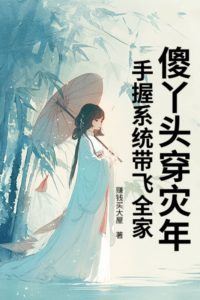
Zhuo Ling, a survivor of a post-apocalyptic underground city where Earth was frozen by a Cambrian Ice Age, transmigrates into the body of a five-year-old girl with an intellectual disability in ancient Great Yan Kingdom. The original owner, an orphan taken in by the destitute Zhuo family, had just fallen from a tree after being tricked by village children. Upon waking, Zhuo Ling discovers she retains her Marketplace System, a technological interface from the apocalypse that allows her to buy and sell goods between the resource-scarved underground city and this ancient world. The exchange rate is heavily skewed, with items from the ancient world selling for vast sums in underground credits, while goods from the future can be purchased cheaply in this era.

The Zhuo family lives in extreme poverty in a remote village suffering from a severe two-year drought. The father, Zhuo Dawu, is bedridden with a infected leg wound, while the mother, Fenniang, and her three sons struggle to survive on watery porridge mixed with wild vegetables. Despite their hardship, the family treats Zhuo Ling with profound kindness, sharing their meager food with her. Zhuo Ling, who never experienced family warmth in the cold underground city, is deeply moved by their love and resolves to use her system to improve their lives. Her first act is selling a basket of organic eggs belonging to her malicious Second Aunt, Fan Cuihua, to the system for sixty thousand underground credits, which she converts into sixty copper coins. This windfall allows the family to eat a proper meal for the first time in months, though they remain suspicious about the source of the money.

Conflict escalates when Second Aunt Fan Cuihua confronts the family after discovering her eggs are missing. She accuses them of theft and insults Fenniang, claiming the children are illegitimate. Fenniang, usually gentle, fiercely defends her family’s honor, forcing Fan Cuihua to retreat. The tension resumes when Zhuo Ling steals an egg from Fan Cuihua’s son, Xiaohu, leading to another public confrontation. To resolve the dispute and secure a sustainable food source, Zhuo Ling purchases a genetically enhanced laying hen from the system. The hen lays over a dozen large eggs in a single session, astonishing the villagers and silencing her critics. The family uses the eggs to repay debts and improve their diet, marking a turning point in their survival.

As the family’s situation improves, Zhuo Ling identifies a critical medical emergency: her father’s leg infection is worsening and risks becoming sepsis. With no money for traditional medicine, she spends her remaining credits on premium antibiotics and painkillers from the system. She cleverly disguises the medicine as part of her father’s food, hiding the powder in his porridge. The treatment begins to take effect, offering hope for his recovery. Meanwhile, Zhuo Ling continues to explore the mountain forests with her brothers, using the system to identify valuable wild plants like dandelions and stinkweed, which she sells for substantial profits. She plans to build a grand mansion for her family, aiming to provide them with a life free from the hunger and hardship that defined their existence before her arrival.

The narrative follows Zhuo Ling’s strategic management of her dual-world resources. She balances the need to maintain her disguise as a foolish child with the necessity of secretly accumulating wealth and goods. Her actions gradually shift the family’s fortune, turning them from near-starvation to a position of relative stability within the village. The story highlights the contrast between the brutal, resource-driven society of the apocalypse and the communal, albeit impoverished, life in the ancient village. Zhuo Ling’s ultimate goal is to secure her family’s safety and prosperity, using her unique system to navigate the challenges of drought, illness, and social hostility.

Novel Items

More
Arcane Treasures
A translucent virtual interface system from the post-apocalyptic underground city that appeared in Zhuo Ling's mind. It has a red targeting frame that can lock onto items, display their prices in Underground Credits, and sell them. The system exchanges items at a rate of 1000 Underground Credits to 1 copper coin in the current world's currency. It disappeared after selling the eggs.
Materials
Six eggs carried in Second Aunt's basket, hidden beneath a layer of wild grass. Each egg was valued at 10,000 Underground Credits by the Marketplace System. Zhuo Ling sold all six eggs through the system, receiving 60,000 Underground Credits equivalent to 60 copper coins in this world's currency. Second Aunt discovered them missing and screamed in distress.
Materials
Hauled by the men from the pens to be used as fertilizer for the potato fields during the village land reclamation work.
Item
The currency used in the post-apocalyptic underground cities. 10,000 credits could buy ten months of synthetic food. The exchange rate to this world's copper coins was 1000:1.
Item
Basic currency in the Apocalypse Game. Players receive copper coins as drops from monsters. Exchange rate: 1 gold = 100 silver = 10,000 copper.
Food Ingredient
Oil pressed from wild perilla seeds that Zhuo Chang'an spent an entire year gathering. Fenniang roasted and pressed them into half a bowl of oil. The leftover seed cake could still be boiled into porridge for several more meals.
Latest Release
DateGroupRelease
2026-08-11shanghai fantasy c8
2026-08-11shanghai fantasy c7
2026-08-11shanghai fantasy c6
2026-08-11shanghai fantasy c5
2026-08-11shanghai fantasy c4
2026-08-11shanghai fantasy c3
2026-08-11shanghai fantasy c2
2026-08-11shanghai fantasy c1

Community Reviews

Rating(3.9 / 5.0, 24votes)
5 stars
8(33%)
4 stars
6(25%)
3 stars
10(42%)
2 stars
0(0%)
1 stars
0(0%)

Popular reviews

... Read More
The stakes in this chapter are deceptively simple on the surface — a girl finds valuable plants and a rabbit in a famine world — but they're actually layered in ways that keep me hooked. On the external level, the stakes are survival: this family is poor, the famine is real, and every copper coin matters. Sister-in-law Zhang mentions they're struggling to make ends meet. Fenniang is taking eggs to town to sell. The rabbit Uncle Feng caught is described as "skinny — not much meat on it." In this world, a rabbit is worth a dozen copper coins per jin. But Zhuo Ling knows it's worth a THOUSAND. That gap between perceived value and actual value is the central tension, and it's brilliant. But the real stakes are internal and relational. Zhuo Ling is hiding something massive — a system that can turn worthless weeds into fortunes — from the people closest to her. She trusts Eldest Brother, yes, but she's still weighing whether to tell him. Every time she almost does, something interrupts. The author is deliberately stretching out this revelation, and it works because we understand WHY she's hesitant. If word got out, she'd be in danger. In a famine world, someone who can conjure wealth from nothing isn't just rich — they're a target. There's also the tension of opportunity cost. She COULD sell the stinkweed openly, but she'd get pennies. She COULD take the rabbit and sell it in town, but she'd miss out on nearly a thousand times the value. Every decision she makes is a calculation between safety and profit, and that's where the suspense lives. Will she figure out how to withdraw the credits? Will Eldest Brother notice? The chapter ends with her walking to town with her family, the hen laying eggs, the system humming in the background — and I literally cannot wait to see what happens next.
... Read More
Let me just start by saying the opening imagery in Chapter 1 is absolutely cinematic. Blazing sun, lush green trees, thick grass, wildflowers blooming among vibrant weeds—this is a world that feels ALIVE in a way that underground city descriptions never could. The author doesn't just tell us it's beautiful, they make us feel the contrast through Zhuo Ling's senses. And then—cow dung. Of course. Just when you think the scene is going full pastoral fantasy, BAM, a handful of yellowish sticky mud and the smell hits her. The humor of it is perfect. She's having this transcendent moment of smelling fresh grass and discovering wildflowers for the first time in her life, and then her palm is covered in cow dung. The children laughing, Xiaohu's reaction when she shoves it in his mouth—it grounds the scene in reality while still being hilarious. The underground city flashbacks are where the worldbuilding really shines though. Molecular synthesis technology making food that looks like cat food. The fact that green plants were unimaginably precious. The global seed vault suffering catastrophic damage. The wealthy eating real vegetables while everyone else survived on synthetic paste. This isn't just backstory—it's the emotional foundation for why Zhuo Ling is literally grinning like a maniac at the sight of wild grass. "Oh my god! So this is what fresh grass smells like!" This single exclamation carries the weight of an entire civilization's loss. The contrast between the frozen apocalypse Earth and this sun-drenched ancient village isn't just setting—it's the emotional core of why this transmigration matters. Every wildflower, every patch of grass, every drop of sunlight is a victory against the ice age that destroyed her old world.
... Read More
The dialogue in this chapter is doing so much heavy lifting and I love it. Zhuo Ling's voice — or rather, her performed voice — is a masterclass in comedic timing. Every time she opens her mouth, it's something like "Bunny! Bunny!" or "Tired! Ling'er tired!" or the drooling scene where she just starts salivating on command. But the genius is that the narrative never lets us forget this is an act. We're always hearing her internal monologue in sharp contrast: "Clear sap seeped from the broken stems... Sure, it stinks... but it's valuable, you silly brother!" The gap between what she says and what she thinks is where the humor lives, and it's consistently funny without ever feeling forced. The other characters' voices are distinct too. Sister-in-law Zhang has that nagging-but-caring tone — "Why would she let you two half-grown boys bring a foolish little girl here? What if you run into a wild beast?" — and then immediately follows it up with actual help (the flatbread). Uncle Feng is straightforward and warm: "Foolish girl, you can't eat it raw!" and then laughs so hard he nearly doubles over. Even the background villagers have quick, functional dialogue that paints the world without slowing things down. The narrative voice itself is also worth noting. It's close third person, staying firmly anchored in Zhuo Ling's perspective, but it occasionally slips into almost cinematic descriptions — like the sunlight shaft hitting Chang'an's face. The tone balances between playful (the drooling rabbit scene) and genuinely tender (the brother-sister quiet moment). And those system notifications? "Ding! Natural medicinal herb—Sambucus (Bone-Setting Herb)—discovered. Value: 150,000 Underground Credits per jin. Sell?" They're blunt, mechanical, and perfectly contrast with the organic, messy human world around them. The author knows exactly when to be funny and when to let a moment breathe.
... Read More
I need to talk about the emotional journey in this chapter because it hit me right in the feels. Zhuo Ling's fear of being discovered is palpable—her heart pounding, the sweat on her forehead, the desperate need to prove herself. When she finally reveals everything, there's this moment of vulnerability that's almost painful to read. She's been carrying this secret alone, and the relief when Eldest Brother believes her is so palpable you can feel it. But what really got me was Zhuo Chang'an's question: 'What happened to the old Ling'er?' That single line carries so much weight. He's not just accepting the new Zhuo Ling—he's mourning the sister he knew, even if she was slow-witted. It's a bittersweet moment that adds depth to their relationship. And then there's the tenderness when he rubs her head, the way he protects her secret, the promise they make to build a future together. This isn't just a transactional partnership—it's family, forged in extraordinary circumstances. The emotional payoff is huge, and I'm already invested in their journey.
... Read More
The dialogue in this chapter is exceptional. Every character has a distinct voice that feels authentic and memorable. Zhuo Ling's dialogue is perfect—she's energetic, sometimes impulsive, with that mix of adult intelligence and childlike expressions. 'I'll prove it if you don't believe me! I'll perform a magic trick!'—that's exactly how a five-year-old with an old soul would talk. Zhuo Chang'an's dialogue is more measured, thoughtful, with that quiet wisdom that comes from being the eldest brother. His line 'Ling'er's eyes used to be vacant... empty. They weren't like yours' is spoken so softly, so tenderly, that it gives me chills every time. And the system notifications? 'Ding! Rare Chinese horse breed detected. Value: 10,000,000 Underground Credits. Sell?'—that's a brilliant narrative device that adds humor and world-building without breaking the flow. The dialogue never feels forced or expository; it feels natural, like real people talking. The author has a gift for letting characters reveal themselves through what they say and how they say it.
... Read More
"Because biting myself hurts." This line. This absolutely perfect line. Zhuo Ling bites Xiaohu instead because self-harm is for idiots and she has survived fifty years in an underground city where literally everything was rationed and painful. Of course her first instinct is to make someone else suffer instead of herself. This is trauma response and I am not okay. But then—the tenderness. Oh god, the tenderness. When Chang'an picks her up and she buries herself in his arms, the way the narrative describes her face turning bright red and her body tingling like she's been shocked? That's not just a child's reaction. That's a twenty-year-old woman who has never been touched with kindness experiencing something entirely new. And Chang'an's response—lightly patting her bottom, telling her not to be naughty, rubbing her head—this boy is genuinely gentle. He doesn't treat her like she's broken or less than. He sees her, even when she's drooling on his shoulder and accidentally kissing his collarbone. The most emotionally devastating part for me was the Second Aunt scene. All those women mocking her, calling her a fool, saying she brought disaster to her family, suggesting she should have been drowned in a latrine. And Zhuo Ling's internal response? Not sadness. Not shame. Pure, unadulterated rage. She's already gathered another mouthful of saliva to spit at the woman. This is a character who has been told she's worthless her entire life and she refuses to internalize it. The CP chemistry between these two is already simmering under the surface. It's not explicit—it's in the way he wipes her drool, the way she instinctively snuggles into his chest, the way both of them are playing roles (her pretending to be foolish, him pretending not to notice). I need more. I need it now.
See all reviews

Characters

See all characters

Custom lists

Oops…There is nothing here.