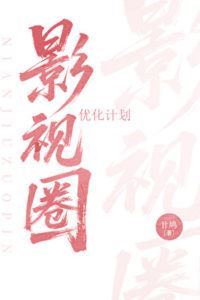
The Film & TV Industry Optimization Project
+Add to Custom List
Genres:
Novel Info
  • Author:
  • 廿鸠
  • Status:Ongoing

Summary

... Read More
Ying Shi is a twenty-year-old finance sophomore at N University who runs an online account analyzing films and television dramas. Her candid critique of actor Li Yinan’s appearance and acting skills in a video triggers a severe backlash from his fanbase. The harassment escalates from online abuse to real-world violence when a deranged fan tracks down Ying Shi and stabs her in the abdomen. She survives the attack due to a mild concussion and a shallow wound, but the experience leaves her shaken. Upon waking in the hospital, she discovers she has died and been bound to a mysterious entity known as the Film and Television Industry Protection System. The system grants her three days of life and offers a path to extend it through completing tasks related to the entertainment industry. Ying Shi learns that the system can provide substantial funding, legal protection, and control over online traffic. Her first task is to produce a high-quality television series. In exchange for earning points, she receives an inheritance from a distant relative abroad, which legally allows her to acquire a twelve-story office building and establish Ying Shi Entertainment. The system handles the acquisition of adaptation rights for a historical romance web novel titled Little Sweetheart. Ying Shi recruits a team consisting of director Lin Chongshan, screenwriter Song Zhizhi, and two unknown actors, Zhou Qingning and Shen Xiao. She insists on maintaining creative control, refusing to allow investors or actors to interfere with the script or filming process. As production progresses, Li Yinan and his agency attempt to suppress Ying Shi’s influence. They file complaints to remove her review videos and pressure streaming platforms to reject her drama. Despite these obstacles, the filming of Little Sweetheart proceeds smoothly. The crew produces a well-received drama with high production values. However, upon completion, Ying Shi faces a blockade: major streaming platforms refuse to license the series due to industry politics and pressure from established entertainment companies. To circumvent this, Ying Shi uses the system to create Wanshi Trending, a website that publishes objective viewership data and rankings. The platform reveals that Li Yinan’s popular drama, Si Hua Nian, has significantly inflated popularity metrics compared to its actual viewership. This move gains Ying Shi public support and exposes the manipulation of data by major platforms. She then launches Wanshi TV, a streaming platform that offers Little Sweetheart for free without requiring registration. The drama is released to positive audience feedback, achieving a high trending score on Wanshi Trending despite lacking the marketing budget of competing productions. Li Yinan’s fans react with hostility, accusing Ying Shi of rigging the charts and seeking revenge. Ying Shi responds by publicly documenting their abuse and tagging Li Yinan and his studio, challenging them to address the behavior of their fanbase. The story concludes with Ying Shi establishing her company as a credible entity in the industry, using data transparency to challenge the dominance of traditional platforms and traffic stars. She continues to balance her university studies with running her entertainment company, while the system prepares her for future tasks to further reform the film and television industry.

Novel Items

More
System
A mysterious entity bound to Ying Shi after her death. It extends her life through points (1 point per hour of life), provides massive funding for film and television production, controls online traffic, can lift view limits on social media posts, and grants her a film and television company with a twelve-story office building. It evaluates projects based on audience feedback.
Company
The film and television company established by Ying Shi, named by herself. It is housed in a twelve-story office building in the Wilderness area of Xicheng District. The system provides all funding, including employee salaries. Ying Shi plans to focus on producing film and television works rather than artist management.
Rights
Ying Shi's first production project plan. She chose a historical romance web novel from Green River with simple character settings, straightforward structure, no obvious plot holes, and archetypal characters requiring minimal complex performances. The series would be around thirty episodes. The system handled the purchase since Ying Shi is in the beginner stage.
Weapon
A fruit knife found on a table in the basement, its blade stained with blood. Likely used in connection with the bloody scene in the cage.
Event
Ying Shi posted screenshots of abusive comments from Li Yinan's fans, the raffle event celebrating her stabbing, and tagged regulatory authorities, Li Yinan, and his studio. The system lifted the view limit on her posts, helping the issue trend at the top of Weibo's overall trending chart.
Social Media Post
A 'just friends' Weibo post that Zhu Yan was made to publish regarding her relationship with Meng Chu. This was part of Meng Chu's so-called handling of the situation.
Latest Release
DateGroupRelease
2026-08-11shanghai fantasy c43
2026-08-11shanghai fantasy c42
2026-08-11shanghai fantasy c41
2026-08-11shanghai fantasy c40
2026-08-11shanghai fantasy c39
2026-08-11shanghai fantasy c38
2026-08-11shanghai fantasy c37
2026-08-11shanghai fantasy c36
2026-08-11shanghai fantasy c35
2026-08-11shanghai fantasy c34
2026-08-11shanghai fantasy c33
2026-08-11shanghai fantasy c32

Community Reviews

Rating(4.1 / 5.0, 32votes)
5 stars
15(47%)
4 stars
6(19%)
3 stars
11(34%)
2 stars
0(0%)
1 stars
0(0%)

Popular reviews

... Read More
I need to talk about Lin Jinyao because this character absolutely wrecked me. Let me just say it: she is the most tragic figure in this entire story and nobody gives her enough credit. Think about it—she had EVERYTHING. A husband who truly loved her, a comfortable life, no parental favoritism. And yet she still felt empty. The text literally says she watched Sanxiu walk out step by step while she herself never picked up the medicine box again. Is that because she physically couldn't anymore? Or because she finally let go? The ambiguity is killing me. And then there's the relationship between Sanxiu and Lin Jinyao—that's the real emotional engine here. Lin Jinyao sees in Sanxiu the girl she once was, smarter and braver, and she wants to protect her with everything she has. It's not romantic love, it's not even exactly maternal, it's something that lives in a category all its own. The scene where Lin Jinyao can't hold back her tears watching Sanxiu's thin shoulders carry that medicine box through the streets—chills. Absolute chills. And then the plague demon and Sanxiu? That's a whole different flavor of relationship. The demon is this rebellious creature born from disease and death, hated by everyone, and Sanxiu is the first person who asks it a question instead of running away. "Could you use your different forms to simulate symptoms?" Not "what are you?" Not "stay away from me." Just pure, scientific curiosity. The demon, starved for affection, just... folds. It's heartbreaking and kind of funny at the same time.
... Read More
Okay so let me just say this opening hit me like a truck. A film blogger gets stabbed by a delusional fan over a drama review video—then wakes up in a hospital with a shallow scratch because apparently she was already dead and got bound to some supernatural system. The plot mechanics here are wild but weirdly satisfying. The system giving her a twelve-story building, unlimited production funds, and traffic manipulation powers? That's not just a cheat code, that's a full-on genre shift from realistic drama to something almost like a wish-fulfillment fantasy. But what I love is how the plot sets up the central conflict: Ying Shi vs. the toxic entertainment industry ecosystem. She's not just fighting one bad actor's fans—she's fighting an entire system that rewards bad acting and protects celebrities at all costs. The fact that Li Yinan's fans are holding a raffle to celebrate her stabbing? That's the kind of detail that makes you want to throw the book across the room. And then she turns around and uses the system's traffic manipulation to make them taste their own poison. The plot is basically: wronged protagonist gets supernatural power, builds empire, takes down corrupt industry from the inside. Classic structure, but executed with enough specificity and bite that it doesn't feel generic. The adaptation rights purchase being handled by the system in the beginner stage is a smart narrative choice—it removes a boring bureaucratic obstacle so we can get to the fun part: the actual production drama. I'm genuinely curious how the system's rules will evolve as Ying Shi progresses. Does she earn more autonomy? Do the tasks get harder? That's the tension I want to keep reading for.
... Read More
I need to talk about the pacing because Song Zhizhi is genuinely cruel to readers and I am here for it. The first twenty episodes move at a pace that's almost suspiciously good. We get Sanxiu's backstory, her discovery of her talent, the heavenly general's intervention, the slow absorption of spiritual energy, the growing reputation of the county, the lurking demons... and then BOOM. Episode 20 ends with the plague demon reappearing, recognizing Sanxiu as the child it injured years ago, and intending to seize her life elixir before the other great demons can. The text cuts off right there. Right. There. No resolution. No hint of what happens next. Just... silence. Su Manwen's reaction says it all: 'So where was the rest? Why couldn't Song Zhizhi write twenty episodes a day?' That's the reader experience captured perfectly. You're hooked, you're worried about Sanxiu, you're angry at the plague demon, and the story just... stops. It's the most frustrating cliffhanger in web novel history and I would read a thousand more like it. But here's what's interesting about the structure—the first twenty episodes aren't just setup. They're a complete emotional arc. Sanxiu goes from a sold child to a healer with spiritual power. The world builds around her. The relationships form. And then the threat returns, tying back to the very first incident that started everything. That's circular storytelling at its finest. The meta-narrative about Su Manwen reading and reacting to the script also adds a layer of pacing control. We get breathing room between the emotional beats of Sanxiu's story and Su Manwen's professional reactions, which keeps the overall rhythm from becoming monotonous.
... Read More
The pacing in these first seven chapters is absolutely razor-sharp. Let me break down why it works so well. Chapter 1 opens IN MEDIA RES—Ying Shi is already in the hospital, already stabbed, already processing what happened. No slow buildup, no prologue explaining the world. We drop right into the aftermath and learn everything through her internal monologue and the system's exposition. That's confident writing. The author trusts the reader to keep up. Then the pacing accelerates: system binding → hospital discharge → claiming the building → naming the company → planning the first project. All in one chapter, and it never feels rushed because each beat has a clear purpose. The transition from victim to entrepreneur happens naturally because Ying Shi's personality is already action-oriented. She doesn't wallow. She doesn't have a long grieving period for her old life. She dies, gets reborn with a system, and immediately starts working. Chapter 2 shifts gears slightly—we get a quieter moment where she's scrolling Weibo at 1 AM, checking on her roommates and the orphanage volunteer. This is important structural work: it grounds the fantastical elements in real human relationships before launching back into the business plot. The chapter ends on a cliffhanger with the Bilibili complaint, which is a perfect button to close on. The author understands that even in a system-driven fantasy, you need small personal stakes to keep readers emotionally engaged between the big plot beats. My only note: I would have liked a bit more breathing room between the system revelations and the company naming. But honestly, the momentum is so addictive that I can't complain too much. This is the kind of pacing that makes you say 'just one more chapter' at 2 AM.
... Read More
Let me just say this: the worldbuilding in this script is exceptional. Not the typical 'let me describe the magical realm' kind of worldbuilding, but the kind where the world feels like it exists whether or not the protagonist is in it. The opening establishes Sanxiu's backstory in this matter-of-fact way—sold at six, nearly abandoned by a broker, rescued by the Lin family. But then it layers in the mythological elements so naturally that you don't even notice the genre shift happening. A heavenly general chasing a plague demon, spiritual energy merging with mortal flesh and blood and bones. The text describes this cultivation principle as 'mountains gain spirit when immortals dwell within; waters gain spirit when dragons reside beneath' and then applies it to a mere mortal woman. That's the kind of worldbuilding that makes you sit up and pay attention. The entire small county becomes saturated with spiritual energy. Just... saturated. You can feel it. The demons notice. The gods notice. And Sanxiu, this girl who just wanted to help people, is at the center of it all without even realizing it. What I love is how the mundane and the mythological coexist. There's a medical clinic, herbs, medicinal formulas, and also heavenly generals and plague demons and land gods. The land god is described as 'seeming lazy but possessing great spiritual power'—that's such a specific, vivid character detail that tells you everything about this world's sense of humor. And the ghostly messenger Wang Yan exists alongside corrupt officials and upright magistrates and vicious demons and innocent little demons. This world has texture. It has history. It feels like somewhere you could actually live, which is the highest compliment I can give to any fantasy setting.
... Read More
Okay, I need to talk about Shen Xiao and Zhou Qingning because their dynamic is genuinely one of the most refreshing things in this entire chapter. Like, most CP marketing in dramas is so forced and icky, right? But here? It actually feels real. The moment that got me was when Zhou Qingning asks him straight-up: 'If I join, it won't be a long-term CP marketing thing with you, will it?' And Shen Xiao's response—'To be honest, are you that repulsed by me?'—is simultaneously childish and weirdly vulnerable. He's not being smooth about it at all, and that's exactly why it works. You can tell he's genuinely hurt by the implication, even though he's also being a brat about it. And then the narrator drops this gem: 'She didn't want their on-screen persona as an adorable, lovable pair of silly sweethearts to turn into the No-Brains and Bad-Temper Show.' I literally laughed out loud. That is SO accurate to their dynamic. They're both a little ridiculous, but in a way that feels honest rather than manufactured. The whole 'older woman, loyal puppy' vibe that netizens picked up on is interesting because it flips the usual trope. Zhou Qingning isn't some cold, dominant figure—she's just more experienced and knows what she wants. Shen Xiao isn't weak; he's just openly enthusiastic and not afraid to show it. When he hangs up on her after she calls him repulsive, that's not toxic, that's just two people who know each other well enough to not sugarcoat things. Also, the fact that they ended up at the same company? That's not just convenient plotting—that's the kind of organic development that makes CP fans lose their minds in the best way. The contrast between their on-screen sweethearts and their off-screen banter is what makes this feel earned rather than forced.

See all reviews

Characters

See all characters

Custom lists

Oops…There is nothing here.