Summary

... Read More

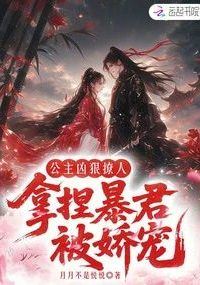
Xiao Changning, the daughter of the Crown Prince of Nanxiao, leads a humble life distributing congee to the poor, unaware that her royal status makes her a pawn in a geopolitical game. As Beiyuan’s army besieges the Nanxiao capital, the Emperor issues an ultimatum: send a princess for a marriage alliance or execute hundreds of prisoners daily. The Crown Prince, prioritizing his political survival, agrees to sacrifice his daughter. Xiao Changning, who is secretly in love with her childhood friend Vice Minister Yuan Yanchen, attempts to elope with him to avoid the fate awaiting her. However, Yuan Yanchen is coerced by his mother into abandoning the plan to protect his clan, leaving Xiao Changning waiting alone in the cold until dawn. Heartbroken and betrayed, she accepts her destiny and departs for Beiyuan as a marriage alliance bride.

The Emperor of Beiyuan, Murong Yao, is a ruthless tyrant who seized the throne by slaughtering his siblings. He has desired Xiao Changning since seeing her perform a dance five years prior and orchestrated the war to force the marriage. Upon her arrival, he asserts his dominance, but Xiao Changning discovers that her maid, Ali, has been spying on her for Murong Yao. When assassins attack the camp, Ali sacrifices herself to save Xiao Changning, revealing her loyalty was forced by threats against her family. Grieving and isolated, Xiao Changning is brought to the Beiyuan capital, Jincheng, where she enters a hostile harem. The Empress, Jiang Yuzhou, appears welcoming but harbors her own political agendas, having secretly influenced court decisions from the shadows.

Xiao Changning faces immediate hostility from the other consorts, particularly Chen Zhaoyi, who resents the new Guifei’s elevation. Murong Yao publicly defends Xiao Changning, punishing those who disrespect her, yet he also forces her to drink contraceptive soup, denying her the one thing that might secure her position. The political landscape is further complicated by the Prime Minister, Jiang Xun, who is Jiang Yuzhou’s father and seeks to maintain control over the military and court appointments. He clashes with the Empress over her interference in state affairs, revealing the deep fractures within the Beiyuan leadership.

As Xiao Changning navigates the treacherous palace environment, she realizes that her past with Yuan Yanchen was manipulated and that her current captivity is part of a larger design. Murong Yao’s obsession with her grows, but his methods are controlling and violent, leaving her with no true ally. The story establishes a complex web of political intrigue, personal betrayal, and survival, with Xiao Changning caught between the crumbling state of her birth and the oppressive regime of her captor.

The narrative highlights the power dynamics between the sovereigns, the consorts, and the ministerial factions. Murong Yao’s military success is tempered by internal dissent, while Xiao Changning’s resilience is tested by the loss of her freedom, her love, and her servant. The tension builds as various characters pursue their own interests, setting the stage for a struggle that will determine the fate of both nations and the personal destiny of the princess who dared to hope for a different life.

Novel Items

More
Document
A formal diplomatic letter delivered in a yellow casket by a junior official. It demanded that Nanxiao send Princess Changning for a marriage alliance within three days, threatening to execute one hundred prisoners of war and refugee commoners daily until none remained.
Item
A travel document placed inside a travel bag by the Crown Princess for Xiao Changning to use during her attempted escape. It was meant to help her and Ali flee the imperial city.
Performance
A performance by Xiao Changning on a Painted Pleasure Boat in Jiangling, featuring the lyrics The mountains have trees, oh; my heart delights in you, oh. This performance utterly conquered Murong Yao and became the catalyst for his obsession with her.
Event
A proposed marriage alliance between the Lu and Xia families. Xia Zhengyang plans to force Lu Huaijin to announce it at the birthday banquet if Xia Nanxing makes her move on him. Lu Huaijin's parents have also been quietly pushing for this match.
Item
A type of candy owned by Xiao Changning in her childhood. When Yuan Yanchen scraped his palm on a branch while picking green plums for her at age ten, she dabbed his wound with her saliva-moistened osmanthus candy, telling him it would prevent scarring. The candy became a symbol of their childhood bond.
Keepsake
A wooden carving of Xiao Changning made with his own hands by Yuan Yanchen. It served as a token of their love. Xiao Changning threw it away before leaving, and Yuan Yanchen picked up the broken carving and followed her.
Latest Release
DateGroupRelease
2026-08-11shanghai fantasy c1

Community Reviews

Rating(4.3 / 5.0, 10votes)
5 stars
4(40%)
4 stars
5(50%)
3 stars
1(10%)
2 stars
0(0%)
1 stars
0(0%)

Popular reviews

... Read More
This poisoning subplot is giving me actual chills and I need to process it. Someone in the palace has been systematically overdosing Guifei's medicine — three times the normal amount of one ingredient, and they did it so carefully that not a single trace was found in the pharmacy. Three times the amount. That's not a impulsive act, that's calculated murder. And Jiang Yuzhou's reaction is what got me: she immediately understands the motive without needing evidence. 'In the palace, whoever is favored becomes the target. It's not for anything else—just pure envy.' That line is so cold and so true. Then Murong Yao brings up his own lack of reason when it comes to Xiao Changning, and suddenly the stakes feel personal, not just political. Jiang Yuzhou's decision to stand aside and let Guifei face it herself is brilliant and terrifying at the same time. She's basically saying: if this woman is innocent, fine. If she's a schemer who's bewitched the emperor, the empire could fall. She's weighing one woman's life against the stability of the entire nation. And Qin Feng's worry about 'Alan' — telling her to keep watch — shows how deeply the surveillance network runs. Everyone is being watched. Everyone is a potential threat. The tension here is suffocating in the best way because you know something is going to explode and we're all just waiting for it.
... Read More
The structure of these chapters is doing something really smart and I want to unpack it. It opens with this heavy, emotional scene between Jiang Yuzhou and her father — slow, intimate, almost domestic. Then it transitions to the palace where the poisoning plot is revealed, which ramps up the tension significantly. But then — and this is the genius part — it cuts to Xiao Changning lying in bed, homesick and half-asleep, dreaming of her childhood. The pacing takes a breath here. It lets you exhale before dropping you back into the danger with Alan and Ying Qi's midnight meeting. The sibling reunion scene is almost comedic in its warmth, which makes the final moment even more tense: Xiao Changning stepping out in her robe, catching them in the middle of the night, and both of them freezing in terror. The author understands that tension doesn't come from constant action — it comes from the contrast between peace and danger. Each scene ends on a note that pulls you into the next: Jiang Xun pretending to sleep, Jiang Yuzhou agreeing to help despite her exhaustion, Xiao Changning lost in memory, the siblings sharing snacks, and then — surprise! — the Guifei is awake and watching. It's a masterclass in controlled pacing. No chapter drags, no transition feels rushed. The emotional beats land because they're given space to breathe.
... Read More
The dialogue between Jiang Yuzhou and Murong Yao in this chapter is absolutely iconic. Let me just say it: Murong Yao has completely lost his mind over Xiao Changning and the way he tries to manipulate Jiang Yuzhou into helping is both hilarious and kind of pathetic in the best way. 'I can't hold on any longer' — bro, it's a poisoning investigation, not a romantic confession. But then he pivots so smoothly into flattery: 'You are my indispensable strategist.' Jiang Yuzhou's response? 'Then you should praise me less in the future. It's not that I won't help, but it's exhausting.' The man is literally rubbing his aching temples from all the emotional labor. And Murong Yao's immediate brightening when she sighs and agrees to help? Chef's kiss. The back-and-forth between them has this perfect rhythm — he's desperate and slightly unhinged, she's tired and sarcastic but ultimately loyal. Their dynamic feels like the most honest relationship in the entire story. Even Jiang Xun's dialogue with his daughter has this wonderful naturalness. 'Remarry? What for?' — half-drunk dismissal, then the sudden serious 'I won't remarry!' when he realizes what he's saying. And the way he mumbles it and then pretends to sleep? That's not dialogue writing, that's character writing at its finest. Every line reveals something about who these people are.
... Read More
There's a moment in Chapter 6 that I keep coming back to. Xiao Changning has just dismissed Ali, walked out of the carriage, and the text says: "She gazed at the darkening sky, at the lonely crescent moon hanging in the night, and murmured to herself, 'Isn't that just like me? Alone, with no one by my side, and no family in sight.'" Just one sentence of description — darkening sky, lonely crescent moon — and it perfectly captures her entire existence. She's not just alone in this moment, she's alone in her LIFE. No family, no allies, just this crescent moon watching over her. And then IMMEDIATELY after, an arrow flies at her. The universe won't even let her have one quiet moment of self-pity. The imagery throughout these chapters is consistently strong. Ali's blood spreading on the ground is compared to "Manjusaka flowers of hell" — that's such a specific, vivid image. Those are the spider lilies that bloom at the threshold of death in Buddhist tradition, and the author chose that comparison deliberately. Blood like hell flowers. I can SEE this scene. The harem entrance scene is also brilliantly painted. "A flock of gorgeously dressed women, all vying for attention, craned their necks in anticipation." The Empress sitting crookedly in her chair, sipping tea without care while the concubines whisper behind her back. The contrast between her casual posture and the sheer authority she wields — slamming that teacup down and everyone goes silent instantly. And then Weiyang Palace — "a pungent, bitter scent of medicine immediately assaulted her senses." The medicine smell as the first thing that hits you when entering Xiao Changning's space. She's sick, she's weak, she's surrounded by the smell of remedies she probably hates. Jiang Yuzhou, who has disliked medicine since childhood, has to endure this bitter scent just to visit her. It's a small detail but it tells you everything about Xiao Changning's current state. The Anwei on the roof too — "descended like a ghost" to defend his painting skills. This is the kind of worldbuilding detail that makes me smile. The imperial guards are so good at stealth that the Empress has to call them out by name, and they're standing on the roof the entire time while she's talking to Xiao Changning. The world feels alive because even the background characters have personality.
... Read More
The stakes in this story just keeps climbing and I am living for it. On the surface level, Xiao Changning's personal stakes are devastating. She wanted freedom — "free as the sky and sea" — and instead she's trapped in a palace with a man who won't let her have children, surrounded by women who want her dead, and she just watched her only friend die because of her. Ali's last words were literally about how Xiao Changning would have been free if not for her. The guilt is going to eat her alive. But the political stakes are just as dangerous. The court officials are submitting impeachment memorials by the boatload. General Helian Jue is specifically called out as "particularly resentful and defiant" — this is a military man who lost cities and prisoners because of Xiao Changning, and he's not happy about it. The Emperor released prisoners and cities just to bring her back, and the entire bureaucracy is furious. This isn't just palace drama, this is potentially treason-level discontent. Murong Yao's conflict is the most interesting though. He's the Emperor — technically the most powerful person in the story — but he's clearly fighting battles on multiple fronts. He needs Xiao Changning (why? we still don't fully know), he needs to keep the court from revolting, he needs the Empress to help him manage everything secretly, and he's actively preventing the one thing that would secure her position (a child). What is he protecting her from? Or what is he protecting himself from? The assassination attempt raises the stakes to life-or-death immediately. These weren't random attackers — they were sent specifically for Xiao Changning, and they were willing to kill her in broad daylight during a carriage journey. The fact that the assassins all committed suicide rather than talk means someone with real power ordered this hit, and that someone is still out there. And underneath everything, there's Xiao Changning's internal conflict — she keeps saying "this is my fate as a princess" and forgiving people who betrayed her, but how long can she keep absorbing betrayal before it breaks her? Ali's death wasn't just a plot point, it was the first crack in her endless pattern of trusting the wrong people and getting hurt. What happens when she stops forgiving?
... Read More
Okay, I need to talk about Jiang Xun because this scene absolutely wrecked me. On the surface it's just a father-daughter dinner, right? She's being sweet, offering to find him a wife, the whole wholesome thing. But then he drops that bomb about losing the girl he loved and marrying someone he didn't love, and then immediately pretends to be asleep to avoid explaining further. That is such a human reaction. Like, he clearly wants to talk about it but also doesn't know how. The fact that he was half-drunk when it came out tells me everything — the alcohol lowered his guard and the real story slipped out. And Jiang Yuzhou's reaction? Her eyes widening instantly, the way she leaned in close to ask who the girl was — you can feel her curiosity and also this weird protectiveness. She's the emperor but here she is, just a daughter who wants to understand her father. The dynamic between them is so layered. She came to the palace under complicated circumstances, yet this moment feels genuinely tender. Also, can we talk about how Jiang Xun set a trap to get her to come back? That's not just loneliness, that's a father who's been holding onto something for decades and finally cracked. I keep wondering who this childhood sweetheart was and whether she's still alive. This single scene added so much depth to a character I thought I already knew.
See all reviews

Characters

See all characters

Custom lists

Oops…There is nothing here.