Summary

... Read More
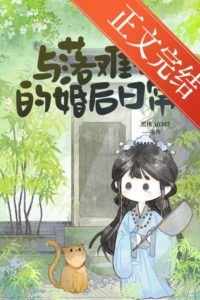
Lin You'an is an eight-year-old boy living in Lin Family Village with his four-month-old sister, Lin Wanwan. After their father's death during the imperial examinations, their mother Zhou Yuhe remarries within two months and abandons the children to the care of their maternal uncle's family. The abusive Zhou family plans to sell Wanwan as a ghost bride for twenty taels of silver. Guided by prophetic dreams, Lin You'an rescues his sister and flees, enduring months of hardship as forced laborers under the Zhou family before finally escaping back to his father's ancestral home.While taking shelter from a rainstorm in a dilapidated temple, Lin You'an witnesses servants from the wealthy Gu family strangle a young woman named Chu Chi. After the servants depart, he searches the corpse for valuables but discovers the woman is alive. Chu Chi is a unique zombie who has transcended typical mindless instincts, maintaining hygiene and intelligence while hunting only small game at night. She had been rescued from human attackers by Chu Chi before an explosion killed both parties, transporting Chu Chi's consciousness into this new body.Initially terrified by the revived woman's supernatural strength, Lin You'an quickly realizes she appears mentally diminished, likely from brain damage due to strangulation. Recognizing her physical power as protection for himself and his sister, he manipulates her into believing they are family. He fabricates a story claiming she is his stepmother, the betrothed wife of his deceased father who married posthumously. Using repeated reinforcement and emotional appeals, he convinces the confused zombie to adopt them.Chu Chi accepts the role after learning she casts a shadow, concluding she is now human. She bonds with infant Wanwan, perceiving her resemblance to the baby she saved before the explosion. Her protective instincts override her previous solitary habits, and she agrees to return to the Lin household as their matriarch.Upon arriving at Lin Family Village, the trio encounters the Lin clan, led by Lin Yuanshan, the elder brother of Lin You'an's deceased father. Tensions rise when Lin Yuanshan reveals that Lin You'an's accusations against him were based on his mother's manipulation. Years earlier, Zhou Yuhe had convinced the child that his uncle was attempting to assault her, leading Lin You'an to drive a wedge between the branches. The Zhou family subsequently seized the family property through forged documents.Lin Yuanshan had borrowed heavily to redeem the land and house, maintaining them in hope of reconciliation. The revelation shatters Lin You'an's understanding of recent events, forcing him to confront the extent of his mother's deception. Despite his guilt, he maintains the fabricated family narrative in front of Chu Chi, who displays violent protection toward her claimed son when threatened.As the story progresses, Lin You'an must navigate the complex dynamics of reclaiming his family's heritage while managing the unpredictable nature of a superhuman zombie disguised as his mother. The presence of the Gu family's poisoned Chu Chi introduces additional dangers, as her original pursuers may seek to eliminate the witness who survived their assassination attempt.
Latest Release
DateGroupRelease
2026-09-26akknovel c35
2026-09-26akknovel c34
2026-09-26akknovel c33
2026-09-26akknovel c32
2026-09-26akknovel c31
2026-09-26akknovel c30
2026-09-26akknovel c29
2026-09-26akknovel c28
2026-09-26akknovel c27
2026-09-26akknovel c26
2026-09-26akknovel c25
2026-09-26akknovel c24

Community Reviews

Rating(4 / 5.0, 46votes)
5 stars
17(37%)
4 stars
14(30%)
3 stars
15(33%)
2 stars
0(0%)
1 stars
0(0%)

Popular reviews

... Read More
Lin You'an's relationship with Wan Wan is the emotional core here, and it's devastatingly rendered. This five-year-old boy who lost his father, inherited his family's property through his uncle's greed, and still managed to smuggle biscuits from the Zhou household—there's something ferocious about his devotion. The scene where he chews the dry biscuit first, softening it with his saliva before feeding it to her, broke something open in me. It's not just practical; it's tenderness weaponized against cruelty. He's learned to anticipate her needs because she's never been allowed to be more than a burden. Their bond reads as survival code, yes, but underneath there's this fierce, aching love that no one could take from him. Then there's the grandmother-zombie, or whatever she is. When she grabs him instead of eating him—when she speaks, when she shows recognition—that relationship pivot changed everything. His apology for searching her body, his willingness to take blows meant to protect Wan Wan, shows a boy who understands sacrifice before he should have to. And yet, when she crouches down to examine the snake instead of attacking them? Something shifts between them, something unspoken but deeply significant. The Zhou family dynamic is darker but clear. His uncle seized the property. His mother changed. He knows these people now, and his eyes don't just hold fear—they hold calculation. He's memorizing enemies, cataloging each betrayal. That intelligence, inherited from his father, is his greatest weapon and his heaviest burden.
... Read More
Lin You'an's dialogue is remarkable because it never sounds like an adult pretending to be a child. His speech is clipped, practical, laced with the kind of formal politeness that comes from being taught to navigate dangerous social terrain. 'I shouldn't have searched your body earlier. It was extremely disrespectful'—this isn't a five-year-old reciting lessons. It's a child who understands that manners can be armor. The narrative voice carries this same precision. Short sentences. Observations that matter. 'She wasn't picky; she ate whatever her brother gave her.' There's no sentimentality here, just the stark beauty of fact. When Lin You'an speaks to the zombie, his internal monologue reveals someone who has learned to read threats in milliseconds: 'Lin You'an could feel her pouncing on him like a hungry tiger.' Chu Chi's internal voice—when we catch glimpses of it—is equally distinct. Her confusion about the snake, her hunger, her vague recognition of the children, her clinical examination of prey—all rendered in a detached, almost alien perspective that makes her feel truly other without becoming monstrous. The author resists the temptation to make dialogue exposition-dumpy or overly dramatic. Even moments of high tension carry this matter-of-fact quality that makes them land harder. When Wan Wan whimpers, Lin You'an doesn't panic-he analyzes. 'Familiar with his sister's habits...That meant Wan Wan must be hungry.' The voice trusts the reader to feel the fear beneath the analysis.
... Read More
I need to talk about the dialogue in these chapters because it is absolutely phenomenal and I want to dissect every line. First, let's address Chu Chi's voice. She speaks in short, clipped sentences that feel genuinely alien. "Wild chicken, for you, payment." Not "Here, you can have this wild chicken as payment for protecting us." She STRIPS the sentence down to its functional bones. This isn't bad grammar—it's a different cognitive processing style. The text supports this: "After speaking, she stood up, leisurely wiped her mouth, and was about to leave." She doesn't elaborate. She doesn't perform social niceties. She states a fact and moves on. But then something fascinating happens. As Lin You'an talks to her, her speech pattern CHANGES. The text literally notes: "The words flowed more smoothly from her mouth, and the knowledge in her brain became more abundant." She's adapting. Her voice is becoming more human in real time, mirroring the child's cadence. This is such a subtle but brilliant detail—the author shows us her assimilation through syntax, not exposition. Lin You'an's dialogue is a completely different beast. He's verbose, emotional, relentless. Watch how his speech patterns shift with his strategy. When he's begging: "Please! Don't go, okay?" Short, desperate. Then he launches into the monologue: "You've already been poisoned by those servants sent by the Gu Family, which means there must be danger waiting for you there!" Longer sentences, more complex logic, trying to overwhelm her with reasoning. His stepmother pitch is where his voice really shines: "I'm not your biological child, you're my stepmother! It means you're the woman my father married later. But my little sister, she's your biological child!" The explanatory tone—he's teaching her a concept while simultaneously selling her on an identity. The parenthetical definitions are hilarious because they're clearly designed to confuse her through information overload. The dialogue between them creates this beautiful asymmetry. She speaks in declarations; he speaks in arguments. She speaks in observations; he speaks in manipulation. And yet, somehow, they're having a real conversation. The text captures this in moments like: "Chu Chi lowered her head and looked at the youngster whose mouth was trembling slightly. Her usually vacant beautiful eyes blinked several times in confusion." Even her internal thoughts feel distinct—practical, analytical, occasionally self-correcting. "Wait? That's not right. How did she, a zombie, know this human physiological common sense?" This meta-awareness of her own cognition is such a fresh voice for a zombie protagonist. She's not just reacting; she's observing herself thinking, which adds layers to every line she speaks.

... Read More
Let me just say—the stakes in these chapters are layered in ways that keep getting worse and more complicated, and I am HERE for it. On the surface, the immediate conflict is simple: Lin You'an wants Chu Chi to stay and protect him and his sister. She wants to leave because she's a zombie and humans with 'ability' will kill her if they find out. This is survival versus safety, and the tension is palpable every time she lifts her leg to walk toward the door. But then the text drops this bomb: "You've already been poisoned by those servants sent by the Gu Family, which means there must be danger waiting for you there!" This reframes everything. Chu Chi thought she was safe returning to her old life, but her own family (if you can call them that) tried to KILL her. The stakes just escalated from 'humans might find me' to 'the people I thought were my allies are actively trying to murder me.' Lin You'an's own situation is equally dire. His father is dead. His mother has remarried someone else. His uncle stole the family business. He describes himself as "that stray dog kicked around by everyone." He has literally no one. The stakes for him are existential—he's not just asking for protection; he's asking for a reason to keep living. The internal conflict for Chu Chi is fascinating. She's torn between her zombie nature (she likes her clean world, her new brain, the delicious food) and the growing pull of human connection. The text says: "She liked this clean world, she liked this newly grown brain, she liked this place that supposedly had many, many delicious foods. She definitely didn't want to have her head blown off by those ability users!" But she also seems... curious? Intrigued? The way she pauses, thinks, and engages with his arguments suggests she's not entirely opposed to the idea. The suspense works on multiple levels. Will she stay? Will the Gu Family catch up to her? Will Lin You'an's deception be exposed? What happens when she realizes she can't actually give birth to a child? Each unanswered question raises the stakes further. What makes this conflict truly compelling is that both characters genuinely need each other, but neither can admit it directly. He begs; she resists. He offers service; she offers food. They're circling each other like predators who somehow became prey, and the emotional tension is electric.
... Read More
This opening sequence hits like a freight train. Lin You'an's waking nightmare—discovering his sister Wan Wan's fate—propels him into action so fast I barely had time to process what was happening. The structure here is brutal and efficient: dream, realization, flight, survival. No wasted words. What struck me most is how the author layers multiple plot threads simultaneously. On the surface, it's a sibling survival story—they're running from the Zhou family with stolen biscuits and a silver lock pendant. But underneath, there's this haunting subplot about his father's death, the prophecy dreams, and this mysterious woman who dies and comes back. Each revelation opens another door. The pacing is relentless. Chapter 2 ends with him fleeing, Chapter 3 drops them into a ruined temple where they witness a murder and encounter a zombie. That's not even considering the larger mystery of why the Gu family's true young miss seems to have risen from the dead. The author knows exactly how to string me along—teasing connections between Lin You'an's father, the Zhou family conspiracy, and this supernatural revival that echoes folk tales about resurrection. I love that the plot doesn't shy away from making the protagonist vulnerable. He's five years old, technically, but carries the weight of an orphan protecting his baby sister. The stolen biscuits, the river water shared mouth-to-mouth—these small survival details ground the larger supernatural plot in real stakes. Every moment feels earned.
... Read More
So the one worldbuilding detail that keeps popping back into my head is the red moon. "Chu Chi thought of how in her previous world there was only a red moon." That's it. That's the whole setup. A sky with a red moon instead of stars, and then the baby opens her eyes and they're "round black eyes, seeming to sparkle like stars" and Chu Chi goes "Stars? What were stars supposed to look like?" And I'm just sitting here going... the world is visually defined by its ABSENCE of something. No stars. Just a red moon. The baby's eyes are the only reference to something (stars) that doesn't exist in this world, so the recognition happens through pure foreign-memory. It's a tiny detail but it makes the whole sky feel oppressive, warm-red, alien. And then contrast that with the dilapidated temple they're in. The text doesn't really describe the temple beyond "dilapidated" and "dark shadows on the ground" but the shadows are doing double duty here. They're the worldbuilding logic test (shadows = alive, no shadow = ghost/dead) AND they're the visual grounding moment where Chu Chi looks down and sees two small shadows and one of her own and thinks "oh. I'm real. I'm here." The ground-level darkness of the temple against the red-moon sky above. I can actually see it. This is not a detailed description chapter but the few sensory anchors they drop (the red moon, the shadows, the baby's weak crying in a quiet temple, the tattered cloth swaddle) paint a picture that's more melancholy than dramatic. And the food detail. Snake meat. In a village where the family's belongings have been stolen. The kid is making snake meat to prove his cooking skills and filial piety. The texture of that. The smell, probably, in a drafty abandoned temple. I don't know why I'm fixating on the snake meat but it grounds the whole scene in a very specific, slightly gross, very rural reality that clashes with the supernatural zombie-in-a-new-body premise in a fun way. The world feels lived-in because of the small stuff: the bruise on the neck that's still there, the stolen household items, the thin face of a kid who's eating not enough. The supernatural elements (zombie, red moon, ghost-shadows) are filtered through this very material, hungry, broken domestic lens and that contrast is where the setting actually breathes for me. I just wish we got more of the outside world. What does the village look like under the red moon? Is it always red? Does the light change things? I want a paragraph of that. But I digress. The temple-as-quiet-stage for this family renegotiation works. Very grounded. Very small. The shadows on the floor are doing more worldbuilding than any description of the architecture ever could.
See all reviews

Custom lists

See all custom Lists