Summary

... Read More

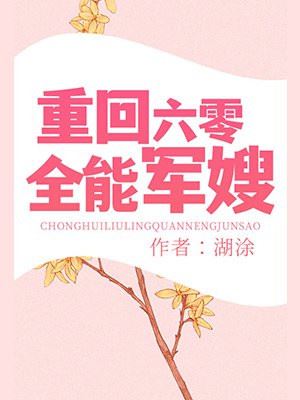
Xu Youyou is a three-year-old girl raised in the Chunxiao Orphanage, where she endures frequent bullying from older children led by a girl named Huahua. Despite being hungry and frightened when her meal is stolen, she refuses to cry or report the incident because she has been conditioned to believe that obedience and silence are the only ways to remain lovable. Her internal struggle for survival is interrupted by the sudden appearance of System 5874, a digital entity assigned to change her fate. The system, which poses as Xu Youyou’s deceased mother, Xu Wenyin, manages to earn the child’s trust by intervening in the bullying incident and securing restitution from the orphanage director, Grandma Wu. This successful manipulation allows the system to manifest a physical body, albeit with severe time limitations, setting the stage for a mission to rescue Xu Youyou from a predetermined tragic trajectory.

The central conflict arises when the Zhou couple arrives at the orphanage with intentions to adopt Xu Youyou. In the original narrative, this adoption leads to a life of servitude and abuse, as the couple values the child only for her astrological compatibility with their desire for a biological son. Recognizing the danger, System 5874, now inhabiting the body of Xu Wenyin, orchestrates a dramatic reappearance. Claiming to be the biological mother who survived a years-long ordeal involving amnesia, trafficking attempts, and isolation, she leverages media attention and police assistance to invalidate the Zhou couple’s adoption plans. The public nature of her reunion with Xu Youyou forces the Zhoos to abandon their attempt, as they cannot interfere with a legally recognized maternal relationship without risking social and legal repercussions.

Following the thwarted adoption, Xu Wenyin and Xu Youyou relocate to Jiangcheng, a larger city where they establish a new, albeit modest, life. The system faces logistical challenges due to its limited physical presence, which is capped at roughly two hours per day. To sustain them, Xu Wenyin utilizes her expertise in computer programming to sell software online, generating enough income to secure a safe apartment near a kindergarten. During this transition, Xu Youyou begins to shed her passive demeanor, influenced by her mother’s teachings on self-advocacy and safety. The bond between them deepens, transforming the dynamic from one of desperate survival to one of nurturing and security.

A significant turning point occurs when Xu Youyou encounters a quiet, curly-haired boy named Xiaolu at a community playground. Their initial interaction is marked by a playful misunderstanding over names, hinting at a future friendship or connection. Meanwhile, Xu Wenyin navigates the complexities of single motherhood while managing the constraints of her system-assisted existence. She remains vigilant against potential threats from the Zhou family and works to build a stable environment for Xu Youyou, ensuring that the child is protected from the psychological manipulation that defined her earlier years. The narrative shifts focus toward the long-term process of rebuilding Xu Youyou’s confidence and rewriting her destiny, moving away from the trope of the abused heroine toward a story of resilience and maternal devotion.

As the story progresses, Xu Wenyin continues to balance her dual existence between the system interface and the physical world. She meticulously plans for Xu Youyou’s education and emotional development, using resources from the database to guide her parenting. The couple’s past traumas and the system’s underlying motives are gradually revealed, adding layers to their relationship. Xu Youyou’s growth is depicted through small, everyday moments—learning to assert herself, making friends, and enjoying childhood freedoms she was previously denied. The narrative sets the foundation for a future where Xu Youyou can thrive independently, free from the oppressive expectations that once threatened to consume her life.

Latest Release
DateGroupRelease
2026-09-26knoxt c38
2026-09-26knoxt c37
2026-09-26knoxt c36
2026-09-26knoxt c35
2026-09-26knoxt c34
2026-09-26knoxt c33
2026-09-26knoxt c32
2026-09-26knoxt c31
2026-09-26knoxt c30
2026-09-26knoxt c29
2026-09-26knoxt c28
2026-09-26knoxt c27

Community Reviews

Rating(4.1 / 5.0, 198votes)
5 stars
72(36%)
4 stars
70(35%)
3 stars
54(27%)
2 stars
2(1%)
1 stars
0(0%)

Popular reviews

... Read More
Okay I need to talk about Grandma Liu because honestly she made me so angry I had to pause the book and stare at the ceiling. This woman? She doesn't just spoil her granddaughter — she spoils her as a STRATEGY. Like, the whole doting thing was calculated, which is honestly more terrifying than if she were just openly abusive. Think about it: she undermines the parents' authority by encouraging Miaomiao to act out, feeds her toxic ideas like girls don't need to study and you should beat up anyone who makes you angry, all while playing the role of the loving grandma. It's grooming disguised as affection. And the scene where Mother Liu screams at her — "Where exactly have I wronged you! You want to ruin Miaomiao like this?!" — that line just broke something in me. Because you can feel the exhaustion in that question. This isn't the first fight. This is the hundredth, and Mother Liu has no evidence, no paper trail, just the sinking dread that her child is being shaped by someone she let in. Then Grandma Liu sees four-year-old Miaomiao at the door and instead of feeling guilty she lashes out: "You scourge! I should have killed you when you were born!" That pivot from victim-blaming to outright curse is the kind of moment that shows you someone's true nature in one sentence. There's no more mask. What also struck me is how Father Liu handled things. His vasectomy was basically a love letter to his daughter — "Miaomiao will be the only child, the family property will be left to her." That's his stand. And when he tells his mother to go back to her hometown with monthly money, he's drawing a line not out of cruelty but out of sheer survival. Meanwhile Xu Youyou is over there hugging Miaomiao and doing her best, copying Grandma Wu's orphanage comfort techniques like "Miaomiao is the best~ Miaomiao is the bravest~" and I love her so much for trying even when she has no idea what she's doing. That's real friendship — showing up imperfectly.
... Read More
Okay so can we just talk about Xu Youyou for a sec because THIS kid is giving me life. Like on one hand you've got her mom pulling out all the stops, winning 3.5 million to buy her a house, planning all these grand visions. And then Youyou just drops: "Can we not move?" The little voice, trembling, explaining she doesn't want to leave Aunt Qin and Juanjuan and ALL her new friends. I literally had to put the book down. This is such a real kid moment — adults are over here doing all this calculus about square meters and housing prices and the kid is just like no I want my friends. And the fact that she gathered enough courage to say it out loud, voice shaking? That's not a side character, that's a whole personality in miniature. Xu Wenyin though — her whole world is Youyou. That's what makes her so compelling. She didn't come in here wanting fame or recognition, she came in because she saw a path to security and she took it. The Cinderella energy of her bolting out the door at 4:01 AM screaming about the money going on her card, then immediately dreaming up villas and garden styles... it's all love, it's just love with a keyboard instead of a lullaby.
... Read More
"Wi ~ Fe~" — I need the author to explain how a thirty-two-year-old special forces soldier comes home from three years of military service and his first words are basically a cat noise. This is the kind of dialogue choice that makes me laugh out loud and also deeply concerned for the woman receiving it. But honestly, that's what makes the dialogue work so well. Lu Weizheng's voice is immediate and distinct. He's performative even in private—picking up his wife, demanding affection, calling himself cute with those elongated vowel sounds. And then he switches instantly to serious mode when talking business. The tonal whiplash IS the character. You don't need narration to tell us he's complicated; the dialogue does it for him. Lu Chenjun's voice is even better in its brevity. Every line from the boy is a masterpiece of preteen devastation: "...no, put me down." Just that. Ellipsis, refusal, zero enthusiasm. He doesn't yell, he doesn't cry—he just exists in a state of permanent disappointment. That's the voice of a kid who has already processed the fact that his father is ridiculous and has moved on to coping mechanisms. And the narration itself has a voice—this sassy, omniscient narrator who can't resist commenting. "Look, is this what a three-year-old says?" The narrator is basically the reader's stand-in, leaning over our shoulder going "did you see that?" It's a very specific comedic tone that reminds me of light novel narration but with sharper edges. The parenthetical explanations are the most interesting stylistic choice though. The text literally stops mid-sentence to define "legal coffee" like we're reading a Wikipedia article. It breaks the fourth wall in a way that's either brilliant meta-commentary or the author just didn't trust us to understand Chinese internet slang. Either way, it's distinctive. The voice refuses to take itself seriously, and that's exactly what makes it fun to read.
... Read More
Let's be real: on the surface, this batch has no world-ending threats. No armies marching, no dark lords rising, no dramatic betrayals (yet). What we have is a restaurant bill dispute, a mother's scraped knuckles, and a three-year-old's desire to learn self-defense. The stakes feel small. But the conflict underneath is anything but. The external conflict is straightforward—Youyou witnessed something scary, felt powerless, and now wants to change that. But the REAL conflict is internal: Wenyin has to confront the fact that her daughter sees her as fragile. That's a mother's worst fear wrapped in a child's innocent request. And the resolution—sending her to a training camp where she CAN'T be there—means Wenyin has to trust the process, trust the environment, trust her daughter to handle discomfort without her. Meanwhile, Lu Chenjun's conflict is almost invisible but deeply felt. He's surrounded by people who want something from him (Qin Yiren's hopes, society's expectations of his family name), and his resistance—refusing to engage, refusing to perform—is his only act of autonomy. Youyou touching his hair without permission is, in a weird way, the first time someone treats him like a normal kid instead of a symbol. The stakes compound when you consider the novel's larger framework. Wenyin knows this is a story. She knows what dangers await. Sending her daughter into a training camp run by a special soldier's family isn't just about martial arts—it's about preparing a child for a world Wenyin already knows is cruel. That subtext turns a simple 'sign up for class' moment into something with genuine tension. I'm not just wondering if Youyou will learn to fight. I'm wondering what happens when the story's real plot catches up to her.
... Read More
I need to talk about how the dialogue works in this section because honestly it's really good and I don't say that often. The adult dialogue is mostly functional — polite exchanges, media concerns, the usual business of adults pretending everything is fine — but the kids? The kids sound like actual children. Not adults in child costumes, not miniature versions of the narrator spitting out observations, but kids. Liu Miaomiao: 'I know, I know, this is the one on TV, what is it called?' — that 'I know, I know' with the impatient repetition, then the incomplete thought trailing off because she can't remember the title. That's how a kid actually talks. Qian Xin: 'Yes, I just told An An that maybe you guys will come when Miaomiao comes, but I didn't think it was true.' — long, slightly rambling sentence, the kind of over-explanation kids do when they want to show they were right about something. Perfect. The funniest one has to be Liu Yanzhi's contribution: 'Fate.' Just one word. He's basically providing the thematic caption for the whole scene while his friend is having a full identity crisis over a name. The deadpan delivery is immaculate. And Gu Xiaobao's breakdown — 'You, you, you...' followed by this incredibly formal, overly detailed self-introduction that completely contrasts with his flustered state — is arguably the best piece of child dialogue in the passage. He goes from speechless stutter to reciting his entire profile like a nervous TED Talk. The shift in register itself tells the story. Even Xu Wenyin's single line — 'People who aren't important, didn't remember' — has such a distinct voice. Dry, slightly cynical, delivered with the casual shrug of someone who has absolutely zero interest in performing politeness for people who don't matter to her.
... Read More
I went into this chapter expecting another physical training montage and got hit with something way more complicated. On the surface, the conflict is simple: kids vs. instructor, kids vs. exhaustion, spoiled rich kids vs. the real world. The running laps, the stretching, the tears — it's all very straightforward external conflict. Anyone can see who's winning (spoiler: nobody, because they're all losing). But then the author pulls the rug out. The REAL conflict isn't whether Liu Miaomiao can stop crying. It's whether Xu Youyou will choose compassion OR self-preservation. And this is where the stakes get interesting because neither choice is obviously right. If Xu Youyou goes to comfort Miaomiao, she's being the hero — but she's also potentially reinforcing a pattern where she sacrifices herself for others who didn't earn it. If she stays put, she's being smart — but she's also abandoning a crying child. What makes this scene work is that the author doesn't resolve it neatly. Xu Wenyin's voice in Xu Youyou's head gives her the tools to make her own choice, but the chapter ENDS before we see what she does. That trailing sentence — 'At least this way Youyou won't...' — it's not just a cliffhanger, it's the entire thesis of the story compressed into a fragment. The stakes have shifted from 'can these kids survive training' to 'what kind of person will Xu Youyou become?' And honestly, that's a much more interesting question to be asking at this point in the story.
See all reviews

Custom lists

See all custom Lists