Summary

... Read More
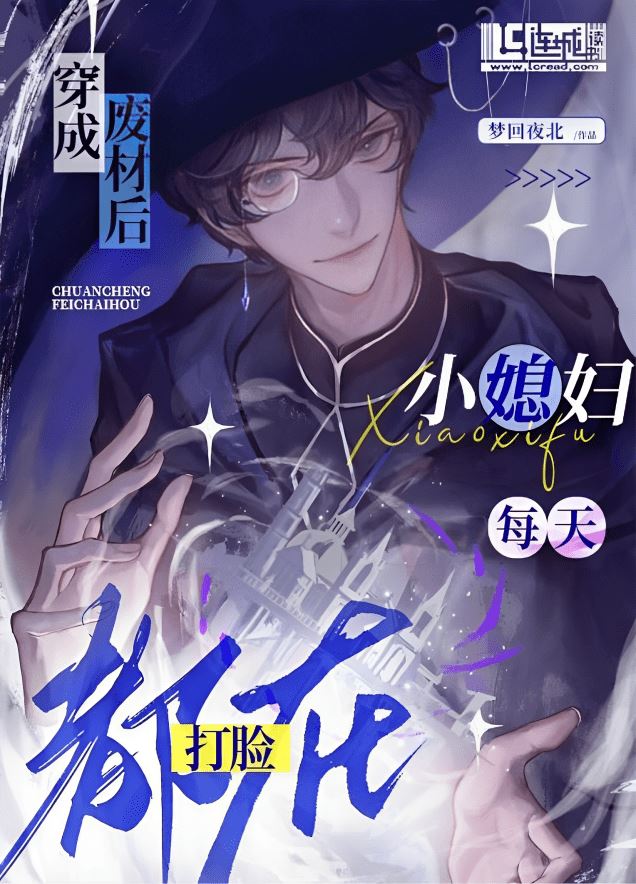
Zhi Yao is a fox spirit who, after being abandoned by her mother and separated from her kin, falls into the hands of a deceitful woman who drugs her and attempts to sell her to a predatory man. In a desperate escape, Zhi Yao collapses from the effects of the drug and is discovered by Pei Chiyao, an aloof international movie star who possesses a mysterious wolf-like aura and is uniquely unallergic to animals. Despite initial warnings from his agent about her wild nature, Pei Chiyao feels an inexplicable sense of possessiveness and decides to keep her, commanding his staff to treat her with utmost care.As Zhi Yao recovers, she realizes she can understand human speech but hides this ability, fearing she will be captured and experimented on if her intelligence is discovered. She forms a complex bond with Pei Chiyao, who is fascinated by her shrewdness and affectionate behavior, particularly her sensitivity around her tail. During a visit to the film set, Zhi Yao recognizes Lu Yi, the woman who drugged her, and vehemently reacts against her. Pei Chiyao, interpreting her hostility, bans Lu Yi from the production, demonstrating his willingness to protect his new companion. Zhi Yao also encounters He Kaiting, a woman connected to Pei Chiyao’s family, who dismisses Zhi Yao as a mere pet, further irritating the fox spirit.A significant turning point occurs when Zhi Yao accidentally transforms into a human girl while bathing with Pei Chiyao. She is terrified, believing he will sell her to researchers, but he instead shows restraint and concern, drying her hair and allowing her to hide. Later, she transforms back into a fox just as visitors arrive, deepening the mystery of her condition. Pei Chiyao takes her to an antique shop, where Zhi Yao recognizes a jade pendant that belonged to her past, prompting him to purchase it for her. This item seems to resonate with her spiritual energy.Back at Pei Chiyao’s residence, Jin Palace, Zhi Yao’s life improves as she enjoys luxurious food and comfort. However, she becomes distressed upon learning from Pei Ning, Pei Chiyao’s cousin, that she has gained weight. In a fit of anxiety about her appearance, she attempts a hunger strike. During this time, she briefly transforms into a human again while half-asleep, leading to an intimate moment with Pei Chiyao before reverting to fox form. He reassures her that she is not fat, and she resumes eating, strengthened by his validation.The narrative deepens when Pei Chiyao takes Zhi Yao to a clandestine meeting with subordinates. Zhi Yao recognizes one of the men as the individual responsible for capturing her mother and other fox spirits. Enraged, she leaps from his pocket, intending to confront him, exposing her hidden agency and the danger lurking beneath Pei Chiyao’s protected world. The story follows Zhi Yao’s struggle for freedom and identity, Pei Chiyao’s growing attachment and protective instincts, and the unfolding conspiracy involving the trafficking of supernatural creatures.

Latest Release
DateGroupRelease
2026-09-26akknovel c60
2026-09-26akknovel c59
2026-09-26akknovel c58
2026-09-26akknovel c57
2026-09-26akknovel c56
2026-09-26akknovel c55
2026-09-26akknovel c54
2026-09-26akknovel c53
2026-09-26akknovel c52
2026-09-26akknovel c51
2026-09-26akknovel c50
2026-09-26akknovel c49

Community Reviews

Rating(3.8 / 5.0, 26votes)
5 stars
7(27%)
4 stars
9(35%)
3 stars
9(35%)
2 stars
1(4%)
1 stars
0(0%)

Popular reviews

... Read More
The pacing across these chapters is masterful—the author knows exactly when to make us laugh and when to let us breathe. Chapter 13 opens with rapid-fire comedy: the maid apologizing to a fox, Zhi Yao demanding clothes, Pei Ning's uncontrollable laughter about strappy dresses. This scene moves fast, bouncing between characters and escalating the humor until it peaks with Pei Chiyao laughing along and Zhi Yao genuinely confused. Then Chapter 14 shifts gears dramatically. The pacing slows as Zhi Yao's hunger strike takes effect, her exhaustion becomes palpable, and we move into more intimate, vulnerable territory. The transformation scene unfolds slowly—we notice details gradually: the half-cover blanket, the delicate skin, the exposed curves, the tail that gives away her true nature. This deliberate pacing forces us to sit with Pei Chiyao's reaction, to feel the weight of discovering her in this state. The chapter ends on a quiet, almost tender note with Zhi Yao asking if she's fat, her voice small and uncertain. The structural choice to split this across two chapters works perfectly—the first chapter establishes the comedic premise and Zhi Yao's personality through her fox form, while the second explores her vulnerability and the beginning of her human awakening. Scene transitions are smooth, moving from the dining room to the bathroom mirror to the bedroom without jarring jumps. The author controls reader engagement by alternating between high-energy comedy and slow-burn romance, never letting the story drag or rush.
... Read More
One of the most striking features of this passage is how much the author communicates through what characters don't say. Pei Chiyao, the man reputed to be cold and distant, speaks fewer words than any other character, yet his dialogue carries disproportionate weight. 'Pick it up.' Three words to buy an entire shop's worth of jadeware. 'This is not a pet.' A correction that redefines his entire relationship with Zhi Yao. 'Spoiled thing.' An endearment disguised as criticism. Each line is sparse, precise, and loaded with subtext. The market seller, by contrast, is all verbal excess—'top-quality jadeite, very spiritual! If the animal wears it for a long time, it may be infected with the aura and become more and more intelligent!' His dialogue is pitch-perfect hawker patter, the kind of enthusiastic nonsense that exists to separate fools from their money. The author uses him as comic relief while also planting the crucial lore seed about the jade's cultivative properties. Pei Ning's voice is perhaps the most distinctive. She starts with sharp commands ('Stop right there, what do you have in your hand?') and pivots instantly to gushing adoration ('Sweetie, you're just too adorable!'). Her speech patterns mirror her personality—impulsive, emotionally unrestrained, incapable of maintaining a single tone for more than three seconds. The exclamation marks practically leap off the page. Zhi Yao's lack of conventional dialogue is a deliberate stylistic choice that works beautifully. Her communications—'Mmph mmph!' 'Wah~' 'QAQ!'—force the reader to interpret her through action and reaction rather than exposition. When she 'chattered away' on Pei Chiyao's shoulder at the end, the narrative doesn't translate her words. We're meant to understand her meaning without literal transcription, which creates an intimacy between reader and character that dialogue alone couldn't achieve. The narrative voice itself deserves mention. It flirts with omniscient commentary ('This was not a pet. More like his little ancestor.') while staying grounded in Zhi Yao's limited perspective. That hybrid approach lets the author deliver emotional truth without breaking the story's point-of-view contract.
... Read More
The pacing in these chapters operates on what I'd call a rollercoaster structure—every time the reader settles into a mood, the author tilts the track. The opening sequence is slow and sensory: a marketplace, a haggling seller, a fox nodding enthusiastically at the prospect of jewelry. It's almost slice-of-life, cozy even. The prose lingers on small details—the circular motion of Pei Chiyao's fingertip on Zhi Yao's belly, the faint green glow of the jade, the way she looks 'like a little fox fairy fallen from the sky.' This is the calm before the narrative drops a bomb. Then we cut to Jin Palace, and the tempo shifts. The prose becomes more kinetic—Zhi Yao 'gathered her strength and leapt,' 'began to eat wildly,' her 'hair stood on ends.' Food comedy is inherently fast-paced, and the author uses it to build energy before the crash. The shrill scream that follows isn't just a plot device; it's a tempo change signaled through sound. Everything after that line happens in a rush: the grab, the struggle, the desperate flight, the interception by Pei Ning, the confrontation, the reveal, the firing, and Zhi Yao's panicked attempt to soften the punishment. What's impressive is how the author manages to maintain narrative clarity through all these transitions. The shift from market to mansion isn't jarring because it's motivated—Pei Chiyao takes Zhi Yao home after the purchase. The introduction of Pei Ning feels organic because she's summoned by the commotion. Even the maid's overreach is structurally sound: she's established as harsh early on ('throw it out'), so her escalation feels earned rather than invented. The chapter closes on a note that balances comedy and tension. Zhi Yao's panic about the maid losing her job ('She only wanted the maid to apologize, not cost someone their job!') is genuinely funny but also reveals her moral center. The story hasn't resolved the conflict—it's postponed it, which is the right move. There's too much emotional momentum to tie up neatly, and the author knows it.
... Read More
There's a moment in these chapters that should be small and quiet and instead hits like a sledgehammer. Zhi Yao, grabbed by the scruff and carried toward the door, looks around desperately for Pei Chiyao. She screams until her throat is raw. The mansion is enormous and he's nowhere to be seen. And then the thought arrives, unsolicited and devastating: 'Could it be that her fate with Pei Chiyao ended here? Come to think of it, she was rather reluctant to part with him...' The passage that follows is deceptively simple. 'Her fox parents were gone. Her fellow foxes had all been caught by humans. It seemed... Pei Chiyao was her only family left in this world.' No fanfare. No melodrama. Just a white fox-ball processing her own loneliness in a human world that has repeatedly proven hostile to creatures like her. This is the emotional core of the entire narrative compressed into three sentences, and it recontextualizes every playful, comedic beat that comes before and after. The jade pendant works on the same emotional frequency. To the seller, it's merchandise—'top-quality jadeite, very spiritual.' To Zhi Yao, it's the instrument of her transformation, her bridge into a world where she might survive. To Pei Chiyao, it's a gift he chooses without hesitation, custom-fitted almost magically to her size. The way he watches her hold it 'lovingly with both soft paws' and feels 'very amused'—that's affection, plain and simple, though neither of them would call it that. And then the reversal: Zhi Yao, who moments ago was nearly discarded, slips free from Pei Ning's hug and runs straight to Pei Chiyao. Not away from danger, but toward the one person who has consistently, weirdly, chosen to keep her. The image of her perched on his shoulder, chattering and glancing back at the maid like she's filing a complaint, is one of the most tender things I've read in this genre. It's found family, chosen family, family forged across species and silence and the unspoken promise that I will not throw you away.
... Read More
The stakes in this passage are staggering, and I want to talk about how they operate on multiple levels simultaneously. On the surface, there's the immediate conflict: Zhi Yao is terrified of being examined, she's been betrayed before by humans, and now she's encountering the people who harmed her in her past. But the deeper conflict is internal — she literally cannot trust anyone because her survival depends on it. Every human reaching toward her is a potential threat, and Pei Chiyao has to work against that instinct. The trauma from her previous owner is the key to understanding her behavior. She was thrown from two meters high, injured for a long time, and learned that leaving Mother's side meant danger. So when Pei Chiyao scratches his hand and she sees the blood, she's not just reacting to pain — she's reacting to every instance of human betrayal she's ever experienced. The stakes here are existential: if she trusts and is wrong, she could be hurt again. If she doesn't trust, she's alone again. And then there's Lu Yi — the woman who drugged her drink and tried to send her to an ugly man's bed. The fact that Zhi Yao remembers this so vividly, that her body tenses instantly when she sees that 'plump figure,' tells us everything about what she almost lost. Her career, her freedom, possibly her life. And now she's in a situation where that woman is still at large, still working with the director, still appearing in her orbit. But the most interesting conflict is the one between Pei Chiyao's instinct and Zhi Yao's trauma. He feels an inexplicable familiarity and possessiveness from the first moment — as if this isn't their first meeting. He wants to protect her, to comfort her, to stay. But she's programmed by pain to flee, to fight, to claw. The tension between his certainty and her fear is where the real drama lives.
... Read More
Let me talk about the pacing here because it's genuinely impressive. The passage opens at maximum intensity — alarm bells, violent thrashing, blood on white skin. That's not a gentle entry; it's a hook that grabs you by the throat. Then it does something clever: instead of staying at that fever pitch, it lets the tension dissolve through Pei Chiyao's gentleness. The examination goes smoothly, older brother Sun relaxes, and then — the car ride. This is where the author gives us a breather, a warm moment of peace. But here's the thing: that peace is built on trauma. We learn about Zhi Yao being thrown from two meters high, injured for a long time, never daring to leave Mother's side again. So even in this quiet moment, there's an undercurrent of sadness. The pacing isn't just fast-slow-fast; it's layered. Every calm moment has trauma echoing beneath it. Then comes the dream — sweet dreams accompanied by sandalwood fragrance — and right when you're settling in, the familiar voice wakes her up. The director, the fat woman, Lu Yi. The author uses this technique of breaking peace repeatedly, and each time it hits harder because you've grown attached to that warmth. The chapter ends on a cliffhanger with Lu Yi about to speak, and you are NOT ready to close this tab. The structure also alternates between external action (the examination, the car ride, the arrival) and internal revelation (Zhi Yao's memories, her realizations about Pei Chiyao). This keeps the narrative from feeling one-dimensional and gives us both plot momentum and emotional depth.
See all reviews

Custom lists

See all custom Lists