Summary

... Read More

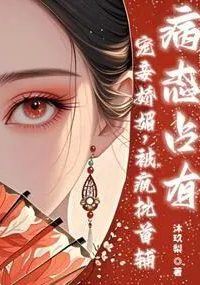
Su Yao was once the beloved daughter of a high-ranking official in the Ministry of Personnel, living a privileged life in the capital. Her world shattered when her family was implicated in a political scandal, leading to the conscription of the men into the army and the sale of the women into the Music Bureau. Her mother and elder sister perished in that institution, leaving Su Yao to face a fate worse than death. On the brink of being forced into servitude, she was rescued by Lu Huaijin, the Grand Secretary and one of the most powerful ministers in the empire. Lu Huaijin, a man in his thirties known for his cold demeanor and ruthless political acumen, took Su Yao into his residence. What began as an act of salvation quickly twisted into a three-year captivity. Su Yao was not granted freedom but was instead kept in a secluded side chamber, treated as a prized possession rather than a person. She was bound by invisible chains of power and fear, her movements monitored and her will systematically broken.

The core conflict of the narrative revolves around Su Yao’s desperate struggle for autonomy against Lu Huaijin’s suffocating control. Lu Huaijin’s obsession with Su Yao is palpable and terrifying; he demands her complete obedience while simultaneously claiming to protect her. He subjects her to invasive medical examinations, not for her health, but to ensure she can bear him an heir. The arrival of Nanny Chang and Physician Shi marks a turning point where Su Yao’s body becomes a vessel for Lu Huaijin’s desires. She is subjected to painful acupuncture treatments designed to induce fertility, a process she endures in silent terror. Despite Lu Huaijin’s outward displays of care, such as bathing her and providing luxurious surroundings, his actions are rooted in possession. He removes her ankle bells only to replace them with a golden counterpart, symbolizing that her captivity has merely been refined, not ended. Su Yao’s resistance is subtle but persistent; she secretly takes contraceptive medicine to prevent pregnancy, viewing motherhood with Lu Huaijin as a fate worse than death.

A significant emotional complication arises with the return of Lu Chuyao, Lu Huaijin’s son, who had been away training under a general for two years. Lu Chuyao and Su Yao share a history of childhood affection, and he had hoped to marry her before her family’s downfall. His return disrupts the fragile equilibrium of Su Yao’s captivity. Lu Huaijin is visibly jealous and hostile toward the relationship, forbidding Su Yao from seeing Lu Chuyao and threatening her with his vicious hounds, Heihu and Tiejia, to enforce compliance. The tension escalates when Su Yao encounters Lu Chuyao in the snow on her birthday. The reunion is brief and painful; Su Yao, aware of her compromised status and the danger her connection poses to Lu Chuyao, pushes him away. However, her emotional distress and exposure to the cold lead to a severe fever. Lu Huaijin, despite his anger, tends to her with a mix of possessiveness and genuine concern, staying by her side through the night.

The story takes a darker turn when Su Yao’s maid, Chun Tao, attempts to procure a new prescription for contraceptive medicine. Lu Huaijin, suspecting her intentions, intercepts the prescription and secretly swaps it for a fertility-enhancing formula. He watches from the shadows as Chun Tao brews the altered medicine, ensuring Su Yao consumes it. This act of sabotage demonstrates Lu Huaijin’s willingness to manipulate every aspect of Su Yao’s life, including her health and reproductive choices, to secure his goal of an heir. The narrative concludes with Su Yao unaware of the switch, feeling a strange warmth after drinking the medicine, while Lu Huaijin prepares to leave the capital for official duties, leaving her under the watchful eyes of his servants. The power dynamic remains firmly in Lu Huaijin’s favor, with Su Yao’s attempts at escape or resistance consistently thwarted by his overwhelming authority and surveillance.

Throughout these events, the political backdrop of the imperial court looms large. Lu Huaijin’s position is precarious, requiring him to navigate the suspicions of the Empress Dowager and the young Emperor. His relationship with Su Yao is a secret he must protect, yet his obsession drives him to reckless behavior, such as skipping court to remain with her. The impending marriage arrangement orchestrated by the Empress Dowager adds another layer of complexity, threatening to upend Lu Huaijin’s plans and potentially freeing Su Yao from her current status, though likely into another form of confinement. Su Yao’s internal conflict deepens as she balances her hatred for her captor with her lingering feelings for Lu Chuyao and her longing for her lost family. The story paints a grim picture of a woman trapped in a gilded cage, where every act of kindness is a chain and every moment of vulnerability is exploited.

Novel Items

More
Item
Bells on Su Yao's ankle given to her by Lu Huaijin as a gift claimed to keep her safe. She hates the sound because it alerts him to her location whenever she moves. The bell was eventually removed during a private moment.
Item
A brush used by Lu Huaijin for reviewing official documents in his study.
Item
Earrings worn by Su Yao that sway on both sides when she shakes her head.
Medical Tools
Used for acupuncture to put Ye Yunzhou into a deep sleep before surgery. Qiao Huan disinfected them after the procedure.
Event
Regular pulse examinations performed by Physician Shi on Su Yao, done almost every three or four days. Lu Huaijin insists on them despite Su Yao not being ill, secretly to monitor her condition for bearing an heir.
Event
An agonizing acupuncture procedure performed by Nanny Chang on Su Yao to help her conceive Lu Huaijin's child. The treatment left Su Yao drenched in sweat and in excruciating pain.
Latest Release
DateGroupRelease
2026-08-11shanghai fantasy c10
2026-08-11shanghai fantasy c9
2026-08-11shanghai fantasy c8
2026-08-11shanghai fantasy c7
2026-08-11shanghai fantasy c6
2026-08-11shanghai fantasy c5
2026-08-11shanghai fantasy c4
2026-08-11shanghai fantasy c3
2026-08-11shanghai fantasy c2
2026-08-11shanghai fantasy c1

Community Reviews

Rating(3.8 / 5.0, 6votes)
5 stars
2(33%)
4 stars
1(17%)
3 stars
3(50%)
2 stars
0(0%)
1 stars
0(0%)

Popular reviews

... Read More
The stakes in this novel are suffocating and I mean that in the best possible way. On the surface, Su Yao's conflict is simple: she wants to leave, and Lu Huaijin won't let her. But the deeper conflict is what happens when the person who saved you becomes the person who imprisons you. He literally tells her: "if it weren't for me saving you back then, you would still be serving others in the Music Bureau." He owns her survival. And that's the most dangerous kind of power because it's wrapped in the language of gratitude. The external stakes are escalating rapidly. The Empress Dowager is arranging Lu Huaijin's marriage. A noble lady, a proper match. If this happens, Su Yao's position becomes untenable—she's already been demoted to a whisper, a "passing fancy" kept in a desolate garden. What happens to a woman with no title when her master marries someone of status? The maids don't even need to say it. We know. But the internal stakes are what keep me up at night. Su Yao has been taking contraceptive medicine secretly, knowing it will make her physically ill—"the abdominal pain was unbearable, as if being twisted by knives." She chooses pain over compliance. She chooses suffering over surrender. And when she pours out the fertility potion, she's not just rejecting a child; she's rejecting the entire narrative written for her body. The Lu Chuyao subplot adds another layer of danger. He's risking his father's wrath to see her. She's risking Lu Huaijin's wrath by meeting him. Every interaction between them is a potential catastrophe. When she faints and bleeds, it's not just physical—it's the moment her carefully constructed composure cracks. The blood on her palm, the blood on her tongue from biting it, the blood on her new birthday dress. Three types of bleeding, three levels of violation. And the hounds. Always the hounds. They're not just guards; they're the physical manifestation of her trauma. The night she tried to escape, they chased her. Now they're her permanent companions. Lu Huaijin's line—"With me here, they won't hurt you again"—is both protection and threat. He's saying he controls the danger, which means he controls her safety, which means he controls everything. The stakes have never been higher, and they're only going to get worse before they get better. I just need to know what happens next.
... Read More
I need to talk about the medicine scene because it's the single most important moment in this entire passage and I don't think I've processed it yet. Two bowls. One for contraception, one for fertility. Su Yao drinks the first and pours out the second. This isn't just a plot point—it's a declaration of war against every expectation placed on her body. She's a woman kept in a garden, given no title, no status, no future. The fertility potion represents the only path society has carved out for her: produce an heir and find purpose through motherhood. By refusing it, she's refusing to let her body become a political tool, even a passive one. The plum tree is another symbol that keeps appearing. In Chinese literature, plum blossoms represent resilience—beauty that persists through winter, that blooms when everything else is dead. Su Yao watching her own petals droop under the weight of rain is devastating because she doesn't yet see herself as a plum blossom. She sees herself as something broken. The author is showing us the gap between how we see ourselves and how others see us. The hounds—Heihu and Tiejia—represent controlled violence. They're not attacking her; they're performing obedience for Lu Huaijin. They kneel. They wait. They exist to remind her that escape is impossible. But here's the thing: they're also animals. They can be trained, but they can also turn. The fact that Lu Huaijin trusts them to guard her rather than keeping her in a locked room suggests he wants her to *know* she's watched, not just to be watched. The surveillance is the point. And the jade hairpin—the mutton-fat jade he rode thirty miles through snow to deliver. Jade in Chinese culture represents purity, endurance, something valuable that survives pressure. He gave it to her as a gift, but it's also a shackle. Precious things are meant to be displayed, not set free. The hairpin in her hair is a brand, not a decoration. The blood on her birthday—bleeding on one's birthday is an ominous sign, as Chun Tao would tell you. But Su Yao doesn't flee. She picks up the umbrella and hands it back to Lu Chuyao like nothing happened. She absorbs the pain and keeps moving. That's not weakness. That's the kind of strength that doesn't announce itself.
... Read More
This author has a gift for atmosphere that I just cannot get over. Let me paint you a picture. The hound scene at night—moonlight, two fierce dogs with gleaming fangs, Su Yao's pupils contracting as memories flood back. The bluestone pavement, the trembling Chun Tao on her knees, the cedar scent wrapping around Su Yao like a cage. It's cinematic. I could literally see the frame: cold blue tones, the white of Su Yao's dress against dark stone, those two shadows moving between them like death itself. But the scene that haunts me is the birthday morning. Snow falling outside, the fine drizzle from earlier turning to snow, and Su Yao curled under her brocade quilt staring at the canopy. The author writes: "Moonlight like shattered ice pierced through the window lattice, cutting fine, dense fractures across Su Yao's pale skirt." Fractured light. Fractured woman. I'm not even sure that's accidental. And then the plum tree. Always the plum tree. "A cold wind swept by, causing the plum blossoms in the corner of the wall to sway in the wind and rain, their petals drooping under the weight of the raindrops." Su Yao watching herself in that tree—bending but not breaking, or maybe just barely holding on. When Chun Tao brings the two bowls of medicine, the contrast between the dark murky tonic and the fertility potion is almost grotesque in its symbolism, but it works because the author never explains it. We just see Su Yao pouring the fertility potion into a potted plant while drinking the contraceptive herself. The snow scene with Lu Chuyao is pure visual poetry—his clothes soaked through, water dripping from his black hair, Su Yao standing on tiptoe holding an umbrella over a man twice her emotional burden. And then the blood. Bright red on white snow and white dress. Bleeding on one's birthday. The author doesn't need to tell us this is ominous. The image says it all.
... Read More
Okay so I need to talk about Lu Huaijin because this man is absolutely unhinged and I cannot stop thinking about him. The scene with the two hounds—Heihu and Tiejia—was genuinely chilling. He brings them to Su Yao's courtyard like some kind of twisted security system. And the way he makes them kneel? That's not just dominance, that's psychological warfare. He's showing her that even her worst trauma is something he controls. "They only listen to me. What about you?" The way he says that, it's not even a question. It's a statement wrapped in a threat wrapped in a whisper. But here's what gets me—the contrast. Three years ago he saved her from the Music Bureau, and now she's his prisoner. He literally tells her "if it weren't for me saving you back then, you would still be serving others." He's built their entire relationship on a foundation of debt and obligation, as if her life belongs to him because he chose to intervene that one night. And then there's Lu Chuyao. The brother figure who waits in the snow for hours. When Su Yao sees him and faints from the emotional overload—that's the moment I knew this author really understands human complexity. She's torn between the man who owns her and the one who still treats her like the sister she used to be. Her line to him: "I'm not the same Su Yao I used to be. We shouldn't see each other anymore." That's not rejection. That's protection. She's trying to shield him from the wreckage of her life. The most devastating detail? The mutton-fat jade hairpin. He rode thirty miles through snow last year just to give it to her. And now the Empress Dowager is arranging his marriage to a noble lady. The man who once risked everything for a hairpin is now being married off like a political asset. And Su Yao? She's still in that desolate garden, three years without a title, while everyone around her whispers that she's just a "passing fancy." The tragedy isn't that he might marry someone else. The tragedy is that she already believes she was never anything more.
... Read More
Let me just say this: the dialogue in this novel is absolutely vicious and I love it. Lu Huaijin's voice is instantly recognizable. Every line he speaks carries that same poisonous sweetness. "Truly a fine appearance, no wonder Chu Yao has never forgotten you all these years." He's accusing her of seducing his father while simultaneously reminding her that he saved her. The manipulation is so layered it's almost artistic. And then: "Tell me, if Chu Yao knew you seduced his father, would he still think fondly of you?" He's not asking. He's weaponizing her past like a scalpel. But the line that got me was his softer one: "Yao'er, you cannot escape." Three words. No threat, no anger, just cold certainty. That's the most terrifying thing he says all chapter. Su Yao's dialogue is different—shorter, sharper, more desperate. "Lu Huaijin, I am not your pet. Do I not even have the right to go out for a walk?" That's her fighting back, and it's beautiful because it's so small. She's not demanding freedom; she's demanding the right to buy pastries. The fact that this is her rebellion tells you everything about her situation. And Lu Chuyao—oh, his voice is so different. Gentle, worried, persistent. "Sister Ayao, why are you avoiding me?" Simple. Direct. No manipulation, no hidden agenda. He just wants to see her. And when she faints and he scoops her up, calling her name over and over—that's not dialogue, that's pure emotion breaking through words. The maids' gossip is also brilliantly written. Their voices are distinct from everyone else—cynical, knowing, cruel in their casualness. "What do you know?" the indigo-clad maid says with such practiced superiority. And "It's just a passing fancy. Men are all like that." This is the voice of people who've seen this story before and know how it ends. They're not wrong. That's what makes it hurt.
... Read More
I want to talk about how this author builds tension because honestly it's masterful and I need to process it. Chapter 6 starts with an intimate, almost tender moment—Lu Huaijin carrying Su Yao back to her room, candlelight, the implication of what's about to happen. We're lulled into thinking maybe, just maybe, there's something real here. The prose slows down, the sensory details multiply, and for a page or two you almost forget she's trapped. Then Chapter 7 hits like a truck. She wakes up to find informants everywhere. Her own courtyard is a prison with better decor. The pacing shifts from slow and suffocating to rapid and paranoid. She sends Chun Tao for medicine, we think it's for health, and then—boom—the two bowls. The contraceptive and the fertility potion. The author doesn't rush this reveal. Su Yao says "Set them down. They're a bit too hot; I'll drink them later." And then waits until Chun Tao leaves. That pause. That deliberate silence. The reader is sitting there knowing what she's about to do while she takes her time, and it's agonizing. Then the birthday. The Empress Dowager's marriage proposal. The maids gossiping under the plum tree. The author uses gossip as a narrative device here—letting us learn the stakes through other people's whispers rather than exposition. "Three years, and not even a title." That line lands like a hammer because we've been living inside Su Yao's head and we already know the answer: she was never going to be enough. And then Lu Chuyao appearing in the snow. The pacing accelerates again—her worry, her running to meet him, the umbrella falling, the faint, the blood. It's a cascade of emotional beats that hits so fast you can't catch your breath. By the time she's bleeding on the snow, I was genuinely shaken. The author knows exactly when to slow down and when to sprint, and this chapter is proof.
See all reviews

Characters

See all characters

Custom lists

Oops…There is nothing here.