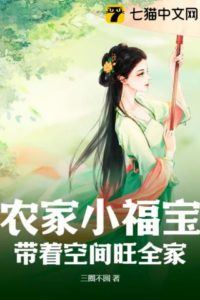
The Farmer's Little Lucky Treasure, Bringing Prosperity to the Whole Family with Her Space
+Add to Custom List
Novel Info

Summary

... Read More
Wang Nuannuan, a wealthy estate owner from the modern era, dies after accidentally falling into a well and transmigrates into the body of a newborn girl in an ancient rural village. She is born to the Wang family, the third son's wife Qian Jinping and husband Wang Tiezhu, in a household that values family harmony despite poverty. The Wang family, led by the wise Old Master Wang and Old Madam Wang, treats the newborn girl with equal love and care, defying village norms that favor boys. Shortly after birth, Wang Nuannuan discovers she retains her modern grand estate as a spatial dimension, complete with a control panel for farming, livestock, and a healing spring. Using this ability, she secretly provides her family with goats, eggs, rabbits, fish, and other resources, appearing as a lucky child blessed by heaven. The family, particularly her grandparents, gradually realize her special nature but accept it with protective love, teaching her to be modest and careful about her gifts. The family faces external conflicts from jealous villagers, most notably the Tian family, who attempt to exploit the Wangs' good fortune. Old Madam Wang firmly repels these schemes, defending her family's dignity and resources. Internally, the Wang family navigates economic hardships caused by increased taxes and poor harvests, while maintaining strong bonds among the three brothers and their wives. A significant subplot involves Zhang Xiuer, the eldest daughter-in-law, whose selfish maternal family attempts to manipulate her into giving away the family's goats. Through her husband Wang Dazhu's support and her in-laws' guidance, she resists this pressure, strengthening her commitment to her marital family. As Wang Nuannuan grows, she begins to speak at seven months old and continues to provide food and resources through her spatial abilities. The family develops strategies to sell her apples and other goods in town, establishing connections with wealthy households like the Li Manor to secure better prices. Old Master Wang carefully manages these transactions while teaching Wang Nuannuan about moderation and the dangers of drawing too much attention to her gifts. The story follows the Wang family's gradual improvement in living standards through hunting, farming, and strategic sales, all while maintaining their close-knit family structure. Wang Nuannuan's special abilities serve as both a blessing and a responsibility, requiring careful management to ensure her family's prosperity without exposing them to envy or danger from the village community.

Novel Items

More
Cultural Item
Hung on the door to signify a newborn. In this setting, usually only done for boys, but the Wang family hangs it for a girl, showing their egalitarian values. It warns people with mourning to avoid entering.
Currency
Payment given to Aunt Li the midwife, along with a basket, as thanks for her service. The Wang family gives it despite not being wealthy, showing their gratitude.
Magical Item
Located within Wang Nuannuan's transmigration space. The water strengthens the body, stops bleeding, and cures illnesses. It is described as a treasure.
Magical Item
A supernatural interface in Wang Nuannuan's space with options like 'One-Click Harvest,' 'One-Click Planting,' and seed selection. It functions like a farming game and helps manage the estate.
Animal
A female goat released by Wang Nuannuan from her space behind the Wang family house. It will provide milk for Qian Jinping to help with breastfeeding.
Item
Meat hunted by Zi Wu, which Cheng Youyou offered to him as a gesture of appreciation since he had done the hardest work. She had previously visited his cave to find him but he was not there.
Latest Release
DateGroupRelease
2026-08-11shanghai fantasy c10
2026-08-11shanghai fantasy c9
2026-08-11shanghai fantasy c8
2026-08-11shanghai fantasy c7
2026-08-11shanghai fantasy c6
2026-08-11shanghai fantasy c5
2026-08-11shanghai fantasy c4
2026-08-11shanghai fantasy c3
2026-08-11shanghai fantasy c2
2026-08-11shanghai fantasy c1

Community Reviews

Rating(4.1 / 5.0, 11votes)
5 stars
5(45%)
4 stars
2(18%)
3 stars
4(36%)
2 stars
0(0%)
1 stars
0(0%)

Popular reviews

... Read More
Okay I need to talk about Old Madam Wang because this woman is an absolute legend and I am HERE for her. The scene where she chases off the Tian family with a broom is one of the funniest moments in the whole chapter. One against three, completely dominates, and then INSTANTLY switches to a warm smile when she turns back to her granddaughter. Like, what a switch. Wang Nuannuan watching all of this with wide eyes like she's enjoying the show the most — I literally laughed out loud. But what really got me is the dynamic between her and her husband. They've been married for decades and the way they communicate without speaking is insane. When Old Master Wang comes back with the extra goat kids, she doesn't even ask questions — she just gives him a look and he rolls with it. That kind of unspoken understanding between a couple? Chills. Actual chills. And then there's the whole thing with the daughters-in-law. Old Madam Wang is clearly the matriarch holding everything together, but she's also worried about Xiuer — the eldest — because her natal family is unreliable. She even privately reminds her not to let them know about the goat. The fact that she's thinking three steps ahead while also making sure her granddaughter gets goat milk shows how layered this woman is. "Jealousy is a disease—go get it treated!" Old Madam Wang literally said this. I'm not okay. The grandmother-granddaughter relationship is the heart of this story and I'm already emotionally invested. Wang Nuannuan spitting on Yu Pandi like it was the most natural thing in the world — that baby has more attitude than half the adults in this village combined.
... Read More
I keep coming back to the sensory details in this book and I just need to say — the author knows how to paint a scene. The opening image of the nanny goat dripping milk with Big Brother guarding it already sets this strange, almost magical tone. But then it immediately grounds you in the Wang family courtyard with Old Madam Wang collecting dishes and giving practical instructions. The contrast between the mysterious goat and the mundane daily life is what makes this world feel alive. There's this one moment where Old Madam Wang looks out at her busy sons and daughters-in-law and the narrative says: "The courtyard was filled with the warmth of daily life." And I swear I could feel it. The spring plowing, the firewood being carried in, the three grandsons gathered around their grandfather — it's so specific and so ordinary and that's exactly what makes it work. The village setting itself is fascinating. You've got the eastern mountain where they hunt, the rear mountain, the vegetable patch where the goat pen goes, the courtyard where everyone gathers. Each location has a purpose and a feel. The mountain represents both danger and opportunity — that's where the goats appear from, that's where Wang Dazhu brings back rabbits. And the full-month celebration setup! The villagers bringing baskets of eggs and printed cloth, the informal gathering, the taxes eating into their harvest — all of this builds a world that feels lived-in and real. This isn't some fantasy kingdom with castles; it's a poor farming family trying to make do, and that makes every small victory feel earned. The atmosphere shifts so naturally from the mysterious goat appearance to the domestic comedy of the Tian women's visit to the quiet evening scene where Old Madam Wang and her husband discuss everything on the kang bed. Each scene has its own temperature and mood.
... Read More
The pacing in these chapters is doing some serious double duty. We start with the mountain outing—gentle, almost idyllic family time, the kind of scene that makes you want to slow down and savor it. Then we cut to the family returning home and the money reveal, which is a nice payoff. The Wang Erzhu backstory about saving Steward Li is dropped in casually but it's actually crucial worldbuilding. And then—BAM—the Zhang family subplot hits like a truck. One minute we're celebrating two taels of silver, the next we're watching a manipulative mother-in-law and sister-in-law scheme to drain their daughter's resources. The chapter ends with Zhang Eldest arriving at the Wang household at dawn, looking around the yard like a vulture, and the family's expressions darkening. That transition from warmth to tension is seamless. The author doesn't let us breathe between the high of the rabbit sale and the low of the family drama. It's like emotional whiplash and I can't look away.
... Read More
I have to talk about the dialogue in this book because honestly it's one of my favorite things about it. Old Madam Wang's voice is unmistakable. When she's dealing with the Tian women, she doesn't mince words: "You shameless troublemakers! Where do you get the nerve?! Even city walls aren't as thick as your faces!" This woman goes from sweet grandmother to full-on warrior in two seconds and the dialogue makes it feel completely natural. Then there's Yu Pandi — the eldest Tian daughter-in-law — and her dialogue is pure passive aggression wrapped in sweetness. "For the sake of her granddaughter's blessings, she wouldn't sell at such a high price… right, little one?" She reaches out to pinch the baby's cheek while simultaneously trying to guilt-trip the grandmother. The subtext in every word is delicious. Old Master Wang's dialogue is sparse but loaded. "Does it matter?" — just three words when his wife asks if everything today was coincidence. That's it. That's all he says. But it carries so much weight. He's clearly suspected something all along and has made his peace with it. And Wang Nuannuan's "dialogue" — well, she's a baby so it's all mental. But her internal voice is SO distinct. When she gives her grandmother a mental thumbs-up after Old Madam Wang shuts down the Tian women, or when she spits at Yu Pandi and thinks "She really liked this strong, battle-ready grandmother!" — you can hear her personality even without spoken words. The narrative voice itself is also great — it's warm, slightly humorous, and never talks down to the reader. It knows when to be serious and when to let a moment breathe.
... Read More
There's this recurring theme about what belongs to whom and what we're 'meant to' have, and it's woven through everything. Grandpa's warning to Nuannuan about enjoying things that don't belong to us is the thesis statement for the whole novel, I think. It's not just about her space ability—it's about the tension between natural hardship and unearned blessing. The drought, the increased taxes, the animals fleeing deeper into the mountains: the world is punishing them for something, or testing them, and Nuannuan's power is both a gift and a potential curse. Then you have the Zhang family, who feel entitled to Zhang Xiuer's prosperity even though she married OUT. They didn't raise her, they didn't support her, but they think her success is their property. The rabbits with black-ringed eyes are interesting too—they're described almost like little creatures from a fairy tale, and they're the key that unlocks the connection to the Li Manor. Symbols of luck, symbols of consequence, symbols of what happens when kindness is returned.
... Read More
I've been thinking about this goat nonstop since I finished these chapters and I think it's the central symbol of the whole story. On the surface, it's just a goat that provides milk for a newborn. But the way it appears — mysteriously, with a guardian, exactly when needed — it's clearly supernatural. Old Madam Wang even entertains the idea that her granddaughter might be "a fairy descended to the mortal world." The goat isn't just an animal; it's a sign, a blessing, a manifestation of whatever power Nuannuan brings into this family. There's this recurring theme about signs and omens. When Old Master Wang says "signs of light often meant good fortune," he's not just being superstitious — he's acknowledging that something extraordinary has entered their lives. The goat appearing out of nowhere mirrors Nuannuan appearing out of nowhere. Both are gifts that the family doesn't fully understand but must protect. The poverty theme is also heavy throughout. Ten acres of land, taxes eating into the harvest, barely getting by until autumn. The goat represents hope — not just nutrition for the baby, but a potential source of income when the kids grow up. Old Madam Wang immediately sees the practical side: "When the three kids grow up, we can sell them." And then there's the family unity theme. Despite their poverty, despite the mysteries they can't explain, the Wang family stands together. Every member has a role — the grand parents plan, the sons work, the daughters-in-law manage the household. The goat brings them closer, not apart. Even the conflict with the Tian family reinforces this — outsiders trying to take advantage versus the family protecting what's theirs. The deepest question the story raises is about acceptance. Old Master Wang's "Does it matter?" when asked about the coincidence — that's the thematic core. It doesn't matter where the goat came from or where Nuannuan came from. What matters is that they're part of the family now.
See all reviews

Characters

See all characters

Custom lists

Oops…There is nothing here.