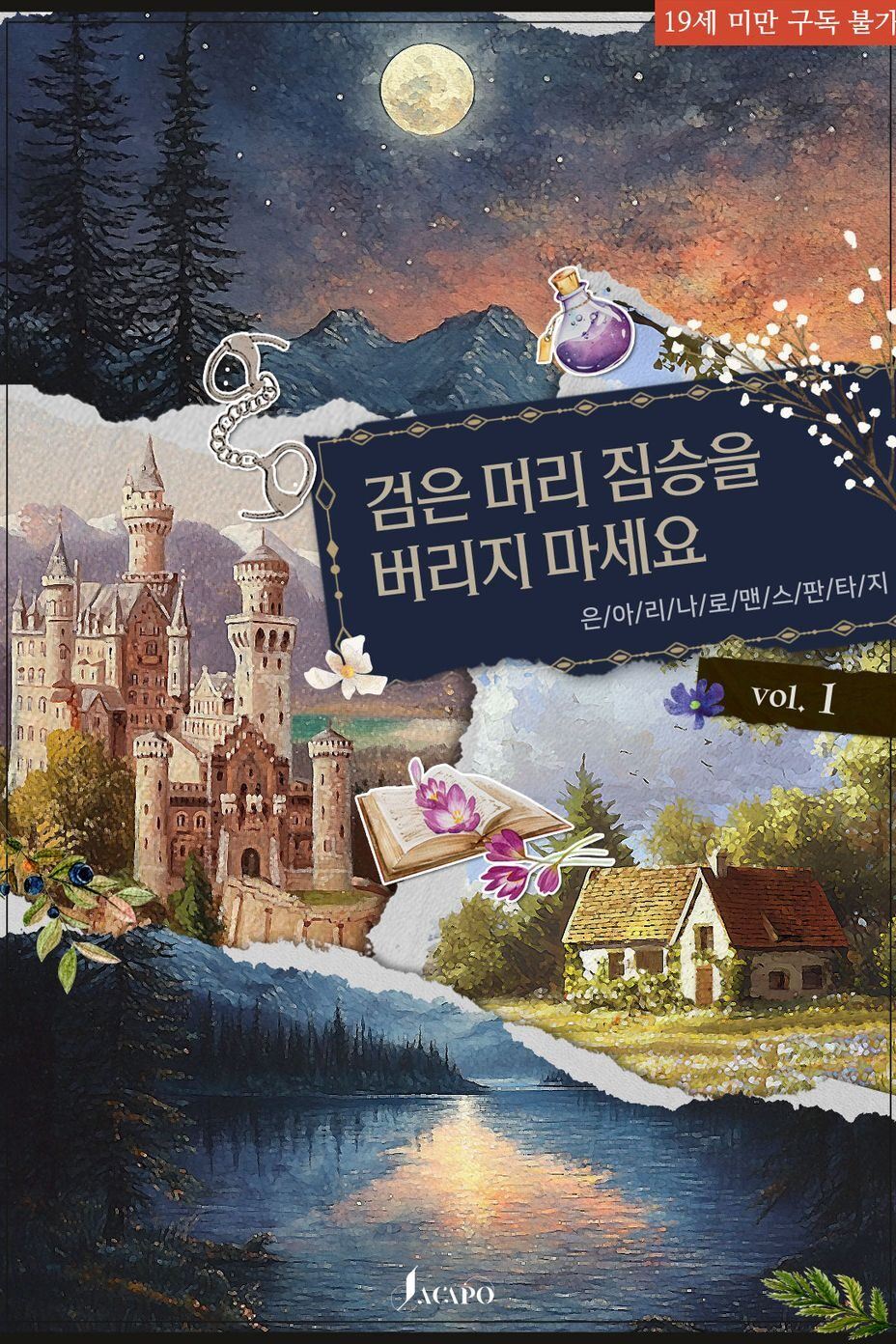
The Fallen Princess is Sold Off
+Add to Custom List
Genres:
Novel Info
  • Author:
  • Status:Ongoing

Summary

... Read More

Princess Luciella of the small Kingdom of Bert lived a sheltered life until her father, King Rublo, died suddenly. Her older brother Rudvil ascended the throne but proved to be a decadent and incompetent ruler who neglected state affairs, leading to famine and civil unrest. When a popular rebellion overthrew the royal family, Rudvil was executed, but Luciella was spared by foreign mercenaries who captured her alive. They sold her at an illegal underground auction in the neighboring Empire, where she was purchased for the staggering sum of one billion gold by a masked buyer.

The buyer revealed himself to be Enoch Walter, a Marquis of commoner origin and the Empire's greatest military hero. Despite his noble status, Enoch faced constant discrimination from conservative high-born factions due to his low birth. He announced his intention to marry Luciella, a fallen princess with a tarnished reputation, which caused significant controversy. Luciella, terrified and confused, believed Enoch only wanted her for political leverage to legitimize his status, though she desperately hoped to cancel the engagement. She tried to reason with him, offering to repay the purchase price through the sale of her family's secret villa assets, but Enoch firmly rejected her attempts to escape the marriage contract.

Luciella’s situation was further complicated by a secret she had hidden from everyone: a medical condition that caused irregular menstruation, making her nearly infertile. This flaw meant she could not fulfill the primary duty of an empress or noble wife, adding to her fear that she was merely being used as a broodmare. During a social gathering organized by Enoch to introduce her to high society, Luciella unexpectedly reunited with her childhood friend, Grand Duke Sejef Winston. Sejef, who had been exiled to Bert as a child, expressed genuine concern for her well-being and offered his protection, creating a triangular tension between the cold, possessive Marquis and the warm, caring Grand Duke.

Enoch grew increasingly jealous and aggressive upon seeing Luciella’s closeness with Sejef. He asserted his dominance physically and emotionally, reminding Luciella that she belonged to him now. Despite his rough treatment and verbal abuse regarding her status as a purchased wife, Enoch continued to provide her with luxurious living conditions and expensive gifts, confusing Luciella about his true intentions. He insisted the wedding would proceed regardless of her objections, treating her silence as acceptance.

As the wedding date approached, Luciella grappled with her despair. She realized she had no country to return to and no family left alive. The political landscape of the Empire made open rebellion impossible, and her only potential ally, Sejef, could not openly defy the Marquis without causing a diplomatic incident. Enoch’s behavior remained erratic, oscillating between formal respect and brutal possession, leaving Luciella unsure if he viewed her as a human partner or merely valuable property.

The story moves toward the impending wedding, with Luciella forced to navigate the treacherous politics of the Empire while hiding her infertility. She attempts to balance her fear of Enoch with the lingering hope represented by Sejef. Meanwhile, Enoch seems determined to secure his position through this marriage, possibly seeking more than just political legitimacy. The narrative ends with the tension rising as the ceremony nears, leaving Luciella’s fate uncertain as she prepares to become the wife of the man who bought her life and freedom, only to trap her in a gilded cage.

Latest Release
DateGroupRelease
2026-10-03dusk blossoms c34
2026-10-03dusk blossoms c33
2026-10-03dusk blossoms c32
2026-10-03dusk blossoms c31
2026-10-03dusk blossoms c30
2026-10-03dusk blossoms c29
2026-10-03dusk blossoms c28
2026-10-03dusk blossoms c27
2026-10-03dusk blossoms c26
2026-10-03dusk blossoms c25
2026-10-03dusk blossoms c24
2026-10-03dusk blossoms c23

Community Reviews

Rating(0 / 5.0, 40votes)
5 stars
0(0%)
4 stars
0(0%)
3 stars
0(0%)
2 stars
0(0%)
1 stars
0(0%)

Popular reviews

... Read More
I need to process what just happened because this batch got HEAVY. Let's start with the most devastating line in the entire text: 'All other royals except Your Highness the Princess were executed.' Enoch delivers this with such clinical detachment—'my condolences' in a voice so dry it could crack—and Luciella just... collapses. Not dramatically, not with wails, but powerlessly to the floor, unable to cry properly. That's the conflict the author is playing with most masterfully: internal vs external. The world outside her window has burned down, and the man holding her captive is the only one who knows. But then—AND THEN—the stakes shift AGAIN when Sejef appears. Suddenly there's a third party entering this dangerous equation. Enoch is already established as possessive and controlling. Sejef is warm and protective. What happens when those two forces collide? Luciella is literally caught between them, and the author makes it clear through Enoch's physical actions—grabbing her arm, pulling her chest-to-back, holding her more firmly—that he senses the threat. Not a physical threat, an emotional one. Sejef offers her something Enoch cannot: genuine care without conditions. The ten billion gold transaction hangs over everything like a sword. Luciella is aware of it constantly—even while talking to Sejef, she thinks 'the biggest problem is the ten billion gold.' It's not romance, it's not friendship, it's debt. She's trapped by price. And the new royal knight commander who seized power? Someone who definitely doesn't have her best interests at heart. The external stakes are 'death by execution' and the internal stakes are 'do I trust anyone anymore?' Both are brutal, and the author doesn't let up on either one.
... Read More
I just... I need to sit with the description of that mansion for a second. The author writes 'gold painted everywhere and chandeliers and famous paintings with jewels hanging in clusters' and somehow that's supposed to be just a background detail but it's SO vivid I could smell the polished floors and feel the weight of every diamond. And then Luciella's internal thought—'Is this considered a simple level in the Empire?'—which is this perfect little joke because obviously she's been raised among royalty and has no idea what normal people think is extravagant. It's funny AND it tells us everything about how disconnected she is from ordinary life now. But the real cinematic moment for me is the carriage ride. Just silence. Endless, ceasless silence between Enoch and Luciella traveling to this event. No music, no small talk, just the wheels rolling. I kept imagining the camera following that carriage through some dark road and it gave me actual chills. The author doesn't need to describe what's happening between them in that moment—the silence itself IS the scene. And then the terrace! The whole Sejef conversation happens on a terrace with curtains drawn, which is such a deliberate choice by the author. They're removing themselves from the ballroom's judgmental gaze. The fact that Sejef examines her face 'with a quite serious face' checking for injuries while murmuring about how he wishes he could have prevented all this—it's intimate without being romantic, which is rarer than you'd think. The golden light of evening probably flooding that terrace too, matching his hair and eyes. I swear the color palette of this scene is literally warm gold and shadow.
... Read More
The way this chapter is STRUCTURED is actually brilliant and I need to unpack it. It opens IN MEDIA RES—literally in the middle of an intense, disturbing intimate scene between Enoch and Luciella. Raw. Visceral. Uncomfortable. We're dropped right into the consequences of their forced marriage with zero warning. The pacing here is aggressive, almost violent, matching the tone of the scene itself. No breathing room. No setup. Just impact. Then—SMACK—time jump. We're thrown back to when Enoch first arrived in Bert Kingdom as a brand-new knight. The prose slows down considerably. The scenes are longer, more reflective. We get the banquet, the first glimpse of Luciella, the pond incident, the uniform exchange, the innocent conversations. This flashback section reads almost like a romantic comedy from a different genre entirely. Sweet. Naive. Hopeful. And that's the trap. The author makes us FALL FOR that version of their story—the meeting, the blushes, the fish-feeding—so that when we snap back to the present, the devastation hits twice as hard. We just spent pages watching two people connect genuinely, and now we're back in a room where one is terrified and the other is worshipping like a fanatic. Then the final beat: Sejef's invitation to the auction house, cutting off mid-sentence. A cliffhanger that pivots from personal drama into something far darker and wider in scope. The pacing goes from intimate → nostalgic → threatening, and it never lets you settle. I picked up this chapter expecting one thing and got three entirely different experiences layered on top of each other. The author clearly knows exactly what they're doing with structure, and it keeps you hooked page after page.
... Read More
The stakes in these chapters are absolutely ratcheting up and I need to process what's happening. Let me map the conflicts: First, the INTERNAL conflict—Luciella genuinely does not understand why Enoch is doing this. She proposed cancellation, she wanted out, and instead he's buying rings and picking dresses. Her confusion isn't just plot device, it's her emotional armor. If she admits he might actually love her, she loses the one justification for keeping distance. Then there's EXTERNAL conflict—the maids are literally whispering about how ungrateful she is, how rude she's been. They don't know she resisted because she thought he'd be cruel, not because she's proud. Dramatic irony at its finest. The Sejef letter introduces yet another layer—Grand Duke Winston is apparently a romantic interest or at least someone important to Luciella, and Enoch's command 'don't associate with him' is possessive, jealous, and unmistakably controlling. Who is the actual threat here? The story hasn't decided yet and that uncertainty is what makes it addictive. And the biggest stake of all: Luciella asked to cancel the marriage. Enoch heard her say it right after telling her about the ring he prepared. His reaction—to flee, to stammer, to demand she stay away from Winston—tells us everything about where his heart is, but also everything about how dangerously close he is to losing control again.
... Read More
The stakes in this text keep escalating, and I love that the author layers them instead of just cranking up the volume on a single conflict. On the external level, the stakes are political. Enoch is of commoner origin in a hyper-noble society. His marriage to a fallen princess could either elevate him or destroy him. The noble faction is already using his origins against him. The butler explicitly warns about this. If the marriage goes through and proves unsuccessful — if Luciella can't produce an heir, for instance — Enoch's political position could collapse entirely. This isn't just romance; this is survival in a system that watches you closely. On the personal level, the stakes are about identity. Luciella went from princess to auction block. She's trying to figure out who she is now, and every interaction with Enoch complicates that. Does he see her as a wife? A trophy? A tool? Her refusal to accept the gifts, her hesitation to believe his intentions — these are the struggles of someone whose entire sense of self has been shattered and who's trying to reassemble it without knowing which pieces are real. But the SHARPEST conflict is the one brewing beneath everything: the health secret. This is a ticking time bomb because it ties together every other stake in the story. If her infertility becomes known: - Politically, it undermines Enoch's alliance with her bloodline - Personally, it confirms her deepest fear that she is broken, unusable, unwanted - Romantically, it creates a barrier she can't cross because she can't reveal it without risking everything She's hiding this from her brother, which means it's not just a private matter — it's something she's ashamed of at a fundamental level. And the irony is crushing: Enoch might be marrying her for reasons she doesn't understand, and she might be rejecting him for reasons he can't know about. The suspense maintenance is excellent because none of these conflicts resolve — they compound. Enoch leaves for the border. The gifts pile up. The engagement is announced. Her secret remains hidden. Every chapter adds pressure without releasing it. And I'm OBSESSED with what happens when all of this finally collides.
... Read More
There's a devastating symbolism running through this entire passage that I can't stop thinking about, and it centers on the concept of markings—both literal and metaphorical. Enoch literally brands Luciella's body with bite marks and suck marks, treating her skin like canvas for his possession. 'This much should prevent you from thinking of getting naked in front of Grand Duke Winston for a while.' He's leaving visible evidence of ownership, like cattle branding. But the parallel to Enoch's own body is too rich to ignore: he's described as 'dark with countless scars and burn marks,' while Luciella's skin is 'white like untrodden snow' with 'not a single small scratch.' The man who carries physical proof of violence everywhere on his body is now inflicting his own kind of marks on someone pristine. The torn letters are another symbol that haunted me. He doesn't just read Sejef's letter—he shreds it. 'The letters were torn so miserably that their contents could no longer be confirmed.' He's destroying communication, destroying any connection between her and her brother, just like he tears open her dress and her undergarments. Control through destruction of what exists outside their dyad. And then there's Enoch's observation about feeling 'more sin now than when he first held Luciella in his arms.' That line is the thematic key to everything. He's not innocent, but this has crossed something. The contrast between 'sacred' imagery of her pale body and the violent, animalistic way he handles her—it's deliberately jarring. The author is asking: can love and ownership occupy the same space, or does one always corrupt the other?
See all reviews

Custom lists

See all custom Lists