The Fake Heiress Wins Big!
+Add to Custom List
Genres:
Novel Info

Summary

... Read More
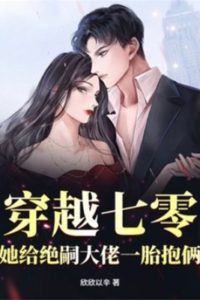
In the Kingdom of Beiyue during the twentieth year of Zhenning, a young woman named Si Wan arrives at the Duke of Zhenguo's residence with a jade pendant, claiming to be the legitimate daughter who was switched at birth fifteen years ago. The Duchess verifies her identity through a matching birthmark and the pendant, while the Duke secretly investigates the truth. Meanwhile, Zhou Yao, the girl who has lived as the Duke's daughter, discovers she is not the biological child and writes a suicide note, choosing to end her life rather than remain in a home where she no longer belongs.

Si Yao, a star-gazing researcher from the 22nd century, dies in a traffic accident and transmigrates into Zhou Yao's body. Upon reading the suicide note, she is furious at the original owner's foolishness and decides to live fiercely for both of them. Si Yao possesses a spatial unit chip implanted in her wrist, which contains material wealth and provides enhanced strength and targeting capabilities. She buries Zhou Yao's clothes at Hua Fa Temple, establishing a memorial, and then confronts two human traffickers who attempt to kidnap her, defeating them and selling them at the trafficking market for three taels of silver.

Si Yao travels to Sijia Village to find her biological family, consisting of Mother Liu, her father Si Lao Er, and two brothers, Si Qing and Si Yang. The family lives in poverty, having been driven out by Old Woman Si, the grandmother who favored Si Wan and abused the family. Si Yao brings food and supplies from her spatial unit, and the family shares their first proper meal together. She learns that Old Woman Si had switched the babies at Hua Fa Temple after being bribed with ten taels of silver by Si Lao Er, who feared his mother would mistreat a girl.

Si Yao begins to integrate into rural life, demonstrating exceptional strength by winning a digging race against her brother Si Yang. She hunts a wild boar in the mountains using her spatial unit's targeting system. Meanwhile, rumors spread through the village about the beautiful new daughter returning to Mother Liu. Old Woman Si, upon hearing the news, rushes to the second son's hut to demand filial piety and resources for her favored grandson Yaoge.

The core conflict centers on Si Yao navigating her new identity while dealing with the oppressive Old Woman Si and the political intrigue at the Duke's residence. The Duke discovers the truth about the switch and the conspiracy involving Nanny Wang, who acted on behalf of Old Woman Si. Si Yao must protect her biological family from Old Woman Si's exploitation while building a new life. Her spatial unit proves essential for survival, providing food, tools, and combat capabilities. The story follows her journey from a privileged duke's daughter to a resilient rural woman who refuses to be victimized, determined to enjoy great fortune in the latter half of her life.

Latest Release
DateGroupRelease
2026-08-11shanghai fantasy c6
2026-08-11shanghai fantasy c5
2026-08-11shanghai fantasy c4
2026-08-11shanghai fantasy c3
2026-08-11shanghai fantasy c2
2026-08-11shanghai fantasy c1

Community Reviews

Rating(4.1 / 5.0, 9votes)
5 stars
3(33%)
4 stars
4(44%)
3 stars
2(22%)
2 stars
0(0%)
1 stars
0(0%)

Popular reviews

... Read More
Okay so this batch is wild. Like, the way the story cuts between Si Yao doing something almost spiritual at the temple and then immediately getting ambushed by traffickers? Chef's kiss. Let me start with the Hua Fa Temple scene. Si Yao buries clothes as a tomb for Zhou Yao, plants sunflower seeds, and basically declares: she's taking over this life on her own terms. This is the emotional anchor of the whole chapter. And then—bam—she's on the road getting scammed by Qin Xianglian and Old Man Chen. The tonal whiplash is intentional, and it works because Si Yao handles both situations with the same calm competence. What I loved most was the trafficker scene structure. It follows a classic setup-escalation-resolution pattern but with a twist: Si Yao plays along instead of immediately fighting back. She pretends to drink the drugged water, pretends to fall asleep, waits for them to turn the cart around, THEN strikes. That's not just action writing—that's tactical storytelling. The author trusts the reader to follow along without over-explaining. And then cutting to Sijia Village? Old Woman Si harassing Mother Liu for money Zhou Wan didn't even steal from her? The parallel is brutal. Si Yao escaped that world, but it's still there, still choking people. The plot doesn't let us forget where she came from. My only tiny complaint: the transition between the temple scene and the road scene felt slightly abrupt. But honestly, that might be the point—Si Yao's life doesn't have gentle transitions. One moment she's being reflective, the next she's fighting for survival.
... Read More
The pacing in this section is absolutely relentless and I love it. Chapter 11 opens with Si Yao handling a wild boar in the forest—quick, efficient, establishing her capabilities—then immediately pivots to the bearded man with the trap. This is such smart scene design because it does three things at once: shows her power, introduces a potential ally, and keeps the reader moving. Then BAM, Chapter 11 shifts to the old compound farce and the pacing goes from calm to chaotic in a single paragraph. Mother Liu rushing back, the door fallen, everything stolen—it's immediate stakes. The confrontation scene itself is a masterclass in escalation: Old Woman Si screams, Si Yang gets whipped, Mother Liu gets beaten, Old Man Si watches, and then Si Yao kicks the door open. Each beat raises the tension higher. What's really impressive is how the author handles the aftermath. After the explosive confrontation, instead of continuing the high energy, we get a quieter walking-home scene where Si Lao Er opens up about his past. This emotional breather is essential—it lets the reader process what just happened while deepening character motivation. Then the family separation conversation follows naturally, and we end on a warm, almost comedic note with the boar reveal and family laughter. The chapter structure moves from action → conflict → emotional processing → resolution → warm closing. It's a complete narrative arc packed into a few thousand words, and I didn't want it to end.
... Read More
The stakes in this batch operate on three levels, and they're all working simultaneously. Level one: survival. Si Yao is alone on the road with two human traffickers who drugged her water and planned to sell her. The tension here is immediate and visceral. Every moment she pretends to sleep while they turn the cart around—that's genuine suspense because we know she's awake and they don't. When she finally acts, it's not just a fight scene, it's a reversal of power that makes your chest tight with relief. Level two: identity. Si Yao is occupying Zhou Yao's body, and she needs to become the real Si Yao. The stakes here are existential. If she fails, she's just a ghost in someone else's life. The temple scene, the tomb of clothes, the sunflower seeds—all of this is Si Yao fighting for the right to exist as herself. That's a deeply personal stake that makes the action sequences feel earned rather than gratuitous. Level three: the past that won't stay buried. Sijia Village represents everything Si Yao escaped, and the author makes it clear it's still alive and still hurting people. Mother Liu, the two thin sons, the dilapidated hut—it's a parallel tragedy running alongside Si Yao's success. The conflict here is internal for Si Yao (do I look back?) and external for the family (can they survive Old Woman Si?). What I love most is how the author raises the stakes without raising the volume. Si Yao never panics. She never monologues about her fears. She just acts, and the stakes speak for themselves. That's confident writing.
... Read More
I need to talk about Si Lao Er because honestly my heart was breaking for him. The passage where he explains his childhood—'since he could walk, he had been put to work in the fields. Any small mistake would earn him a whipping from his father. If there was food, his brothers ate first'—this is the kind of quiet, devastating detail that makes you hate the grandparents even more. He spent his whole life accepting this as 'fate,' saying things like 'the destiny between children and parents is fated.' Like he had convinced himself he deserved it. And then Si Yao asks him the simplest question: 'If we separate the family, will you follow us or stay with the old compound?' And he says 'Us, of course! I am the head of this household!' And I swear I got genuinely emotional. This man who had been beaten down his entire life finally claimed his authority. The scene where Si Yang teasingly calls him 'Head of the household' and the family laughs together while Mother Liu weeps with joy—this is the emotional payoff the entire arc had been building toward. Si Yao isn't just fighting for stuff, she's fighting for her family's right to exist without abuse. And her relationship with her two brothers is so sweet too—Si Qing's 'tense shoulders relaxed slightly' and Si Yang's fierce loyalty developing in real time. The moment Si Yang almost takes the silver but stops himself because 'what difference would he be from Si Wan?' showed such growth. These family bonds are what make the story work.
... Read More
There's so much going on symbolically in these chapters that most readers probably just glide past without noticing. The sunflower seeds first. Si Yao scatters them around Zhou Yao's tomb of clothes with this line: "Zhou Yao, no matter whose daughter you are reborn as, never forget to love yourself well! Always be full of hope, cherish yourself, and grow toward the sun!" Sunflowers don't just symbolize hope here—they symbolize direction. They always turn toward light. That's Si Yao's entire arc in miniature: no matter what body you're in, no matter where you start, you choose which way to grow. The tomb of clothes itself is a powerful symbol. In Chinese tradition, burying clothes as a memorial (衣冠冢) is for someone whose body is lost or unavailable. Si Yao is literally creating a grave for Zhou Yao's identity while she inhabits her body. It's a funeral and a birth certificate at the same time. She's burying the old self to become the new. Then there's the flour. Old Woman Si demands coarse flour from Mother Liu while hoarding the fine white flour for Yaoge. Food as power. Food as hierarchy. The village women who used to bring eggs and vegetables only to be cursed afterward—this is a community that has learned that giving to Old Woman Si only invites more extraction. It's a brilliant microcosm of how abusive family dynamics work: they consume goodwill until nothing remains. And the zither Zhou Wan smashed? That's Zhou Yao's maiden name engraved on it. A symbol of identity and artistry, destroyed by someone who couldn't appreciate either. The contrast between Si Yao planting seeds of hope and Zhou Wan destroying symbols of beauty says everything about these two characters.
... Read More
Okay so let me just say this: Si Yao walking into that old compound and dismantling an entire family of abusers with NOTHING but her voice was one of the most satisfying plot moments I have ever read. Like, she didn't even throw a single punch at Old Woman Si—she just grabbed her, lifted her up 'like a puppy,' and then talked the woman into fainting. Fainting. From verbal attacks alone. I actually laughed out loud. The structure of that confrontation is so well-built too: first Si Yang shows up and gets whipped for trying to stand up, then Mother Liu gets brutally attacked, and THEN Si Yao arrives like a storm. The author lets the tension build through the brothers' powerlessness before unleashing Si Yao's full force. And then—plot twist within the twist—she whispers something to Old Man Si that makes him 'drastically change' and go pale. Turns out this old man is a murderer and rapist, and Si Yao uses that as leverage. The way she then tells Si Yang to go get their things while Old Man Si is too terrified to refuse? Chef's kiss. Also, the wild boar scene at the beginning is such a cool world-building moment—her spatial unit, the boar vanishing into it. It establishes her power level without any exposition dumps. And the random bearded man with the trap? I'm 99% sure that's a future ally or at least a significant character. The chestnuts he gave her felt like a seed being planted. Overall, the plot here is tight, the revenge arc is deeply satisfying, and the family separation subplot sets up the next major story beat perfectly.
See all reviews

Characters

See all characters

Custom lists

See all custom Lists