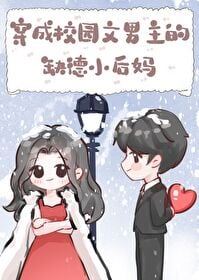
The Evil Stepmother Dressed as the Heroine of a College Romance Novel
+Add to Custom List
Genres:
Novel Info

Summary

... Read More

Song Lingxi is a transmigrator who has inhabited the body of a fictional character for over a decade. In the original novel, she was the biological mother of the second villain, Xie Qiao, and the lover of the protagonist, Zong Xuecheng. Her role was tragic: she was destined to die early after being framed and abused by the antagonist, Wang Ruowei, which led to her son Xie Qiao turning dark and seeking revenge. Despite her knowledge of the plot, Song Lingxi has failed repeatedly to escape her fate. She lives a quiet life with her son, trying to avoid the main characters, but her existence is constantly threatened by the rigid plot forces and the predatory nature of Zong Xuecheng, a cold and calculating businessman who views her as a disposable mistress.

The story begins with a violent confrontation at Golden Wing High School between Xie Qiao and Zong Fei, the son of Zong Xuecheng. Zong Fei, the male lead of the novel, is a genius heir who has always been overshadowed by Xie Qiao’s superior intellect. The fight is instigated by Wang Yizhi, a jealous classmate who manipulates Zong Fei into bullying Xie Qiao. Song Lingxi arrives at the school office to face Director Zhao, a corrupt official who blindly sides with the wealthy Zong family. Instead of submitting, Song Lingxi aggressively confronts the director, recording his threats and using psychological warfare to dismantle his authority. She exposes the hypocrisy of the school staff and forces the opposing parties to apologize, displaying a fierce protectiveness over her son that shocks everyone present.

During the incident, Zong Fei apologizes to Xie Qiao, acknowledging that the fight was a result of his own pride and jealousy rather than any wrongdoing by Xie Qiao. This marks a shift in their relationship, as Zong Fei begins to see Xie Qiao not just as a rival but as an equal. Meanwhile, Secretary Qian, Zong Xuecheng’s aide, attempts to intimidate Song Lingxi into accepting a settlement and remaining silent about her status. Song Lingxi counters with a verbal barrage that strips away his pretensions of class superiority, leaving him humiliated and speechless. Her actions disrupt the expected narrative, causing Zong Xuecheng to take notice of her changed behavior.

The conflict escalates when Song Lingxi’s biological family suddenly appears at her apartment. Her parents and brother, whom she has not seen in ten years, are revealed to be greedy opportunists who were manipulated by Wang Ruowei. They attempt to extort money from Song Lingxi and smear her reputation, claiming she abandoned them. Xie Qiao and Zong Fei jointly intervene to expel the family, demonstrating a newfound alliance between the two rivals. Song Lingxi threatens her mother, implying she knows about Wang Ruowei’s involvement, and warns them to stay away. This encounter highlights the external threats conspiring against her, as Wang Ruowei seeks to destroy Song Lingxi to eliminate competition for Zong Xuecheng’s affection.

Zong Xuecheng arrives and invites Song Lingxi to a family banquet at the Zong estate, a significant deviation from the original plot where she was never allowed such access. He intends to use the event to humble her and reinforce the social distance between them, but Song Lingxi accepts with unexpected confidence. The story moves toward a confrontation with the Zong family’s patriarch and the broader Wang family conspiracy. As Song Lingxi navigates these dangerous waters, she remains determined to survive and protect her son, refusing to accept the tragic fate written for her. The dynamic between the two genius boys, Xie Qiao and Zong Fei, continues to evolve, complicating the original redemption arc and altering the course of their futures.

Latest Release
DateGroupRelease
2026-08-11shanghai fantasy c6
2026-08-11shanghai fantasy c5
2026-08-11shanghai fantasy c4
2026-08-11shanghai fantasy c3
2026-08-11shanghai fantasy c2
2026-08-11shanghai fantasy c1

Community Reviews

Rating(4.1 / 5.0, 7votes)
5 stars
3(43%)
4 stars
2(29%)
3 stars
2(29%)
2 stars
0(0%)
1 stars
0(0%)

Popular reviews

... Read More
"A child represented a variable, something that could disrupt the family's inheritance rights, and those kinds of variables needed to be eliminated." This line absolutely haunted me. Let's talk about Zong Xuecheng for a second because this man is a walking contradiction and I am HERE for it. On one hand, he's the coldest, most calculated businessman in the novel. He played Wang Ruowei like a fiddle, absorbed her family's empire, and showed zero remorse. He adopted Xie Qiao out of obligation, not love. He's been keeping Song Lingxi at arm's length for over ten years while somehow never letting her go completely. This is a man who treats every relationship like a transaction. But then he has this vivid dream about Song Lingxi being pregnant, and suddenly he's unsettled. Not scared—Zong Xuecheng doesn't do scared—but unsettled. The dream disturbed him enough that he starts thinking about "tying up loose ends." What loose ends? Is he talking about Song Lingxi? Is he talking about something else entirely? The most interesting part is how he looks at her after she comes out of her room. "It seemed like she had changed after not seeing him for months." He notices the sharpness in her words, the edge she's never shown before. And instead of being threatened by it, he seems... intrigued? That's the thing about Zong Xuecheng—he's drawn to strength, even when it's directed at him. Their relationship has always been this weird dance where she avoids him and he somehow always finds her. Now she's stopped running, and I genuinely don't know what he's going to do next. Does he respect her defiance? Does he try to break it? Or does he finally stop playing games and just... want her?
... Read More
I need to talk about the very first scene in this batch because it's one of those moments that just LIVES in my head. Song Lingxi is watching Zong Xuecheng change his shirt from behind, and the description is so deliberate, so charged, that I had to put the book down for a second. "From behind, the man appeared tall and lean, with a slim waist and back, his arms both delicate and strong." The full-length mirror reflects his face—gold-rimmed glasses, deep-set eyes, that expression of someone who could buy and sell you and not feel bad about it. But what makes this scene work isn't just the physical description. It's the contrast between how he looks and who he is. The author keeps reminding us that he's described as a "refined yet untouchable scoundrel" and that the colder he is, the more irresistible he becomes. The mirror is doing so much work here—it's literally reflecting his image while Song Lingxi is reflecting on his nature. She thinks about how women chase him, how he's the ultimate white moonlight, and then she has this brilliant internal monologue: "The white moonlight in the sky was the purest kind of moonlight. Anything else, when pulled down to the ground, was just toxic light." And then the scene shifts. His voice cuts through her thoughts. "Are you hungry?" The mundane question after all that tension is almost funnier than if he'd said something dramatic. He's in a fresh shirt now, looking at her through the mirror, and the power dynamic between them is so thick you could cut it with a knife. The domestic setting—a bathroom, a bedroom, ordering takeout—contrasted with the almost operatic family drama happening around them is what makes this world feel so alive. These characters are living in luxury but their lives are anything but comfortable.
... Read More
The title of this novel isn't accidental. "Toxic Bai Yueguang"—the white moonlight that poisons everyone who reaches for it—is the central metaphor, and this batch explores it from every angle. Zong Xuecheng is the white moonlight. Cold, beautiful, untouchable. Women project their fantasies onto him and then destroy themselves trying to get close. Wang Ruowei is the perfect case study—she spent over a decade obsessing, came back from exile consumed by paranoia, betrayed her own family, and ended up with nothing. The author shows us that the white moonlight wasn't real to begin with. Zong Xuecheng never loved her. He never loved anyone in that way. He was just playing a game, and she was the most entertaining piece on the board. But Song Lingxi's observation about moonlight is what really crystallizes the theme: "The white moonlight in the sky was the purest kind of moonlight. Anything else, when pulled down to the ground, was just toxic light." This is about the danger of idealization. The farther away something is, the more perfect it seems. The moment you try to possess it, it becomes poisonous. Wang Ruowei tried to pull the moon down and got burned. The original owner tried to get close and died. And now Song Lingxi—she's the first person who seems to understand this. She doesn't worship him. She doesn't fear him either. She just... exists near him, on her own terms. The family dinner Zong Fei is arranging is also symbolic. The Zong family represents tradition, power, legacy—all the things that make Zong Xuecheng who he is. Bringing Song Lingxi into that space is a statement. It's either claiming her or testing her, and either way, it's about what happens when the untouchable moonlight is forced to confront the people who actually matter. And Song Lingxi's own family? They're the toxic light in a different form. They represent the parasitic relationships that drain you, the people who love you only for what you can give. The author is building this parallel between romantic toxicity and familial toxicity, and I think we're supposed to see how they mirror each other.
... Read More
Let me just say this: the stakes in this novel keep escalating in ways that genuinely surprise me. On the surface, you've got Song Lingxi fighting for her life. She transmigration'd into a body with a fatal heart condition, and she has maybe months to figure out how to survive. That's a ticking clock that never stops ticking. Every chapter she's one step closer to either finding a cure or dying, and the author makes you feel that urgency without ever being melodramatic about it. But then there's the interpersonal conflict, and this is where it gets really interesting. The Song family showing up isn't just a random obstacle—it's a direct threat to Song Lingxi's carefully constructed life. These people know nothing about who she really is now, but they're going to try to exploit her anyway. And Zong Xuecheng's family dinner invitation? That's another layer of danger. He's pulling her into a world she has no business being in, and she's walking into it with her eyes open because she has no choice. The most compelling conflict though is the one between Song Lingxi and Zong Xuecheng themselves. He's been keeping her at arm's length for over ten years. She's been avoiding him just as deliberately. And now both of them are changing—she's becoming sharper, more defiant, and he's... what? Showing vulnerability? Inviting her to family dinners? Having nightmares about her? The conflict isn't just external anymore. It's internal. What do they want from each other? What are they afraid of? And what happens when they can't avoid each other anymore? The suspense is maintained beautifully because the author never lets you settle. Just when you think you understand the situation, something new arrives—whether it's Wang Ruowei's backstory, the Song family's entrance, or Zong Xuecheng's strange dream. Every revelation raises new questions, and every question raises the stakes a little higher. I'm not sure what the ultimate conflict is yet, but I know this: whatever it is, it's going to change everything.
... Read More
Okay so I just finished this batch and my brain is still processing. The way the plot layers here is genuinely impressive. You've got the Wang Ruowei backstory unfolding like a dark origin story—she went from obsessed stalker to complete psycho, and honestly? The author makes you understand her without excusing her. She literally destroyed her own family for a man who was playing her the entire time. That's not just villainy, that's tragic self-sabotage on a monumental scale. But then BAM—Zong Xuecheng invites Song Lingxi to a family dinner. A FAMILY DINNER. This guy who wouldn't bring a lover within a hundred miles of his relatives is suddenly saying "Grandpa wants to see you, do you want to go?" With actual warmth in his voice? Song Lingxi's internal monologue had me screaming because she's absolutely right to be suspicious. This isn't kindness, it's either a test or a threat. And then the Song family shows up. The original owner's parents and brother. After ten years of silence. The timing is either incredibly convenient or deeply suspicious, and I'm leaning toward suspicious. What do they want? Money, obviously, but what's the real play here? The plot is moving fast now and I love it. Every chapter seems to add a new layer of complication without losing the main thread. Zong Xuecheng's dream about Song Lingxi being pregnant is also sitting in my brain like a hot coal. That wasn't just a random nightmare—it felt like foreshadowing, like the author is telling us something big is coming. What happens if she gets pregnant? What does it mean for the power dynamics? I need to know.
... Read More
This author's dialogue is genuinely sharp, and nowhere is that more true than in the Song family's entrance. Tang Hongmei opens her mouth and immediately unleashes: "I worked so hard to raise you, you ungrateful brat! And yet, you never came home, never took care of your brother all these years. I'm taking you to court for being a heartless daughter!" Let me just pause here. This woman had a daughter she abandoned, who grew up without her, who nearly died in a hospital bed with no one to sign consent forms—and her first words are about being ungrateful? The audacity is so cartoonishly perfect that I couldn't stop reading. And then her husband chimes in with: "Children have a duty to support their parents. And what about your uncle? Your mother hasn't taken care of him in years, so you owe us big time!" Owe them. OWE THEM. For what? For being born? For surviving against impossible odds? The dialogue here is doing something really clever—it's making you feel the characters' shamelessness through their own words. You don't need narration to tell you these people are terrible. They tell you themselves. But the best line has to be Song Lingxi's response. She just casually fires back: "Who are you calling Song Lai Di? If I remember correctly, I used to call you 'Deadbeat Brother,' right?" And then she repeats it three times like a toddler taunt. Deadbeat Brother, Deadbeat Brother, Deadbeat Brother. Xie Qiao's lines are also perfectly calibrated. "You're not welcome here. Leave. Legally, a child isn't required to support their parents until they're sixty. If you want to sue me, come back when you hit that age." Cold, precise, and absolutely devastating. He doesn't raise his voice. He doesn't need to. The narrative voice itself is also doing a lot of work. Song Lingxi's internal commentary—"Who knows when love-struck minds will end up in prison?" and "I also allow your grandfather to see me"—gives us this wry, modern sensibility that contrasts perfectly with the more formal dialogue of the other characters.
See all reviews

Characters

See all characters

Custom lists

See all custom Lists