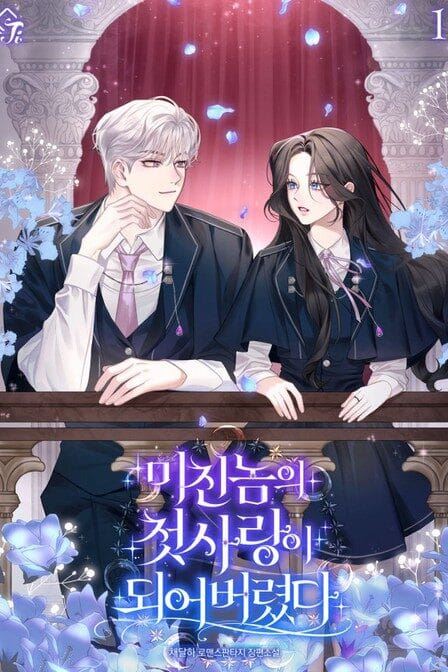
The End of This Marriage Was Death
+Add to Custom List
Genres:
Novel Info
  • Author:
  • Status:Ongoing

Summary

... Read More

Lirie Scarlett, the youngest daughter of Duke Scarlett, is forced into a political marriage with Edward Winderton, the cold and calculating Duke of Winderton, by order of their uncle, the Emperor of Lucenster. Raised as a dutiful doll to serve her family’s ambitions, Lirie enters the union with little hope of affection, especially given Edward’s known disdain for the Scarlett house and his apparent devotion to another woman. Their wedding night is a disaster; Edward refuses to consummate the marriage and openly mocks her, establishing a dynamic where Lirie is treated as an outsider and unwelcome burden in her own home.

Upon moving into Winderton Manor, Lirie faces immediate hostility from the servants, who favor Edward’s longtime companion, Lady Sasha Kidman. Initially believing Sasha to be merely a business partner, Lirie slowly realizes through eavesdropping and social interactions that Sasha holds a far more intimate and cherished place in Edward’s life. The tension escalates when Edward brings Sasha to family dinners and events, openly displaying their closeness while excluding Lirie. Lady Eteil, Edward’s mother, further alienates Lirie by explicitly endorsing Sasha and warning her not to interfere with their relationship, effectively stripping Lirie of her authority as Duchess.

The conflict deepens when Lirie suffers a severe allergic reaction to food served at breakfast, a meal that excluded her preferences in favor of Sasha’s tastes. Edward interprets her silence regarding the allergies as pretense or manipulation, responding with cruelty rather than concern. This incident leaves Lirie physically weakened and emotionally isolated. Later, she confronts Sasha directly, only to be taunted with the revelation that Edward claims he is only attracted to Sasha and views Lirie with revulsion. When Edward discovers Lirie in the garden later, he unleashes his pent-up rage, accusing her of scheming to secure her position and reminding her that she is the daughter of the man who destroyed his happiness.

Amidst this emotional abuse and isolation, Lirie finds herself developing genuine feelings for Edward, despite his relentless mistreatment. She recognizes that their marriage is a trap set by their families and the Emperor, leaving her with no avenue for escape. The narrative traces her internal struggle as she oscillates between self-preservation and a desperate, unrequited love. She attempts to maintain her dignity and fulfill her duties as Duchess, but the household dynamics constantly reinforce her status as a pariah. The story highlights the power imbalance between the two houses and the psychological toll placed on Lirie as she navigates a hostile environment where every interaction is filtered through Edward’s prejudice and Sasha’s calculated dominance.

As the days pass, Lirie’s health and spirit deteriorate. She becomes increasingly aware that her existence is an inconvenience to everyone around her, from the mocking servants to her indifferent husband. The arrival of new rumors and social pressures adds to her burden, yet she remains trapped by the Emperor’s decree. Her only solace is her loyal maid, Betty, who tries to shield her from the harsh realities of court life. Lirie’s journey is one of endurance, as she learns to hide her vulnerabilities behind a mask of noble composure, even as her internal world crumbles under the weight of rejection and betrayal.

Latest Release
DateGroupRelease
2026-10-03dusk blossoms c127
2026-10-03dusk blossoms c126
2026-10-03dusk blossoms c125
2026-10-03dusk blossoms c124
2026-10-03dusk blossoms c123
2026-10-03dusk blossoms c122
2026-10-03dusk blossoms c121
2026-10-03dusk blossoms c120
2026-10-03dusk blossoms c119
2026-10-03dusk blossoms c118
2026-10-03dusk blossoms c117
2026-10-03dusk blossoms c116

Community Reviews

Rating(0 / 5.0, 34votes)
5 stars
0(0%)
4 stars
0(0%)
3 stars
0(0%)
2 stars
0(0%)
1 stars
0(0%)

Popular reviews

... Read More
What gets me about this book is how the stakes escalate without ever becoming loud about it. The biggest conflicts are quiet, internal, and devastating. On the surface, the external conflict is simple: Lirie is married to a man who hates her, in a house full of hostile servants, under the watch of an Emperor who treats people like chess pieces. But the REAL stakes are far more personal. If she fails to produce an heir—or even appear to want to—she becomes a "useless mistress." In this world, that's not just embarrassing. It's dangerous. She has no protection, no income, no future. She's trapped between two houses that both use her, and neither will let her go. The internal conflict is even sharper. Lirie wants to survive, but she doesn't want to become like her family. She resents being treated as currency, yet she's being used as currency right now. Every time she bites her lip instead of speaking up, every time she forces a smile for Betty, she's making a choice: dignity or survival? And the book keeps asking—which one actually exists when you're this powerless? The tension in the wedding night scene is MASTERFUL because it's not physical danger—it's social and emotional annihilation. Edward could literally destroy her reputation with a single cold word, and he does, casually, like breathing. "At this rate, I'm losing interest." That's not just mean—it's a threat wrapped in indifference, which is somehow worse. But here's what keeps me up at night: the Emperor. He's barely mentioned but present everywhere. He decreed this marriage. Edward calls him "childish." What kind of ruler makes a political marriage like this? And why? The stakes involve imperial politics, noble alliances, and possibly war. All of this is simmering beneath the surface like a pot about to boil over. The servant conflict on day one is also significant. When the maid refuses to fetch Betty, it's not just rudeness—it's a power test. Who controls the household? The Duchess or the Duke's established hierarchy? Lirie asserts herself, but we know this is a losing battle. She's fighting structural opposition with nothing but rank she hasn't earned yet. And the banquet scene? That's where the social stakes become visible to the reader in a way that's almost painful. Every whispered comment, every pitying glance, every empty seat beside her—that's the battlefield. She's surrounded by people, yet completely alone. The isolation is suffocating. I'm convinced the stakes are about to escalate massively. You don't introduce an Emperor who uses marriage as a weapon without that weapon turning on someone. And my money is on it turning on Lirie first.
... Read More
I have to talk about how the castle itself practically radiates hostility. This isn't some warm, welcoming estate where the lady of the house is cherished. From the moment Lirie wanders those halls at dawn, Winderton Castle feels like a place that doesn't want her there. The description of the brightening halls, her dry mouth, the unsteady legs—it all paints this picture of a woman literally walking through a world that has no room for her. And then there are those scenes that hit like a gut punch visually. The banquet hall moment where she sees nobles looking visibly disappointed that she stayed instead of leaving? You can picture every painted face in that room, waiting for an excuse to gawk. It's so cinematic. And later, the contrast between the lavishly set dining room where Lady Kidman eats and the bedroom where Lirie gets fed by a servant trolley—alone. The author doesn't need to say 'she felt isolated'; the physical separation does all the work. I also loved the morning scene with the maids huddled in a lit room. That sliver of light through a slightly open door, the sense of foreboding before she even hears them—the atmosphere is thick enough to cut with a knife. And the final image of her hearing laughter from Edward's study while she's up late with a bowl of fruit, going back to bed regretting everything... that's a scene I will not be forgetting anytime soon.
... Read More
Let me be honest—I initially wanted to hate Edward. And he gives every reason to. The man waltzes into his own wedding night like he's attending a business meeting, stares at his wife like she's something unpleasant he stepped in, and then delivers lines that would make a villain proud. "As the daughter of House Scarlett, I thought you'd want to bear my heir." Honey. No. Absolutely not. But here's the thing that got me—Edward isn't just being cruel for fun. There's something underneath it, and I'm not talking about hidden romance tropes (though we all know where this genre is headed). He calls her "mute" when she can't respond. He says he's "losing interest." These are the words of a man who feels like he's been played too. He sees Lirie as another pawn of House Scarlett, another instrument of the Emperor's scheme. His cruelty is armor. And Lirie? Oh, she's fascinating. She's not some fragile flower. When Edward grabs her chin and kisses her roughly, she pushes him away with all her strength. She's trembling, yes, but she fights back. And then she throws a pillow at the door after he leaves. That pillow throw is one of my favorite character moments in this entire book. It's small, it's impotent, it's utterly human—and it tells us everything about her. The relationship between them is built on mutual misunderstanding, which is honestly the most realistic foundation for any fictional romance. Neither of them knows the full truth. Edward thinks she's a political plant. Lirie thinks he's just a cruel aristocrat. Both are partially right and completely wrong. What I also can't stop thinking about is her relationship with her father. That moment where he hands her over with "reddened eyes"—is that genuine grief or practiced performance? Given that her family treated her like a doll and only showed affection in private, I'm leaning toward performance. But it's ambiguous enough that I'm not 100% sure. And that ambiguity is what makes the Scarlett family so terrifying. Also, Betty. Sweet, loyal Betty, who hides her worries so her mistress won't feel guilty. I need more of this girl in future chapters. She's the only source of warmth in this whole nightmare. The emotional core of this book isn't "will they fall in love." It's "will they see each other as human beings?" And honestly, that's a much more interesting question.
... Read More
I've been turning over a specific line from Kion that I think captures everything this story is really about: "You were born for Scarlett. Your destiny, your duty, is to do anything for Scarlett." This isn't just a villain monologue. This is the thematic thesis of the entire novel compressed into one sentence. The concept of family as obligation rather than affection runs through every relationship in this book. Lirie's marriage to Edward isn't about love—it's about tying him to Winderton politically, keeping him useful, keeping him contained. The emperor orchestrated it. The Duke of Scarlett reinforced it. Everyone treats the marriage as transaction, never as partnership. And then you have Kion, who represents the Scarlett family philosophy in its purest, most terrifying form. Love doesn't exist. Only utility. Lirie's value is measured entirely by what she can produce—a child, a political advantage, a sacrifice if necessary. Her brother touches her hair affectionately while discussing her murder. That's not a contradiction; that's the point. In the Scarlett worldview, affection and violence are the same thing—both are tools for maintaining family hierarchy. Sasha functions as a dark mirror to all of this. She's also transactional, but at least she's honest about it. She wants Edward for what he can give her—power, status, wealth. She doesn't pretend to love him or serve a family cause. In a story full of people who disguise exploitation as devotion, Sasha's naked self-interest is almost refreshing. Then there's Lirie's attempt to study household management and become worthy of Edward. This is where the tragedy becomes most acute. She's internalized the very logic that's destroying her—she believes that if she just becomes more useful, more competent, more valuable, she'll earn love and safety. But the system doesn't work that way. Neither the Scarletts nor Edward will ever reward her compliance because compliance is expected, not celebrated. The recurring imagery of masks and performances reinforces this theme. Kion performs affection. Edward performs politeness. The emperor performs concern. Lirie performs wellness. Everyone is acting, and the audience is always watching. The question the novel seems to be asking is: when every relationship is a performance, is there any version of yourself that's actually real?
... Read More
Let me just connect some dots because I think this book is doing something interesting with its imagery. The garden. Edward's favorite place. The garden that Lady Eteil destroys and then forces Lirie to restore. What does that represent? A space that belongs to Edward — to HIS mother's lineage, to the house of Winderton — that Lirie is supposed to nurture but will never truly own. She tends it, bleeds for it, works herself to the ground, and when Edward arrives he doesn't even thank her. The garden is her labor made invisible. Then there are the feet. Lirie's injured feet literally prevent her from walking freely in this house. She's confined to her bedroom. Her body is saying what her social position won't allow: she doesn't belong here. The bandaged feet are both a punishment and a cage, and also — and this is the part that really got me — they're the thing that keeps her hidden from the full glare of Winderton's cruelty for a few days. The injury is both harm and protection. And the vase. It was there yesterday, gone today. Small detail, but it signals that Lirie can't even trust her own environment. Things disappear. Memory fails her. The ground literally shifts under her. 'I've never considered you my wife.' That line isn't just cruel — it's thematic. If she's not his wife, then none of these injustices are marital betrayals, they're just... the natural order of a house that doesn't want her. The book is asking: what does it mean to belong somewhere when every institution in that place is organized against you?
... Read More
I have to talk about how the dialogue in this book works because it is MASTERCLASS level subtext. Every conversation is a landmine and I am obsessed. Look at this exchange: "You haven't changed either, Your Grace." "You haven't changed either." They're saying completely different things and neither of them is heard. She means: you've never once looked at me like I matter. He probably means: you've never once broken composure. Then there's Diden, the supposedly warm brother, who pats her head and says "You're a good sister, so I know you'll do well" with what the narrative explicitly calls an "icy cold" gaze behind a gentle voice. The text doesn't even need to tell us he's fake—we can TELL from how the dialogue is framed. And Edward, who says "Do you want this marriage, my lady?"—the most loaded question in the entire book—delivered with such casual detachment that it's almost cruel. He asks and then says NOTHING when she gives the polite answer. The silence IS the dialogue. The narrative voice is also doing something brilliant: Lirie's internal monologue is poetic and raw while her spoken words are stiff and performative. That gap between what she thinks and what she says IS the story. Every time she verbally agrees with her family's cruelty toward herself, the narration immediately undercuts it with her true feelings. It's exhausting to read because it's so accurate to how traumatized people actually communicate.
See all reviews

Custom lists

See all custom Lists