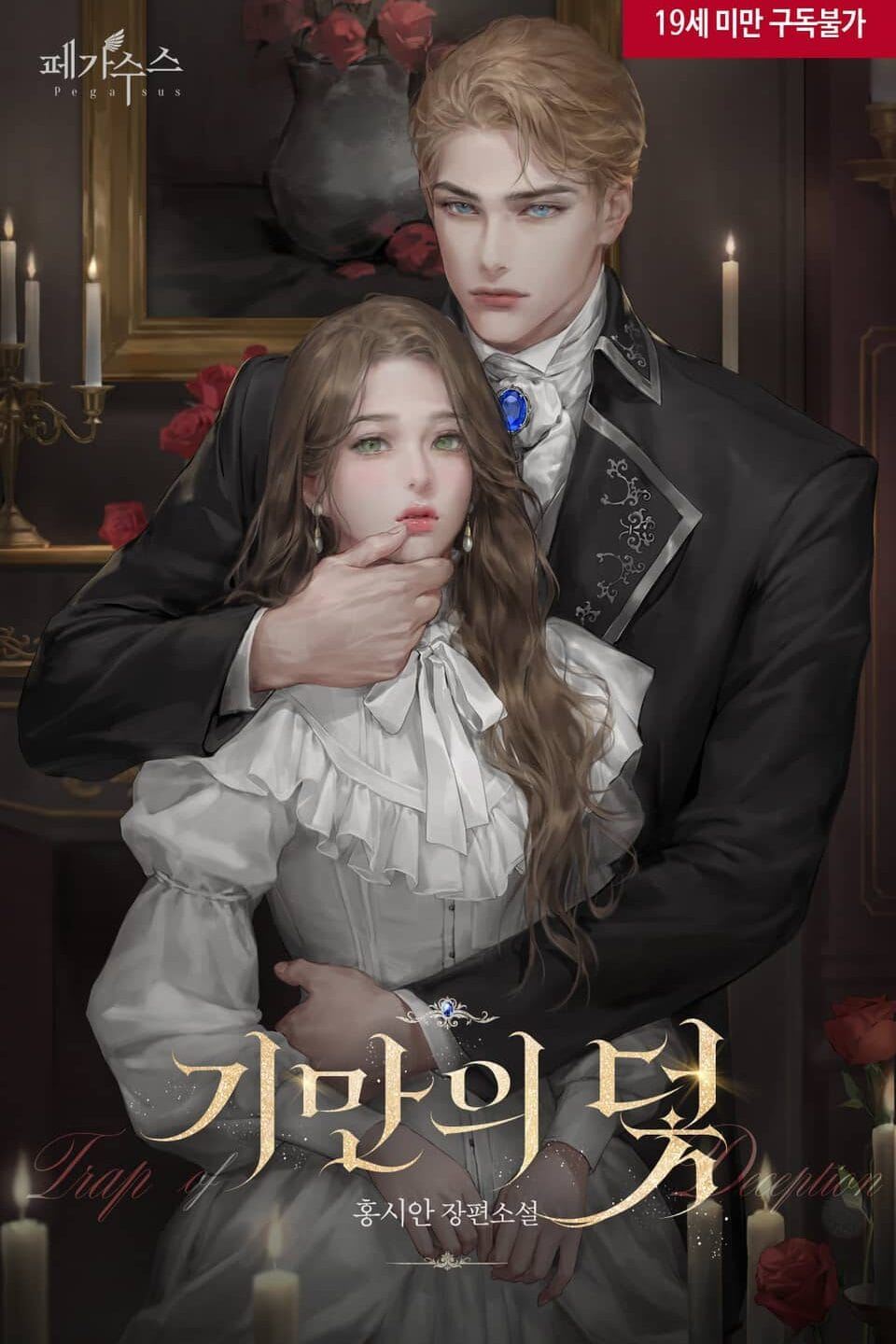
The End of a Lewd Hobby
+Add to Custom List
Novel Info
  • Author:
  • Status:Ongoing

Summary

... Read More

Elott Persia is a first-rate noblewoman at the Imperial Academy, renowned for her flawless etiquette, calm demeanor, and perfect academic record. To her peers and professors, she is the ideal young lady, embodying the refined composure expected of the aristocracy. However, this public image masks a private torment. Following the traumatic death of her mother and subsequent abuse by her cruel stepmother, Elott suppressed her true, lively personality to survive within the rigid social hierarchy. She lives a life of constant performance, exhausting herself by maintaining a mask of serene dignity while harboring deep-seated frustration and a secret, shameful sexual curiosity that she has never been able to fully satisfy alone.

The narrative begins when Elott discovers a hidden Third Archive Room in the academy. Drawn into the dim, red-lit space, she indulges in her private habit, rubbing against the sharp corner of a table in an attempt to find pleasure. Her solitary act is interrupted by Lucion, a mysterious third-year male student who observes her from the shadows. Lucion is a commoner orphan and a magical genius revered across the kingdom, destined for an earldom upon graduation. He confronts Elott, not with blackmail or malice, but with a chillingly calm offer to teach her what true pleasure is. Despite her terror and shame, Elott is compelled to return to the archive room, where Lucion exercises a hypnotic control over her. He forces her to submit to his will, stripping away her noble pretenses and exposing her body and desires in the dark confines of the archive.

Lucion’s method is psychological as much as physical. He humiliates Elott by stepping on her genitals with his shoe, forcing her to climax while he watches with detached amusement. He deconstructs her identity as a proper noblewoman, revealing that her composure is a fragile shell hiding a needy, submissive core. The experience leaves Elott physically spent but psychologically entrapped. She returns to her dormitory with fragmented memories, unable to reconcile the refined lady she presents to the world with the helpless creature she becomes in Lucion’s presence. The days that follow are a torment of anxiety and anticipation. Elott tries to ignore Lucion, but her body betrays her; she finds herself obsessively thinking about him and touching herself in回忆s of his dominance.

A secondary conflict arises involving Edgar Hallon, Elott’s assigned guard knight. Edgar is a stoic, blunt man from a declining noble family, attached to Elott by her stepmother’s arrangement. While Elott generally finds his presence annoying, Edgar reveals a vulnerable side after a misunderstanding with another student, kneeling to beg her not to lend him to others. This interaction highlights the transactional nature of Elott’s relationships; even her guard is a tool for social maneuvering. Edgar witnesses Elott’s distress but remains silent, adding to her paranoia that her secret might be exposed.

The story reaches a critical turning point when Elott’s stepmother’s influence and the pressure of an arranged marriage for political gain push her toward a breaking point. Elott is engaged to a foreign nobleman she does not know, a union meant to solidify trade agreements. Her stepmother constantly reminds her of the importance of premarital chastity, using it as a weapon to control and punish her. After her encounter with Lucion, Elott feels defiled and fears the judgment of her family and society. In a moment of despair, she retrieves a chastity vow ring from her drawer, a symbol of the purity she is expected to maintain. She writes a letter to her stepmother and submits a formal document to the faculty, signaling her intent to either flee the academy or commit to a path of absolute submission. The narrative ends with Elott caught between the oppressive expectations of her noble station and the dangerous, liberating dominance of Lucion, leaving her future uncertain as she navigates the aftermath of her unraveling secret.

Latest Release
DateGroupRelease
2026-10-03dusk blossoms c10
2026-10-03dusk blossoms c9
2026-10-03dusk blossoms c8
2026-10-03dusk blossoms c7
2026-10-03dusk blossoms c6
2026-10-03dusk blossoms c5
2026-10-03dusk blossoms c4
2026-10-03dusk blossoms c3
2026-10-03dusk blossoms c2
2026-10-03dusk blossoms c1

Community Reviews

Rating(0 / 5.0, 21votes)
5 stars
0(0%)
4 stars
0(0%)
3 stars
0(0%)
2 stars
0(0%)
1 stars
0(0%)

Popular reviews

... Read More
Elott Persia. That name sounds like something you'd see embroidered on a very expensive handkerchief, doesn't it? Blonde hair, blue eyes, perfect posture, perfect grades, perfect reputation. The eldest daughter, the model student, the young lady everyone praises for being 'so calm.' But god, the moment she's alone in that archive room, all of it falls apart. And not in a dramatic way—in a quiet, devastating way. She presses against a table corner between her legs and it's thrilling but empty, and she knows it. She's been chasing something she can't name, something just out of reach, for God knows how long. What struck me most is how the text handles her trauma. Her mother died. Her stepmother took over. She was publicly humiliated by other noble girls and since then, she buried her true self so deep she can barely remember what it felt like to laugh freely. The text says: 'She could no longer even remember when she had last laughed.' That line wrecked me. A whole person erased by expectations and cruelty, and she's been performing calmness as survival. And then this mysterious man appears. We don't know his name, we don't know his face, we don't know anything except that his voice is cold, his hands are skilled, and he knows exactly what he's doing to her. The power dynamic is insane—he's literally watching her do something shameful, and instead of exposing her, he offers to teach her. 'I'll teach you.' That's it. That one sentence changes everything. He sees the real her, the one nobody else does, and instead of judgment, he offers connection. Or control. Or both. Their dynamic has the kind of electric tension that makes your stomach drop. She's frozen, unable to move, and yet her body responds completely. The contradiction between her mind screaming and her body yielding—that's where the story lives.
... Read More
i have to say something about the atmosphere in these scenes because the author really knows how to paint with light and shadow. there's this one moment where elott is walking to the dining hall and passes a full-length mirror, and the narration is just devastating: 'elott looked to anyone's eyes like a proper and graceful noble young lady. there was no trace at all of the appearance that had come undone in pleasure within that deep darkness.' that. just sits there. one sentence. no commentary needed. the contrast between public composure and private unraveling, captured in a mirror reflection. chills. and the archive room itself—first the doorknob hidden by darkness, the stale air, the way she flinches at the sound of the door closing. it feels almost like a character. you can picture it: dim, still, enclosed. the magic sphere that Lucion creates is this sudden explosion of light that transforms the space entirely, revealing everything she tried to hide—the table, the bookshelves, HIM. the visual of red hair 'resembling the orange glow of a brightly burning sunset' against that dark archive room is stunning imagery. then the winter sun setting, casting 'an armful of crimson light' that dyes everything. the author keeps tying the environment to elott's emotional state. the world is sinking into indigo dusk when she finally walks to that archive room. she's already half-dead inside from worrying all day. and the cold. so much emphasis on cold throughout—'the chill unique to early winter,' the cold doorknob, the stale air. there's this warmth underneath it all but the surface is always chill. i feel like the setting isn't just backdrop, it's carrying the mood.
... Read More
Okay so let me just say—this plot sequence is absolutely relentless and I cannot stop thinking about it. We follow Elott from the moment she storms in to end things, full of bravado and trembling hands, all the way to a point where she's literally stripped bare both physically and emotionally. The arc here is brutal in the best way. What hooks me is how the author uses hesitation as a narrative device—every time Elott thinks she's about to escape or reclaim agency, she slips back into desire. That scene where she locks herself in her dorm room and does it alone, imagining him, is honestly devastating because it proves Lucion was right the whole time: she doesn't want to leave. She's been his all along. And that rabbit storybook on his desk? I haven't stopped thinking about this detail. It's such a weird, mundane object sitting there in what is clearly a space of power and control, and yet it creates this almost childlike dissonance against who Lucion is. It's like the book itself is a metaphor for the kind of fairy tale he's twisting—something sweet on the cover, something dark inside. The structure of these chapters is also interesting because we move from confrontation to confession to physical submission in what feels like one unbroken spiral. There's no respite, no chapter break that lets you catch your breath. By the time Elott is pressed against the wall with her wrists pinned, the plot has essentially stripped away every defense she had—not just her clothes but her lies, her independence, her ability to even pretend she wanted out.
... Read More
"Hng, uh……" — that sound she makes in her room, pressed against the wall, trying so hard to be quiet while the whole corridor could hear if they leaned close enough. The author writes that line and suddenly my heart was racing because I was holding my breath right along with her. That's the pacing magic of this book—it doesn't just tell you what's happening, it makes your body react to it. The structure between these chapters is masterful in how it alternates between external confrontation and private collapse. We get the Lucion scene—tense, verbal, sharp—then immediately cut to Elott alone in her room falling apart. Then back to Lucion, then deeper into physical intimacy. It's like the narrative is breathing: inhale, exhale, inhale harder, and you're gasping by the end. What I love most is how the author controls the speed of revelation. Elott doesn't confess anything outright. She never says 'I want you.' Instead, her body tells the story—her damp panties, her trembling, the way she clings to his shoulder, the empty feeling after. The pacing trusts the reader to connect those dots, and that trust makes every moment hit harder. When Lucion stops moving his finger and she whines for more, forgetting her shame entirely—that's the pace shifting from slow burn to something urgent and raw. And the chapter ending? Brutal. Just cutting off mid-scene with 'Huaaang' leaving you hanging. I immediately opened the next chapter. No dignity, no self-control, just pure reader addiction. That's the author's power—they don't ask for your attention, they take it.
... Read More
Okay, so let me just say—this opening sequence is a masterclass in slow-burn tension. Chapter 1 starts with us seeing Elott in her element: the perfect, composed noble girl at the Imperial Academy, walking out of a faculty consultation with a smile that doesn't reach anywhere near her eyes. But then she turns the corner and lets out a sigh, and suddenly we know something is off. Something beneath the surface. And then—bam—the Third Archive Room. A door she apparently didn't even know existed, glowing red from the sunset, completely alone. It's such a small thing but it pulls you in like nothing else. The pacing is deliberate, almost hypnotic. We follow her from the faculty office, through the hallway, into the archive room, and then into her private moment—which is when the story flips entirely. The sudden voice, "Aren't you going to do more?" That line hit me like a truck. One second she's alone, the next, someone is behind her, having watched her the entire time. Who? When? How? No answers. Just the cold voice and a hand sliding under her skirt. And then the chapter ends on one of the most chilling, magnetic lines I've read in a long time: "I'll teach you. What true pleasure is." I need to know who this person is immediately. And I need to know what happens next. The author has hooked me by making every second count, stripping away everything unnecessary and letting the silence between words do the work. There's no filler here. Every paragraph builds toward something. Every detail feels intentional. Also, the structure itself is interesting—starting in a bright, orderly space (the faculty office, academia, rules) and moving into shadow (the archive room, darkness,欲望). That visual movement mirrors Elott's internal journey perfectly. From light into shadow, from control into surrender. Brilliant.
... Read More
I'm still recovering from reading this. Like, actually recovering. The emotional weight of Elott's story hits you in waves, and I spent the entire time oscillating between anger, empathy, and this strange, helpless fascination with where the story is going. The most painful part isn't the explicit scene—it's everything that comes before it. We learn that Elott used to be lively, that she ran around with dogs and rolled through gardens as a child, that happiness was real and then it was stolen from her. The text says: 'But happiness had been brief.' Three words. That's all it takes. Her mother dies, a new wife takes over, years of abuse and suppression follow, and one public humiliation finalizes the erasure of her personality. She's been performing 'calm, kind, and refined' so long that she's forgotten who she was underneath. And then in the archive room, for the first time in who knows how long, she lets go. She stops performing. She stops being the perfect noble daughter. What comes out is raw, messy, desperate—and honestly, it's the most honest she's been in the entire story. When she climaxes, the text describes it as 'the barrier that had tormented her for so long tore apart.' That's not just physical. That's emotional. That's years of repression breaking open. The stranger's touch—cold, controlled, expert—paradoxically gives her something she's never had: genuine sensation without judgment. He doesn't care about her family name or her grades or her reputation. He sees her desire and he meets it. And when he says 'I'll teach you,' it's terrifying and tender at the same time. She's vulnerable in a way she's never allowed herself to be, and instead of using that against her, he offers her something real. I need the next chapter. I need to know what 'teaching' looks like. I need to know who this person is. I need—
See all reviews

Custom lists

See all custom Lists