Summary

... Read More

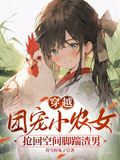
Rong Dai, the Empress of the Upstream Kingdom who spent thirty years in the imperial palace and a decade in the Cold Palace, dies and transmigrates into the body of a modern woman with the same name in the year 2018. The original host has just undergone an appendectomy and suffers from a contract marriage with Huo Shaoting, a cold CEO who demands a divorce within three days. Confused by the thousand-year time gap and unfamiliar with modern technology, Rong Dai must navigate this new world while concealing her ancient royal identity.

Initially panicked by the strange surroundings and medical equipment, Rong Dai uses the phone in the original host's bag to research basic customs, learning about monogamy laws, smartphone functions, and social norms. When Huo Shaoting delivers the divorce papers with visible disgust, she counters by appealing to his respect for their grandmother, requesting a one-year postponement to find employment and achieve financial independence rather than leaving destitute. Her calculated plea, combined with genuine vulnerability, convinces him to grant her the extension.

Rong Dai spends three days isolated in her bedroom, studying modern life through voice assistants and internet searches. She quickly adapts to basic hygiene routines, fashion choices, and social etiquette, though she occasionally makes errors like eating toothpaste or mistaking a mirror reflection for an intruder. Her transformation from a withdrawn recluse to an engaged participant surprises the household staff, who report her changes to the family matriarch.

At a family banquet, Rong Dai confronts the power dynamics between Huo Shaoting and his perceived favorite, Wen Shilan. Rather than displaying jealousy, she apologizes publicly for her earlier hostility toward Wen Shilan, demonstrating political acumen learned from decades of harem survival. When accused of stealing jade heirlooms belonging to Mrs. Huo's deceased daughter, she gracefully returns the jewelry while earning praise for her modesty, carefully balancing relationships with both her mother-in-law and grandmother-in-law.

The narrative's central turning point occurs during a charity auction where a rare Tianhuang ink jade pendant resembling one from Rong Dai's coming-of-age ceremony is displayed. Overcome by emotional attachment to this tangible connection to her past life, she begs Huo Shaoting to bid on her behalf. He wins the pendant for one billion yuan, creating a significant financial obligation that intensifies the story's conflict around her dependence and growing autonomy.

Following the auction, tensions escalate when Wen Shilan confronts the couple at the venue, believing she holds a special relationship with Huo Shaoting. He explicitly rejects her advances, clarifying that his treatment of her was merely fulfilling her father's dying wish. Humiliated, Wen Shilan reports the incident to Mrs. Huo, manipulating the narrative to portray Rong Dai as a gold-digger who exploited the auction to drain family wealth.

Back at the Huo residence, Rong Dai faces accusations from both Mrs. Huo and Huo Meishu regarding the billionaire expenditure. Rather than denying involvement, she accepts responsibility and writes a formal IOU, pressing her fingerprint with blood to signify her commitment to repayment. This act of accountability temporarily de-escalates the family conflict, though it establishes ongoing financial pressure that will shape her efforts to secure employment and independence throughout the remainder of the story.

Latest Release
DateGroupRelease
2026-09-26akknovel c129
2026-09-26akknovel c128
2026-09-26akknovel c127
2026-09-26akknovel c126
2026-09-26akknovel c125
2026-09-26akknovel c124
2026-09-26akknovel c123
2026-09-26akknovel c122
2026-09-26akknovel c121
2026-09-26akknovel c120
2026-09-26akknovel c119
2026-09-26akknovel c118

Community Reviews

Rating(3.8 / 5.0, 17votes)
5 stars
4(24%)
4 stars
6(35%)
3 stars
7(41%)
2 stars
0(0%)
1 stars
0(0%)

Popular reviews

... Read More
Okay so this whole banquet scene is honestly genius-level plotting, and I need to talk about it. Rong Dai's maneuvering here—pretending to be delighted when Mrs. Huo offers her those fancy jewelry pieces, then immediately offloading them onto Mei Shu—is such a masterclass in social chess. She basically just defused an entire conflict without throwing a single punch. The Old Madam was clearly disappointed, but Rong Dai managed to smooth that over too with a whispered conversation and a promise to embroider a handkerchief. Meanwhile, watching from across the room, Huo Shao Ting is taking all of this in with this increasingly dark expression, and I am HERE for it. But the real plot twist? The dinner scene that follows. Rong Dai walks in on him half-dressed, loses her mind a little, then when he threatens to serve divorce papers, she literally bolts behind a closed door like she's dodging bullets. And then she compliments his abs while doing it—'Not bad physique'—and he's sitting there with his eight-pack being dismissed like it's a participation trophy. Then she spends an hour in the bathroom because she refuses to share a bed with him, and when she finally comes out, she gives him this pity look because she assumes he ran back from visiting Wen Shi Lan. The woman is operating on a completely different frequency than everyone else in this house. And then—BANG—the door slam. She accidentally warns him that if Miss Wen gets pregnant, it could be 'bad for you,' completely missing the fact that he probably WANTS kids at his age, and he just storms out. This plot has so many layers of misunderstanding and near-explosions, and I cannot look away.
... Read More
Okay so let's talk about the sheer comedic brilliance of Rong Dai eating toothpaste because apparently being a queen for thirty years doesn't prepare you for a toothbrush. This plot twist of "familiar face, unfamiliar world" is such a classic transmigration setup, but the author has fun subverting it by making our MC's royal experience completely useless against modern plumbing. The hospital-to-bridalf-chamber transition is also wild — she wakes up in her own wedding room and spends the entire first day trying not to die of confusion. Like, she's recovering from surgery and still managing to terrorize the household staff by literally swallowing toothpaste. That's commitment. And the family dynamics are already laid out like a minefield: cold husband, absent mother-in-law, outright hostile sister-in-law, and one grandmother figure who apparently is her only ally. "Favored concubines eclipse the wife" — she literally says this out loud, which tells you everything about her current social standing. What I love is how the plot keeps you off balance. One moment she's in her head about her past life, the next she's falling on the bathroom floor. The humor comes from this constant whiplash between her noble internal monologue and her absolutely chaotic external reality.
... Read More
This entire shopping sequence is really about power, identity, and what women are worth in different systems. The dress itself - that light blue cinched waist number with antique buttons and hand-woven waistband - it's not just clothing. It's armor. It's Rong Dai's attempt to construct a new identity in this world where she has no money, no status, and no real agency. The money symbolism is everywhere. Eighty thousand for a dress that she has to ask him to front, that she wants to pay back slowly - it represents her entire predicament. She was a princess who rewarded servants with ingots and nuggets of silver, and now she's terrified of a receipt. The contrast between her past life wealth and current poverty isn't just comedic; it's a commentary on how identity shifts when you lose your financial power. Her line about wishing those gold beans and leaves had followed her here? That's not just nostalgia, that's grief for a self she can no longer be. Even the event itself is symbolic. Why does she need to attend? To perform wifely duty, to be seen, to maintain appearances. The whole thing mirrors palace life - you show up, you dress appropriately, you don't embarrass your husband, you survive another day of political performance. And that wardrobe full of somber colors? It's not just bad taste, it's the visual representation of her current emotional state. Everything is grey until she buys the blue dress, until she gives herself something bright to wear.
... Read More
I am OBSESSED with the voice in this book. Like, the contrast between Rong Dai's internal royal dignity and her external inability to function in 2024 is comedy gold. Her internal voice is so formal and measured — "Good fortune never comes alone, misfortune does not strike alone. Alas...this inescapable fate" — and then immediately she's down there eating toothpaste like it's some kind of delicate confection. The gap between how she thinks and what she actually does is absolutely perfect. And her dialogue with Huo Mei Shu! "Rong Dai, are you an idiot?" — the sister-in-law doesn't even waste time with fake politeness. She just walks in and absolutely eviscerates her. Meanwhile Rong Dai is internally panicking because she genuinely thought the toothpaste was edible. The exchange where Wang Ma sees her soaking wet and Rong Dai just blathers "I just fell down accidentally" while clearly lying through her teeth is painfully funny. The author's narrative voice has this wonderful dry wit. It doesn't mock Rong Dai cruelly — it sympathizes with her while letting her absolutely bomb at basic human tasks in a modern setting.
... Read More
The dialogue in this passage is genuinely hilarious and I think the humor comes from the collision of two completely different registers. Rong Dai speaks like someone who has spent decades surrounded by sycophants and formal protocol, and it shows in every line she delivers. 'Are you alright? Is your incision hurting?' from the nurse is completely flat and functional, while Rong Dai's response is 'As if you'd dare' - an entire sentence loaded with centuries of palace paranoia and imperial authority. The nurse calls it casually, almost dismissively, and Rong Dai takes it as a genuine threat. This is comedy gold. The author has crafted a protagonist whose voice is instantly distinguishable from everyone else in the scene. Even when Rong Dai tries to play along and says 'Oh, I'm a bit confused, I thought I was reading a book,' you can hear the strain beneath it. She is performing normalcy while internally screaming. The nurse's response - 'You don't even have a password on your phone?' - is such a mundane observation that it creates the funniest contrast possible with everything that has happened. These are people from different worlds colliding and neither one speaks the other's language. I love that the author trusts the dialogue to carry the comedy without needing narration to explain the joke. Sometimes the best humor is just people misunderstandin each other, and this passage is a masterclass in that.
... Read More
Let me just say - the dialogue in this section is deceptively simple. On paper, most of the conversations are short, clipped exchanges. But the subtext? Oh, the subtext is carrying the whole scene. Take this exchange: "Does it look good?" / "It looks quite good. Appreciating beautiful things can delight one's mood." Rong Dai is literally staring at his face and deflecting with poetic nonsense. And Huo Shaoting's response - he just frowns. He doesn't push, he doesn't press further. That silence between them says everything. Then later when he asks what she wants to eat and she moves away from his shadow? The physical choreography of their dialogue is so telling. She's learned to dodge his presence even when he's just sitting there. The narrative voice is doing heavy lifting too. Phrases like "a flicker of amusement in his eyes" and "his words were icy cold" paint his emotional state without needing him to verbalize it. And Rong Dai's internal commentary - the part where she thinks Wen Shilan is "nothing more than a petty bourgeois girl" who couldn't handle being matriarch of an eminent clan - that's such a perfect character reveal. She's judging his taste while also judging his attraction to someone else. The author lets us hear Rong Dai's thoughts directly, which makes her voice distinct from the narration. My favorite moment of implied dialogue: when Huo Shaoting says he won't begrudge any of her costs during their marriage. He doesn't say it out loud in this scene, but the reader catches it, and suddenly the eighty thousand dress feels like both a burden and a strange kind of care.
See all reviews

Custom lists

See all custom Lists