The Empress Ascends, and the Realm Falls at Her Feet
Novel Info

Summary

... Read More
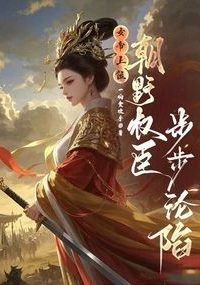
Mu Xi, a modern woman who died resentful after her father favored an illegitimate son over her, transmigrates into the body of the Jin Fang Heir in an ancient world. This original host was a biological princess disguised as a boy since childhood to secure her father's ducal title, living in constant fear of exposure. Raised in seclusion on Xihua Mountain, she was summoned back to the Jin Fang Residence only to be forced to take a so-called fake death pill, a scheme orchestrated by her stepmother Madam Gao and her father, Lord Mu Zhen, to eliminate her in favor of the favored second son, Mu Xun. However, the pill was actually lethal, killing the original host and allowing Mu Xi to take over. Awakening inside her own coffin, Mu Xi discovers a maid named Ling Mei sneaking into the burial chamber to physically inspect the corpse, suspecting the cross-dressing secret. As Mu Xi confronts the maid, a violent male personality within her mind takes control of her body, brutally killing Ling Mei to silence her. This entity claims to be Mu Xi, but she realizes it is a dissociative alter or a separate soul inhabiting the same mind. The incident is interrupted by the arrival of Mu Xun, who knows the secret of the heir's gender, and Madam Gao, who brings her brother, Grand Marshal Gao Quan. Gao Quan aggressively tests Mu Xi, attempting to expose her by checking her pulse and physical strength, but is interrupted by the family physician, Divine Doctor Luo. Confronting her father in his study, Mu Xi discovers a drafted memorial appointing Mu Xun as the new heir. She tears it up, openly defying her father and stepmother for the first time. She realizes that her previous life's trauma of being undervalued as a daughter has merged with this new reality, driving her to reclaim her legitimate status. She confronts Madam Gao's son, Mu Chong, and threatens his grandmother, Madam Han, with her sword to establish dominance and warn the household against further espionage. Understanding that she cannot remain confined, Mu Xi decides to leave the residence to build a public reputation. She plans to reveal her true female identity and claim her birthright as a princess, rather than remaining a shadowy male heir. As she exits the mansion, she vows to make the city aware that the Jin Fang Heir has returned from the dead, setting the stage for her struggle to reclaim her life and status against a family that sought to erase her.
Latest Release
DateGroupRelease
2026-08-11shanghai fantasy c28
2026-08-11shanghai fantasy c27
2026-08-11shanghai fantasy c26
2026-08-11shanghai fantasy c25
2026-08-11shanghai fantasy c24
2026-08-11shanghai fantasy c23
2026-08-11shanghai fantasy c22
2026-08-11shanghai fantasy c21
2026-08-11shanghai fantasy c20
2026-08-11shanghai fantasy c19
2026-08-11shanghai fantasy c18
2026-08-11shanghai fantasy c17

Community Reviews

Rating(4.2 / 5.0, 6votes)
5 stars
3(50%)
4 stars
1(17%)
3 stars
2(33%)
2 stars
0(0%)
1 stars
0(0%)

Popular reviews

... Read More
I have to appreciate the dialogue in this chapter because it's sharp and character-revealing without being exposition-heavy. Ling Mei is the standout. From the moment she wakes up groggy and scared, she quickly recovers her wit and starts throwing barbs. 'The Young Master jests. This servant belongs to the Madam, who cannot be without me for even a moment.' She's essentially saying 'you can't touch me without Madam Gao coming down on your head' and she says it with a straight face while facing someone who just woke up from being declared dead. The narrative voice is also doing a lot of work here. It's close third person, staying firmly inside Mu Xi's head, but it has this dry, almost wry quality. When Mu Xi assesses her combat ability against Ling Mei, the text goes: 'If they were to compare 'combat ability'... Mu Xi secretly assessed the situation and had zero confidence.' That quoted scare-quotes around 'combat ability' is such a Mu Xi observation. She's a modern woman who worked in a family company — she's not used to physical confrontations, and the narration acknowledges that with a kind of self-aware humor. The male voice's dialogue is minimal but effective. 'Let me out, I'll take care of her.' 'I am you.' 'Didn't you want to kill her?' Short, aggressive, repetitive. It contrasts perfectly with Mu Xi's more measured internal monologue. And then there's Mu Xun: 'Elder brother? How are you awake?' His gentle, shocked tone is almost too normal for the situation, which makes it subtly unsettling. Is he genuinely shocked, or is he performing shock?
... Read More
I need to talk about the choking scene because it absolutely wrecked me. Not because it was violent — though it was — but because of the emotional horror of it. Mu Xi is right there, fully conscious, watching her own hands strangle this woman, and she CANNOT stop it. She's screaming internally 'let go, let go' and her body just keeps squeezing. The text says: 'It was as if Mu Xi was battling an invisible force, yet it also felt like she was fighting herself.' That line. That single line. It's not just a body takeover. It's a fracture of identity. She's fighting herself and she's losing. And the worst part? When the male voice says 'Didn't you want to kill her?' and she says 'I only thought about it; I didn't really mean to kill,' she's not wrong. She DID think about it. In that moment of panic, when Ling Mei was about to expose her, when her entire carefully constructed new life was about to collapse — yes, she wanted the threat gone. The voice just made her want it more violently than she would have on her own. And then Mu Xun arrives and she collapses with relief. Not relief that she didn't kill someone — though that should have been the primary emotion — but relief that an 'insider' appeared. She's already calculating, already strategizing, already too exhausted to process the moral weight of what just happened. That tells you everything about who this character is. She's pragmatic to her core. She survived her previous life by being strong-willed and hardworking, and she's bringing that same survival instinct into this new world. But at what cost? Every time she lets that voice take the wheel, she loses a piece of herself. And I'm already worried about where this is going.
... Read More
This chapter is dripping with symbolism and I can't stop thinking about it. The central image — a woman raised as a man, lying in a coffin declared dead, then waking up as something else entirely — is the most potent symbol I've encountered in recent reading. Mu Xi's cross-dressing isn't just a plot device; it's a metaphor for performance of identity. She was forced to perform masculinity to survive, just as her previous-life self performed competence to earn her father's respect. Both performances were exhausting. Both were ultimately rejected. The coffin itself is a symbol of death and rebirth. She dies as the heir Mu Xi and is reborn as... what? The text says: 'A woman who should have been a duchess's daughter from birth was raised as a boy.' So her true identity was always female, but she lived as male. Now with a new soul in the body, the question becomes: who is she now? Is she still the heir? Still female? Something else entirely? And then there's the male voice. 'I am you.' This is the most unsettling symbolic element. Is it a split personality born from years of repressed identity? Is it a literal ghost inhabiting the body? The text deliberately keeps this ambiguous. But the symbolism is clear: there's a violent, repressed masculinity in this body that's been waiting to emerge. The cross-dressing heir always had a warrior's body — trained in martial arts, buried with a sword — but was forced to live as a quiet, refined young master. Now that persona is breaking through. The spirit tablet is another powerful symbol. Standing before 'her own' grave, Mu Xi is literally confronting her death and rebirth. The gold characters on black background are the eternal record of who she was supposed to be. But she's alive, and she's not that person anymore.
... Read More
'Forehead, cheeks, neck, shoulders, chest, chest, chest... Chest?' The novel opens with sensory deprivation and then SHATTERS it. You're in a pitch-black coffin. That's the entire world for a moment — darkness, the feeling of someone's hand on your body, the muffled scream of a maid fainting. It's claustrophobic and terrifying and I was right there with Mu Xi. The description of the mourning hall is sparse but effective. Dim light. A spirit tablet with gold characters on black background — 'Jin Fang Heir Mu Xi.' That image alone does so much worldbuilding. You immediately understand the stakes: this is a place of death and ritual, of Confucian hierarchy and ancestral worship. The fact that she's standing before her OWN spirit tablet while still alive is a haunting visual that I can't shake. And then the funeral garments. Golden thread brocade robe, purple upper garment, yellow lower garment, golden crown, jade belt, sword on the left, jade on the right. The text emphasizes how 'intricate, heavy, and cumbersome' this outfit is. But then — 'Yet, with a sword, it was different.' When the violent force takes over, that heavy ceremonial weight becomes irrelevant. Her body moves with 'unbelievable elasticity.' The contrast between the ornate, restrictive funeral attire and the fluid, deadly movement is such a vivid image. It's like the dead heir has come back to life and the funeral clothes are just a costume on a warrior. I also loved the detail about the mourning hall being completely empty except for Ling Mei. 'How could there not be a single person keeping vigil?' This is the residence of a prestigious duke, and yet the heir's death vigil has zero guards? That's not just atmospheric — it's a plot clue. Something is wrong with this household, and the emptiness of the mourning hall is the first symptom.

... Read More
Let me just list what Mu Xi stands to lose in this chapter, because it's staggering: 1. Her identity as the heir — if the cross-dressing is exposed, it's the crime of deceiving the sovereign, which is a death penalty offense. 2. Her life — Madam Gao sent Ling Mei to investigate, and if Ling Mei survives to report what she found, Mu Xi is done for. 3. Her freedom — she's trapped in a body that's being controlled by a violent male voice she can't explain. 4. Her morality — she just watched her body kill a woman and couldn't stop it. And that's just from the opening scene. The stakes escalate when Mu Xun walks in. He's the 'greatest beneficiary' of the fake death pill. He knew about the cross-dressing. He's now standing over a corpse with his 'elder brother' who just demonstrated supernatural combat ability. What does he know? What does he suspect? And what will he do with that information? The internal conflict is equally intense. Mu Xi is a modern woman who worked in a family company, who fought her father for fairness in her previous life. She's not a murderer. She's not a fighter. And now she's in a body that can kill without her consent, in a world where one mistake means death. The text captures this perfectly: 'This was still the original owner's slender, delicate female body — how had it suddenly turned into a powerful, raging brute?' The suspense is maintained masterfully. Every scene ends with a new question or threat. Ling Mei wakes up → can Mu Xi handle her? The male voice takes over → will Mu Xi become a killer? Mu Xun arrives → what does he know? The chapter ends and I immediately wanted to read the next one.
... Read More
Okay, let me just say it straight: the opening of this novel is absolutely brutal and I love it. You wake up in a coffin, you realize you've transmigrated into a body that was literally raised as a male heir to protect some family title, and within the first chapter you're already fighting for your life against a maid who just caught you alive. The plot moves at a fever pitch from page one. No slow buildup, no 'let me explain the world to you' exposition dump. It just THROWS you in and says deal with it. The fake death pill turning into a real death pill is such a clean twist. It's not some convoluted scheme — it's just a mistake that creates the perfect vacuum for a transmigrator to slip in. And then the original host's memories loading up like a corrupted file, stopping abruptly at some crucial point? That's your hook. I immediately wanted to know what was missing. But the real plot masterstroke is the male voice in her head. 'Let me out, I'll take care of her.' Who is this? Is it a system? A split personality? A separate soul? The text says: 'I am you.' And then when this violent force takes over and chokes Ling Mei to death, Mu Xi is a passive passenger in her own body. That's not just a plot device — that's a ticking bomb. Because now we know there's something dark sharing this skull with her, and it's already proven willing to kill. And then Mu Xun walks in. The greatest beneficiary of the fake death pill. The 'insider' who knew about the cross-dressing. He sees the corpse, he sees his 'elder brother' half-conscious on the floor, and what does he do? He sends someone to report to the Marquis while keeping his eyes on Mu Xi like a hawk. The tension here is so thick you could cut it with a knife. Every character in this chapter has an agenda, and none of them are what they seem.
See all reviews

Characters

See all characters

Custom lists

See all custom Lists