Summary

... Read More

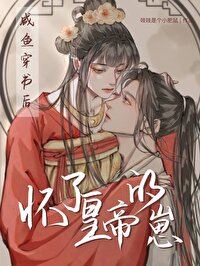
Xiao Linye, the sixth son of Emperor Fengming of Great Qi, was an outcast from birth due to his mother Consort Rong's foreign heritage. Shunned by his father and bullied by his siblings in the imperial palace, he found his only solace in Pei Lanqing, the Grand Tutor assigned to teach the royal princes. Pei Lanqing became the sole figure of warmth in Xiao Linye's cold existence, caring for him through illness and offering unconditional acceptance. This deep bond fostered in Xiao Linye a burning desire for power, driven not only by ambition but by a need to protect his tutor and claim the status he was denied. At eighteen, he joined the military during the Northern Di invasion, leaving Pei Lanqing with a forbidden kiss before departing for the frontier.

For five years, Xiao Linye distinguished himself as a formidable commander, earning the terrifying title of the Azure Dragon among the northern tribes. However, Emperor Fengming viewed him merely as an expendable blade, sending him to every dangerous conflict without reward. Upon the Emperor's sudden death, Crown Prince Xiao Dexuan summoned Xiao Linye back to the capital under the guise of filial duty. Sensing a trap, Xiao Linye prepared for war. At a welcome banquet, Pei Lanqing handed him a cup of wine, which Xiao Linye drank, only to collapse from poisoning. He was imprisoned and left to die, believing his mentor had betrayed him. In his delirium, he dreamed of reunion, but a secret rescue by his loyal forces allowed him to survive and launch a full-scale assault on the capital.


Xiao Linye breached the city walls and killed Xiao Dexuan, who revealed that Pei Lanqing was pregnant with the late Emperor's child and held captive in Phoenix Prosperity Palace. Confronting the Grand Tutor, Xiao Linye found him frail and seemingly indifferent. Pei Lanqing claimed he had sacrificed himself only for political survival and denied any romantic feelings, leaving Xiao Linye heartbroken and furious. He left Pei Lanqing to die in neglect, immersing himself in governance. Yet, unable to stay away, he returned to find Pei Lanqing feverish and dying. Imperial physicians discovered that Pei Lanqing was a Medicinal Person, a rare individual who could neutralize poisons and create immune offspring through a curse known as Medicinal Gu.


The truth emerged: Pei Lanqing had fed Xiao Linye the poisoned wine to lower the late Emperor's guard, planning to smuggle him out of the city. The Medicinal Gu had allowed Pei Lanqing to detoxify Xiao Linye internally, but carrying the resulting child drained his vitality. Xiao Linye realized the depth of his tutor's sacrifice and remorse for his earlier cruelty. He used his own blood to trigger the Gu's effect, saving Pei Lanqing's life and rekindling their intimacy. With the misunderstanding resolved, Xiao Linye formally ascended the throne. He summoned rival princes to the capital to consolidate power and prepared for his coronation, while Pei Lanqing supported him politically despite his deteriorating health and societal stigma.


After his enthronement, Xiao Linye ruled with an iron fist, suppressing opposition from veteran ministers who despised his military origins. He personally inspected the lodging of scholars arriving for the imperial examinations, ensuring fairness and gathering talent loyal to his new regime. When Pei Lanqing requested permission to visit his family to secure the Pei Clan's support for the new dynasty, Xiao Linye granted it but followed him to the Pei Manor. The meeting with Pei Lanqing's father and relatives was tense, as the family feared scandal and political ruin due to the tutor's pregnancy and relationship with the Emperor. Xiao Linye's unexpected arrival at the manor signaled his determination to protect his partner and legitimize their union, setting the stage for a new era where personal loyalty and imperial authority would intertwine.

Latest Release
DateGroupRelease
2026-09-25knoxt c34
2026-09-25knoxt c33
2026-09-25knoxt c32
2026-09-25knoxt c31
2026-09-25knoxt c30
2026-09-25knoxt c29
2026-09-25knoxt c28
2026-09-25knoxt c27
2026-09-25knoxt c26
2026-09-25knoxt c25
2026-09-25knoxt c24
2026-09-25knoxt c23

Community Reviews

Rating(4.1 / 5.0, 39votes)
5 stars
14(36%)
4 stars
14(36%)
3 stars
11(28%)
2 stars
0(0%)
1 stars
0(0%)

Popular reviews

... Read More
Okay so let me just start by saying—I think this chapter cracked something open for me regarding Xiao Linyue. He is literally sitting there in the imperial study, supposedly reviewing memorials, but his mind is clearly elsewhere. The text says he 'grew restless' and spent the afternoon 'in a daze.' That's not a man doing his job. That's a man who can't stand being away from someone. And the genius move—using the Grace Examination as cover to visit those inns! He could've just said he was going to see Pei Lanqing, right? But instead he manufactured this whole elaborate excuse about 'investigating' the scholars' lodgings. Song Pingming bought it completely. 'Suspecting nothing,' the text says. I swear Xiao Linyue might be a better schemer than some of the villains in these novels. Then there's Pei Lanqing, and honestly? My heart. He's wearing that cloak Xiao Linyue draped over his shoulders before leaving the palace, and it still can't conceal his seven-month-pregnant figure—and he's not even trying to hide it anymore. There's a moment where he says 'I believe in Ye... His Majesty possesses great ambition and vision' and I just—what does that even mean for their relationship? He's publicly defending the emperor to his own skeptical family. That's not just love, that's loyalty mixed with something deeper. The way the second uncle looks at him—'his gaze lingering on Pei Lanqing's pregnant form'—it's so dismissive, so cold. And Pei Lanqing feels it but doesn't break. He says 'What difference would that make between us and opportunistic sycophants?' This man has spine. Absolute spine. But then—the father slams his teacup and shatters it. I need a moment. Why did that land so hard for me? Maybe because it was the first time anyone in that room actually showed emotion instead of cold calculation.
... Read More
The stakes in this section escalated SO fast and I am not okay. You go from 'mysterious poisoning incident' to 'someone is carrying a parasitic insect inside their body that could kill both them and an unborn child' in like two paragraphs. What I love is that the internal and external conflicts are completely braided together. Externally: Xiao Dexuan is manipulating things from the shadows, threatening the Pei Clan to force Pei Lanqing's hand. Internally: Pei Lanqing is trapped between his own body's demands and his principles, making choices that look like betrayal from the outside but are actually devotion on the inside. And Xiao Linyan! His whole arc this chapter is basically going from rage to heartbreak to tenderness in the span of maybe ten minutes of story time. When he cuts his hand and the blood triggers that reaction in Pei Lanqing — that's not just a romantic moment, that's the narrative making the stakes PHYSICAL. Pei Lanqing's body is betraying him even as his mind resists. He's fighting himself. That's genuinely high-stakes writing.
... Read More
The imagery in these chapters is so deliberate it hurts. Let me start with the very first image: red plum blossoms against snow. Not just any flowers—plum blossoms. They bloom in winter. They're stubborn. They survive what would kill everything else. And Xiao Linye personally instructs someone to pick them, carries them back through the palace like a offering, and finds Pei Lanqing waiting behind sheer curtains in just a thin robe, hair still damp from bathing. Do you understand the cinematic quality of that frame? The red flowers, the white snow outside, the pale skin, the sheer curtains diffusing the light—it's literally a painting. "Phoenix Prosperity Palace remained brightly lit, as if awaiting Xiao Linye's return." Three words. The whole palace feels like it's breathing, waiting. That's worldbuilding through atmosphere, not exposition. Then we cut to the Dragon Throne room and the visual language shifts completely. "His sword-like eyebrows and sharp eyes revealing no hint of his true thoughts." The golden dragon embroidered on his sleeve "glared fiercely, radiating imperial majesty." The same man who was gently nibbling Pei Lanqing's fingertip moments before is now a creature of sharp angles and metallic threat. The author doesn't need to describe the throne room's size or opulence—we feel it through Xiao Linye's presence, through the ministers kneeling in unison, through the chill that runs down their spines. And the winter cold keeps echoing throughout. "This winter will be exceptionally cold"—the Ministry of Revenue mentioning it, Xiao Linye passing that concern to Pei Lanqing like it's the most natural thing in the world. The weather isn't just weather. It's pressure. It's survival. Every setting in this story feels like it has weight and temperature.
... Read More
The court scene at the end of this batch is where everything tightens. Xiao Linye just spent the night being soft—touching scars, worrying about cold weather, begging his husband not to leave him alone. And then he walks into court and says: "But should anyone harbor ulterior motives or disdain my military origins, they will be judged according to military law, without exception or leniency!" Each syllable dripping with unspoken blood. The ministers exchange furtive glances and kneel in unison. He's threatening them. Politely. With a smile. And the stakes here are enormous because the author has made us care about BOTH sides. We know Pei Lanqing is going home to persuade his father to declare support for the new dynasty. We know the Pei Family holds no official power but their students are scattered across the land—meaning the intellectual elite, the bureaucrats, the future of this government. If Pei Lanqing fails, if the scholars don't endorse Xiao Linye, the throne is fragile. Military conquest gets you the crown. But scholarly endorsement? That's what keeps it. Meanwhile, Xiao Linye just threatened military law against ministers who might oppose him. He's playing both games at once—offering carrots and brandishing swords—and we're left wondering which one actually works. The Grace Examination is coming in spring. Fresh talent versus old guard. That's not just policy, that's a purge waiting to happen. What happens when Pei Lanqing comes back and Xiao Linye's ministers have started crossing people off lists?
... Read More
This scene is CINEMATIC. Like, genuinely. Read this: "The moonlight streamed through the window, illuminating the white-robed figure on the soft couch." White robe. Moonlight. A man curled on a couch, holding a dagger he once kept hidden. It's so stark, so minimal, and yet every detail hits. The author doesn't overdescribe the room — we don't need to know what color the curtains are or how many chairs are in the hall. What we get is precise and devastating: the silver dagger, the Dragon-Patterned Jade Disc, the cough that tastes like blood, the cloak still carrying the smell of the battlefield. The contrast between intimacy and violence here is insane. This is supposed to be a private, vulnerable moment between two people who clearly still care about each other, and instead it becomes this arena where old wounds get reopened and smashed. The worst part? After the jade shatters, after Pei Lanqing starts coughing up blood, the scene cuts to the outer hall — cold tea, tense physicians, oppressive silence. It's like the emotional temperature drops twenty degrees in one beat. The world itself feels hostile, claustrophobic, like the palace walls are closing in. And that ending with Physician Liu bursting in with ancient medical texts? Instantly shifts the genre from angsty romance into something darker. Poison? Medicinal Gu? The mood goes from heartbreaking to genuinely threatening in a single paragraph.
... Read More
I need to talk about the structure of these chapters because something about how the author moves between scenes is genuinely impressive and I don't think I've emphasized that enough. It starts in the palace—Xiao Linyue restless, getting up, deciding to go out. Then we follow him through the inn inspections, which serves this dual purpose: showing his competence as a ruler AND setting up that emotional payoff when he decides not to return to the palace but instead goes to Pei Manor. The inn scene could've been skippable filler, but it's not—it's where we see him as a person who notices injustice and acts on it, not just as a future lover. Then the transition to Pei Manor feels like a pressure cooker. The family confrontation builds and builds—second uncle's jab, third brother pressing about the child's paternity, Pei Lanqing coughing, the tension rising—and just when you think it's going to spiral further, the father intervenes with that shattered teacup. Boom. Relief. And then the Emperor's carriage arriving? Perfect comedic timing masked as dramatic entrance. The steward bursting in, everyone scrambling to greet the emperor, Xiao Linyue stepping out already distracted by Pei Lanqing—that's comedy gold wrapped in romance. The pacing from Palace → Inns → Pei Manor is basically a masterclass in how to move a story forward without letting any section drag. Each location serves a different emotional purpose and they flow into each other like water. I stayed up way too late reading this and I have no regrets.
See all reviews

Custom lists

See all custom Lists