Summary

... Read More
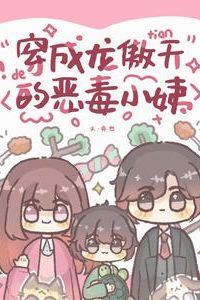
Wang Yuan'er is a fifteen-year-old girl living in Changle Town with her mother, Madam Liang, and three younger sisters. Her father, Wang Da, has recently passed away, leaving the family in a vulnerable position under the authority of her paternal grandmother, Grandma Wang, and her second uncle and aunt. In her previous life, Wang Yuan'er was gentle and submissive, allowing her relatives to control her earnings. After her mother died from complications following childbirth due to neglect, Wang Yuan'er was forced into a miserable marriage as a concubine to an elderly, wealthy man. There, she was treated as a tool, secretly sent money to her siblings that never reached them, and ultimately driven to murder the man's foolish son before taking her own life after learning of her family's destruction in a flood. Upon dying, she awakens in her fifteen-year-old body, moments after falling from a mountain while gathering firewood, realizing she has been given a second chance to change her fate and protect her family. Determined to alter the tragic outcomes of her past, Wang Yuan'er resolves to be selfish and cold-hearted if necessary to ensure the survival and well-being of her mother and sisters. She immediately confronts her second aunt, Madam Zhang, who is verbally abusing her grieving mother over lost gambling money. Using sharp wit and public pressure, Wang Yuan'er silences her aunt and asserts her family's dignity. When summoned by Grandma Wang to hand over her earnings from the firewood, Wang Yuan'er refuses, cleverly framing her refusal as an act of filial piety intended to buy nourishment for her pregnant mother. Her strategic defense forces Grandma Wang to allow her to keep her earnings to avoid public scandal, marking the first time Wang Yuan'er successfully claims financial autonomy. Recognizing the urgent need for income to support her frail, pregnant mother and prevent the hardships that led to her mother's death in her past life, Wang Yuan'er devises a business plan. She recalls a recipe for marinated tea eggs learned from a cook in her previous life and decides to sell them at the busy Changle River pier. Despite opposition from Madam Zhang, who attempts to withhold the family's egg supply, Wang Yuan'er negotiates with Grandma Wang, promising to repay the cost if the venture fails. She successfully produces the tea eggs, which become an instant hit among travelers due to their unique flavor. The business generates steady income, allowing Wang Yuan'er to save money and improve her family's diet. The narrative also introduces Gou Dan, a young boy who steals buns and is later revealed to be the future notorious bandit leader Zhao Dali. Wang Yuan'er intervenes when he is bullied by local youths, offering him a warning about his father's drinking habits rather than harboring resentment. This act of empathy contrasts with her calculated approach to her own family's survival. As the story progresses, Wang Yuan'er learns of Gou Dan's father's death by drowning, confirming that certain events remain unchanged. Meanwhile, she becomes aware of impending political turmoil, including the assassination of the emperor and the subsequent rise of a new ruler who will boost the local economy through canal transport. Understanding that land values in Changle Town will skyrocket, Wang Yuan'er focuses on accumulating capital to invest in property, aiming to secure a future where her family is protected from the poverty and exploitation that defined her previous existence.

Latest Release
DateGroupRelease
2026-08-11shanghai fantasy c104
2026-08-11shanghai fantasy c103
2026-08-11shanghai fantasy c102
2026-08-11shanghai fantasy c101
2026-08-11shanghai fantasy c100
2026-08-11shanghai fantasy c99
2026-08-11shanghai fantasy c98
2026-08-11shanghai fantasy c97
2026-08-11shanghai fantasy c96
2026-08-11shanghai fantasy c95
2026-08-11shanghai fantasy c94
2026-08-11shanghai fantasy c93

Community Reviews

Rating(3.7 / 5.0, 26votes)
5 stars
8(31%)
4 stars
6(23%)
3 stars
9(35%)
2 stars
3(12%)
1 stars
0(0%)

Popular reviews

... Read More
Let me just say—this section moves. Chapters 7 through 10 cover a single conflict (the firewood money) and stretch it across four chapters without ever feeling padded. Here's how the author does it: Chapter 7 is the confrontation itself, fast and sharp, ending with Yuan'er walking away victorious. Chapter 8 pivots to Grandma Wang's perspective, which does double duty—reinforcing that the grandmother isn't a cartoon villain but a calculating matriarch, while also establishing the family power dynamics through her internal assessment of her daughters-in-law. Chapter 9 shifts to the domestic sphere, the mother-daughter scene, and drops the bomb about Yuan'er wanting to split the family. Chapter 10 deals with the aftermath and the impossibility of that goal. Each chapter has a different emotional temperature and perspective, so the same conflict never repeats itself. The pacing also benefits from what I'd call strategic withholding—we don't get the full picture of Madam Zhang's schemes until we see them through Grandma Wang's knowing gaze. And that ending beat where Yuan'er wakes up at night to hear her mother sobbing? That's a pacing choice that slows everything down right when the plot is accelerating, which actually makes the tension tighter rather than looser. The author trusts the reader to hold multiple threads at once.
... Read More
I need to talk about how the stakes escalate in this section because the author really knows how to turn a small domestic dispute into something that feels genuinely devastating. It starts with five pounds of meat. Five. Pounds. That's not even a lot of meat in the grand scheme of things. But the moment Wang Chun'er says 'this meat is short,' everything changes. Because it's not about the meat anymore—it's about trust, about who in this family can be relied upon, about whether the household can maintain its dignity in a small town where everyone knows everyone's business. The external conflict is obvious: Madam Zhang vs. the Wang family hierarchy. But the internal conflict is where it really hurts. Madam Zhang isn't some cartoon villain. She's a woman who gambles because she's trapped, who steals pork because she has no other option, who kneels and cries because she knows she's destroyed herself. And Wang Er? He's not evil either. He's just a man who can't handle the consequences of his wife's choices because he enabled them for years. The highest stakes moment has to be when Grandma Wang throws the sewing basket and shouts 'Get out!' The fact that she hasn't physically struck a daughter-in-law in fifteen years makes this moment feel like an earthquake. And then Wang Min'er walking in and saying 'I'm mortified'—that's when the reader realizes the damage isn't just to Madam Zhang. It's to every single person in this family. The reputation is the currency here, and it's been devalued completely.
... Read More
I need to talk about Madam Liang. Just—this woman is falling apart and the narrative doesn't shy away from it. She's crying into her pillow at night, she's lost ten years in one month, her face is thin and sallow. And then Yuan'er comes back from that confrontation and the first thing her mother does is pull her aside and examine her, worried SHE might have been wronged. That's love. That's the kind of love that doesn't need grand declarations. But the scene where Yuan'er has to lie to her mother—telling her about the nightmare, the fabricated dream that they'd be sold into servitude—this wrecked me. She's using a half-truth as emotional armor because the real truth ("they'll sell us after you die") is unspeakable. And Madam Liang's response? "It's my fault. I've been too absorbed in my own grief." She actually sees her daughter's pain beneath the drama. I kept thinking about how in the previous life, did Madam Liang ever get this chance to be strong for her children? She died from childbirth complications with a broken spirit. Yuan'er's nightmare wasn't just fiction—it was a memory she's trying to prevent. The sister Chun'er's fate is also hanging over everything. Married to a abusive husband in the last life, arranged by the very aunt who's now being publicly schooled. Every tender moment between mother and daughter comes shadowed by the knowledge of what's coming. That's the emotional core of this story—it's not just about survival, it's about a daughter trying to rewrite her mother's tragedy.
... Read More
What I love about the worldbuilding here is how the author never stops to explain—it just shows you. The Wang family has a carpentry shop in Changle Town that brings in dozens of taels of silver annually. That's not just a number; it tells you they're comfortably above a subsistence farming family but still solidly middle-class rural. You can see the whole economic ecosystem: the daughters gather firewood before dawn, the mother embroiders patterns she freely shares with other girls, the second uncle runs the shop. And the contrast with Min'er—dressed like a young lady, never doing manual labor, already having marriage arrangements discussed by town aunts—is painted through visual details rather than exposition. The shoe sole Grandma Wang is stitching, the money bag Yuan'er raises above her head, the east room where the sisters sleep—these aren't set dressing, they're the texture of a life. I especially appreciate the farming detail: Wang Da's land produces ten percent more grain than neighbors because he actually wrote a book on his techniques. That's a specific, grounded detail that makes the world feel lived-in. The whole thing reads like you could walk into Changle Town and find the Wang family's house. No fantasy elements, no exaggerated settings—just a meticulously rendered late-imperial Chinese rural household where the drama comes from human relationships, not world-shaking events.
... Read More
Okay so this rebirth moment is genuinely satisfying because it's not some grand magical transformation—Wang Yuan'er just wakes up with memories and makes ONE small but seismic decision: she refuses to hand over her copper coins. And the dominoes fall so well. The way she weaponizes filial piety against Madam Zhang is chef's kiss. She kneels, raises the money bag like a hostage situation, and lays out this whole speech about how she's gathering firewood before dawn to buy her grieving mother nourishment, NOT saving for a dowry to attract some man. Madam Zhang is left sputtering like a broken cart wheel. But here's what really got me—Grandma Wang's decision to let Yuan'er keep the money wasn't about justice, it was about protecting the family's reputation. "Stop putting on that act. Get up, or people will say I've mistreated you." That's the realpolitik of it. The plot doesn't rely on some deus ex machina; it runs on social maneuvering and face culture, which makes every confrontation feel like a tactical chess match. And the cliffhanger with Yuan'er suggesting a family split? That's a huge escalation. She's moving from defending copper coins to trying to restructure the entire household arrangement. The stakes are climbing nicely, and I'm hooked on whether she can actually pull it off without looking like a rebellious ungrateful granddaughter.
... Read More
The dialogue in this passage is genuinely excellent because each character has a distinct verbal fingerprint. Madam Zhang's lines are all defensive sputtering—"I, I…" "I didn't mean it like that, I…" She talks around things, never directly, which perfectly matches her scheming personality. Grandma Wang, meanwhile, speaks in short, sharp commands: "Shut up." "Is it your place to speak?" "Enough." Her authority is in the brevity. Wang Yuan'er's voice is the most impressive transformation—she starts with the timid "Grandmother, can I keep the money?" and evolves into a razor-wired performer who can deploy filial piety like a weapon while kneeling on the floor. Her speech to Grandma Wang is basically a one-woman play, and the fact that she delivers it without breaking character shows how thoroughly she's committed to this new version of herself. Madam Liang's dialogue is soft, trailing off, full of pauses and self-deprecation—which makes her few direct statements hit harder. And Yuan'er's lie to her mother about the nightmare? The dialogue here is carefully constructed to sound like a worried daughter's dramatic storytelling, not a calculated manipulation, even though we readers know it's both. The author also lets the narrative voice carry personality—phrases like "sputtering like a broken cart wheel" and "sharp and piercing, every single one stinging" give the narration its own attitude without breaking POV.
See all reviews

Characters

See all characters

Custom lists

See all custom Lists