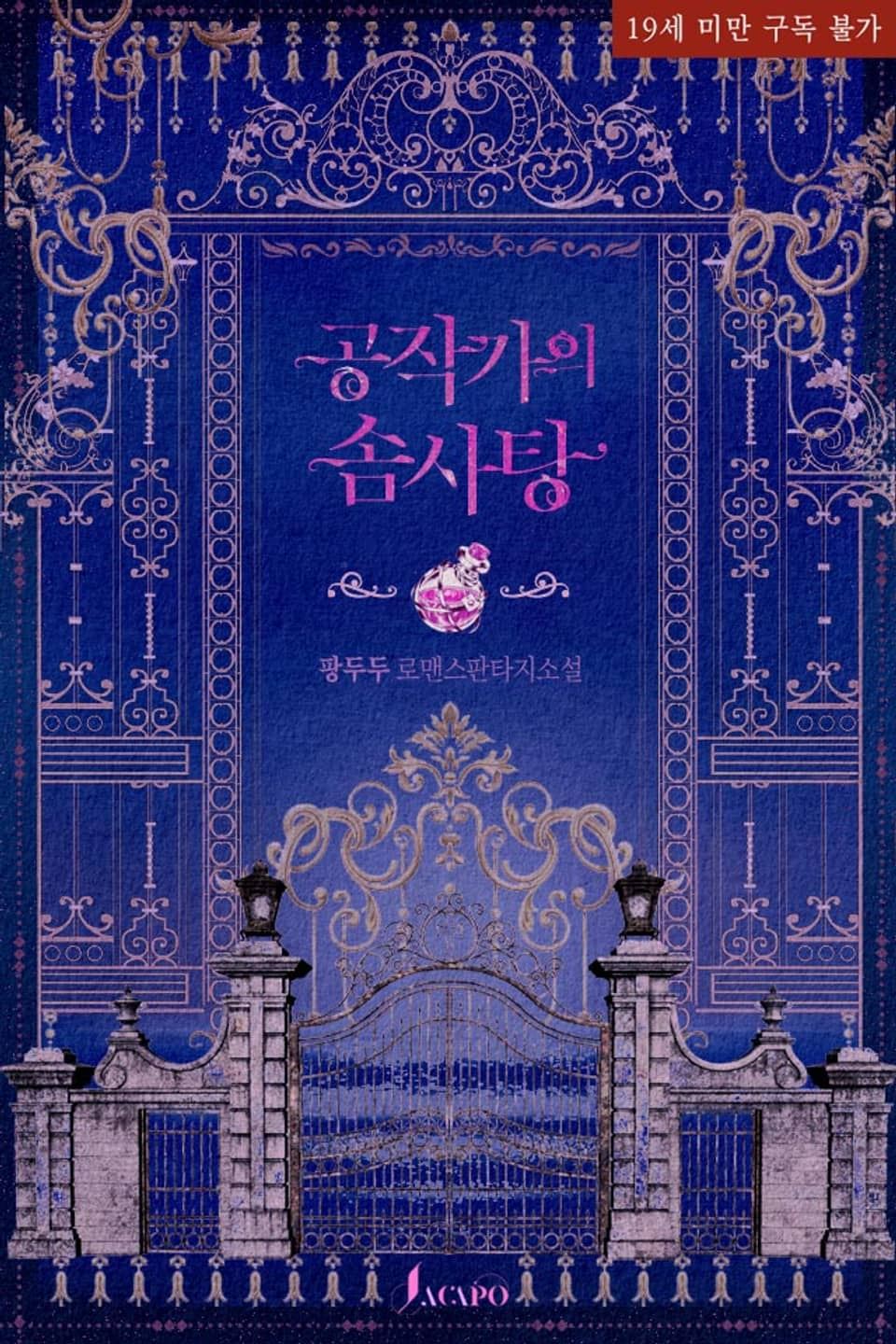
The Duke’s Cotton Candy
+Add to Custom List
Genres:
Novel Info
  • Author:
  • Status:Ongoing

Summary

... Read More

Lyrica was an orphan raised in a remote mountain village within the Valrates Empire. Possessing rare pink hair and sky-blue eyes, she developed a modest healing ability at age fifteen that allowed her to treat minor ailments. After five years of service under Priest Emil in a neighboring village, she embarked on a journey to the capital to train as a healing priestess. Days into her travels, she was kidnapped by slave traders who drugged her with a potent aphrodisiac intended to break her will before selling her to wealthy nobles. During the raid that liberated the slaves, Imperial Knights Captain Noel Valter discovered Lyrica in a compromised state. He rescued her and brought her to the Valter ducal residence, where he initially tended to her condition. Because Lyrica lacked knowledge of sexual matters and could not neutralize the drug through conventional means, Noel engaged in sexual intercourse with her to alleviate her suffering. The act created a binding dependency, as the aphrodisiac required regular release to remain dormant.

Lyrica found herself without a recommendation letter and physically unable to pursue her goal of becoming a priestess due to the loss of her purity. Noel insisted she remain at the mansion, framing their relationship through a lens of ownership and obligation. Lyrica accepted this arrangement out of desperation and fear of being cast out into a life she could not survive. Her situation complicated further when Lian Valter, the Duke and Noel’s older brother, returned from a territorial inspection. Lian, known for his cold demeanor and red eyes characteristic of the ducal heir, encountered Lyrica during one of her drug-induced episodes. Mistaking him for Noel, she begged for relief, leading to a sexual encounter that established a second claim on her body. When Noel returned and discovered his brother with Lyrica, the two men did not eject her. Instead, they reached a silent agreement to share her care and attention, acknowledging their mutual possessiveness.

Lyrica’s daily existence transformed into a cycle of intimacy and dependency. Noel attended to her each morning before his duties at the Imperial Palace, while Lian occupied her afternoons. Despite the physical pleasure derived from their interactions, Lyrica struggled with the psychological weight of her status. She viewed herself as a guest rather than a slave, yet the men consistently referred to her as property to justify their control. The tension between her self-perception and their treatment of her peaked when Lian explicitly defined her duty as receiving their semen. Lyrica broke down in tears, feeling reduced to a prostitute. Lian, realizing the cruelty of his wording, apologized and offered her educational opportunities and freedom of movement within the estate to alleviate her distress.

The introduction of Lucas Valter, the third brother and a reclusive mage, added another layer to the dynamic. Lucas returned to the residence for his birthday and unexpectedly landed in the garden where Lyrica was walking. He noticed her healing powers immediately and engaged her in conversation. Lyrica’s natural kindness and lack of awareness regarding noble customs intrigued Lucas. He observed her differences from the typical courtiers and felt a curiosity that transcended the sexual obsession dominating his brothers. While Noel and Lian viewed Lyrica as an object of desire and possession, Lucas saw her as a mystery to be understood. The story establishes a triangular tension among the brothers, with Lyrica caught in the middle, navigating a life where her original ambitions have been replaced by a complex web of dependency, power dynamics, and unintended emotional attachments within the powerful Valter family.

Latest Release
DateGroupRelease
2026-10-03dusk blossoms c37
2026-10-03dusk blossoms c36
2026-10-03dusk blossoms c35
2026-10-03dusk blossoms c34
2026-10-03dusk blossoms c33
2026-10-03dusk blossoms c32
2026-10-03dusk blossoms c31
2026-10-03dusk blossoms c30
2026-10-03dusk blossoms c29
2026-10-03dusk blossoms c28
2026-10-03dusk blossoms c27
2026-10-03dusk blossoms c26

Community Reviews

Rating(0 / 5.0, 33votes)
5 stars
0(0%)
4 stars
0(0%)
3 stars
0(0%)
2 stars
0(0%)
1 stars
0(0%)

Popular reviews

... Read More
'Lyrica, was it? She tastes exquisite. Where did you find such a woman?' — Lian literally says this afterwards like it's no big deal, and I'm screaming. But let's talk about Noel for a second because this guy is a walking contradiction and that's what makes him so frustrating to read about. On one hand, he genuinely seems to care about Lyrica. He feeds her, he gets her dressed up, he brings her books and snacks and takes her to the garden. He also gets visibly aroused watching his brother with her, which is... definitely a red flag multiplied by ten. Then there's the scene where he comes home early specifically because he was worried, checks on her, and the very first thing out of his mouth is 'Don't open the door for anyone except me.' That's possessive. That's controlling. But then he also tells her 'I'll lick your pussy when I get back' in the same breath, which is so casually vulgar it makes you wonder if he even processes what he's saying. And Lian — cold, calculating, absolutely ruthless. The way he watches Lyrica without any shame, the way he claims her as 'my slave too' after Noel brought her home, the casual cruelty in 'You still mistake me for Noel? I thought I gave you enough cock to satisfy you.' This guy doesn't even pretend to care about her consent. He just wants what he wants and everyone else exists to serve that desire.
... Read More
This section is absolutely obsessed with the concept of purity, and not just in the obvious bodily way—which, yes, is there and important—but in this deeper, more unsettling structural way. Purity is what Lyrica thought would save her. The letter of recommendation, the healing power, the dream of becoming a priestess—it all rested on being PURE. And then Noel systematically dismantles that entire identity. "I've filled your pussy with enough cum to fill it ten times over. You think you can become a priestess with such a lewd body?" That line is brutal, but it's also the key to understanding the whole theme. Purity isn't a virtue here—it's a gatekeeping mechanism, a way to control who gets to belong. But here's what really got me thinking: the aphrodisiac drug itself is kind of a metaphor. It forces Lyrica's body to betray her supposed purity—she gets wet, she moans, she begs—none of it is under her control. The drug strips away the performance of innocence and reveals desire as something raw and undeniable. Is that what the author is saying about purity culture? That it's just performance, and desire will always break through? Then there's the healing power. Lyrica can heal others but not her own situation. She can cleanse wounds but not her 'corrupted' body. That irony is everywhere. The thing that makes her valuable—the very gift she hoped would save her—is useless against the social judgment that now threatens her. And Noel himself—this guy who seems to operate outside normal rules—both destroys her path to purity AND becomes her only salvation. He's the villain and the haven at the same time. That moral ambiguity is what makes this theme stick with me.
... Read More
The word 'master' appears multiple times in this passage and it lands completely differently each time. Lian uses it as a command—'call me master'—as a condition of keeping Lyrica alive. But Lyrica's internal reaction is fascinating: she compares it to childhood pretend play where she had to call her friend 'hero' for a year. To her, the word is performative, like a game. To Lian, it's genuinely about ownership and binding. That gap between how the word functions for each character is where the whole theme lives. And then there's the aphrodisiac itself—as a symbol, it's doing double duty. It's the plot mechanism that justifies the sexual content, sure, but it's also a literal removal of consent and agency that mirrors the larger power structure. Lyrica isn't choosing any of this; her body is choosing for her. Yet the text frames her responses as genuine desire ('I want to taste cum,' 'Lyrica's mouth-pussy wants cum'). Is the story suggesting that under the right conditions of power and chemical influence, submission and pleasure become indistinguishable? That's a pretty uncomfortable question to be sitting with. The hero/saint pretend play memory at the end is interesting too—it echoes the master/slave dynamic but frames it as something innocent and voluntary. Maybe that's the point: we rationalize power relations by treating them like games.
... Read More
"Give me a kiss here." Three words. That's all it took for everything to shift. Because up until that moment, Lyrica's relationship with Lian had this weird clinical quality to it—he was the cold duke who commanded her body but apparently not her heart. But then he asks for a kiss. And she gives him this tentative little peck, and he pulls her in DEEP and suddenly you realize: THIS MAN IS DESPERATE. The way the author writes this scene is devastating in its subtlety. Lyrica's internal monologue is so pure—she's thinking about Mrs. Rebecca from her village, about how married couples kiss in the morning, and wondering if the Duke actually... likes her? Like, romantically? Not just physically? That moment of hope is so fragile and so beautiful and the author lets it bloom for exactly three sentences before stomping on it. Because that's the emotional trajectory of this entire chapter, isn't it? Lyrica keeps finding these tiny crumbs of genuine connection—Noel's sleepy tenderness in the morning, Lian's rough but somehow gentle kisses, the way they both seem almost embarrassed by their own hunger for her—and then the larger reality crashes back in. She's trapped. She's drugged. She's being told her purpose is to be their personal sex object. The part that absolutely wrecked me was Lyrica's reaction to Lian's apology. She doesn't forgive him quickly. She makes him WORK for it. She makes him enumerate everything he's offering—walking privileges, a teacher, horseback riding lessons—and only THEN does she settle into his arms. And even then, she's mumbling about how she always wanted to learn to draw. Not thank you, not I forgive you—just... I wanted to learn to draw. As if that's the only thing that matters now. As if her dreams have been reduced to hobbies the Duke can permit her to pursue. I'm not okay. I'm genuinely not okay.
... Read More
Okay so first of all—can we talk about how the author just casually lets THREE DAYS pass in this section without even making it feel rushed? Like, you go from the intense moment where Lyrica first wakes up next to Noel, to suddenly just... waking up again to more of the same, and the transition is just... there. No chapter break drama, no fancy time card. The narrative just SLIDES. It actually works because the intensity of those scenes makes time dilate naturally. You FEEL like days have passed because the scenes pile up on each other. What really gets me is the contrast between the frantic three-day spiral and then Noel suddenly snapping out of it: "What day was it?" That moment where he literally loses track of time because he was so consumed—that's brilliant pacing. The author builds this bubble of intimacy that just expands and expands, and then suddenly pops it with one question. It left me breathless. The scene transitions are also interesting. They don't always go from moment to moment linearly. Sometimes there's this gap where you just KNOW things happened but the author doesn't show them. Like when Lyrica's body is healing between sessions and you just skip to her waking up again. It respects the reader enough to not over-explain everything. But honestly, I think the pacing could've been tighter in the middle section—the back-and-forth dialogue during the intimate scenes gets a bit repetitive after a while. Not that I wanted to skip it, but you know what I mean. The author clearly enjoys these scenes and writes them with real texture, but maybe a touch more variation in rhythm would've kept it fresher.
... Read More
I've been thinking a lot about how these two brothers represent fundamentally different ways of possessing Lyrica, and it's honestly fascinating from a character dynamics standpoint. Noel is... soft violence. He's physical, affectionate, almost sweet about it. He calls her pet names, he feeds her breakfast, he carries her to the bathroom afterward. His possession wraps around her like a warm blanket and you almost forget it's a cage. But it's still a cage. He decides when she eats, when she sleeps, when she gets pleasure. The morning routine isn't romantic—it's ritualistic. Every day, same pattern. She wakes, he takes her, she naps, he reads, he touches her. She's on a schedule she didn't choose. Lian is the opposite. His possession is cold, verbal, ideological. He doesn't just want her body—he wants her compliance, her submission, her vocabulary. "Call me master." Those two words matter more to him than any sexual act because they represent TOTAL surrender. And when she asks for independence, his instinct isn't to reason with her—he instinctively reasserts dominance through the most degrading framing possible. Slave. Duty. Prostitute. But here's what makes both of them complex: neither is purely villainous. Lian genuinely panics when he realizes he hurt her. Noel is exhausted and almost tender in his attentiveness. They both bring her food, keep her comfortable, protect her from the outside world. The problem isn't that they're evil—they're that they're selfish. They've built a paradise for her that she didn't ask to enter and can't leave. And Lyrica? She's complicit in her own captivity. She cries about being treated like a prostitute, but she also thinks about how eagerly she'd respond if they offered again. That self-awareness—that's where the real tragedy lives.
See all reviews

Custom lists

See all custom Lists