The Duchess Wants To, But…
+Add to Custom List
Genres:
Tags:
Novel Info
  • Author:
  • Status:Completed

Summary

... Read More

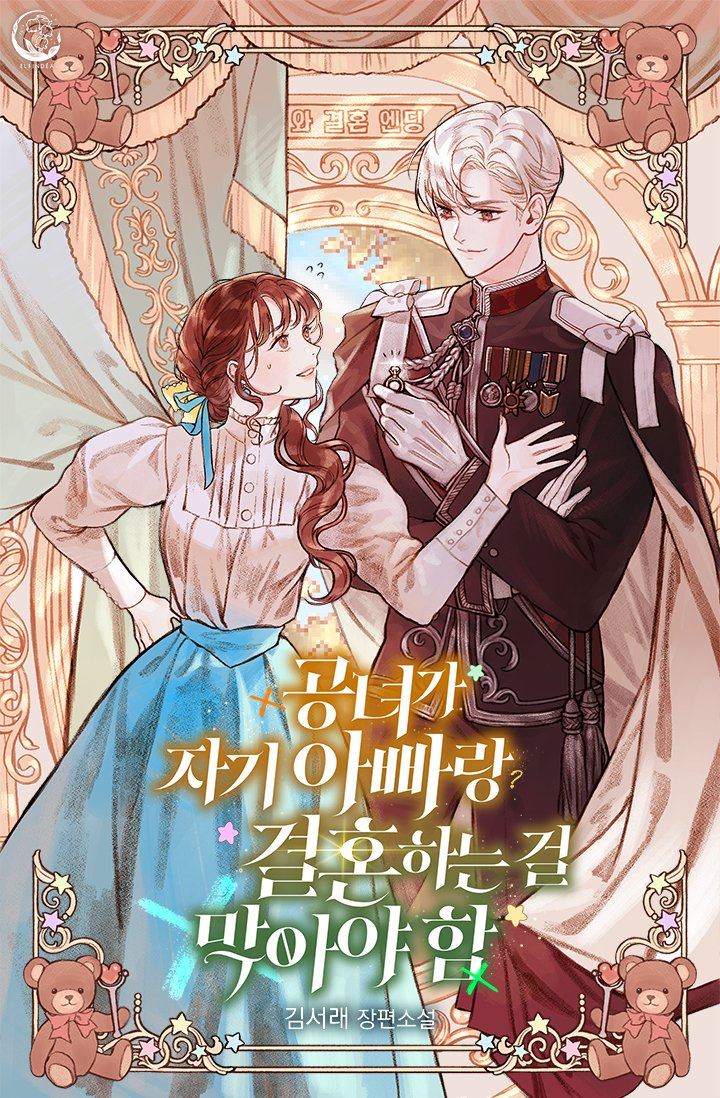
Lariella Polar, a young woman from a modest rural baronial family, is unexpectedly chosen as the bride for Duke Kais Elmano, the wealthiest and most noble aristocrat in the Bayaroman Empire. Despite having no prior connection to the duke and lacking the sophisticated upbringing expected of high society nobles, she accepts his proposal, which includes a lavish dowry of gold coins. The wedding is grand and celebrated by all except Lariella, who endures the festivities hungry and overwhelmed. Her sister-in-law, Murina, provides her with explicit instructions regarding their upcoming wedding night, leaving Lariella both anxious and curious about the intimate encounter.

On their wedding night, Lariella prepares meticulously, bathing in scented waters and wearing provocative attire, only for the duke to kiss her briefly and then sleep with his back turned to her. For a month, this pattern continues: he visits her room every night, offers no affection, and leaves at dawn, leaving Lariella a virgin wife. The servants notice her lack of consummation and grow disrespectful, while society ladies gossip viciously at a tea party, claiming the duke is a eunuch and mocking Lariella’s inability to satisfy him.

Devastated and feeling humiliated, Lariella decides to stop trying to please him. However, her perspective shifts when she accidentally discovers the duke waking in the early morning and engaging in self-pleasure, revealing that he is not a eunuch but possesses a fully functional male organ. Confused and hurt by his rejection, she later witnesses the duke kissing his cousin, Sir Worklan, leading her to believe he is homosexual and has used her for a convenient marriage. Heartbroken, she writes to her brother for advice.

The narrative then shifts to Duke Kais, who is portrayed as cold, calculating, and burdened by his past. He rejects the advances of Count Ramona’s daughter, Arete, who attempts to seduce him to save her family from debt. Kais ruthlessly dismisses her, indifferent to her pleas and threats to spread rumors about his impotence. His coldness stems from a traumatic childhood under his father, Duke Drake, a depraved man who forced young Kais to run the duchy while he indulged in debauchery. After Drake’s gruesome death from syphilis, Kais inherited the title at seventeen, determined to protect his family’s honor and maintain strict emotional distance from women.

Lariella remains unaware of the duke’s true nature and continues to suffer in silence, believing herself unwanted. Meanwhile, Kais struggles with his own repressed desires and the societal expectations placed upon him. The story highlights the growing tension between the two characters, as misunderstandings and secrets threaten to further deepen the emotional chasm between them. As court intrigue and external pressures mount, both Lariella and Kais must confront the realities of their arranged marriage and the hidden truths that define their lives.

Latest Release
DateGroupRelease
2026-10-03dusk blossoms c58
2026-10-03dusk blossoms c57
2026-10-03dusk blossoms c56
2026-10-03dusk blossoms c55
2026-10-03dusk blossoms c54
2026-10-03dusk blossoms c53
2026-10-03dusk blossoms c52
2026-10-03dusk blossoms c51
2026-10-03dusk blossoms c50
2026-10-03dusk blossoms c49
2026-10-03dusk blossoms c48
2026-10-03dusk blossoms c47

Community Reviews

Rating(0 / 5.0, 23votes)
5 stars
0(0%)
4 stars
0(0%)
3 stars
0(0%)
2 stars
0(0%)
1 stars
0(0%)

Popular reviews

... Read More
The conflict architecture in this passage is a masterclass in stacked stakes, and I want to trace how the author builds tension from the very first sentence. On the surface, the conflict is simple: Count Ramona brings his daughter to Duke Elmano as a bribe, and the duke refuses. But the author layers this with at least four competing conflict tracks, and they all escalate simultaneously. Track one: Ramona vs. Kais. This is the external conflict, the political game. Ramona is trying to extract three hundred gold from a duke who has every reason to destroy him for the audacity. The stakes here are financial survival — the Ramona family is bankrupt, and this is their last play. But Kais holds ALL the power. He doesn't even need to refuse forcefully; his indifference alone is a weapon. When he tells Willis to warn Ramona that “if he tries such a trick again, he'll face severe consequences,” that's not a threat — it's a policy statement. Track two: Arete vs. herself. This is the internal conflict, and honestly, it's the most painful one. She's been obsessed with Kais since before her debut. She's convinced he's her match, her destiny, the only acceptable outcome. But her entire sense of self is built on a foundation that was always flawed — she assumed he would eventually notice her, that persistence would convert his indifference into affection. The conflict isn't really with Kais; it's with her own delusion. And when that delusion shatters, it takes everything with it. Track three: Arete vs. society. She's trapped by the very social codes she's trying to manipulate. Her honor is supposed to protect her, but she's willing to sacrifice it strategically — or so she thinks. The problem is that Kais doesn't play by the same rules. He sees through her manipulation instantly and refuses to beblackmailed by social convention. “Didn't you already throw that into the gutter when you snuck in here?” — he reframes her entire strategy as self-inflicted damage. Track four: Kais vs. his inheritance. The Drake backstory reveals that Kais's fundamental conflict is structural — he inherited a title from a father who treated governance as a joke and the dukedom as a playground. His coldness isn't just personality; it's survival. If he shows weakness, if he lets sentiment override judgment, the entire Elmano legacy collapses the way the Ramona legacy collapsed. Every interaction where he refuses to be manipulated is also a rehearsal for the responsibilities he'll one day inherit. The suspense here is maintained through dramatic irony — we know what Ramona is planning before he executes it, so we watch the trap being sprung in slow motion. And the resolution comes not through a twist but through the complete collapse of expectation. Arete expects rejection softened by attraction. She gets rejection sharpened into contempt. The stakes were always there; we just didn't know how catastrophically they would resolve.
... Read More
Okay so let me just say this: the way the plot unfolds here is genuinely clever. You've got Kais, this ridiculously powerful duke, who literally cannot control himself around Lariella, and instead of just having them get together immediately—which would be boring af—the author puts a THREE-Month limit on it. Three months of torture for both of them. And the wedding date being set so urgently because of his 'condition' is such a great plot device. It's not just romantic tension for the sake of it; there's an actual ticking clock. The inciting incident is already established—we know they met before at Count Viller's garden, and Kais was already obsessed then. But Lariella has no idea. That dramatic irony is chef's kiss. And the fact that he had to send Worklan on like a dozen trips just to handle the proposal logistics while he was busy dealing with his own internal crisis? Hilarious and painfully human. What really nailed it for me was the wedding night scene buildup. The author doesn't rush it. We get the bath scene, the terrace moment where he bites his own lip, the hallway encounter with Worklan—each beat adds to the anticipation. And that ending with Worklan being insufferable about whether Kais will 'finish before getting it in'? I literally yelled at my phone. This plot knows exactly what it's doing.
... Read More
Let me just say this out loud: Gladys deserved better than whatever this author is planning to do with her memory. The conversation between young Kais and Gladys that gets recalled here is devastating in its simplicity. She's this woman who grew up watching him, raised him basically, and she says "I will be your first woman" like it's the most natural thing in the world — and what does she actually want? She's not asking for marriage. She's asking to be near him. Even when Kais shuts her down cold, she pivots to "I'll be your bedchamber maid. I'm fine with anything, as long as I can be with you." And then Drake takes that vulnerability and turns it into a weapon. The relationship between Drake and Gladys is the kind of evil that doesn't need mustache-twirling. He didn't rape her out of passion — he did it because she was available, because she was "just" a wet nurse's daughter, because in his mind a bedchamber maid is property to be passed around. "What was the problem since bedchamber maids were meant to be passed around anyway?" That line from Drake made my skin crawl. He genuinely couldn't comprehend why anyone would find this wrong. But it's Kais and Gladys's dynamic that really destroys me. He rejected her for being reasonable — she didn't understand "how unreasonable her request was." He was protecting her honor, or so he told himself. And yet somehow the outcome is exactly what he feared most. The tragedy isn't just that Gladys died. It's that Kais spent years carrying this guilt he couldn't even name, and now that he knows, what does it change? He still can't remember the actual moment. His mind won't let him see what he saw hanging from that rope.
... Read More
The pacing in this section is absolutely masterful and I want to dissect it because it's doing so much work. We open with the sibling scene—dialogue-heavy, warm, leisurely. It's a breather. You sink into it, get comfortable with the Polars, and then suddenly the POV shifts to Kais and the tempo changes. 'Where is Polar territory?' is the first line after the scene break, and it lands like a door slamming shut. No preamble, no context, just this sharp desperate question from a man who has lost control of his own schedule. The two-week time jump is handled in a single paragraph that does incredible heavy lifting: 'He had already forgotten about the unremarkable ball, but only that rustic, oblivious, and strange woman remained in his memory.' In ten words, the author establishes that everything else in Kais's life—the political events, the social gatherings, the affairs of state—has been rendered meaningless by this one encounter. That is efficient storytelling at its finest. Then the journey itself: two days of riding, rough roads, exhausted horses, arriving after dark. The author could have rushed this, but instead slows down on the small details—the twin innkeepers, the late-night meal, the warm bath, the old but clean beds. These moments of sensory comfort create a lull before the storm, making the morning scene hit even harder. And then the morning sequence unfolds like a slow-motion car crash. Kais wakes up. Considers his options. Looks out the window. Sees her. The prose accelerates—shorter sentences, more fragments, his internal monologue becoming increasingly frantic. 'Why is it so hot in here?' then the physical reactions described in escalating detail. The parallel between the dragon-slaying knight and his own private battle is woven through the narration without ever feeling forced. The chapter ends mid-scene, actually—'It was about twenty minutes later when Kais, with a crimson face, emerged from the room'—and that cut is perfect. We don't get the aftermath, we don't get his excuse or his explanation. We just get the moment of highest tension and then the door slams. Exactly the right amount of cruelty from the author.
... Read More
There's a symbol in this passage that I can't stop thinking about. Not the obvious one — obviously the opium represents the family's moral decay, that's too straightforward. It's the dream sequence itself, specifically the ending. Kais wakes up lying spread-eagled on Lariella's bed, "holding his erect cock in his hand," with his own seed dripping on his face. He thinks he's been with her. He was reaching for connection, for warmth, for something real — and his body gave him fantasy instead. The seed that stains his face is the same physical evidence of desire that his mind produced while dreaming of someone else entirely. It's contamination. It's the family line continuing even in his unconscious, even in his most private moments. And then there's the bedchamber maid tradition itself — framed in the text as both practical preparation and institutionalized violation. "Both to confirm proper sexual function and to teach them how to have intercourse." What a beautiful euphemism for grooming young men to treat women as instruments. Drake didn't invent this system; he just weaponized it against Gladys specifically. The institution is the crime. The opium rumors thread through everything like a slow poison — literally and figuratively. Drake imports it, nobles become addicted, the Emperor holds the whole family responsible, and Kais bears the shame of having signed the paperwork. His hands, which built the empire, are the same hands that enabled its corruption. That's not accidentally thematic. The author is asking: how much of who we are is inherited, and how much is it chosen? Kais wanted nothing to do with his father's lifestyle — "I won't live like my father" — but his father found a way to reach him anyway.
... Read More
The atmosphere in these chapters is so meticulously built. Start with the bath scene—'a plain, short bath for the first time in a long while,' a 'plain, comfortable nightgown,' her 'untreated hair loosely braided.' After all the elaborate preparations for the tea party, the author strips everything away and gives us this intimate, almost fragile image of Lariella just... existing without performance. And then the dawn light: 'Pale dawn light was seeping through the cracks of the closed wooden shutters.' That specific quality of light—the room isn't bright, it's that thin grey-blue hour before full morning—creates this suspended, dreamlike tension. You're standing right there beside her bed, half-asleep yourself. Later, the garden scene shifts the mood entirely. Rose vines with 'luscious blooms' and the latia plant 'with such abundant leaves it was hard to tell whether it was a flower or a weed.' The world feels lived-in and real. And then the office—Elmano behind his desk, the cold grey-blue eyes, Count Ramona's worn coat and split-toe shoes. The author doesn't over-describe; every detail earns its place. The contrast between the warm intimacy of the bedroom and the sharp, judgmental atmosphere of the office is masterful.
See all reviews

Custom lists

See all custom Lists