The Domineering Boss’s Assistant Refuses The Grind - Reviews

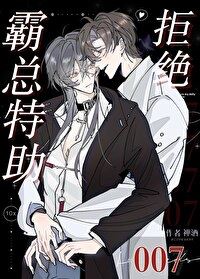
The Domineering Boss’s Assistant Refuses The Grind
+Add to Custom List
Sort
Add review
... Read More
There's a symbolic layer to Ji Qian's life here that I think more readers might gloss over because it's dressed in luxury car details. He drives a LaFerrari but lives in an old residential complex. He wears rainbow designer outfits but his passion is medicine, not fashion or wealth. He lets Chi Ke win arguments because he's comfortable enough in his own status to not need to prove anything. 'You know I've dedicated my life to medicine.' That's Ji Qian saying it plainly. And then immediately after, he's poking Chi Ke's arm like a kid and racing GTRs for fun. The contradiction isn't accidental—it's the whole point. Ji Qian is someone who has escaped the gravitational pull of his family's expectations precisely because he chose something real over something expected. Medicine is his authenticity. The cars and clothes are... what? Play? Indulgence? A private language he speaks with himself? Then there's the mask. Chi Ke puts it on before getting into the car. Not because he's shy, but because he's protecting something. The past life trauma, the Leng Yunting years—all of it lives under that mask. Ji Qian sees through it without demanding he remove it. When Ji Qian reads the medical report and lists Chi Ke's conditions matter-of-factly, he's doing something deeper than being a doctor. He's saying: I can hold your brokenness and not look away. 'I can't afford to take the blame if you go bankrupt.' Chi Ke's line about boundaries is really about trust. Who gets to decide your fate? Who carries your failures? These questions aren't accidental either. They're the novel's nervous system, and Ji Qian keeps finding new ways to answer them.
... Read More
I have to talk about Chi Ke and Ji Qian because this scene just rewired how I see their whole dynamic. You know how most stories handle two guys caring about the same kid? They要么争风吃醋要么互相甩锅对吧. But here? Neither. Ji Qian is already holding the frozen kid wrapped in his own jacket, shivering while muttering curses about a car that never came, and Chi Ke storms in completely unaware. The author just drops this line — "You don't even recognize your own little brother?" and I physically gasped. Not because it's dramatic, but because it's so casually devastating. These two are clearly bonded to this child in different ways, and neither has fully told the other what they know. The tension isn't romantic or hostile, it's the ugly kind: people who care about the same person but haven't figured out how to share that care without awkwardness. And then Ji Qian, who I'm beginning to suspect knows WAY more than he's letting on, just teases him through it instead of breaking. That's characterization, not exposition.
... Read More
I need to talk about this scene because it has been living rent-free in my head since I finished reading it. The Buddhist beads, friends. THE BEADS. Let me break this down because my heart can't handle carrying this alone. Ji Qian presses his shoulder against Chi Ke. Not a casual lean. A deliberate, calculated press of body against body. And then—then—he leans in close enough that his lips nearly brush Chi Ke's ear. This man is literally weaponizing intimacy as a conversational tactic. I am deceased. "Like a stranger watching from the sidelines." He says this into Chi Ke's ear while practically wrapping himself around him. The audacity. The gall. And Chi Ke's reaction? His fingers curl into a fist. His first instinct is to step forward—to ESCAPE the warmth belonging to someone else. But he can't, because Ji Qian anticipated it. "Red light!" Ji Qian reaches out with one arm and reels him back in. Like fishing. He FISHES Chi Ke back like he's a reluctant catch. And then—the beads. Chi Ke reflexively grabs Ji Qian's hand, his fingers brushing against the Buddhist beads warmed by Ji Qian's body temperature. Ji Qian seems to be POSSESSED by the pressure of those beads. The tighter they press, the tighter his arm wraps around Chi Ke, almost embedding him into his embrace. Embedding. EMBEDDING. This man wants to physically fuse with another person through the medium of pressed wrists and worried silence. "Don't run around." That's it. That's the line. After all of THAT. Two words. Soft sigh. Like he's talking to a misbehaving puppy instead of a grown man who just nearly had an existential crisis against a traffic light. I am not okay. My chest hurts. I need to sit down.
... Read More
Okay can we just talk about Chi Ke staring at Ji Qian's side profile for a full thirty seconds at a red light like he was cataloguing every detail? Thirty. Seconds. And when Ji Qian caught him looking, Chi Ke didn't even blink or get embarrassed—he just said 'Just looking' like it was the most casual thing in the world. Meanwhile Ji Qian is over there offering to let him take a picture because he's so used to people staring at him that he can't imagine someone doing it for any other reason. The fact that Chi Ke then thought 'No need. That would be a bit much' tells me so much about how carefully he guards his feelings versus how openly Ji Qian operates. And then Ji Qian immediately pivots to reading Chi Ke's medical report and listing off all his conditions with this gentle 'Assistant Chi, working for Leng Yunting all these years must've been tough on you.' That's—yeah. That hits different. It's not pity. It's recognition. It's the kind of observation that says 'I see you carrying things and I'm not going to pretend I don't.' The milk detail also deserves its own paragraph. Ji Qian bringing him hot milk instead of coffee because he knows Chi Ke's stomach is shot. No sugar because he knows Chi Ke doesn't like sweet things. He REMEMBERS. He's paying attention to literally everything about this person. Meanwhile Chi Ke is over here internally freaking out but externally keeping his face completely composed. The tension between them is not romantic yet but it's built on this foundation of genuine care and attention that makes me actually breathe easier every time they're in the same room together.
... Read More
This chapter is weirdly stacked with conflict on every front and I wasn't prepared for it. On the surface it's comedy—sick leaves, dancing sunflowers, avoiding each other at the office entrance. But underneath, THREE separate storylines are colliding. First: Chi Ke is literally destroying his body. Three Americanos a day, three hours of sleep, a health report that reads like a horror story. This isn't background detail, this is a ticking time bomb. How long before something breaks? Second: Leng Yunting's confession plan for Xu Lemian. New Year's deadline. The sunflower is supposed to be the romantic gesture. But we all know this is either going to be disastrous or reveal something deeper about how Leng Yunting actually expresses care. His 'touch of cruelty' when discussing how to handle Xu Lemian is a red flag wrapped in a plan. Third: the Chi Ke-Ji Qian relationship tension, which is both the sweetest and most stressful thread. Ji Qian knows he's being avoided and presses closer. Chi Ke ADMITS he wouldn't have helped if he didn't admire him, yet keeps building walls. And now Ji Qian has discovered that Chi Ke is working himself into premature death and he's using that knowledge as emotional ammunition. Who do you think breaks first? The one who's hiding or the one who refuses to stop looking?
... Read More
On the surface, this chapter is about a medical checkup. Chi Ke goes in worried, comes out with good news, and takes a nap. But the real conflict is happening entirely inside his skull and it is VOLATILE. The external stakes are low—nothing life-threatening anymore—but the internal stakes are MAXIMUM. Every interaction with Ji Qian is a miniature battlefield where Chi Ke's survival instincts clash with his desperate, terrified desire to just... be human for five minutes. The nightmare sequence raises the stakes to near-lethal levels. We're not talking about a bad dream here. This is full-system reboot trauma. Cold sweat. Chest like lead. Gasping for air like he's drowning on dry land. And Ji Qian has to physically pull him back from the edge with nothing but presence and a gentle 'you're okay.' The vulnerability of that moment is staggering because Chi Ke has built his entire life on never needing anyone, and in that second, he did. Completely. Helplessly. What makes the tension so good is that nothing explodes. There's no argument, no dramatic confession, no cliffhanger. The conflict is quiet and simmering and that's somehow worse. Chi Ke lies there all night unable to sleep, calculating every favor, every gesture, every warm hand touch like it's a debt ledger. 'These favors had to be repaid, but when? How? That uncertainty was unsettling.' The suspense isn't 'will he survive?' It's 'will he let himself survive?' And that final beat—Ji Qian staying up all night, working through hospital documents between two beds, silently choosing to be there—raises the stakes for their relationship to something genuinely dangerous. Because the more Chi Ke lets someone in, the more there is to lose. And after losing an empire, losing a person might actually kill him.
... Read More
Honestly, Secretary Sun is the funniest character ever introduced. The man is a literal scalper middleman for hospital appointments and he's proud of it—sending Chi Ke four business cards like it's a goddamn menu at a buffet. "First one's for concert tickets, second one's for restaurant reservations, third one's for hospital appointments." This guy treats human suffering like a subscription service. But what really gets me is Chi Ke's response: "Look at this—textbook example of a worker finding joy in suffering." That line hit me so hard. He sees through the whole system—the scalpers, the capitalists, the workers all feeding each other in this endless cycle—and he's still trapped in it. He'd rather pay 1,000 RMB directly to a doctor than owe someone a favor, even though that "fair price" principle is kind of laughable when you're the one who can't sleep because of a transmigration. And then the moment he finally reaches out to Ji Qian... after refusing Secretary Sun's suggestion to "ask Dr. Ji" because "if money could solve it, there was no need to owe favors"—he caves and sends the request anyway. Money couldn't solve it. Not fast enough. That contradiction says everything about his pride and his desperation.
... Read More
The scene at Nanyang University is one of my favorites so far, and I want to break down why it works so well. First, the setup: semi-open campus, no student ID required. Chi Ke changes into a windbreaker and jeans to blend in with the student crowd. He thinks his disguise is flawless. And then a student immediately spots him because HOLD UP - you are holding a bouquet of roses and you think nobody will notice? The student's line about "which lucky girl has such a handsome guy chasing her" made me laugh out loud. But more importantly, the worldbuilding here is subtle and effective. We get a sense of the university - it is in the suburbs, an hour's drive from the city, and apparently students still use internet forums (over 500 comments on a post about Chi Ke? In this day and age?). The backstage area at the dance academy is described with just enough detail to paint the picture. Quiet, a small crowd gathering, the collision of rose bouquet and white jasmine bouquet - these visual details make the scene feel cinematic. I could see this as a film. And Secretary Sun's scene with the car? The image of him clinging to a trash can, pale-lipped, gasping "you're insane" while simultaneously respectful? That is comedy gold painted in words. The contrast between Chi Ke's calm, precise driving and Secretary Sun's complete devastation is so vivid. The author knows how to use setting to enhance character moments. The suburban university gives us distance from the city, making Chi Ke's arrival feel like an intrusion into someone else's world. The dance academy backstage is liminal - not quite public, not quite private. Perfect for the tension between Chi Ke and Sima Yichen.
... Read More
The pacing in this section is what I'd call surgical—because of course it is, given the setting. It starts with Chi Ke in the doctor's office, all deadpan seriousness about his 'cough-heart-discomfort,' then swings hard into his private terror at night with those heating pads, then morning where he looks like he has a terminal illness, then the actual procedure, then out of the OR, into a room with a chatty roommate, and somehow we end up with WORLD BUILDING aboutLu Xiaoyong's cousin who used to be a surgeon. How does the author do this without any section breaks? It's all one continuous flow and yet every beat lands. The transition from maximum tension (Chi Ke alone in the dark, cold hands, counting meters to the operating room door) to almost comedic relief (the old man congratulating him on having guts, Lu Xiaoyong offering tissues and AC adjustments) is jarring in the best way. It mirrors how real trauma recovery works—you don't get to stay in the dramatic moment, life just keeps moving and you have to keep up. The only slight wobble is that last paragraph about Lu Xiaoyong's cousin, which feels like it's setting something up we haven't earned yet. But honestly? I'm here for it. That's exactly the kind of breadcrumb that makes me not sleep until I read the next chapter.
... Read More
There's something really clever about how the pacing works in this section. It starts with business — the salary deduction nonsense, the Apple ecosystem gift — which is lighter, almost comedic. Then it pivots hard into something more urgent when Chi Ke needs to find a doctor late at night. The search sequence through Baidu creates this nice sense of desperation without any actual action happening. But then the author deliberately SLOWS everything down. The rain, the shivering, the keyboard typing letter by letter, the long pause looking at the photo of Ji Qian. It's like the narrative breathes for a moment before accelerating again with Chi Ke leaving the store and Ji Qian arriving. The parallel structure of the two men converging on the same convenience store within minutes of each other is honestly brilliant pacing. One leaves, one arrives. The clerk is the only witness to both encounters, creating this invisible thread connecting them. The reader knows something the characters don't — that these two are meant to cross paths. And that ending with 'What a coinc...' cut off mid-sentence? Classic cliffhanger technique. The author knows exactly when to stop to maximize the craving for more. This chapter structure is doing a lot of heavy lifting without anyone noticing how carefully it's built.
... Read More
Let's be real — most novels throw in a sick kid as a cheap emotional trigger, treat it like a plot device, then move on. This one doesn't. The stakes here are painfully concrete: a boy with asthma, frostbite on his extremities, running a fever, abandoned at school because his family situation is "complicated" and nobody picks him up. And Chi Ke's entire arc in these chapters is built around the collision between his cold pragmatism and the fact that this child is literally HIS blood. Think about the structure the author uses: 1. Chi Ke solves a problem by throwing a ball (violence as education, establishes his character) 2. He learns a child is suffering in his own school (the problem becomes personal) 3. Ji Qian already found the child (someone else has been watching, someone else cares differently) 4. Both men converge on the same crisis (clash of methods, shared responsibility) 5. The doctor confirms the severity (the stakes go from uncomfortable to dangerous) The author never once tells us how Chi Ke feels about his brother. We only see him block the doctor's glare, pull his arm free when alone, and mutter about "taking the blame for no reason." That restraint IS the conflict. The boy's health is the ticking clock, and every second of silence from Chi Ke is louder than any monologue could be. I was genuinely scared for that kid through the whole hospital scene.
... Read More
I have to address the single most cinematic scene in this entire chapter. Ji Qian bursts into Leng Yunting's office and promptly 'shed his flashy outer coat, now lounging on the sofa in just a simple long-sleeved shirt. He was sprawled out like an amorphous blob of slime—flexible, shapeless.' FORGIVE ME but I cannot unsee this image. The description is so vivid and so accurately captures Ji Qian's personality in one physical pose. He doesn't sit—he floods the furniture. Then there's the whole reveal of the dancing sunflower. Leng Yunting pulling it out of his drawer like it's a state secret. The mechanical voice saying 'Mianmian, be with me' while the flower wiggles. I literally gasped out loud. The absurdity of it against the backdrop of a serious hospital executive's office is comedy gold. And the small details—the wet palm prints on Ji Qian's shirt after washing his hands, the coffee cup sliding across the desk, the attendance record paper being skimmed and then re-read with a frown. These are the moments that make the setting feel lived-in. We're in a real hospital, with real offices, and these ridiculous people are inhabiting them. The contrast between the mundane corporate setting and the extraordinary emotional chaos happening within it is what makes every scene pop.

Leave a comment

You must be logged in to leave comments. or
