The Doctor Lady's Medicinal Cuisine in the 1980s
+Add to Custom List
Genres:
Novel Info
  • Author:
  • 柚苏
  • Status:Ongoing

Summary

... Read More

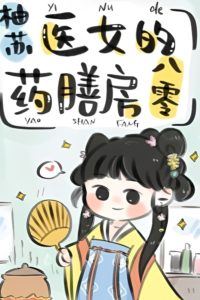
Ning Xin is a transmigrator who has lived two previous lives. In her first life, she was a top-tier medical student who traveled back to an ancient era, enduring twelve years of hardship to become the most renowned female physician of the Dahong Dynasty. Her second transmigration lands her in a period novel set in 1980s China, where she inhabits the body of a cannon-fodder supporting character with the same name. In the original story, this character and her brother, Ning Yi, were destined to sacrifice their father’s legacy to the female lead, only to meet tragic ends. Ning Xin arrives at the beginning of the narrative, just after her father’s death, and immediately faces hostility from her third aunt, Zhu Chunhong, who demands Ning Xin relinquish a factory job inheritance.

The core conflict begins when Zhu Chunhong physically assaults Ning Xin, beating her severely in an attempt to force her to give up the position. Ning Xin, possessing combat skills from her previous life, fights back and creates a public scene that draws neighbors and police. Zhu Chunhong is arrested and sentenced to labor reform. Shortly after, Ning Xin is attacked in the hospital by her cousin, Ning Ling, who chokes her unconscious in retaliation. Ning Xin survives due to quick medical attention, and Ning Ling is arrested for attempted murder. The family matriarch, Old Madam Ning, arrives and, despite her grief, refuses to intervene on behalf of the violent relatives, choosing instead to support her granddaughter.

Ning Xin decides not to take the enamelware factory job, viewing it as a declining industry with no future. Instead, she and her brother negotiate the sale of the job quota to their neighbor, Auntie Wang, for eight hundred yuan. This capital becomes the foundation for their new plans. Ning Xin reveals she possesses a spiritual spring water ability that enhances the nutritional and medicinal properties of food and drink. She uses this asset to improve her family’s health and begins planning a business venture. She also discovers that the ancestral recipe book, central to the original plot, was merely a childhood story told by her father and does not exist.

With the job money secured and her grandmother’s protection, Ning Xin shifts her focus to entrepreneurship. She starts by making herbal teas and other food products using her spiritual spring water, which attract local customers and generate steady income. Her brother, Ning Yi, who had been working a grueling job at a coal yard, is relieved of his burdens as Ning Xin takes charge of the family’s financial future. The siblings begin to rebuild their lives, moving away from the victimhood prescribed by the original novel.

The story direction moves toward Ning Xin establishing herself as a successful businesswoman in the early reform era. She leverages her medical knowledge from her first life and her spiritual abilities to create high-demand products. As she gains wealth and independence, she distances herself from the toxic extended family members who previously sought to exploit her. The narrative follows her strategic navigation of the 1980s economic landscape, turning a precarious situation into one of stability and prosperity, while avoiding the tragic fate that awaited the original characters.

Novel Items

More
Manual
A family recipe book that is a key plot element. In the original story, Ning Xin and her brother were supposed to give this along with their house to the female lead, laying the foundation for her path to wealth. Ning Xin refuses to give it up.
Employment
A teaching position at the mechanical factory's elementary school that Shen Sanqian arranged for Jiang Wanwan. This was the key solution to help her avoid being sent to the countryside, as having a job was one of the three ways to opt out of the program.
Weapon
A kitchen tool used as a weapon. Jiang Mingyue picked it up and swung it at Li Sanwa's forehead, making a bump. Li Sanwa then took it and hit Jiang Mingxia several times with it, causing her to spit blood and faint.
Currency
The amount of silver Xie Laofuren compensated Xue Ning for redeeming the white jade Buddha from the pawnshop. This was several years' worth of Xue Ning's savings.
Employment Opportunity
The factory job position left behind by Ning Chengwen that could be inherited by his children. It was originally given to Ning Xin but later offered to Liu Sheng. It was considered a highly desirable position that ordinary families could rarely obtain.
Item
An oxygen tank stored in Shi Qingqian's spatial stash from an earlier highland trip. She used it when entering the underground cellar because the oxygen levels were dangerously low.
Latest Release
DateGroupRelease
2026-08-11shanghai fantasy c10
2026-08-11shanghai fantasy c9
2026-08-11shanghai fantasy c8
2026-08-11shanghai fantasy c7
2026-08-11shanghai fantasy c6
2026-08-11shanghai fantasy c5
2026-08-11shanghai fantasy c4
2026-08-11shanghai fantasy c3
2026-08-11shanghai fantasy c2
2026-08-11shanghai fantasy c1

Community Reviews

Rating(3.7 / 5.0, 15votes)
5 stars
3(20%)
4 stars
5(33%)
3 stars
7(47%)
2 stars
0(0%)
1 stars
0(0%)

Popular reviews

... Read More
Okay, can we talk about Wang Jinying for a second? This woman is EVERYTHING. She comes in with a canteen like it's some sacred offering, and suddenly the whole neighborhood is transformed. I love how she's not just some background character—she's the one who sees Ning Xin's potential before Ning Xin herself does. When she slaps that five yuan on the table, it's not just about paying for tea. It's about dignity, about not letting a young girl feel like she's doing charity work. And then she goes and spreads the word? Chef's kiss. The way the neighbors treat Ning Xin afterward—everyone's suddenly invested, everyone wants to be part of this thing—shows how much community dynamics matter here. Master Liu asking about the tea? That's a man of few words showing his true colors through action. And Old Madam Ning's panic about her granddaughter doing business? So real. The generational trauma of 'we gave up everything once, don't do it again' is palpable. But Wang Jinying shuts that down with pure logic. This woman is the MVP of the entire chapter.
... Read More
The pacing in this chapter is absolutely masterful. Let me break it down because the author really knows how to build momentum. We start with this quiet, intimate moment—Ning Xin sewing, Wang Jinying arriving with her canteen. Slow, domestic, almost sleepy. Then Wang Jinying drops the business idea, and suddenly everything accelerates. Five yuan appears on the table, and boom—we're into commerce mode. But here's where it gets really clever: the author doesn't rush the neighborhood reaction. We get this beautiful cascade effect. Wang Jinying tells a few people, those people tell more people, and before Ning Xin even finishes boiling her first kettle, the whole street knows. The scene transitions are seamless—from the kitchen to the courtyard to the neighbors washing up by the spigot. And that moment when Old Madam Ning returns and almost walks into the wrong house? Perfect comedic timing that also serves the plot. The chapter ends with Ning Xin exhausted on that bamboo lounger, which is the perfect emotional beat after all that energy. It's like the story takes a deep breath and says 'yes, this happened, and now let's rest.' The structure mirrors the tea itself—starting with individual ingredients, building to something that nourishes everyone.
... Read More
I need to talk about Ning Yi because this boy is already carrying so much weight and I'm not okay. Picture this - he's twenty-five or twenty-six, works at a coal yard in a sleeveless vest covered in grime, and the first thing we see him do is show up at the hospital with his face streaked with coal dust because he was wiping away tears with his dirty hands. There's a red slap mark on his shoulder from Auntie Wang. He looks absolutely wretched and the text says it all: he gave up the factory job to his sister. Not because he wanted to, but because he thought it would keep her safe from this woman. The original Ning Xin resented him for it and ran away, which led to her death. But this Ning Xin? She sees him and for the first time there's this moment where he reaches out to touch her face but stops because his hands are dirty. That small hesitation says everything about a brother who feels he's failed her. And then when she tells him she wants HIM to take the job instead, his immediate refusal - 'Once it's given to you, it's yours' - hits different. This is a guy who would literally give up everything for his sister and he doesn't even flinch. I'm already invested in their relationship and we're only on chapter two.
... Read More
I went into this expecting a generic transmigration revenge story and somehow ended up emotionally compromised by a brother and sister dynamic. Let me explain. The moment that absolutely wrecked me was when Ning Xin first wakes up in the clinic and Ning Yi is there. He's dirty, he's crying, he has a red slap mark on his shoulder, and his first instinct is to reach out and touch her face but he stops himself because he feels too filthy. That hesitation - that tiny pause of his hand in midair - is one of the most devastating character moments I've read in any genre. It's not dramatic or loud, it's just this quiet, aching recognition that he can't provide for her, can't even clean himself enough to comfort her. And then Ning Xin, who has literally just been through a physical fight and a concussion, immediately goes straight to protecting HIM by offering him the job. She's been through hell and her first thought is 'my brother needs this more than I do.' The sibling bond between them isn't spelled out with grand declarations, it's in these tiny moments of restraint and sacrifice. Wang Jinying slapping Ning Yi outside the door felt like justice, honestly. That woman deserved every bit of it. I'm already emotionally attached to this cast and we haven't even left the hospital yet.
... Read More
I need to talk about the family dynamics here because WOW. Ning Xin collapsing on that bamboo lounger after selling all that tea? Her brother Ning Yi coming back and draping a towel blanket over her? That moment hit me so hard. It's not dramatic or over-the-top, it's just... quiet care. The kind of sibling love that doesn't need words. And Old Madam Ning's heart aching when she sees her granddaughter sprawled out like that? The generational worry, the fear that something might happen to her only remaining grandchild? It's so tender. But what really got me was the whole community aspect. These neighbors aren't just customers—they're family in a different way. They're investing in Ning Xin's success because they believe in what she's doing. When the old people say their hearts feel lighter after drinking the tea, it's not just physical healing—it's emotional too. This story understands that family isn't just blood relations. It's the people who show up with canteens and jasmine leaves and five yuan bills. It's the people who wait in line because they don't want Ning Xin to lose face. That's the real emotional core here, and it's beautiful.
... Read More
The pacing in these chapters is masterful. You start in the hospital ward with high tension - Ning Xin has been injured, her grandmother is angry, there's conflict with family members. Then you get this quiet moment with the terrible food, the revelation about the recipe book, the grandmother's emotional breakdown. And then suddenly you're outside in the courtyard, walking around, taking in the space, reflecting on the father's life. The transition from internal family drama to external physical space is so smooth. It gives the reader a chance to breathe after all that emotional intensity. And the chapter structure itself is interesting - you have the hospital scene, then the food scene, then the courtyard scene, and each one serves a different purpose. The hospital is about conflict and resolution, the food is about family dynamics and revelation, the courtyard is about reflection and moving forward. The author doesn't rush any of these moments. Even the dialogue about the father's cooking skills and the recipe book lie gets its own space to land. And then the chapter ends with Ning Xin standing by the flower bed, feeling the melancholy dissipate. It's a perfect structural arc for these chapters - tension, release, reflection, hope. I also love how the author uses the food as a pacing device. Those terrible steamed buns, the mushy tofu, the watery cucumbers - they're funny but they also slow down the narrative, giving us a moment of levity before the heavier revelations.
See all reviews

Characters

See all characters

Custom lists

Oops…There is nothing here.