Summary

... Read More

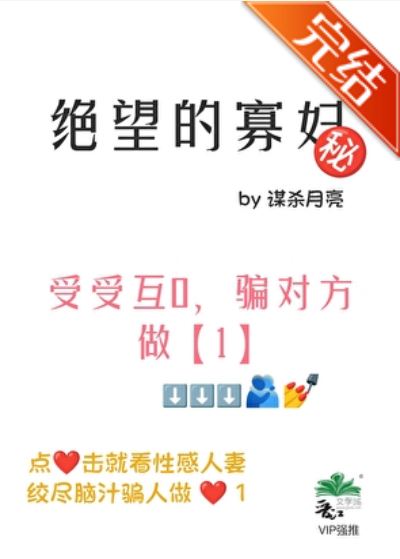
Jiang Cenglan is a twenty-something fashion design student at the New York School of Visual Arts who has spent two years in a committed relationship with Zhang Ruien, a successful and well-known fashion designer five years his senior. Jiang Cenglan, raised in a strict academic household, remained closeted regarding his sexuality until meeting Zhang Ruien during a lecture. Impressed by Zhang’s gentle guidance and gentlemanly behavior, Jiang abandoned his postgraduate studies in China to follow him to the United States, relying on financial aid from his boyfriend to survive the exorbitant costs of American art education. Jiang harbors deep insecurities about his sexual identity, privately identifying as a submissive bottom, yet his relationship with Zhang remains strictly platonic; after two years, they have never progressed beyond kissing due to Zhang’s repeated claims that Jiang is too young and they should wait.

The relationship begins to fracture three months before the story’s current timeline. While celebrating a design competition victory with a romantic dinner prepared for Zhang, Jiang witnesses his boyfriend receive a secretive phone call that causes visible distress. Zhang abruptly leaves, citing urgent plans, and their interactions afterward become cold and transactional. Jiang notices inconsistencies: he has never met Zhang’s friends, meetings are always confined to Jiang’s apartment, and Zhang refuses to make the relationship public under the guise of professional caution. Suspecting infidelity, Jiang investigates and discovers online rumors revealing that Zhang is not gay but is instead maintained by a wealthy older partner. The rumors suggest Jiang has been unknowingly serving as a third party in Zhang’s long-term marriage.

The situation culminates when Jiang’s flatmate buys a copy of MODE magazine, revealing a cover story featuring supermodel Li Que wearing designs credited solely to Ryan Zhang. Jiang recognizes the stolen work as his own submissions. The revelation triggers a severe asthma attack, underscoring the physical toll of his emotional turmoil. Realizing his designs were plagiarized and his relationship was a facade, Jiang decides to confront the situation. He contacts Zhang, who provides an address to a mansion in Long Island. There, Jiang is greeted not by Zhang, but by Li Que himself—the supermodel and Jiang’s lifelong idol whom he had admired since high school. Li Que reveals he is Zhang’s husband of seven years, confirming that Jiang was indeed the secret affair partner.

Instead of anger, Li Que treats Jiang with kindness and compassion, listening to his account of betrayal and offering comfort. This encounter shifts Jiang’s trajectory entirely. Li Que commissions Jiang to design a custom suit for an upcoming charity event, offering a deposit of one million dollars, which validates Jiang’s talent and provides financial stability. As Jiang balances his studies, this high-profile commission, and a part-time job assisting a senior sister’s streetwear brand, he finds himself drawn closer to Li Que. Their interactions grow more intimate, marked by personal conversations and subtle romantic gestures, such as Li Que modeling Jiang’s designs at a fashion expo and sharing kisses. The narrative follows Jiang’s transition from a naive victim of deception to an emerging designer gaining confidence and recognition, while navigating his complicated romantic feelings for the supermodel who rescued him from ruin.

Meanwhile, Jiang’s personal life stabilizes through his supportive flatmate, who watches over him after the breakup. Jiang also reconnects with his artistic ambitions, channeling his pain into his work. The story highlights the contrast between the exploitative dynamic with Zhang and the respectful, encouraging atmosphere cultivated with Li Que. As Jiang walks the runway for his friend’s brand and spends time with Li Que, he begins to reclaim his autonomy and self-worth. The narrative arc moves toward Jiang establishing himself in the fashion industry while potentially exploring a new romantic possibility with the very man whose image he once worshipped from afar, leaving the fate of his relationship with the duplicitous Zhang firmly in the past.

Latest Release
DateGroupRelease
2026-09-25knoxt c25
2026-09-25knoxt c24
2026-09-25knoxt c23
2026-09-25knoxt c22
2026-09-25knoxt c21
2026-09-25knoxt c20
2026-09-25knoxt c19
2026-09-25knoxt c18
2026-09-25knoxt c17
2026-09-25knoxt c16
2026-09-25knoxt c15
2026-09-25knoxt c14

Community Reviews

Rating(3.9 / 5.0, 26votes)
5 stars
10(38%)
4 stars
4(15%)
3 stars
12(46%)
2 stars
0(0%)
1 stars
0(0%)

Popular reviews

... Read More
This. This right here. This entire chapter is a masterclass in showing romantic interest without any actual confession or dramatic moment. Let me break down what Li Que does across these pages, because the subtext is SO thick you could spread it on toast. First, he appears out of nowhere and immediately makes Jiang Cenglan's heart race. Not a warm greeting — just a tap on the shoulder and a breeze of cologne. Jiang Cenglan's reaction: "His heart gave a jolt, and a feeling of pure joy surged up from within." That is not casual. That is someone who has been carrying feelings around and just got ambushed by the person they like showing up in casual clothes at a random expo. Then Li Que proceeds to do the most Li Que thing possible: say exactly what he means while maintaining the posture of a man who owns every room he enters. "I really like your body" is delivered with the same casual confidence as "No cafés here, huh." No hesitation, no softening. And Jiang Cenglan has zero defense against it because of course he does. But the real moment — the one I keep thinking about — is during the lingerie show. Everyone else is watching models in swimwear. Li Que is watching Jiang Cenglan. The text says: "there was always a pair of eyes next to him not watching the models, but watching him." AND "with a hint of indecency." Do you understand how layered this is? Li Que is simultaneously appreciating the show AND being openly inappropriate about the person sitting next to him, and Jiang Cenglan is sitting there trying to maintain professional composure while someone stares at him like he's the main event. And then the touch. The feather-light hand on his back, reading the hand-embroidered stars. Li Que doesn't say anything about the design — he just touches it. As if confirming the craftsmanship is as valuable as the person wearing it. I cannot handle this man.
... Read More
I need to talk about this senior sister character because WOW she is simultaneously the worst and the best boss ever. On one hand: she's SCREAMING at interns, has purple dark circles, hair in a clumsy ball, acting like a tyrant. On the other hand: she immediately offers Jiang Cenglan hot cocoa when he walks in, gives him the biggest portion of fried chicken, and calls him a "big red envelope" bonus. She's clearly running on fumes and pure stress. But here's what got me — the moment she's in pain backstage. The haughty boss who won't let anyone see her weak? She drops. Completely. Ghostly pale, sweat like raindrops, rolling her eyes, practically begging for help. And Jiang Cenglan — sweet boy, just crouches down BESIDE her in solidarity. Not fixing anything, just... there. "Too nervous" she says about the stomach cramps. But we KNOW from the text that severe anxiety manifests physically. This woman has been holding an entire brand together on sheer willpower and caffeine, and now her body is literally revolting. And Jiang Cenglan's internal monologue about why SHE made HIM model: "As a business owner, it was her job to take advantage of all the available resources… And it was also a pity to hide such a pretty face." HONEY. He KNOWS. He knows she used him to save money, he knows she thinks he's handsome, and he's just... going along with it. The devotion is quiet but REAL. That moment when she shoves the clothes at him and yells "Now go and change, Cinder-fella!" — she's still in full boss mode even while terrified. Classic deflection. Can't show vulnerability, so let's yell at someone else. But then he steps onto that runway and I swear the text practically purrs about how good he looks. The narrative POV is SO clearly on Jiang Cenglan's side, and the way he channels "that older student who loved wearing women's clothing" — magnetic, godly charm — tells me something about how he sees himself in this moment. Not just surviving, but thriving. Their dynamic is everything. Yeller + Listener. Boss + Subordinate. But also... something softer underneath, right? The way she cares without admitting she cares. The way he helps without asking for credit.
... Read More
"Second meeting. Third kiss." Three words. That's all it took to shatter my entire being. I need to talk about Jiang Cenglan first because this boy is suffering in the most relatable way possible. His internal monologue throughout this entire chapter is a masterclass in romantic anxiety. "Don't overthink it, don't overthink it!" he tells himself after Li Que says he wants to wear the same outfit. He's analyzing every gesture, every word, trying to figure out if this is flirting or just how this person communicates. And the worst part? He's afraid that if he asks too much, the whole fragile thing between them will collapse. That's not just crush energy—that's someone who already cares way more than they're ready to admit. But Li Que—oh god, Li Que. This man operates on a completely different wavelength. He doesn't play games. He doesn't hide. When he kisses Jiang Cenglan's cheek, he says "I'll do it happily every day for such a sweet reward." That's not teasing. That's not ambiguous. That is a man stating his intentions with the calm confidence of someone who knows exactly what he wants. And the sunglasses detail—taking them off and tucking them into Jiang Cenglan's hair, then pulling them down to cover Jiang Cenglan's eyes before the kiss? That's intimate choreography. Every movement is deliberate. Their dynamic has this beautiful asymmetry where Jiang Cenglan is always one step behind emotionally, processing and panicking, while Li Que is already three steps ahead, making moves and smiling about it. But here's the thing that makes it work—they're not incompatible. Jiang Cenglan's caution balances Li Que's boldness, and Li Que's directness gives Jiang Cenglan something solid to hold onto. The way Jiang Cenglan felt embarrassed for being "so clingy" and Li Que essentially told him to stay in the audience because he needed work time—that moment of independence between them is actually a sign of trust, not distance. They can handle being separate and still choosing to come back together. I'm not okay with the orange flavor detail. I'm literally not—
... Read More
I have watched so many movies where the lighting and setting tell you everything about the mood before a single line of dialogue hits and this chapter does the exact same thing but with words. Let me paint the picture for you because the author really outdid themselves here. Dim atmospheric light in the cloakroom upstairs. Bare feet on wool carpet. A man who is half-naked under blue veins visible along his arms while someone else measures him with trembling fingers. The air conditioner is set low but the heat is rising in the quilt — that contrast between cold environment and hot internal state is visual poetry. And then the cut to later when Li Que has changed out of his home clothes into a fashionable casual suit and is putting on a diamond watch before asking whether the measurements were written down. The visual storytelling here is relentless. Every detail serves the mood. The pink chest measurement of one zero five centimeters. The two distinctive deep waist dimples. The way his skin is described as mixing delicate Asian texture with flawless French heritage — this is not just description for description sake, it is the author making sure we understand exactly why Jiang Cenglan cannot stop thinking about him. Then there is the New York night scene where the whole city sparkles like the Milky Way but the streetlight near his apartment is broken and abandoned and parked underneath it is a couple million dollar car on a dirty roadside slope. That juxtaposition of glittering wealth and crumbling infrastructure is the single best establishing shot of the entire chapter and it says everything about Jiang Cenglan's world without narrating a single emotion.
... Read More
I need to talk about how this chapter moves because the pacing is absolutely relentless and I refuse to let it go unappreciated. Chapter opens with a low-stakes problem: forgotten painkillers. Jiang Cenglan runs to buy them. Phone rings — relief. Back to normal. Or so you think. He's sent off to wander the expo, gets distracted by his phone, and the entire narrative accelerates from 'business trip procedural' to 'romantic collision course' in approximately three paragraphs. That transition happens so smoothly you don't notice until you've already been swept up. The Li Que entrance is timed perfectly. After all that wandering, after the exposition dump about 400+ brands and competitive stakes, the author drops a character arrival that resets the entire emotional register. No warning. Just a tap on the shoulder and suddenly you're in a completely different scene. Then the conversation builds naturally — Li Que comments on the outfit, Jiang Cenglan explains his work, the runway is mentioned, and then BAM, the bell rings and the venue transforms. The author refuses to give you a breather between the dialogue and the spectacle. You're sitting with Li Que one second, next second you're watching bikini-clad models and wondering why Jiang Cenglan looks like he wants tophase out of reality. The chapter ends on a line that is simultaneously comedic and devastating: Li Que asking if Jiang Cenglan is "heading backstage now to change into your lingerie." Jiang Cenglan's entire world has been disrupted — wrong hall, wrong show, wrong understanding of what's happening — and Li Que is making flirty jokes about it. The pacing here is doing triple duty: advancing the plot, developing the romance, and generating genuine humor. I literally cannot process this much quality in one sitting.
... Read More
"The stars are hand-embroidered by me. Flip it over and it becomes a cloud." I need to sit with this line for a minute because I think it might be the thematic keystone of the entire chapter, maybe the whole arc. Jiang Cenglan is a designer. His work is literal — he builds things with his hands, stitch by stitch, and the result is wearable art that transforms depending on perspective. Stars become clouds. What looks like one thing from one angle is something completely different from another. This is a man who understands that reality is situational. And then consider the context: he accidentally walks into the wrong show. He's been watching a display of hyper-sexualized, commercialized bodies — models in bikinis performing for an audience — while his own creative expression sits quietly on his back, unrecognized by everyone except the one person who matters. The contrast between what the world values (visible, commodified, performative) and what Jiang Cenglan values (crafted, personal, transformative) is almost painfully clear. Li Que touching the embroidery without comment — that's the moment where the theme crystallizes. He doesn't need to praise it. He doesn't need to ask about it. His hand on Jiang Cenglan's back, reading the texture of the stars, is an act of recognition. Someone sees the work. Someone sees the person who made it. The stars-and-clouds metaphor also speaks to Jiang Cenglan's position in this story: he's someone who operates in the background, creating beauty that only reveals itself fully when viewed from the right angle. He's not on the runway himself (yet). He's the one behind the scenes, and the narrative keeps asking us to look past the surface spectacle to find what's actually valuable.
See all reviews

Custom lists

See all custom Lists