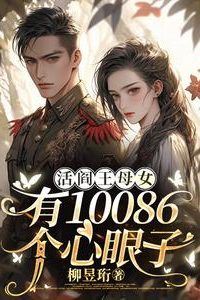
The Demon King Mother and Daughter Have 10,086 Schemes
+Add to Custom List
Genres:
Novel Info

Summary

... Read More

Lin Qiaolan endures years of brutal domestic abuse at the hands of her husband Wang Dahu and his family, a torment that culminates in her death by fire alongside the Wang family after she poisons their soup. In her final moments, she reflects on the tragedy with a mix of rage and sorrow for her daughter, Liu Xiaoyun. Upon waking, she discovers she has been reborn, transported back to the year 1979, specifically to the day of her daughter's third birthday. The nightmare of her previous life has not yet begun. She finds herself in her father's rural home, where she lives with her stepmother Zhang Qiuju, her father Lin Chaocheng, and various half-siblings and relatives. In her past life, Qiaolan was a passive victim who allowed her family to exploit her labor and resources, eventually forcing her into a disastrous marriage with Wang Dahu that destroyed her life. This time, she resolves to change her fate and protect her daughter from the suffering she endured.

The core conflict immediately centers on Qiaolan's confrontation with her stepmother, Zhang Qiuju, who is depicted as a greedy, cruel, and hypocritical woman. Zhang Qiuju favors her own biological children and stepsons, treating Qiaolan and her daughter as servants while hoarding resources for herself. In this pivotal moment, Qiaolan refuses to submit. When Zhang Qiuju demands the duck egg her daughter found, Qiaolan defiantly cooks it for her daughter and sister-in-law, Xu Shuqing, who is secretly pregnant. The tension escalates when Qiaolan kills the family's chickens and ducks to prepare a celebratory meal for her hardworking father and eldest brother, Lin Shumao, directly defying Zhang Qiuju's orders to save the livestock for sale. She locks Zhang Qiuju in a room to prevent her from interfering, marking a decisive break from her previous submissive behavior.

Qiaolan's transformation continues as she exposes the family's injustices. She reveals to her father that Zhang Qiuju has been stealing their earnings and giving them to her own children, while the eldest brother and Qiaolan have been overworked and underfed. She also confronts her half-sister Lin Chunying, who had previously mocked Qiaolan's suffering, by physically disciplining her for her rude behavior. These actions shock the family and the village, as Qiaolan is no longer the timid widow they expected. She begins to reclaim her agency, ensuring that her daughter and her loyal brother's family eat well and receive the care they deserve. She also discovers that her daughter, Nannan, has also been reborn and retains memories of their tragic past, strengthening their bond as they plan to avoid the mistakes of their previous lives.

The story direction shifts as Qiaolan actively works to dismantle the oppressive dynamics within her family. She secures the house that her deceased husband had left her, ensuring she and her daughter have a safe place to live independent of the Lin family's control. She supports her eldest brother and sister-in-law, helping them navigate the dangers posed by Zhang Qiuju, who attempts to harm Xu Shuqing's pregnancy. Qiaolan uses her knowledge of future events to guide her family toward better decisions, such as encouraging her father to demand that the lazy stepsons work in the fields. Her actions are calculated and ruthless toward those who wronged her, yet protective and loving toward her chosen family. The narrative follows her strategic maneuvers to gain financial independence and social standing in the village, setting the stage for her to escape the toxic environment that once trapped her.

As the chapters progress, Qiaolan's reputation in the village changes from a pitiable widow to a formidable woman who cannot be bullied. She faces continued resistance from Zhang Qiuju and her allies, but she consistently outmaneuvers them through sharp wit, physical assertiveness, and strategic alliances with her father and siblings. The story highlights the stark contrast between Qiaolan's past life of silence and her current life of vocal resistance. She refuses to let her daughter suffer the same fate of neglect and abuse, ensuring Nannan grows up loved and secure. The narrative builds toward Qiaolan's ultimate goal of severing ties with the exploitative members of her family and building a new, happy life for herself and her daughter, free from the ghosts of her past.

Latest Release
DateGroupRelease
2026-08-11shanghai fantasy c15
2026-08-11shanghai fantasy c14
2026-08-11shanghai fantasy c13
2026-08-11shanghai fantasy c12
2026-08-11shanghai fantasy c11
2026-08-11shanghai fantasy c10
2026-08-11shanghai fantasy c9
2026-08-11shanghai fantasy c8
2026-08-11shanghai fantasy c7
2026-08-11shanghai fantasy c6
2026-08-11shanghai fantasy c5
2026-08-11shanghai fantasy c4

Community Reviews

Rating(4.6 / 5.0, 9votes)
5 stars
5(56%)
4 stars
4(44%)
3 stars
0(0%)
2 stars
0(0%)
1 stars
0(0%)

Popular reviews

... Read More
There's something almost cinematic about how this book frames its scenes. Let me start with the most striking image: Lin Qiaolan comes back from killing a rabbit, and Nannan says "Mom, wash your face. There is rabbit blood on your face." Just... rabbit blood on her face. She killed a rabbit. In this time period, in this rural village, meat is such a rare luxury that slaughtering an animal is both a triumph and something that leaves you marked. The image of this thin widow with blood on her face, calmly going to wash it off while her daughter watches, is somehow both domestic and brutal. Then she goes to the cellar to get ingredients for potato stew — soy sauce, broad bean paste — and the kitchen becomes this little sanctuary of normalcy amid the chaos. The contrast between the violence outside (Zhang Qiuju bringing Dr. Qiu to declare her crazy) and the cooking inside is chef's kiss. The village setting feels incredibly alive. Sun Hehua and the other old ladies gathering to watch the drama unfold, the barefoot doctor Qiu Wu riding in on his bicycle, the pigpen with those underweight piglets — it all paints a picture of communal rural life where everyone knows everyone's business and the whole village becomes an audience to family conflicts. The scene where Zhang Qiuju and Sun Hehua start fighting, grabbing hair and slapping, with everyone scrambling out of the way — it's chaotic and visceral. You can hear it. The sound of that slap described as "extremely crisp" made me flinch. And then the quiet aftermath: Zhang Qiuju sitting on the bed with a swollen face, Lin Chaocheng smoking his pipe, the two of them in that heavy silence. The worldbuilding here isn't about elaborate descriptions — it's about the small, specific details that make everything feel real.
... Read More
Okay, can we just talk about Nannan for a second because this kid is absolutely unhinged in the best possible way. She is THREE. THREE. And she already has more backbone than half the adults in this village combined. The moment that got me was when Zhang Qiuju was about to hit her, and Nannan just... stepped in. She grabbed her grandmother's pants and said, "Grandma, please don't hit Mom. I'll come find you tonight. At most, I'll give you a few dozen more stitches." STITCHES. This child has been stabbed with needles before and she's casually offering to take more hits to protect her mom. And then she rolls up her sleeves and shows her arms like it's no big deal. And Lin Qiaolan's reaction? She just grabs her daughter and shields her, crying out "she is only three years old!" That moment where she's protecting Nannan with her whole body, shrinking back like she's been hurt before but still throwing herself in front of that child — I literally had to pause and breathe. The whole mother-daughter dynamic between them is so tender but also so fierce. Nannan calls her "Mom" so naturally, and when Lin Qiaolan tells her to wash the rabbit blood off her face, it's such an ordinary, domestic moment that contrasts so sharply with everything else happening. They have each other, and that's their armor. Meanwhile, Xu Shuqing is just... there, being pregnant and getting mistreated, and Lin Qiaolan is the one actually taking care of her. The sister-in-law bond isn't explored much in these chapters but it's quietly there, simmering. And Zhang Qiuju's internal monologue about just throwing Lin Qiaolan in the mountains? Chilling. Absolutely chilling. The emotional landscape of this family is a minefield and I am HERE for it.
... Read More
I need a minute. Just a minute. The scene where Nannan wakes up from her nightmare and sees her mother's face — no scars, beautiful eyes, hair not gray and dry — and she reaches out to touch it because she can't believe it's real? That hit me right in the chest. This is a story about a mother and daughter who died together, sank to the bottom of the sea, and got given a second chance, and the emotional weight of that is enormous. Nannan's confession about what she did after their deaths — collecting everyone's ashes, dumping the Wang family's bones into a cesspool because she couldn't bear to scatter her mother's into the sea — that is such a devastating detail. A child who loved her mother enough to refuse to let her go even in death, and then chose to drown herself rather than survive without her. I keep thinking about that image of two souls at the bottom of the sea, and then waking up as mother and daughter again in a sunlit courtyard. The emotional arc here is so carefully built. In the previous life, Lin Qiaolan was blind, lame, covered in wounds, and couldn't even defend herself against Wang Dahu. Now she's practicing military boxing her daughter taught her, and she's doing it so she can protect this family. But the most emotionally powerful moment for me wasn't even the big dramatic one — it was Nannan looking at Lin Hong and remembering how her aunt had tried to help her in the previous life, and how Lin Hong had stuffed a boiled egg into her hand with a swollen face before being sold away. That quiet moment of recognition between two people who had suffered together, where Nannan says 'Mom, I want some boiled eggs too' and Lin Qiaolan immediately says yes — that's the kind of small tenderness that makes the bigger emotional beats land even harder. The CP energy between mother and daughter here is off the charts. This isn't romance, it's something deeper. It's the bond of two people who chose each other across death itself.
... Read More
Let's talk about how this woman talks, because her dialogue is absolutely lethal. 'She stays at home all day, does nothing, and yet she still has the nerve to make a scene.' That's not just a sentence, that's a declaration of war wrapped in polite grammar. And then she goes on to systematically dismantle her stepmother's entire moral authority by listing every way Zhang Qiuju has failed as a stepmother — not letting the other children help, sending the pregnant sister-in-law's husband away, not even asking the second and third brothers to contribute. Each point lands like a punch. What's remarkable is that Lin Qiaolan's voice is so distinctly different from everyone else's. Her father Lin Chaocheng speaks in worried, conciliatory sentences. Zhang Qiuju screams in fragmented, unhinged bursts. But Lin Qiaolan? She delivers paragraphs of devastating logic with the calm of a surgeon. 'From childhood to adulthood, your food, clothing, shelter, and transportation have all been yours. Now that they've started families and become strong laborers, they've forgotten the hard work of you, the old ox.' That line about the old ox — she's using her father's own language against him, making him see himself through the eyes of someone who actually understands his situation. And then there's the dialogue with her daughter, which is a completely different register. Soft, questioning, full of wonder and fear and relief. 'Nannan, tell me how you came back?' Simple, direct, and it carries so much emotional weight because of everything that came before. The author's narrative voice is also doing interesting work here — there's this slight inconsistency where the protagonist is sometimes called Lin Qiaolan and sometimes Liu Qiaolan, which I assume is a translation artifact, but it doesn't really break the immersion. The humor in the text is dry and sharp too. When Lin Qiaolan tells Zhang Qiuju 'Even if it was a money-losing thing that fell from your body, you would still beat it up' — that's comedy gold, delivered with a straight face. The banter between mother and daughter practicing boxing is light and warm, which provides perfect emotional contrast to the venom coming from the antagonists. Every character has a distinct voice, and that's not always easy to achieve.
... Read More
Let me just say this outright: the stakes in these chapters are NOT trivial. Zhang Qiuju is trying to have Lin Qiaolan declared mentally ill so she can be locked up or married off for money. This isn't petty family drama — this is a woman's life hanging in the balance. Think about what's at stake for Lin Qiaolan: - Her freedom (being declared crazy means institutionalization) - Her daughter's safety (Zhang Qiuju has already been starving and physically abusing Nannan) - Her reputation (one word from her stepmother and the whole village believes she's insane) - Her food (the rabbits, chickens, and duck she's been raising are being stolen and eaten by the family that's trying to destroy her) The moment Dr. Qiu confirms Xu Shuqing is pregnant, you can practically see Zhang Qiuju's face turn green. Because now there's another mouth to feed, another expense, and her plan to get rid of Lin Qiaolan just got more complicated. The stakes keep rising. What I love about how the author handles tension is that it's never just one conflict at a time. While Zhang Qiuju is plotting against Lin Qiaolan, the village women are gathering like an ancient Greek chorus, commenting on everything. Sun Hehua's confrontation with Zhang Qiuju escalates from verbal to physical in seconds, and Lin Qiaolan has to physically restrain her own stepmother to protect Nannan. And the father? Lin Chaocheng sits there smoking his pipe, knowing exactly what his wife is doing, saying nothing until it's too late. The complicity of silence is its own kind of violence. The suspense works because every scene ends with a new threat emerging. Just when you think things can't get worse — they do. And Lin Qiaolan keeps standing her ground. I was genuinely worried for her and Nannan through all of this...
... Read More
I keep coming back to the food in this text. It's not just plot device — it's a symbol, and a pretty loaded one at that. Lin Qiaolan killing the chickens and ducks and making pancakes isn't just about feeding her family; it's an act of economic and social defiance. Those animals belonged to her stepmother, who raised them as her own personal property while the rest of the family starved. By slaughtering them and distributing the meat to the hardworking members of the family — the father, the eldest brother, the pregnant sister-in-law — Lin Qiaolan is literally redistributing resources from the exploiter to the exploited. It's a tiny revolution on a plate. The pancakes made from two-grain flour are also significant. This is food that actually nourishes, that doesn't make your throat sore, that represents a standard of living her family hasn't had in years. When her brother eats it and thinks 'I am in my thirties and even during Chinese New Year I have never eaten a pancake made of two-grain flour' — that single sentence carries the weight of an entire class experience. And then there's the body as a site of struggle. Lin Qiaolan practicing military boxing, her thin but strong body learning to fight. Her sister-in-law's body flinching before being hit, conditioned by years of abuse. Nannan's body shrinking back into childhood after death. The theme here is really about bodily autonomy — who gets to control their own body, their own labor, their own fate. Zhang Qiuju treats everyone's bodies as instruments for her own benefit: their labor, their marriages, their reproductive capacity. Lin Qiaolan's rebellion is fundamentally about reclaiming bodily sovereignty. The military boxing her daughter taught her in the previous life is a perfect symbol of this — it's knowledge passed from daughter to mother across the boundary of death, a weapon of self-defense that represents both love and survival. The deeper theme I'm picking up on is about memory and how the past haunts us. Nannan's nightmare, the cold sweat, the trembling eyelids — trauma doesn't disappear just because you get a second chance. But the story seems to be suggesting that memory, even painful memory, can be a tool. Knowing what happened before is what allows Lin Qiaolan to act differently now. The cyclical nature of the narrative — death, rebirth, repetition with variation — echoes the Chinese folk concept of fate and karma, but with a distinctly modern feminist twist.
See all reviews

Characters

See all characters

Custom lists

See all custom Lists