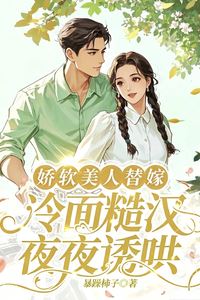
The Delicate Beauty’s Substitute Marriage: The Cold-Faced Rugged Husband Woos Her Every Night
+Add to Custom List
Genres:
Novel Info

Summary

... Read More
In 1980 Shidianzi Village, Qiao Qingyan is a dedicated elementary school teacher who has endured years of emotional abuse from her stepmother Chen Xiuying and stepsister Chen Xiaomeng. After her mother's death, Qingyan was sent to live with her aunt in the city, but she was forced to return two years ago to a hostile household where she was treated as an outsider. Her life appears to be turning around when Jiang Runsheng, a handsome announcer at the township broadcasting station and her childhood acquaintance, proposes marriage. Qingyan accepts, hoping for a stable future with a man she respects as an older brother figure. However, the engagement is shattered when villagers discover Runsheng and Chen Xiaomeng together in a wheat stack. Chen Xiaomeng, who has secretly harbored a deep, obsessive hatred for Qingyan since childhood, deliberately seduced Runsheng while he was intoxicated. By claiming she is now Runsheng's woman, she forces the village chief, Runsheng's father, to arrange their marriage to save the family's reputation. Runsheng, though guilty and still harboring feelings for Qingyan, submits to his father's authority and accepts the arrangement. Qingyan, realizing the hollowness of Runsheng's affection and disgusted by his weakness, publicly slaps both of them and declares the engagement over. She asserts that anything easily stolen was never worth keeping. The fallout leaves Qingyan in a precarious position. Her stepmother and father, having already accepted a bride price from the Xiao family in the neighboring village, demand that Qingyan marry in Chen Xiaomeng's place. The Xiao family is headed by Xiao Jinye, a rugged, uneducated hunter known for his physical prowess but rumored to be impotent. Chen Xiaomeng and her mother scheme to send Qingyan to this miserable fate, believing she will suffer in poverty and emotional neglect. When confronted, Qingyan learns of their plan to sell her to an old, depraved bachelor if she refuses. Accepting her reality, she agrees to the marriage but demands a dowry of two hundred yuan and double the household goods originally intended for Chen Xiaomeng. On the wedding day, both sisters marry simultaneously. Chen Xiaomeng weds Jiang Runsheng, while Qingyan is escorted to the Xiao family home. There, she meets Xiao Jinye's mother, Zeng Yumei, a gentle, limping widow who raises her intellectually disabled daughter, Duoduo, with love and care. Unlike her abusive biological family, Zeng Yumei treats Qingyan with warmth and respect, immediately forming a bond with her new daughter-in-law. Qingyan finds peace in the Xiao household, appreciating the cleanliness and order maintained by her mother-in-law. Meanwhile, Xiao Jinye returns from the mountains on his wedding day but refuses to consummate the marriage or even share a room with Qingyan, revealing to his mother that he loves another woman and cannot bear to be with someone he does not desire. The story concludes with Qingyan beginning her new life, unaware that her marriage to the cold hunter may not be the tragic end her family intended, but rather a fresh start away from toxicity.

Novel Items

More
Ability
Qiao Qingyan gains the ability to hear Chen Xiaomeng's inner thoughts, as thoughts echo clearly in her mind even when Chen Xiaomeng's lips do not move. This ability allows Qingyan to discover the true malicious intentions behind her stepsister's actions.
Item
Gifts exchanged for the engagement between Su Xiaoyin and Lin Tianyang. Mother Lin mentioned they had already been returned to Yuan Songzhi.
Money
A thousand yuan given as bride price for An Ruoyan's marriage to Gu Yizhi. An Ruoyan refused to give it to her stepmother Huang Jinxiu, claiming it was hers by law. This was a major point of conflict in the story.
Money
The Gu family discusses setting aside 1,000 yuan as Ruoyan's dowry. Gu Yizhi initially refuses and wants to handle it himself, but his mother and sisters-in-law insist. His sisters-in-law each received only fifty yuan when they married.
Arcane Treasures
A blood-soaked cloth doll pierced all over with silver needles, found in Princess Xiuning's boudoir. A yellow paper inscribed with the princess's birth date and time was attached to its back. It was used as false evidence of sorcery against Xue Ning.
Weapon
A willow branch that Qiao Nianshan used to whip Qiao Qingyan whenever Chen Xiaomeng falsely accused her or pretended to be victimized. Qiao Nianshan never investigated who was right or wrong before punishing his daughter.
Latest Release
DateGroupRelease
2026-08-11shanghai fantasy c6
2026-08-11shanghai fantasy c5
2026-08-11shanghai fantasy c4
2026-08-11shanghai fantasy c3
2026-08-11shanghai fantasy c2
2026-08-11shanghai fantasy c1

Community Reviews

Rating(4.1 / 5.0, 20votes)
5 stars
6(30%)
4 stars
9(45%)
3 stars
5(25%)
2 stars
0(0%)
1 stars
0(0%)

Popular reviews

... Read More
Okay so let me just say this right now—what is WRONG with this guy? It's their WEDDING DAY and the groom is out hunting in the mountains like it's some regular Tuesday? I literally sat there going WHAT. Qiao Qingyan rides all the way here on a bicycle, probably nervous as hell, and nobody even comes to greet her. Just his mom, limping and smiling, saying 'he went hunting yesterday, not sure if he'll make it back today.' Excuse me?? This is the substitute marriage plot and honestly I'm already confused enough without the groom being a ghost on his own wedding day. But then again, maybe that's the point? Like, is this marriage even real? Is Xiao Jinye even willing? The whole setup feels like a ticking time bomb waiting to go off. And don't even get me started on the Chen family drama—Chen Xiuying cancels the engagement with Chen Xiaomeng and suddenly offers Qiao Qingyan instead? What kind of scheme is this? I need to know what's going on. Also the ancestral festival subplot with the production team needing game meat—this is the kind of background detail that makes the world feel real but also adds this low-key pressure, like everything in this village runs on duty and obligation. The plot is slowly building this web of expectations around Qiao Qingyan and I'm here for it.
... Read More
The breakfast scene in the courtyard is absolutely perfect and I need to talk about it. Early July, stuffy inside the house, cool morning breeze, the three of them — Qingyan, Zeng Yumei, and little Duoduo — sitting around a small stone table. Duoduo spilling porridge on her clothes, Zeng Yumei tying her a bib, washing her face after every meal. It's such a domestic, quiet moment but the author makes it feel so warm and real. I could literally see this as a film scene — natural light, the sound of birds, the steam rising from the porridge. And then there's the river scene. Qingyan going to wash clothes, the willows draping along both banks, crystal-clear water, village women gathered together. The sensory details are so specific — the floral fragrance on the breeze, the elegant sandals making her slender ankles look beautiful, the contrast between her white dress and the worn-out slippers of the country girls. Chunya feeling strangely downhearted looking at Qingyan's delicate hands while scrubbing clothes until her palms turned red — that visual of red palms is haunting. The bicycle scene is such a brilliant worldbuilding moment too. A woman riding pillion on a brand-new bicycle, talking about a washing machine at home. In a rural village setting, these small details — the bicycle, the washing machine — tell you everything about economic status and social dynamics without any exposition. The way the other women react, rolling their eyes at the showing off, asking where they got the money — it paints this entire social ecosystem. What I love is how the author uses these everyday scenes to establish the time period and setting without ever stopping the story to explain. You learn about ration coupons, about the commune system, about village hierarchy — all through characters living their lives.
... Read More
Let me just say this first: Qiao Qingyan slapping Jiang Runsheng AND Chen Xiaomeng in the same scene is the single most satisfying thing I've read all year. Two slaps. One after the other. No hesitation. No tears. Just cold, clean justice. "Anything that can be stolen so easily was never worth holding onto." — this line absolutely destroyed me. She says it so casually, like she's talking about a misplaced book, but it carries so much weight. She's not just dismissing a fiancé; she's dismissing two years of hope and expectation in one sentence. But what really got me is how the author paints Chen Xiaomeng through her own thoughts. Outwardly she's the fragile, tearful victim: "Qingyan, if you're angry, hit me instead. Don't hit Brother Runsheng..." But inside? [Jiang Runsheng, do you really love that bitch Qiao Qingyan that much?] The gap between her performance and her actual thoughts is so wide it's almost comedic. And Qingyan sees it all. She knows exactly what kind of person her stepsister is. Jiang Runsheng is... well, he's the kind of guy who drinks too much and lets himself be pushed into doing things he doesn't want to do, then expects everyone to forgive him because he's "confused." His father Jiang Decheng is worse though — the man literally rewrites a scandal into a love story with a few words. "Young people sometimes lose control of themselves—that's nothing unusual." Sir, they were caught with their clothes OFF in a wheat stack. But sure, let's call it romance. The mother Chen Xiuying is fascinating too. She's furious at first, but the second she realizes her biological daughter is now marrying into the village chief's family, her entire mood flips. That's not a mother — that's a merchant closing a deal.
... Read More
Can we talk about how NONE of these conversations feel scripted? Every character has a distinct voice and I can tell them apart just from how they speak. Zeng Yumei's dialogue is warm and practical—'Drink up, child. It's hot today. Some sweet water will help you cool down.' She doesn't over-explain, doesn't perform. Just takes care of people. Then there's Duoduo: 'Duoduo... drink... sweet...' The broken speech, the drool, the way she points instead of asks—this is a child who struggles to communicate and the author doesn't shy away from it. And Qiao Qingyan's internal voice versus her external voice is fascinating. She thinks 'Mother? She simply couldn't bring herself to say it.' But out loud it's just 'Auntie.' That gap between what she feels and what she says—that's where the tension lives. The villagers' gossip is also perfect: 'The bride is so pretty,' 'Look at her skin,' 'That boy is truly blessed.' They're blunt, loud, unfiltered. Real rural community energy. Even Chunya's entrance at the end has this tiny moment where her smile 'stiffens' when she sees Qiao Qingyan. One word, one detail, and suddenly there's a whole history between these two women that we don't know yet but desperately want to. The dialogue does SO much heavy lifting here.
... Read More
I keep thinking about how layered the conflicts are in this section and it's not just the obvious arranged marriage tension. Let me unpack this because there's actually a lot going on beneath the surface. On the surface level you've got Qingyan vs. the situation—she's a woman who was basically sold into a marriage with a man who already has someone else in his heart. That's a brutal position to be in and the author makes you feel it every time Jinye says he can't sleep with someone he doesn't love. But then you zoom out and there's Chen Xiaomeng who is literally fighting for her entire future on this one night. She's been scheming, she's been manipulating, and she thinks she's won. The stakes for her are existential—her social position, her children, her status as the woman by his side. And the author basically laughs in her face with that ending. Then there's Chunya, who I genuinely feel bad for even though she's being kind of awful. She's jealous of Qingyan, yes, but she's also in this position where Jinye is her emotional anchor and now he's married to someone else. Her father basically confirms that Jinye wouldn't go home on his wedding night because he's unhappy with the marriage, and you can see Chunya's face light up because it means there's still a chance. There's still hope. That's the tragedy of her character—she's clinging to crumbs. And Zeng Yumei! She's caught between her son's stubbornness and her desire for a normal family. When she smacks his arm and calls him ungrateful, that's not just anger—that's a mother who's been carrying this worry for years and her son just doesn't get it.
... Read More
I need to talk about the pumpkin rice. Not because it's a huge symbolic moment but because it's the kind of quiet detail that makes the whole story feel real and grounded. Zeng Yumei putting pumpkin slices on top of the rice while it steams, letting the sweetness seep into the grains—that's basically the entire thesis of this household right there. It's unpretentious, it's warm, it's the kind of love that doesn't need grand gestures. And Qingyan immediately connects it to her own mother's cooking. Two different mothers, two different upbringings, but that one sensory detail bridges the gap between her past and her present. Then you've got the opposite symbol: the wilted pickled cucumber. I know it sounds ridiculous to analyze but hear me out. It's this crude, almost comedic image that represents everything that's wrong with Jiang Runsheng and Chen Xiaomeng's situation. He's physically incapable of performing because he's drunk and emotionally absent. She's lying there in her underwear having imagined a perfect future while reality is literally wilting in front of her. The metaphor is almost too on-the-nose but it works because it's funny and painful at the same time. The bridal room itself is a symbol too. Qingyan's room is decorated with red Double Happiness characters and fresh newspapers and an orchid—someone cared about making it feel like a home. Jinye's room across the way has military-precision folded bedding and clay dolls, and that lingering masculine scent that Qingyan catches. It's his space, untouched, and he's already abandoned it. The physical distance between the two rooms mirrors the emotional distance between the two couples. And Chunya crying alone in her room while her mother calls her lazy and temperamental—nobody sees her pain. She's performing normalcy while falling apart inside. That's a theme this book keeps coming back to: the gap between how things look and how they actually are.
See all reviews

Characters

See all characters

Custom lists

Oops…There is nothing here.