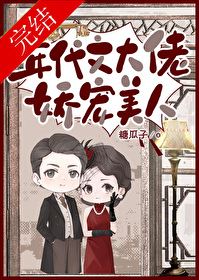
The Delicate Beauty of the Era Novel Big Shot
+Add to Custom List
Genres:
Novel Info

Summary

... Read More
Lin Aiyun and Xiao Cheng, a devoted couple in their twilight years, choose to end their suffering through a double suicide after enduring decades of hardship. Instead of dying, Lin Aiyun awakens in her sixteen-year-old body on March 25, 1949, realizing she has traveled back in time. In her previous life, she had been a naive village girl who fell for Meng Baoguo after he saved her from drowning, leading to a miserable marriage and a life of regret. Now reborn, she is determined to change her fate and reunite with Xiao Cheng, who she knows will become the love of her life. However, Xiao Cheng is currently separated from her in the capital, and the chaotic wartime conditions make immediate travel impossible. Lin Aiyun suppresses her impulsive desire to find Xiao Cheng and instead focuses on protecting herself from the rumors that her previous rebellious behavior has already started to spread. She reconciles with her mother, Zhang Wenhua, rejecting the idea of marrying Meng Baoguo and choosing to stay by her family's side for a few more years. To avoid the gossip in her village and gain independence, she travels to Lanxi County to stay with her aunt, Zhang Wenyue, who lives in the city with her husband Ding Weidong and their two children. The Ding family is warm and welcoming, providing Lin Aiyun with a safe haven as she navigates this new chapter of her life. Meanwhile, in the capital, Xiao Cheng is a powerful and feared young man from a prominent family. He has been plagued by vivid, recurring dreams of a mysterious woman for months, a woman who does not exist in his reality. His obsession drives him to search for her without success, and his sleeplessness leads him to seek treatment from an old Chinese doctor, Liu Chengzhang, who has fled to Lanxi County to escape the turmoil in Shanghai. Xiao Cheng follows the doctor to the county town, unaware that his dream woman is only a short distance away. Lin Aiyun struggles to find employment in Lanxi County but eventually secures a position as a helper in the Liu household, where she assists with household chores and medicinal herb preparation. Her employer is Liu Hui, the doctor's daughter, who is kind but wary of the dangerous Xiao Cheng. Lin Aiyun's first day coincides with a chance encounter in the rain, where she witnesses Xiao Cheng violently disciplining his subordinate. When Xiao Cheng notices her, he is struck by her resemblance to the woman in his dreams and aggressively confronts her, suspecting she is an assassin or spy sent by his rivals. He demands to know if she dreams, and when she calls his name, he realizes she knows him, deepening his suspicion and intrigue. Liu Hui intervenes, revealing her connection to Xiao Cheng as his patient's daughter, and ushers Lin Aiyun inside. Xiao Cheng leaves after learning Lin Aiyun's name, but he orders his subordinate to investigate her immediately. Lin Aiyun, though shaken, remains resolute in her goal to win Xiao Cheng's heart. She learns from Liu Hui that Xiao Cheng is in town for medical treatment, which puzzles her since he was healthy in their previous life. She decides to bide her time, working at the Liu household to stay close to him while avoiding the matchmaking attempts of her aunt, who hopes to secure a wealthy husband for her from the local elite. The story sets the stage for a complex romance where Lin Aiyun must navigate Xiao Cheng's dangerous temperament and the political tensions of the era to reclaim the love she lost in her first life.

Novel Items

More
Item
The poison that Lin Aiyun and Xiao Cheng drank together in their previous life. After drinking it, Xiao Cheng held her frail, dying body in his arms on a cold hospital bed, waiting for death to claim them both.
Item
The path to the afterlife in Chinese mythology. Xiao Cheng told Lin Aiyun that after drinking the medicine, they would walk the Yellow Springs Road together and be reborn together.
Item
The soup in Chinese underworld mythology that erases memories of past lives. Xiao Cheng hoped that Granny Meng would pity their devoted marriage and let them skip drinking from this bowl so they could remember each other in their next life.
Item
A round mirror hanging behind the door in Lin Aiyun's childhood room. She used it to confirm she had been reborn to her younger body, seeing her smooth, young face instead of her wrinkled old one.
Item
An old calendar on the wall showing only the 1983 months partially visible. Li Baohui tears down the remaining scraps after finding them smeared with yellowish-green dried snot, symbolizing the removal of the squatters' presence.
Item
A large, heavy basket Su Xiaoyin carried on her back after returning from the city. It was completely filled with items including a medicine-grinding pestle, medicinal herbs, and braised dishes.
Latest Release
DateGroupRelease
2026-08-11shanghai fantasy c27
2026-08-11shanghai fantasy c26
2026-08-11shanghai fantasy c25
2026-08-11shanghai fantasy c24
2026-08-11shanghai fantasy c23
2026-08-11shanghai fantasy c22
2026-08-11shanghai fantasy c21
2026-08-11shanghai fantasy c20
2026-08-11shanghai fantasy c19
2026-08-11shanghai fantasy c18
2026-08-11shanghai fantasy c17
2026-08-11shanghai fantasy c16

Community Reviews

Rating(3.9 / 5.0, 26votes)
5 stars
9(35%)
4 stars
5(19%)
3 stars
12(46%)
2 stars
0(0%)
1 stars
0(0%)

Popular reviews

... Read More
I keep coming back to the embroidery motif and I think it's way more than just a hobby. Lin Aiyun stitching away in that window with the cool breeze—what is she actually doing? She's creating beauty in a moment of uncertainty. In her past life, embroidery was how she passed time with Xiao Cheng, how she filled a room with her work. Here, in this new life, it's the same impulse: make something lasting, something beautiful, something that proves you existed. The wutong flowers in the Xiao family courtyard—that's memory as both comfort and wound. She smiles thinking about them, but it's a bittersweet smile. The flowers bloom regardless, but she's not there to see them. And then the kidnapping strips her of everything—her agency, her safety, her ability to even move. The embroidery becomes a symbol of what she's fighting to get back to: the quiet power of creating, of choosing what to make with her time and hands. Meanwhile, the child with the slingshot is the perversion of that same innocence. He's supposed to be playing, but he's been weaponized. The mulberries—Lin Aiyun going specifically for those because Auntie Hui said they were delicious. It's an act of love, of connection, and that's exactly what gets her trapped. Her kindness is her vulnerability. But also her strength. The fact that she throws something at Niu Wenshan even bound and drugged—that's the same impulse that made her help the child in the first place. Action through compassion, even when it's dangerous.
... Read More
I've been thinking about the symbolism in these chapters and it's deeper than I expected. The dreams. Xiao Cheng has been dreaming about Lin Aiyun night after night, and the acupuncture is actually shortening the duration of those dreams. So the treatment that's supposed to help him is also slowly removing the very thing he's searching for. There's something almost cruel about that - the cure is making him forget the cure's purpose. Is he being healed from something, or is he being erased from something? The needles themselves are symbolic too. Silver needles inserted into his body, controlling his sleep, his dreams, his very subconscious. There's a loss of agency there that feels important. And the orchid on Liu Hui's handkerchief - orchids symbolize refinement, purity, but also something rare and hard to find. Lin Aiyun tracing the embroidery with her mind, appreciating the craftsmanship even while covered in mud... she notices beauty in a moment of frustration. That's who she is. The water in the bath chamber is described as "greenish-black" - not clean, not pure, but therapeutic. The idea that healing comes through something murky and uncomfortable is a recurring theme. Lin Aiyun's journey to find Xiao Cheng will probably follow the same pattern - it won't be clean or easy, but it might be necessary. Also: rebirth. The text explicitly mentions Lin Aiyun's "rebirth" and her obsession with finding Xiao Cheng since then. What does it mean to carry memory from a past life into a new one? Is fate real, or is it just memory dressed up as destiny?
... Read More
Let's talk about Xiao Cheng first, because this man is a whole mood. The opening scene gives us so much about him without saying anything directly. Insomnia for months. Cigarettes by the pillow. Scars on his chest that look like they came from real violence. And that line—"When I find you, you'd better cry your fill." Who is he talking to? A woman he wronged? A woman who wronged him? The ambiguity is delicious. Then there's Jiang Yan, the son of the man who serves him. Jiang Guojun sent his son to the military years ago, and now Xiao Cheng has brought him back. The power dynamic between them is thick enough to cut with a knife. Xiao Cheng's warning—"stay away from the young ladies"—feels like it's about more than just rules. Is he protecting Jiang Yan? Or is he claiming something for himself? And Lin Aiyun's relationship with her aunt Zhang Wenyue? This is the warm counterpoint to all the cold tension. Zhang Wenyue is fierce, protective, sharp-tongued—and absolutely adores her niece. The scene where she scolds the village gossips and then immediately pivots to making Lin Aiyun comfortable? That's love in action. But then there's that neighbor—the old bachelor who watches Lin Aiyun with a strange smile. Zhang Wenyue's warning about him is chilling: "Don't be fooled by his refined looks." The man's presence hangs over this entire section like a threat waiting to happen. The relationships here are layered with unspoken history, power, and danger. I'm invested in all of them.
... Read More
The stakes in this batch operate on two levels, and both are compelling. On Lin Aiyun's side, the conflict is social and personal. She's been driven from her home by village gossip—rumors that have ruined her reputation and forced her to flee to her aunt's house in a neighboring county. The stakes here are survival: her family's honor, her own future, her sense of safety. When her father says "by summer at the latest" and "once the gossip dies down," it implies this is temporary. But temporary how long? And what happens when she returns to a place that has turned against her? On Xiao Cheng's side, the stakes feel far more dangerous. The political tension is palpable—"the capital was under intense scrutiny," "a single careless word could cost a man his life." His insomnia, his scars, his cryptic vow to find someone and make them cry—all of this suggests a man carrying enormous weight. The stakes here aren't just social; they're physical, possibly lethal. And then there's the neighbor. The old bachelor with the strange smile. Zhang Wenyue's warning is specific and urgent: "If she tries to strike up a conversation with you, don't engage—just walk away." The stakes with him are immediate and personal. A man who "has issues in that department" and "the more he can't have, the more he craves it" is not someone you want crossing your path. Three separate threads of conflict, three different kinds of danger, and they're all building toward something. I can feel it.
... Read More
The atmosphere in these chapters is *chef's kiss*. Let me start with the rain. It's not just weather — it's a mood. "Rain beat against the wisteria, making a crackling sound with no sign of letting up." That line. The wisteria, the rain, the sound — it paints this entire scene in watercolor. You can feel the dampness. You can smell the wet earth. And then there's the contrast: Xiao Cheng in his expensive clothes sitting in this shabby little herbal shop, tapping his long fingers on the table, smoking, watching her. The visual of him is so sharp — "broad and large, beautiful and bony, with prominent veins pulsing beneath the thin skin." This man is carved from marble and menace. But then we cut to the family kitchen, pungent ginger soup smell filling every room, kids wrinkling their noses, the clatter of bowls. It's gritty and real and warm. The author doesn't just describe settings — they make you LIVE in them. Even the detail about Lin Aiyun's cigarette burn on her chest, how it broke the skin slightly, how it would heal in a few days — it's visceral. You can feel the sting just reading it. This world feels tangible, like you could walk through it.
... Read More
The author really knows how to paint a scene and the basement sequence is absolutely chilling. Let me just say—the sensory details are INSANE. 'A piece of ragged cloth was stuffed in her mouth, wrapped with tape on the outside—she could only breathe through her nose.' I could literally feel that. The damp floor, the dim light coming through that small window high up on the wall, the clutter of odds and ends around her. It's so claustrophobic I needed to stretch after reading it. And the kid—sitting cross-legged by the door playing with a slingshot. That image is burned into my brain. A child weaponized like this, just casually picking up pebbles while a woman is bound on the floor. The contrast between his childish activity and the horror of the situation is so effective. Then the lighting shift—sunlight to moonlight, and when the door bursts open with that kerosene lamp glow. 'The faint, warm yellow light enveloped the figure, and for a moment, the world seemed to fall into a suffocating silence.' That line gave me actual chills. The visual of Niu Wenshan's head nearly brushing the doorframe, dressed in black from head to toe, hidden in shadow—it's like a horror movie reveal. And the market scene before all this! The mung bean cakes, the mulberry stall, Liu Hui haggling over fish prices. It feels so lived-in, so ordinary, which makes the kidnapping hit even harder. The world feels real because it's built from these small domestic details before it shatters.
See all reviews

Characters

See all characters

Custom lists

Oops…There is nothing here.