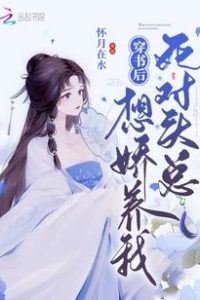
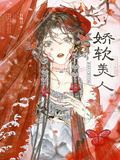
The Delicate Beauty Favored Above All in the Imperial Harem
Novel Info

Summary

... Read More

Ning Zhaorou is the third daughter of the Marquis of Anning, raised in a hostile household where her stepmother, Lady Wu, seeks to marry her off to a distant province to secure power for her own daughter, Ning Wanqing. During the Emperor Yin Mingyu’s autumn hunting expedition on Mount Eming, Zhaorou, desperate to escape her fate, attempts to secretly meet Chu Changfeng, a young general she believes has affection for her. Dressed as a maid, she becomes separated from her servant Shuangwu during an assassination attempt on the Emperor and mistakenly enters the imperial tent, where she is physically assaulted by the Emperor before realizing his identity and fleeing in panic.

The Emperor, initially believing the intruder to be a mere servant, orders a thorough investigation. When he learns she is the Marquis’s daughter, he becomes intrigued by her courage and fear. Meanwhile, Zhaorou lives in terror, fearing execution similar to that of Consort Fang, a favorite who was beaten to death for plotting against the throne. Her sister Ning Wanqing threatens her with being sent home, while Consort Liang, whose daughter was recently punished for bullying Zhaorou, summons the girl to make her kneel in humiliation as retribution for the Emperor’s earlier reprimand of her daughter.

Zhaorou’s situation worsens when she attempts to enlist Chu Changfeng’s help by proposing marriage to create a pretext for their relationship. Chu Changfeng, bound by the Emperor’s public suggestion that he marry later, refuses her advances. Unbeknownst to her, the Emperor witnesses this encounter and realizes she lied about her feelings for the general. Enraged by her deception, he decides not to let her go easily. Instead of punishing her immediately, he sends her medicine for her injuries and a cryptic warning to take care of herself.

The narrative shifts when Zhaorou is summoned to the Emperor’s presence again. This time, he confronts her about her lies and her attempt to deceive him regarding Chu Changfeng. Rather than executing her, he pulls her onto his lap, hiding her from Consort Liang, who arrives to beg for her daughter’s forgiveness. The Emperor uses the moment to assert his dominance, forcing Zhaorou to remain hidden in his arms while he coldly dismisses Consort Liang’s pleas. This incident marks a turning point, as the Emperor makes it clear he will not release her, effectively trapping her within his orbit and setting the stage for a complex power dynamic between the reluctant noblewoman and the ruthless monarch.

Latest Release
DateGroupRelease
2026-08-11shanghai fantasy c105
2026-08-11shanghai fantasy c104
2026-08-11shanghai fantasy c103
2026-08-11shanghai fantasy c102
2026-08-11shanghai fantasy c101
2026-08-11shanghai fantasy c100
2026-08-11shanghai fantasy c99
2026-08-11shanghai fantasy c98
2026-08-11shanghai fantasy c97
2026-08-11shanghai fantasy c96
2026-08-11shanghai fantasy c95
2026-08-11shanghai fantasy c94

Community Reviews

Rating(4.3 / 5.0, 14votes)
5 stars
8(57%)
4 stars
2(14%)
3 stars
4(29%)
2 stars
0(0%)
1 stars
0(0%)

Popular reviews

... Read More
Okay so the pacing in these chapters is absolutely ruthless and I need to discuss it. Chapter 20-21 basically operate like a vice tightening around Ning Zhaorou's throat. The banquet scene starts with tension—everyone sensing the Emperor's bad mood—but the real devastation comes in waves. First, the Emperor praises Chu Changfeng publicly. Hope flickers. Then he asks about marriage. Hope dies. Then he brings up the Second Princess incident, which shifts all eyes to Ning Zhaorou, and she has to kneel and perform gratitude for a judgment that was technically in her favor but also a reminder that she exists in his sight. Each beat lands like a small hammer. The author doesn't rush. There's breathing room between each blow—the officials toasting, Prince An stepping forward, the consorts whispering among themselves. But that breathing room only makes the next hit harder because we're already on edge. Then Chapter 9 jumps to Ning Zhaorou alone, and the pacing shifts entirely. It goes from public spectacle to private breakdown. Midnight. Tears. The conversation with Shuangwu about entering the palace. This is where the chapter earns its emotional weight—the quiet desperation of a girl who has exhausted every option. Chapter 10 is the masterstroke. It moves between three threads: Ning Zhaorou's physical suffering after kneeling, Zhou Lu's investigation (which gives us the reader information that the characters don't have), and finally the Emperor's response. The structure mirrors the power dynamics—information flows upward, decisions flow downward, and Ning Zhaorou is caught in the middle with no voice. The chapter ends on that perfect note: "Send a bottle of wound salve. And... give her a word of advice." The pause before "a word of advice"—that ellipsis is doing so much work. It's the Emperor being deliberately vague, making everyone scramble to interpret his intentions. The pacing here is almost surgical.
... Read More
I need to talk about Ning Zhaorou and what just happened at that banquet because honestly my heart is still racing. When the Emperor said, "Has he married?" about Chu Changfeng, I literally gasped. That was it. That was the moment. She had just laid her intentions bare, she had hope—however thin—and the Emperor basically shut the door in her face with the most casual, devastating line possible. "A young hero should have the freedom to forge his own path. To marry too early would only stifle his ambition." Translation: you're not good enough for him. And what broke me was Ning Zhaorou's reaction. She didn't cry at the banquet. She just... clenched her fists. Her pale face flushed. She hung her head and let her thoughts spiral. The author didn't give us a dramatic breakdown here, just this quiet, internal shattering. That's so much more painful. Then later, when she's alone with Shuangwu and finally lets it out—that scene where she whispers, "I truly have nowhere left to go"—I actually had to put the book down for a second. The image of her curled up in bed, swollen eyes, the words "ahead, wolves. Behind, tigers" echoing in my head... it's so lonely. And the cruelest part? The Emperor's "kindness." He sends wound salve and a "word of advice." He knows she was made to kneel. He knows what Consort Liang did. And instead of intervening, he lets her figure it out herself. That's not kindness—that's manipulation wrapped in silk. He's teaching her a lesson about survival, about not relying on others, about reading between the lines. It's cold. It's calculated. And somehow, it's also the only thing keeping her alive in this world. I keep thinking about whether Chu Changfeng even knows any of this. Does he know the Emperor spoke about him? Does he know Ning Zhaorou heard it? The tragedy is building and I'm here for it.
... Read More
There's a line in this text that I cannot stop thinking about: "Ahead, wolves. Behind, tigers." It's the kind of phrase that sums up an entire worldview in four characters. Ning Zhaorou is trapped. Not just by her stepmother Wu shi wanting to marry her off, not just by Consort Liang's cruelty, not just by the Emperor's games—but by the structure of the world she lives in. Every path forward is blocked by someone who holds power over her. The wolves are the future she's supposed to accept (an arranged marriage to someone she doesn't choose). The tigers are the alternatives that are even more dangerous (the palace, where she'd be prey). The Emperor's behavior throughout these chapters is also deeply symbolic. He never raises his voice. He never throws a tantrum. His power is expressed through silence, through what he chooses to say and what he deliberately leaves unsaid. When he traces the carved patterns on his wine cup while deciding the fate of young people's lives, that image is loaded. He's literally playing with their futures while his fingertip moves over carved designs—ornamental, controlled, distant. Kneeling is another recurring symbol. Ning Zhaorou kneels at the banquet to thank the Emperor for justice. She kneels in Consort Liang's tent until her knees bleed. The physical act of kneeling becomes a metaphor for her entire existence—always lower, always subordinate, always having to perform gratitude for treatment that is fundamentally degrading. And the wound salve the Emperor sends? It's a symbol of his paradoxical nature. He causes the wound indirectly (by allowing Consort Liang's cruelty to proceed) and then offers a superficial remedy. The salve doesn't address the cause. It addresses the symptom. It's the same with everything in this world—nothing fixes the structure, only the damage it inflicts. The deeper question the text keeps asking is: when every path leads to suffering, what does survival look like? Ning Zhaorou's answer is still forming, and that's what makes her such a compelling protagonist.
... Read More
Okay so let me just say—this section is a MASTERCLASS in slow-burn tension building. The plot here operates on two levels simultaneously, and I love how the author layers them. On the surface, it's a harem intrigue story. Consort Shu provoking Consort Liang over Beauty Fang's death, the empty imperial seat at the racetrack, the political posturing—all of that is classic palace drama. But the REAL plot, the one that actually matters, is happening underneath: Ning Zhaorou sneaking glances at Yin Mingyu, and Yin Mingyu... watching her watch him. That reveal in Chapter 17 when he says "That little game you're playing—trying to sneak glances—it's no different from covering your ears while stealing a bell"—I literally gasped. He KNEW. All this time she thought she was being subtle, and he was collecting every stolen look like treasures. The tent collapse is the perfect plot device too. It forces proximity, vulnerability, and physical contact all at once. She's soaked, muddy, terrified—and he picks her up and carries her. No words needed. The plot doesn't just move forward here, it EXPLODES forward. And that ending line "Who hit you?"—what does that mean?? What happened?? I need the next chapter NOW.
... Read More
'Your Ladyship has such a kind heart.' Said with feigned sweetness, eyes sharp as knives. Consort Wu's dialogue is one of the most layered things I've read in this genre. She pretends to compliment Consort Liang while simultaneously tearing Ning Zhaorou apart with every follow-up line. 'But I see this girl doesn't seem very grateful.' That's not a question—that's a verdict. And Consort Liang's response, 'This poor girl lost her mother young...'—she's performing empathy while doing absolutely nothing to help. The dialogue between these two women is a duel disguised as tea conversation. But the Emperor's lines hit different. 'Haven't you knelt enough?' Three words that carry the weight of an entire power structure. 'Good girl, come here.' Casual, almost gentle, but the command in it is absolute. And then his question to Ning Zhaorou: 'Did you explain that your attempt to draw him close was nothing more than an act?' He's not asking for information—he's laying a trap and watching her walk into it. The narrative voice also deserves mention. It's restrained, observant, never rushing to explain what characters feel. We know Ning Zhaorou is terrified because her 'face draining of color,' not because the narrator tells us she's terrified. That's confident writing. Let the details do the work.
... Read More
'She just needed to vent her anger.' Ning Zhaorou says this about Consort Liang's cruelty and I literally couldn't breathe. The image of her rolling up her pant leg to reveal dark bruises on her knees—this is the visual anchor of the entire section. Every time she kneels, we remember the physical cost. The palace isn't just tents and screens; it's a landscape of punishment written on a woman's body. But then there's the Emperor's tent, and the contrast is staggering. Dragon musk, thick and authoritative, filling the air. Soft cushions, palace maids fanning in perfect silence, the low table where he reads. This is power rendered as atmosphere. You can feel the weight of it. And the screen—that dividing line between Consort Liang kneeling outside and Ning Zhaorou hidden inside—what a brilliant use of spatial storytelling. The screen separates two worlds: one of submission, one of hidden rebellion. When Consort Wu looks at Ning Zhaorou with those sharp, calculating eyes, you feel the entire palace hierarchy pressing down on her. Every tent, every corridor, every whispered conversation is part of a machine that grinds women down. But the Emperor's tent? That's the exception. The place where the rules change. Where a concubine's daughter can sit beside the throne instead of kneeling before it.
See all reviews

Characters

See all characters

Custom lists

See all custom Lists