Summary

... Read More

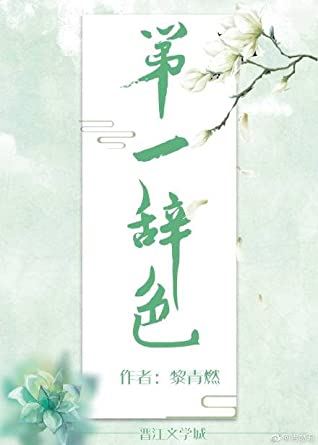
Cui Lanyin is the eldest daughter of the declining Cui family, a once-noble lineage now reduced to genteel poverty following a forced relocation to the provisional capital of Yingcheng. Suffering from a chronic illness that leaves her bedridden for long periods, she has been abandoned by Tan Shao, a childhood friend and the son of her father’s cousin, after his mother arranged his engagement to a more influential Yao family relative whose status rose with the return of Prince Wei and the Empress Dowager. With her family’s finances drained by debts and medical bills, and her own marriage prospects dimming due to her health and lack of dowry, Lanyin faces a precarious future.

Determined to secure her independence and support her family, Lanyin devises a strategic plan leveraging her distant familial tie to Prince Wei, the Emperor’s favored nephew. Despite the impropriety of visiting an unwed prince, she arranges a meeting at his residence, offering homemade pastries that appeal to his specific tastes. Prince Wei, a man known for his lethargy and reclusiveness who communicates through subtle finger taps, accepts her visits. Their interactions reveal a mutual understanding; Lanyin openly admits her intent to gain his favor, while he provides her with critical intelligence regarding a dangerous marriage proposal from the Meng family, a powerful military household seeking to use her as a decorative wife.

Lanyin rejects the Meng proposal and uses the opportunity to establish herself in the capital’s commercial sphere. She invests her limited savings into acquiring a teahouse at the busy East Water Gate dock, a risky venture that places her in contact with local criminal elements. When a canal gang leader attempts to extort her, she is rescued by Prince Wei, who appears incognito as a martial arts master named Master Zhao, accompanied by his loyal subordinate Bailin. This encounter confirms the prince’s hidden capabilities and dual life, further solidifying Lanyin’s reliance on his protection.

Empowered by the prince’s backing, Lanyin consolidates her business interests while navigating complex court dynamics. The Empress Dowager summons her for a private audience, signaling royal recognition of Lanyin’s budding relationship with Prince Wei. As Lanyin manages her growing wealth and plans to assist her brothers’ careers, the political landscape shifts with the upcoming imperial examinations. Prince Wei hints that she should wait a year, suggesting a future alliance tied to scholarly success rather than immediate marriage. Lanyin resolves to build her own financial foundation through diligent business management, aiming to marry a wealthy but ineffectual husband who will grant her the freedom to operate independently, all while maintaining a delicate alliance with the powerful Prince Wei.

Latest Release
DateGroupRelease
2026-09-26akknovel c17
2026-09-26akknovel c16
2026-09-26akknovel c15
2026-09-26akknovel c14
2026-09-26akknovel c13
2026-09-26akknovel c12
2026-09-26akknovel c11
2026-09-26akknovel c10
2026-09-26akknovel c9
2026-09-26akknovel c8
2026-09-26akknovel c7
2026-09-26akknovel c6

Community Reviews

Rating(0 / 5.0, 34votes)
5 stars
0(0%)
4 stars
0(0%)
3 stars
0(0%)
2 stars
0(0%)
1 stars
0(0%)

Popular reviews

... Read More
There's this moment where Geng Dayou brings in the pastries and Master Zhao goes from "nothing in the world could capture his attention" to actually eating with enthusiasm, and it's just... a teahouse. The golden-brown crust crumbling, the grainy red bean filling, the fact that Cui Lanyin specifically asked why they weren't served because they'd "just reached the right texture" — it grounds this entire political/martial world in something so domestic and small. The tea shop isn't just a backdrop, it's Cui Lanyin's territory, her identity, the one place where she's not a noblewoman in plain clothes hiding a secret. And then the whole knife-pinning-to-the-wall scene happening right there over the pastry table, Zhang Gui and Sangzhi still standing in the doorway, Geng Dayou who came in unbidden because he "noticed something amiss" but then just retreats behind his mistress like he's supposed to. I love that the worldbuilding here isn't grand thrones or battlefields. It's rice cakes. It's a server bringing snacks. It's "didn't we just make red bean pastries?" said calmly while a man is deciding whether to kill everyone in the room. The contrast between the cozy food service and the silver-streaked violence is doing so much atmospheric work without a single paragraph of description.
... Read More
I need to talk about how good the dialogue is in these chapters because honestly, some historical fiction just reads like people reciting encyclopedia entries dressed up in fancy clothes. Not this book. Every character has a voice, and I can tell who's speaking without looking at the name tag. Let's start with Cui Lanyin's inner monologue, which the narrative gives us in this beautiful, dry, almost sarcastic tone. When she's thinking about what she could offer in return for marrying into wealth—beauty? the flimsy title of being Prince Wei's niece?—it's sharp and self-aware in a way that feels genuinely modern without breaking the historical setting. She says to herself basically, 'I was naive,' and you believe her. She's not performing ignorance for the reader; she's actually processing her own mistakes. Then there's Geng Dayou, and oh my god, his delivery is perfect. He reports the Duke's heir incident with this hesitant, almost reluctant energy—like he's bringing bad news but also genuinely unsettled himself. His line 'Those men were both skilled fighters and quick on their feet—they slipped away right under the Patrol's noses' has this quality of a man trying to sound useful while admitting the situation is out of control. You can hear his voice. I swear to you, I can hear his voice. And Qian He—the eunuch—is written with such delicious subtlety. He refuses to enter the main hall, makes a comment about the separate entrance with what reads as warmth but could be a test, accepts no bribe but smiles 'even more amiable.' Every line he speaks is doing three things at once: politeness, power play, and genuine curiosity about Cui Lanyin. The author trusts the reader to figure out which layer matters in each moment. The parents, Third Master Cui and Lady Jiang, are painted in broad but effective strokes. Their panic is immediate and unvarnished—pacing in circles, asking why the Empress Dowager summoned her—and it contrasts perfectly with Cui Lanyin's calm reassurance. She tells them it shouldn't be dire, and the dialogue makes you believe she actually means it, not just that she's lying to comfort them. One small thing—the narration occasionally tilts toward omniscient commentary ('That was why Cui Lanyin had been so determined to marry into wealth and leisure'), which works fine but slightly breaks the immersive voice during otherwise tight close-third-person scenes. Not a dealbreaker. Still, those narrative asides do give the story a storyteller quality that I personally enjoy.
... Read More
Can we just take a moment to appreciate how well each character sounds here? Liu Heipi has this wonderfully slimy cadence — starting with "Greetings, miss. Might I trouble you for a favor?" This is a man who wraps threats in courtesy like they're nothing. The shift from ingratiating to menacing is so smooth because he genuinely believes his social position gives him leverage. When he reveals Cui Lanyin's identity to the newcomers, he's not just threatening them — he's performing power. He wants them to know he KNOWS who she is. Then the white-robed man: "Who do you think hasn't seen silver before?" Three words. That's it. He doesn't need to threaten back. He dismantles Liu Heipi's entire strategy with one rhetorical question that implies the man's offerings are insulting not because they're insufficient but because they're irrelevant. And Master Zhao —不说话. Not a word. Just leaning back with his eyes closed. In a scene full of talking and posturing and threat-making, his silence IS his voice. It says everything: I am not impressed. I am not here for you. Your world means nothing to me. Zhang Gui's dialogue is so grounded too — practical, nervous, but competent. "Prepare to close the shop" and he quickly grasps the situation. He's not a martial artist; he's a businessman who understands boundaries. The narrative voice itself is remarkably crisp. Short declarative sentences. No flowery embellishment. It matches the tone of the world — harsh, practical, survival-oriented. The author doesn't waste words on description when a character's action can do the job. When Sangzhi's face flushes red and she calls Liu Heipi a "vile snake," the narration doesn't editorialize further. Let the dialogue carry it.
... Read More
Okay so I nearly threw my phone down when the Emperor's edict dropped: four elder princes assigned to ministries, and Prince Wei gets the Ministry of War. Not Personnel, not Rites—War. And the court immediately starts recalibrating, everyone doing mental math on who's actually ahead in succession. I loved how the narrative doesn't just tell us 'oh, Prince Wei is favored now'—it shows the ripple effect. Cui Lanyin doesn't care about Prince Duan possibly becoming Crown Prince, but she calculates that Prince Wei's rise means her own standing shifts as his nominal niece. That's the part that got me: she's not a player yet, she's a piece being repositioned, and she knows it. The whole political thread here is set up like a slow fuse burning toward the imperial exams next March, and then 'Wait one year' gets scrawled at the bottom of that document by Prince Wei himself. So the political plot and the personal plot are literally stapled together on the same page. Beautiful. Then there's the Meng family subplot which is almost too absurd—father and son about to share a cousin-concubine and nobody seems to think that's wrong—and it functions as a character test for Cui Lanyin. She looks at this moral chaos and says 'not worth it, no matter the benefits.' That's the whole arc in one line: she's choosing integrity over shortcut, and the plot is building toward proving whether that choice pays off or costs her everything. I keep thinking: is the author saving the real political explosion for later chapters because these are just the opening moves? The canal gang business, the Meng family mess, the four princes shuffling into power—all of it feels like the author is laying seven different chess pieces before the reader realizes the game is already in motion. And I'm just sitting here going 'okay, who blinks first?' because honestly nobody in this chapter has blinked yet.
... Read More
I need to talk about the stakes in this book because honestly, the tension is doing things to me. On the surface, the conflicts seem straightforward: Cui Lanyin needs money to survive, her family is scheming against her, there's a rival eunuch trying to sabotage her business, and some angry ruffians are attacking noblemen in the streets. But the real genius is how the author layers these conflicts so they're never just about one thing at a time. Take the tea shop incident. Yes, Liu Heipi is trying to intimidate her. But underneath that, you have the Dingguo Duke's household being humiliated in public, the Five City Patrol unable to catch the attackers, and Liu Heipi operating with apparent impunity. Three separate threads of conflict that all connect back to the same question: who actually holds power in Yingcheng right now, and who's about to find out they don't? Cui Lanyin's personal stakes are terrifyingly real. She's a woman in a position that looks respectable on paper—she has estates, a name, some social standing—but she's one bad decision away from losing everything. Her sister's dowry was only two thousand taels. Her family's total annual income is twelve hundred. If her tea shop fails, if the estates are seized, if someone decides to target her directly—she has zero backup. That's the kind of vulnerability that makes every scene feel dangerous, even the quiet ones. And then there's Prince Wei. Oh, Prince Wei. The author drops these hints about him like breadcrumbs—'wait a year,' generous favors, the implication that he's been pulling strings behind the scenes. Is he helping her because he's benevolent? Or is he investing in her the way she invests in her shops? The ambiguity is delicious. You can't tell if he's an ally or a more sophisticated version of every other threat in her life. The chapter ends with Cui Lanyin being summoned to the palace by the Empress Dowager herself. This is the highest possible stake—a private audience with the most powerful woman in the empire. If she screws this up, there's no recovering. But if she succeeds... 'the possibilities were immense.' The author has positioned her at the exact moment where everything could go spectacularly right or catastrophically wrong, and I was absolutely vibrating with anticipation. What I love most is that none of this feels manufactured. The conflicts grow organically from character motivations and social realities. Every threat makes sense. Every consequence is plausible. And that's why I care so much about what happens next.
... Read More
There's a detail I keep circling back to: the windows and doors, all inlaid with glass. 'Ensuring the room remained bright even on such an overcast day.' The author flags it specifically—not the fruit, not the huanghuali furniture, but the glass. And I think it's doing a lot of work thematically that I'm only starting to unpack. Glass in this context is technology. It's transparency, but also a barrier. You can see through it, you can't touch the other side. The room is bright, controlled, climate-regulated in a way that separates it from the outside world. The prince is behind glass. He observes but doesn't participate. He flicks a finger and the world rearranges, but he stays on his daybed, wrapped in stone-blue silk, surrounded by blue-and-white porcelain and fresh tangerines that only nobility can still access. The glass is privilege made architectural. You look in and you see him, but you can't reach him. Cui Lanyin has to cross that threshold physically AND socially. The glass doesn't let her in; her standing as a cousin lets her in. Two different kinds of barrier, stacked. Then there's the food symbolism, which is more straightforward but no less resonant. The palace kitchen serves six varieties of pastries, preserved fruits, nuts. Cui Lanyin serves two. And the prince rejects all six and eats only hers. 'Ignoring the pastries from the palace kitchen that Cui Lanyin had laid out.' The number matters. Six is abundance, spectacle, the imperial display of 'here is everything you could want.' Two is specific. Two is 'I made these for you, here's what my family actually eats.' And the texture—'drier and grainier'—is the point. Smooth is for the court. Grainy is for home. He chose home. Or she chose home, and he met her there. Either way, the act of eating her grainy chestnut cake is a rejection of the performance of power. It's small, private, almost feral. He devoured it in two bites. No savoring, no ceremony. Just eating. A human act in a room designed to look non-human in its stillness. The absence of incense keeps nagging at me. The room is 'free of incense.' Usually in these novels the scented room signals refinement, spiritual atmosphere, the presence of the sacred. Here the absence is noted as its own detail, and the only smell is fruit—apples and tangerines, 'their pleasant fruity fragrance filling the air.' Earthy. Temporary. Will rot. Compare that to incense, which lasts forever, smells the same in a thousand years. The prince's space smells like a Tuesday afternoon, not like eternity. That feels intentional. It grounds him. Makes him less mythological, more like a guy who eats when he remembers. And the tapping code—'one tap means to sit, presenting something means to speak'—is its own little symbol system. Language reduced to physics. Touch. Contact. In a world where everyone else speaks in elaborate formulae, his language is: *flick*. I think the author is saying something about power that can't be spoken without becoming performance. The moment the prince opens his mouth, he becomes a role. Closed mouth, one finger, and he's just a person on a daybed. The code Cui Lanyin decodes is less a language than a permission structure. She's not talking TO him. She's translating a body language that the rest of the household has normalized into routine. And the fact that she learned it in thirty seconds while Qinglin has presumably been doing it for years tells you something about who processes the world through patterns versus who processes it through exhaustion. I don't think I've fully cracked what the glass means for the larger arc yet. It might just be a detail about wealth. But it keeps echoing. You look through it. You can't break it. The room stays bright and cold and empty and the person inside just... sits. And everyone outside the glass is doing a lot of anxious juggling.
See all reviews

Custom lists

See all custom Lists