The darkened male lead thinks he’s in a crematorium - Reviews

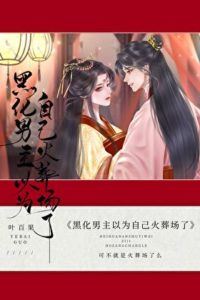
The darkened male lead thinks he’s in a crematorium
+Add to Custom List
Sort
Add review
... Read More
I need to talk about the swollen handprint on Yun Chu's face. Because this is the first time I've actually felt something real for this character beyond "oh he's scheming" and I don't know what to do with that. So Li Yunli walks into his courtyard—this place next to the stables, swarming with mosquitoes, deliberately isolated—and she sees him kneeling there with a fresh bruise on his face. And the text says: "She almost thought she had misremembered the plot. In her dream, it was Yun Chu who had struck her. How, then, did he end up injured instead?" Wait. What? She DREAMT about him striking her? That's not a passing detail, that's a whole thing. The dream where he grips her chin and bites her throat—and now reality shows him with a bruised face instead? Is the dream backwards? Is it a warning? Or is it something else entirely? But what really got me was Yun Chu's silence. When Li Yunli presses him, he doesn't defend himself. He just stays kneeling, eyes closed, accepting the humiliation. And then later, when she's being pressured by the Empress Dowager about Yongzhou, Yun Chu says something that completely shifted my understanding of him: "It's only thanks to Yun Chu's presence lately that I haven't found it so unbearable." He's reminding the Empress Dowager that he matters to Li Yunli. That's not just survival—that's playing the long game with his heart on the line. And Li Yunli's response? She agrees immediately, making it clear that Yun Chu coming along is non-negotiable. She's using him as a political tool, sure, but she's also protecting him in her own way. The Empress Dowager says "let him accompany you" like it's a favor, and Li Yunli turns it into a demand. That's... something. I don't know what it is yet, but it's not nothing. Also the mosquito courtyard detail? The author really wanted me to feel how isolated and exposed Yun Chu is, and it made every interaction between him and Li Yunli feel more charged. He's surrounded by insects and neglect, and she's the only one who keeps showing up.
... Read More
Okay so let me just say—Yun Chu is NOT what he appears to be and I am here for it. The scene where Li Yunli confronts him about his swollen cheek and he deliberately makes sure she sees it? That is some next-level manipulation. He's kneeling there, acting all meek and broken, but his eyes are calculating every angle. And then the whole thing with the Yongcheng Marchioness warning—he knew she was coming. How did he know? That's the question, right? Because Dong Sheng literally said it was a lie, that he encountered the young master on the way. Yun Chu fed her a half-truth and she ate it up. But here's the thing that got me: when the Empress Dowager offers to let Yun Chu accompany her to Yongzhou, Yun Chu's expression actually changes. For the first time. And Li Yunli notices. She's been so focused on reading him that she didn't even realize he was reading her right back. The power dynamic between these two is absolutely electric. In his previous life, she left and he used the opportunity to build his faction with A Si. Now she's dragging him along voluntarily, and he's trapped. "Could she be wary of me?" he thinks. Meanwhile she's thinking the exact same thing about him. They're both sitting across from each other at the banquet table smiling like everything's fine while internally running a hundred different scenarios. This isn't a master-servant relationship. This is two predators who just realized they're in the same cage. And don't even get me started on the Empress Dowager. She thinks she's the one pulling strings, telling Li Yunli that Prince Jin and his wife "would not want to see you this way"—which is such a guilt trip wrapped in silk. But Li Yunli catches it. She catches everything. The fact that the Empress Dowager doesn't know about the Grand State Teacher's divination? That's a crack in the armor. And Li Yunli noticed it immediately. These characters are so sharp it hurts.
... Read More
Okay so let me just say—this opening is a masterclass in subverting the transmigration trope. You know the deal: protagonist wakes up in a book, realizes they're the doomed villain, panics. But Li Yunli? She doesn't spiral. She doesn't even cry about it. She sits up, coughs, and immediately starts running mental risk assessments like she's closing a hostile takeover. That's the thing that hooked me—her corporate brain doesn't switch off just because she's now a fictional princess. She looks at Yun Chu and thinks: not yet powerful, not yet connected, still weak and alone. Then her first instinct isn't to flee or fight—it's to consolidate power by reviewing household records and rewards. That is such a Li Yunli move. She's playing the long game from second one. And then the POV flips to Yun Chu in Chapter 2 and—oh my god. The reader now knows something Li Yunli doesn't. He's been sent back too, but from the other direction. He remembers the future. He knows she's alive and he's overjoyed, but he has to pretend to be the same broken boy. The dramatic irony here is *chef's kiss*. Every time he bows his head and calls her "Your Highness," we know he's smiling inside like a snake. The line "Like a snake flicking its tongue, there was a hint of danger" bookends Chapter 1 and reappears at the end—this isn't just atmosphere, it's a promise. The plot is setting up a double-transmigration situation where both players think they're the only one who knows the future. That's not just a twist, that's a ticking bomb. The A Si reveal in Chapter 3 is the third act of this mini-arc that completely changes the board. In the original novel, A Si appears years later. Here, he's already infiltrated the manor as a horse trainer. Yun Chu recognizes him immediately and the reader gets that thrill of "oh he's ahead of schedule." This means the power dynamics are already shifting before Li Yunli even realizes the game has changed. The plot is moving fast, layers peeling back every chapter, and I am NOT ready for what happens next.
... Read More
Okay, I need to talk about Yun Chu for a second because THIS MAN. The way he goes from that cold, calculating revenge-seeker in his past life to this trembling, broken person kneeling and asking to be punished because she was KIND to him? My heart literally ached. Like, the conditioning runs SO deep. He can't even process basic human decency without expecting punishment. But here's what gets me—the power dynamic FLIPPED. In the previous life, he destroyed her country and then imprisoned her. He watched her beg. And now? She's the one with all the power, and she's still choosing to be gentle. That scene where she says 'I'm glad you're willing to tell me these things' and just... lifts him up? No judgment, no punishment. He was so confused by it I could feel it through the page. And then the whole 'are you willing to trust me' moment—her response was perfect. 'You have never wronged me. Naturally, I am willing to trust you.' She didn't confirm or deny whether she knew about his past. She just... chose trust anyway. That's either incredibly wise or incredibly dangerous, and I'm not sure which makes me like her more. The two separate quilts at the end? That's not just a plot detail. That's the entire relationship in one image. They're in the same bed, close enough to touch, but there's a line drawn right down the middle. Neither of them is ready to cross it yet.
... Read More
Let's talk about Wuyou for a second because this guy's dialogue is SO distinctive. Every time he speaks, it's like he's three steps ahead of everyone else and he KNOWS it. The whole exchange where Li Yunli demands clarity and he just keeps giving her riddles? "Your Highness, you are no longer the same person as before"—what even IS that statement? Is he saying she's transmigration-adjacent? That her soul has changed? Or is he just being philosophically vague? The author writes Wuyou's dialogue with this calm, almost gentle cadence that contrasts perfectly with his unsettling fox-like eyes. He says things like "The variable by your side has already appeared—you just haven't noticed yet" with this light, almost conversational tone, like he's commenting on the weather rather than dropping major plot implications. Meanwhile, Li Yunli's dialogue is all sharp edges and modern skepticism. "I believe in actions, not fate"—that's such a clear voice distinction. She's the scientific-minded transmigrator in a world of mysticism, and it shows in how she talks. But the real dialogue gold is in the hostage scene. The rescued woman's breakdown: "We're all dead... You killed the Third Chief, we won't survive"—this is raw, panicked, fragmented speech that feels completely different from the calculated dialogue of the bandit leader or the composed responses of Li Yunli. Each character has a distinct verbal fingerprint, and I appreciate that the author doesn't let them all sound the same. Xiao Linjia's dialogue is all brevity and action. "Execute him." "Who's next?!" No flourish, just pure military efficiency. It's a nice contrast to Wuyou's philosophical meandering.
... Read More
The dialogue in this book is genuinely excellent and I need to highlight why. First, Li Yunli's voice is sharp and practical. When she says "At worst, I'd be called impatient, not a traitor" about her plan to manipulate the disaster report—there's no hesitation, no moralizing. She's already calculated the risk and found it acceptable. That's her character in one sentence. She's not a hero who debates ethics; she's a strategist who weighs consequences. And her line "I hate causing trouble" when Yun Chu describes the political complications of her early departure? She's clearly joking, but the delivery is so deadpan that it's hilarious. She's the one orchestrating all of this and she's pretending she's reluctant. Classic Li Yunli. Yun Chu's dialogue is different—more measured, more philosophical. His exchange with her about winners and losers is the standout: "In truth, the winner may not always take everything." "But the loser will definitely be devoured." These two lines say everything about their history without explaining it. He's the man who won and lost her. She's the woman who refuses to lose again. The subtext is so thick you could cut it with a knife. The narrative voice also deserves praise. It's close third person, mostly anchored in Li Yunli's perspective, but it dips into Yun Chu's thoughts at key moments—like when he thinks about his previous life, or when he murmurs to himself about possibly finding peace as just her consort. These glimpses are brief but devastating. One thing I noticed: the author doesn't overuse dialogue tags. A lot of the exchanges just have the character name and their line, sometimes with a small action beat. It keeps the conversation flowing naturally without getting bogged down in "he said" and "she said" repetition. The Daoist Wuyou's entrance at the end is perfectly handled too. His greeting is formal—"Greetings, Your Highness Nian'an"—and her response is equally formal but blunt: "What do you want?" He's otherworldly, she's pragmatic. Their dialogue styles couldn't be more different, and it tells you everything about who they are.
... Read More
The stakes in these chapters are layered in a way that keeps me constantly on edge. On the surface, Li Yunli is going to Yongzhou for disaster relief. That's the official story. But underneath, there are至少 five different conflict threads running simultaneously: 1. The political stakes: She's a threat to the young emperor's authority just by existing in the capital. Her voluntary departure is framed as virtuous, but everyone knows it's calculated. The older generals loyal to the Jin Prince will use her presence in Yongzhou as leverage. The Empress Dowager is watching. The court is a minefield. 2. The assassination attempt: Someone tried to kill her and failed. The fake assassin's suicide leaves no trail, but the claim about withheld disaster relief being tied to her "corruption" is dangerous. If that narrative spreads, it could undermine her authority before she even reaches Yongzhou. 3. Yun Chu's internal conflict: He survived his previous life by accumulating power through chaos. Now he's choosing to stay by her side in what he hopes will be peace. But the journey to Yongzhou is "destined to be anything but peaceful." His past life trauma is a conflict he hasn't resolved. 4. The mysterious blue-clad youth: Who is watching? Who orchestrated the assassin's public surrender and suicide? This person is operating in the shadows and clearly has information about Li Yunli's plans. 5. The Yongzhou disaster itself: Real floods, real suffering, real political opportunity. Li Yunli understands that if she acts fast—before the official reports arrive—she can shape the narrative and secure more resources. What makes this work is that ALL of these conflicts are active simultaneously. There's no breathing room. Just when you think the political maneuvering is the main threat, someone tries to assassinate her. Just when you think the assassination is resolved, a mysterious observer appears. The stakes keep rising because the author refuses to let any thread go dormant. I was genuinely worried for her during the carriage scene—Yun Chu not wearing a cloak in the September cold, the long journey ahead, the unknown enemies. Every character interaction felt like it could tip into danger.
... Read More
The dialogue in these chapters is *chef's kiss*. Everything is layered. Nobody says what they actually mean, and that's what makes it so good. Take this exchange: 'Consort, what do you think?' / 'If I were to set the trap, I would ensure that Your Highness is surrounded by enemies, forcing you to leave the capital alone.' On the surface, they're discussing politics. But really, they're testing whether the other person knows about the future. Yun Chu is basically confessing his past-life plans while pretending to analyze strategy. And Li Yunli? She's watching him like a hawk, looking for cracks in his loyalty. Neither of them can just SAY what they're thinking, so they wrap it in political theory and call it a conversation. The narrative voice is also doing a lot of heavy lifting. Li Yunli's sections have this dry, slightly exasperated humor—'She knew her brush calligraphy was terrible. It wasn't her fault!'—while Yun Chu's sections are colder, more poetic, more haunted. The contrast between their inner voices is immediately distinguishable, which is rare and valuable. And the silence between their words? That's where the real dialogue happens. When he says 'Punish me' and she just lifts him up. When he asks 'Are you willing to trust me?' and she doesn't answer directly. When he writes his analysis and she just says 'It's fine. Continue.' The author trusts the reader to feel everything that's NOT being said. That's skillful writing.
... Read More
I want to talk about how this chapter sequence moves, because the author really knows how to pace a scene shift. Chapter 10 opens with Yun Chu hiding a letter under the Xiangfei bamboo, and we immediately cut to Li Yunli sipping tea while someone reports it to her. Two sips of tea, that's it. She's already at ease, already in control. Then she decides to visit Yun Chu's courtyard on a whim. The journey itself is described in one paragraph—remote area, dense bamboo grove, the contrast between the elegant estate and the desolate courtyard beyond. Boom. She's there. No filler. Then the confrontation with Yun Chu. The swollen cheek reveal. The Yongcheng Marquis information. The Empress Dowager and Marchioness arriving like clockwork. Each beat lands and immediately triggers the next. There's no dragging, no unnecessary exposition. When Li Yunli asks Lin Feng who hit Yun Chu and he says "I failed in my duty and did not see," she just says "Useless" and reassigns him. Three words. Perfect. The transition to Chapter 11 is equally sharp. Dusk, cleaning up, Yun Chu thanking her, and then—stone lions, a carriage ride, flower fields, a confrontation at the city gates with Lord Wuyou appearing like a ghost. The pacing never lets you breathe but also never feels rushed. Every scene has a purpose: the flower field leads to Bai Fang Pavilion, the city gate incident introduces Wuyou and his connection to the Yongcheng Marquis, and Li Yunli's observation about the Celestial Observatory ties everything back to the political web. The only moment that felt slightly slow was the Empress Dowager conversation, but even that served dual purpose—revealing that the Emperor doesn't want Li Yunli to leave, which completely flips her assumption. The author is playing 4D chess with information delivery, and I'm here for it.
... Read More
I need to talk about the calligraphy scene because it's the most emotionally devastating moment in these chapters and I'm still not over it. On the surface, it's a simple scene: Li Yunli practicing calligraphy, struggling because she can't mimic Yun Chu's style. He tells her she has her own method, that forcing imitation makes it unnatural. Sweet, right? But then she unrolls a previous attempt and the whole thing shifts. She's been trying to write like him. Not just practice calligraphy—specifically imitating HIS handwriting. Why? Because he's been her constant through two lifetimes, and even in a quiet moment about brush strokes, her instinct is to try to become like him. That's not conscious romantic longing—that's deeper than that. It's the kind of attachment that operates below the level of words. And his response—"You do have time. I will be by Your Highness's side. You can take your time. One day—"—he almost says it. Almost tells her something. But she cuts him off. The tragedy here is that they BOTH want the same thing. He wants to stay by her side in peace. She wants to protect him, protect herself, protect everything they've built. But the world won't let them have it. The September wind is cold. The journey is dangerous. The capital is suffocating. And they're both pretending this is just about calligraphy and garden designs. Later, when she asks him if he despises fate and divination, and he says he thought SHE was the one who hated it most—that moment cracked something open. Because the original Li Yunli would have been the revered princess, possibly even Crown Princess, if not for the belief in ghosts and gods. Her entire life was derailed by superstition and political manipulation. And now she's the one who's pragmatic enough to use belief systems as tools. The emotional restraint in this book is what makes it hit so hard. Nothing is declared. Everything is implied. Yun Chu can't sit close to her in the carriage. She can't stay in the capital. He can't leave her side. The world keeps pulling them apart and they keep finding reasons to stay connected anyway. I'm emotionally compromised. Thank you, author.
... Read More
First of all, I really like the setup of the Story. I think its brilliantly done. One of the best of all original Novels I've read.SPOILERS starting here.My short summary of the main points:The MC grows up in a world where people are able to bond with monsters upon graduation from school to increase their own powers. Even though he was offered a monster with high potential due to his academic achievements, he chose one raised by his own family with less potential and weaker ability's as he did not want to join an Organisation. He starts to cultivate the "supreme combat exercise
... Read More
Read every chapter, by far one of my favorite chapters. The ending was abrupt though, Tim's story wasn't wrapped up, neither any of the yellow dragon stuff. didn't get to see any immortal worlds, etc. It felt like the author just wanted to end it when it definitely had at least 500 more chapters of plot left in it. I'm sad to see the end honestly. I love this novel so much

Leave a comment

You must be logged in to leave comments. or
