Summary

... Read More

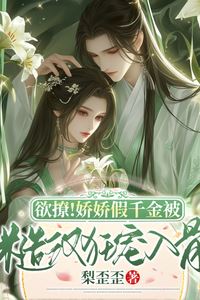
Li Yunli, a high-ranking corporate executive from the modern era, awakens in an unfamiliar ancient chamber to find a young man kneeling by her bedside. The man, Yun Chu, is trembling with fear and bears visible scars, addressing her as "Your Highness." Confused and alarmed, Li Yunli realizes she has transmigrated into the body of the Grand Princess of the Great Chu Empire. She quickly recognizes the setting and the man from a web novel she previously read, "Falling Clouds." In the story, Yun Chu is the protagonist, a fallen prince of a conquered kingdom who endures years of torment under the Grand Princess before eventually overthrowing the empire and executing her in brutal revenge. Li Yunli understands that she has become the villainous character destined for a tragic death, and her primary objective shifts to survival.

Yun Chu, meanwhile, has also been reborn. He retains memories of his past life, including his eventual rise to power and the execution of the Grand Princess. Finding himself back in the early stages of his captivity, he resolves to alter his fate and prevent the tragedies that befell his family and allies in the previous timeline. He maintains a facade of submission and fear to avoid suspicion while secretly working to rebuild his influence. The two characters engage in a delicate psychological dance, each hiding their true intentions and knowledge of the future. Li Yunli attempts to treat Yun Chu with kindness and respect, hoping to change the abusive dynamics of the original story, while Yun Chu remains wary, interpreting her actions as potential manipulation or a new form of control.

As Li Yunli navigates the treacherous political landscape of the Chu court, she faces immediate threats from powerful factions, particularly the Empress Dowager and the Yongcheng Marquis, who seek to diminish her influence. A critical turning point occurs when Li Yunli learns of a planned disaster in her fiefdom of Yongzhou, which the court intends to use as an excuse to force her out of the capital. In the original novel, this exile allows Yun Chu to consolidate power in the capital and launch his rebellion. Determined to break this cycle, Li Yunli decides to embrace the assignment, but with a crucial change: she insists that Yun Chu accompany her to Yongzhou. This decision denies Yun Chu the opportunity to operate freely in the capital and keeps him under her direct observation.

Throughout these events, Li Yunli demonstrates her strategic acumen by reforming the management of her estate, removing corrupt officials like Steward Wang, and establishing a loyal guard network. She also takes steps to secure alliances, such as reaching out to General Xiao Linjia, a key military figure who was previously antagonistic toward her. Yun Chu, recognizing the shift in dynamics, begins to suspect that Li Yunli may also be reborn, given her proactive measures against his future plans. He tests her loyalty and intentions through subtle interactions, including a moment where he openly discusses political strategy with her, revealing his intellect and value beyond his status as a captive.

The narrative explores the evolving relationship between Li Yunli and Yun Chu as they are forced to rely on each other in the hostile environment of Yongzhou. Li Yunli’s modern perspective and business mindset allow her to address the flood crisis and bandit problems more effectively than the original character would have. Yun Chu, in turn, uses his knowledge of the region and his hidden connections, including his ally A Si, to support her efforts. Their interactions become increasingly complex, blending mutual suspicion with growing, albeit reluctant, respect. The story sets the stage for a reimagined conflict where the predetermined tragedy is challenged by the agency and intelligence of both protagonists, leading to an uncertain but hopeful path forward for their intertwined fates.

Latest Release
DateGroupRelease
2026-08-11shanghai fantasy c56
2026-08-11shanghai fantasy c55
2026-08-11shanghai fantasy c54
2026-08-11shanghai fantasy c53
2026-08-11shanghai fantasy c52
2026-08-11shanghai fantasy c51
2026-08-11shanghai fantasy c50
2026-08-11shanghai fantasy c49
2026-08-11shanghai fantasy c48
2026-08-11shanghai fantasy c47
2026-08-11shanghai fantasy c46
2026-08-11shanghai fantasy c45

Community Reviews

Rating(3.7 / 5.0, 43votes)
5 stars
9(21%)
4 stars
15(35%)
3 stars
17(40%)
2 stars
2(5%)
1 stars
0(0%)

Popular reviews

... Read More
I've been thinking about symbolism in this passage and the jade pendant Yun Chu throws is genuinely fascinating. On the surface, it's just a weapon—a solid object to distract the hostage-taker. But consider what it represents: this is a precious item, presumably given to him by someone important, and he HURLS it without hesitation to save Li Yunli. That's not just action; that's sacrifice made physical. Then there's the detail that after the rescue, the pendant lies at Li Yunli's feet while Yun Chu's sweaty hand holds hers. The juxtaposition is deliberate—the valuable object discarded on the ground versus the human connection that matters. It's almost like the author is saying: treasures are disposable, but people are not. The fish Yun Chu catches is another symbol worth noting. He catches more live game than Li Yunli receives intelligence reports. In a story about disaster relief and political maneuvering, this quiet moment of providing food—of nurturing life—stands in contrast to all the violence and death. It's a reminder that even in wartime, even in political intrigue, there's value in simple acts of care. And the rescued women themselves? They're bound together, trembling, traumatized. The rope that binds them becomes a symbol of the Flying Leopard Gang's control—not just physical restraint, but psychological domination. Even after being cut free, they sit motionless, unable to move. The bandits control them not just through violence but through fear so deep it paralyzes. The author seems to be building a theme about what truly binds us—ropes versus loyalty, fear versus compassion, fate versus action. Wuyou talks about fate, Li Yunli talks about action, and Yun Chu? He just acts. Maybe that's the point.
... Read More
Yun Chu. Oh my god. Yun Chu. Let me just say this: the way he looks at Li Yunli in these chapters is NOT subtle and I am HERE for it. Remember the calligraphy scene? She's frustrated because her writing gets worse the more she practices imitating his style. And his response isn't some grand declaration—it's this quiet, steady: "You do have time. I will be by Your Highness's side. You can take your time. One day—" He doesn't even finish the sentence. He just lets it hang there. And then she cuts him off with talk of garden designs like nothing happened. But Yun Chu—his gaze flickered. He was afraid of hearing her talk about time. TEN YEARS. That's how long he practiced calligraphy. And the fact that she immediately latched onto that number and said "where would I find ten years" hit him differently. Because in his previous life, they didn't have that time. He lost her. And now he's terrified of losing her again. Later, when she's talking about the winner taking all and he murmurs "the winner may not always take everything"—that's him. That's the man who won everything in his past life and lost her. And when she says "the loser will definitely be devoured" and he says nothing more? He's thinking about what it cost him last time. And then the carriage scene. She tells him to get in because he's not wearing a cloak and she doesn't want him sick. He sits far away from her near the door. When she asks why, he says it's warm enough. But he's afraid to sit too close. After everything they've been through, he still can't bring himself to cross that line. I'm not okay. This man has loved her across two lifetimes and he can't even share a carriage with her without keeping his distance.
... Read More
There are so many layers of symbolism in these chapters that I couldn't help but sit with them after reading. The Xiangfei bamboo is the first thing that hit me. Yun Chu hides his letter beneath the roots of this specific bamboo—Xiangfei, the weeping bamboo of legend, associated with tears and longing. He's burying his communications under a symbol of sorrow, and Li Yunli watches him do it from behind a surveillance net. The bamboo becomes a metaphor for their entire relationship: rooted in something ancient and painful, visible to the world but hiding secrets beneath the surface. Then there's the courtyard itself. Separated by a dense grove of water bamboo from the rest of the estate, next to the stables, swarming with mosquitoes. This is a physical manifestation of Yun Chu's status—close enough to be useful, far enough to be forgotten. The steward Wang chose this place deliberately, and Li Yunli realizes too late what it means: "If A Si truly became a stable hand here, wouldn't the two of them be able to meet every day and plot their grand restoration?" The isolation that was supposed to contain him is actually facilitating his conspiracy. The very walls meant to cage him are what allow him to grow. The Yongzhou vs. Northern Territory debate is another layer. The Marchioness tries to equate them—"Yongzhou is in the northwest, not much different from your Northern Territory"—but for Li Yunli, they're worlds apart. One is home, military honor, freedom. The other is political exile, stripped of power, forced to bow. The geography of the story is also the geography of power, and every character is trying to control where others are placed. And the stone lions? Commissioned from a workshop outside the capital, meant to guard the Eldest Princess's residence. But the workshop is across from flower fields that supply Bai Fang Pavilion—a place connected to officials, to secrets, to the very web Li Yunli is trying to map. Even inanimate objects in this story carry weight.
... Read More
Let me just say—the author knows how to open a chapter and I am HERE for it. Chapter 12 starts with Li Yunli going to a flower shop that is OBVIOUSLY also a pleasure house, and the way she handles it with deadpan seriousness while internally panicking? Perfect comedic relief that immediately establishes she's not the original princess. But then it cuts to Yun Chu receiving those INTIMATE ITEMS from the manager and telling Linfeng to throw them out? The tone shift is SO sharp and it works. Then we get the backstory dump about Yongzhou—but it's not boring because it's filtered through Yun Chu's bitterness and regret. We learn about the assassination attempt, the divination, the student protests, and it all connects to WHY she's being sent away. The pacing here is efficient; every detail serves the present conflict. But the REAL structural genius is Chapter 13. It starts with Yun Chu's POV, goes deep into his past-life memories, then pivots to the present conversation where they test each other through written analysis. The tension builds scene by scene—first the punishment request, then the trust question, then the political discussion, and finally... the bed with two separate quilts. That ending is a PERFECT button. It leaves you wanting more while also making you think about what it means. The chapter transitions are smooth but never predictable. One moment you're laughing at Li Yunli's flower shop awkwardness, the next you're emotionally devastated by Yun Chu's internal monologue. That's control.
... Read More
The sensory details in this opening are what make the world feel so lived-in. Chapter 1 opens with Li Yunli waking up and the first thing she notices isn't the strange room—it's the cold autumn breeze on her throat. Then the scent of sandalwood from the censer. The floral porcelain vase. The ornate wooden cabinet. These aren't just set dressing; they're anchoring us in a specific, tangible space. And then there's Yun Chu—his thin robe, the scars visible through sheer fabric on his neck and chest and waist. The author doesn't linger on it for shock value but lets the detail sit there, heavy and unspoken, making you feel the history of abuse without a single exposition dump. Chapter 2 shifts to Yun Chu's POV and the world feels different through his eyes. The courtyard is "simple, unadorned"—no extra flower or plant. This is a man who has been stripped of everything except his pride, and even that is being worn down. The night is "silent under a starless sky." There's a loneliness to these descriptions that matches his internal state, but it's not empty loneliness—it's the loneliness of someone who has survived things that would have broken other people. What I love most is how the world building is woven into action rather than description. The punishment ruler, the scripture copying, the horse trainer notice at the gate, the Western Regions horse—none of this is explained with infodumps. You learn about the manor's hierarchy, the political tensions (conquered kingdom vs. conquering empire), and the social structure just by watching people move through it. The lackeys' uniforms, Dong Sheng's simple blue robe, Wang Quan's authority—all of it tells you who matters and who doesn't without the author ever stopping to explain. And that ginkgo tree with golden leaves in Chapter 1? It appears again when Yun Chu looks at it and thinks "Just like before." A single tree becomes a symbol of continuity, of time looping, of something eternal in a world where everything else has been turned upside down. I'm here for the imagery.
... Read More
I need to talk about the pacing in these chapters because the author really knows how to control the rhythm. Chapter 20 starts SO calm. Calligraphy practice. A quiet moment between Li Yunli and Yun Chu. She's frustrated about her handwriting, he's being gentle about it. It feels like a breathing room scene—you know, the kind where you think nothing big is about to happen. And then—immediately after that tender moment—Zihui knocks on the door with an imperial decree. The shift is instant. One second it's about brush strokes, the next it's about political survival. That's good pacing. The author doesn't linger too long on the calm before the storm. The calligraphy scene does double duty: it develops their relationship AND sets up Yun Chu's internal conflict about time and loss. Then the decree arrives and suddenly everything accelerates. Chapter 21—the farewell chapter—starts with the departure procession. Grand, visual, cinematic. We get the detail about her luxurious carriage with a stove, Yun Chu riding beside her in plain robes, the elite soldiers trailing behind. It's a spectacle. And then—she tells him to get in the carriage. Small moment, but it changes the energy. The carriage ride gets interrupted by Daoist Wuyou showing up. Another pause in the journey, another layer of mystery. The chapter ends on a cliffhanger of sorts—not an action cliffhanger, but a character one. Who is this Daoist? What does he want? Why now? The pacing between chapters 20 and 21 works because each chapter has its own rhythm. Chapter 20 is internal—political calculations, philosophical debates, emotional undercurrents. Chapter 21 is external—movement, departure, the physical journey beginning. The author alternates between these modes so you never get bored. One chapter makes you think, the next makes you want to keep going.
See all reviews

Characters

See all characters

Custom lists

See all custom Lists