Summary

... Read More
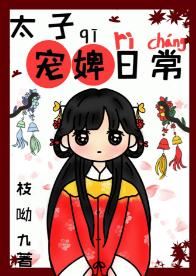
Zhe Junwu is a twelve-year-old girl living in a rural village devastated by a severe drought. Her family has been without food for three days. When a green-feathered parrot she raised for three years flies away due to hunger, she returns home to find a sturdy woman inspecting her. Her mother, desperate to save the rest of the family from starvation, sells Zhe Junwu to the woman for three dou of rice. The woman warns Zhe Junwu that running away results in death, a lesson reinforced when she witnesses a child being shot for attempting to flee. Zhe Junwu is sold along with twelve other girls and one boy to Eunuch He, who transports them to the Imperial Palace. Upon arrival, Eunuch He distributes the children to various palaces. Zhe Junwu is selected by Eunuch Li for the East Palace, the residence of the Crown Prince. The Crown Prince, Qi Dianqing, has a peculiar psychological aversion to beautiful people, stemming from a childhood scandal involving a handsome monk who caused discord between the Emperor and the Empress Dowager. Consequently, the East Palace is staffed almost entirely by plain-looking servants. Eunuch Liu, the Crown Prince’s chief eunuch, suspects that his master’s hatred is not of beauty itself but of beauty used as a weapon for scheming. To test this theory, Eunuch Liu secretly orders the procurement of a beautiful but young maid to see if the Crown Prince can tolerate her if she poses no political threat. Zhe Junwu, despite her natural beauty, is assigned to menial labor in the utility courtyard, where she suffers under the scorching sun and is ignored by other maids. When Eunuch Liu finally brings her to the Crown Prince, her face is marred by sunburn, making her appear unattractive. The Crown Prince is disgusted, but the situation is complicated when his pet parrot, General, recognizes Zhe Junwu and calls out her name. Zhe Junwu explains that she raised the parrot before selling it due to starvation. The Crown Prince, noting her youth and lack of guile, decides to keep her but assigns her to a remote aviary to care for the birds. Realizing that her beauty is a liability in the Crown Prince’s palace, Zhe Junwu cuts her hair into thick bangs that cover half her face, effectively hiding her beauty while leaving her clear eyes visible. This modification pleases the Crown Prince, who finds her appearance acceptable because it does not trigger his aversion. He begins to favor her, allowing her to grind ink in his study and engage in casual conversation. Eunuch Liu recognizes Zhe Junwu’s cleverness and secures her position, understanding that she is the key to satisfying the Crown Prince’s hidden preferences. As Zhe Junwu navigates the complex hierarchy of the East Palace, she forms alliances with senior maids while avoiding the jealousy of others. The Crown Prince, meanwhile, continues to balance his rigorous studies and political duties with his growing, albeit subtle, attachment to the quiet maid who reminds him of his own parrot.

Novel Items

More
Animal
A parrot Zhe Junwu raised for three years from age nine to twelve after finding it with an injured wing. It flew away when the drought hit and her family ran out of food. Its departure symbolized heartlessness and foreshadowed her mother selling her.
Currency
The price Zhe Junwu's mother received for selling her to the sturdy woman during the drought. Her mother pleaded not to be sent to entertainment districts.
Food
Food items eaten by Moke Moke to restore stamina. She ate two steamed buns to restore her stamina to 141 after Cheng Shijia left.
Weapon
Projectile weapon used by Qiao Duoduo to shoot the mutated toad's back after setting up cover during the battle.
Item
Song Yuejiao secretly leaves her purse with money on the tea table outside Qi Guangyi's room so he would find it later. She knows he would refuse direct financial help.
Item
Medicine that Cheng Youyou brought to treat Mu Yu's wounds. She intended to apply it to the bite marks and burns covering his body. She had not brought any herbs specifically for burns, so she relied on her healing powers instead.
Latest Release
DateGroupRelease
2026-08-11shanghai fantasy c10
2026-08-11shanghai fantasy c9
2026-08-11shanghai fantasy c8
2026-08-11shanghai fantasy c7
2026-08-11shanghai fantasy c6
2026-08-11shanghai fantasy c5
2026-08-11shanghai fantasy c4
2026-08-11shanghai fantasy c3
2026-08-11shanghai fantasy c2
2026-08-11shanghai fantasy c1

Community Reviews

Rating(4.1 / 5.0, 20votes)
5 stars
6(30%)
4 stars
9(45%)
3 stars
5(25%)
2 stars
0(0%)
1 stars
0(0%)

Popular reviews

... Read More
I'm genuinely tense reading these chapters and I need to process why. On the surface, nothing dramatic is happening. A prince teaches a maid to read. They share pastries. Eunuchs chat about family. But the underlying tension is absolutely suffocating, and the author never lets us forget it. Let me break down what everyone is risking here. Zhe Junwu: She's twelve—thirteen after New Year. A palace maid with no family, no status, no protection. The Crown Prince's attention is the most dangerous thing that could happen to her. Eunuch Liu literally says: "If things went wrong, Zhe Junwu's life could be in danger." She doesn't seem to fully grasp this. She's overjoyed about the calligraphy lessons, thinking the Crown Prince is kind. But kindness from a Crown Prince in a palace full of vipers is not a gift—it's a target. The Crown Prince: He's already enemies with Prince Duan. The Emperor is watching him closely. Any sign that he's developing attachments—especially to women—gives his rivals ammunition. His mood swings earlier in the story weren't just personal; they were political. And now he's letting his guard down with this girl, teaching her, smiling at her. Every moment of genuine warmth is a moment of vulnerability. Eunuch Liu and Eunuch Yang: They're the ones who see the danger most clearly. Eunuch Liu delivering the gifts secretly, warning Xiao Sheng not to mention the Marquis of Shuling's residence to Zhe Junwu—these are people who understand that information is lethal. Eunuch Yang's comment about fate is almost bitter: "People like us can't afford to envy it." He sees what's happening between the Crown Prince and Zhe Junwu, and he knows it could end badly. The Marquis of Shuling subplot raises the stakes even higher. The Emperor specifically requesting the Crown Prince's attendance at the birthday banquet, knowing Prince Duan will be there—this is political theater, and the Crown Prince can't refuse without looking weak. But showing up means facing his rival in a room full of people who will analyze every word, every glance, every interaction. What makes this conflict so gripping is that nobody is being evil in a cartoonish way. The Crown Prince isn't malicious—he's genuinely drawn to Zhe Junwu's sincerity. Zhe Junwu isn't scheming—she's just hungry and grateful. But the system they're in turns every innocent moment into a potential death sentence. That's what keeps me on the edge of my seat. Not dramatic betrayals or sudden attacks, but the slow, quiet realization that in this world, kindness is dangerous.
... Read More
Okay so I need to talk about how this whole arc with the Crown Prince and Zhe Junwu is actually a masterclass in slow-burn plotting. On the surface it looks like a simple "kind prince teaches maid to read" thing, but the layers underneath are insane. Let me trace it. First, the Crown Prince's mood shift. Earlier chapters established him as someone moody and distant, but here he's literally smiling, offering her pastries, teaching her calligraphy. The text says: "The Crown Prince showed interest. 'And what did you think? Was it authentic?'" This isn't just kindness—this is him testing her, seeing how she handles casual conversation. She plays it perfectly, staying humble and grounded. Then the waste paper request. This is the moment that got me. Zhe Junwu asks for his discarded practice sheets so she can trace over them. The Crown Prince's reaction—"taken aback"—tells us everything. He didn't expect someone to value his mistakes. And Eunuch Liu's observation seals it: "That little girl also has her ways, able to make His Highness indulge in such child's play." But here's where the plot gets dark. Eunuch Liu delivering the gifts secretly. Why? Because the Crown Prince has "always kept his distance from women and detested good-looking people." A sudden change in behavior invites suspicion. The palace is full of people waiting for him to slip up. If anyone suspects Zhe Junwu is using some kind of charm or scheme, she's dead. Eunuch Liu's caution about keeping her low-key isn't just protective—it's a plot device that raises the stakes every time she interacts with the Crown Prince. And then BAM, the Marquis of Shuling subplot drops in. The Emperor wants the Crown Prince to attend a birthday banquet. Prince Duan will be there. Xiao Sheng immediately thinks: "His Highness would be unhappy to see Prince Duan." The political tension is building like a pressure cooker. Every cheerful moment with Zhe Junwu is shadowed by the fact that the Crown Prince is playing a dangerous game just by showing any affection at all. The plot structure here is brilliant because it operates on two levels simultaneously—the intimate, almost tender daily interactions between the Crown Prince and Zhe Junwu, and the looming political earthquake that could destroy them both. The author doesn't rush either thread, letting them braid together naturally.
... Read More
The atmosphere in these chapters is absolutely suffocating and I mean that in the best way possible. The author doesn't need fancy descriptions—they just drop you into scenes and the tension does all the work. Take the opening: the Crown Prince is furious, Zhe Junwu is trembling, and the parrot is just... there. 'Maomao probably heard it.' The parrot is basically a witness to everything, a little green feathered spy that nobody can fully control. And the poem it recites—'Your Highness—Your Highness—The mountains have trees, and the trees have branches—You delight in me, but I know not'—this is actually a real classical Chinese poem, and the fact that it's being chanted by a parrot in a palace setting is strangely perfect. It's innocent on the surface but loaded with meaning. The Nanshu Fang scenes are another highlight. Early morning, before dawn, September still cold. 'Eunuch Liu carried a hexagonal palace lantern, its dim yellow light illuminating the ground just enough to light the way ahead.' This is such a specific, cinematic detail. You can SEE this. The dim light, the cold air, the Crown Prince walking alone to study. It paints this picture of a young man who is both privileged and imprisoned by his position. And the aviary! Xia Yin is described as 'a round-faced girl with two dimples when she smiled,' quiet and steady. It's such a small detail but it immediately establishes her as a safe harbor for Zhe Junwu. The contrast between Chunyin (talkative, sharp, suspicious) and Xia Yin (quiet, steady, smiling) creates this whole ecosystem of palace servants who are all navigating the same dangerous waters in different ways. The scene where Zhe Junwu walks back to her room and 'the few steps from the door to her bed felt as if she were walking on air—nothing felt solid or certain'—this is masterful. The physical sensation of disbelief after surviving another day. The palace isn't just a setting; it's a character that breathes and threatens and devours.
... Read More
There's this one detail that keeps haunting me—the Crown Prince only allows himself a quarter of an hour of relaxation during his entire study session. A quarter of an hour. That's it. Everything else is calligraphy, memorization, archery practice in sweltering heat. The author describes this October heat that's warmer than September, and it's not just weather; it's atmosphere. The palace is suffocating literally and metaphorically. I love how the author builds the world through sensory details rather than exposition dumps. The four corners of the study have ice basins, Xiao Sheng is fanning continuously, the food gets replaced several times because the Crown Prince delays meals, and those dishes eventually end up with the servants—reheated multiple times before reaching Zhe Junwu's mouth. She craves meat and doesn't care for vegetables, and the author just slips that in like it's nothing, but it tells you everything about her background. The small study itself is described with lanterns, tea sets, screens—everything neat, everything controlled, just like the Crown Prince. And then General bursts in disrupting all that order. The contrast between the rigid, controlled environment and the wild bird screaming for its human is the most perfect visual metaphor I've encountered in this novel. It's like the story itself is telling us that nature always finds a way to break through confinement.
... Read More
I have to admit, the atmosphere in these chapters hit me differently than I expected. This isn't some grand, dramatic palace scene with thunder and shouting—it's quiet, domestic, almost cozy. And that's what makes it work. The winter setting is doing a lot of heavy lifting here. The text opens with: "Winter is the season when one most easily gains weight." This is such a casual, almost humorous line, but it immediately grounds us in a specific physical reality. The cold makes people eat more, move less, seek warmth. And the palace reflects this—Xia Yin is reviewing account books on a heated brick bed, Zhe Junwu is sneaking into the small kitchen for snacks, Eunuch Liu is soaking his feet in hot water. The foot-soaking scene with Xiao Sheng is one of the most vivid moments in the entire passage. Let me paint it for you: Eunuch Liu, a powerful palace eunuch, sitting while a young servant slowly adds hot water to his basin, testing the temperature, being careful not to scald him. The text says: "Xiao Sheng didn't dare use scalding water, so he brought several kettles into the room, with another pot boiling in the main hall. He slowly poured water into the wooden foot basin, keeping it at a comfortably warm temperature." This isn't just worldbuilding—it's character building. Xiao Sheng's devotion, Eunuch Liu's comfort, the specific sensory detail of hot water and wooden basins. You can feel the warmth. Then there's the Marquis of Shuling's estate. The stone lions at the gate, dust on them, Lady Zhao's obsession with purity and flawlessness. "These days, she had grown increasingly fond of things that were pure and flawless, unable to bear the sight of dust or stains." This detail about Lady Zhao's psychological state reflected in her environment—that's sophisticated worldbuilding. The physical space tells us about the characters who inhabit it. The small kitchen scenes with Eunuch Yang and the date cakes create this sense of a hidden, warm underworld within the palace. While the Crown Prince's main quarters are formal and political, the kitchen is where people actually eat, share food, and form genuine connections. The date cakes from Yunzhou—Zhe Junwu's hometown—become a tiny symbol of comfort and belonging in a place that's supposed to be cold and impersonal. What I love most is how the author uses temperature as a recurring motif. Winter cold outside, heated brick beds, hot water soaks, warm pastries, the warmth of human connection in a freezing political landscape. The world feels alive because every detail serves the atmosphere.

... Read More
I need to talk about General. This BIRD is the most interesting character in the entire Donggong and I'm not even being dramatic. It's described as being at the height of its glory, monopolizing the Crown Prince's attention alongside Zhe Junwu, and then this CAT shows up and suddenly General has to fight for its position. The parallel is so OBVIOUS though—General represents the old guard, the established favorite, and the cat is the new threat. But here's what actually got me: Zhe Junwu's reaction. She doesn't intervene. She doesn't take sides. She just watches and laughs and says 'General has finally met its match.' This is a woman who has survived palace life and learned that sometimes the best thing you can do is sit back and enjoy the show. And the Crown Prince bestowing food on her—that's such a small gesture but it means everything. In a place where every interaction is calculated, a casual act of kindness from the Crown Prince to someone below him is practically a love confession. The dynamics here are so layered and the author never spells them out, which is exactly why they work.
See all reviews

Characters

See all characters

Custom lists

Oops…There is nothing here.