The Daily Life of a Spoiled Beauty After Marriage
Novel Info

Summary

... Read More

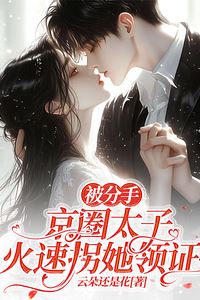
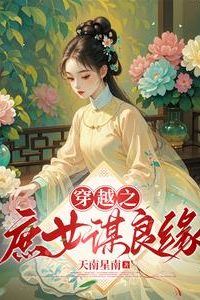
Jiang Rou, the sixth daughter of the Jiang family, returns to the capital from Jiangnan to find her life upended by the machinations of her family's elder branch. Her cousin, Jiang Shu, spreads false rumors that Jiang Rou bullied the playboy Lu Yun'an, the second son of the Marquis of Dingyuan, after they coincidentally met behind a rockery at a banquet. The Emperor, amused by the gossip, decrees their marriage. Although Jiang Rou's father, Jiang Xuan, intends to object to protect his daughter from a known wastrel, Jiang Rou voluntarily accepts the match. She recognizes that Lu Yun'an shares her love for leisure and food, and unlike other noble husbands, he is unlikely to demand she study or adhere to strict social conventions. She also wishes to avoid disappointing her father, who had considered marrying her to a scholar.

On their wedding night, Lu Yun'an is initially bewildered by his new wife's behavior. Expecting a timid, obedient lady, he is instead confronted by Jiang Rou, who firmly insists that he must listen to her to maintain order in the household. When she feigns distress, he quickly capitulates to stop her from crying. The dynamic is further established when Jiang Rou demands a midnight snack, prompting Lu Yun'an to climb over the mansion wall to buy street food. Despite his initial reluctance and embarrassment, he complies, marking the beginning of a unique marital arrangement where Jiang Rou asserts dominance through emotional manipulation and demands for attention, while Lu Yun'an reluctantly yields to keep the peace.

As the couple navigates their first days of marriage, their relationship evolves from awkward negotiation to a comfortable, albeit unconventional, partnership. Jiang Rou struggles with homesickness and the rigid etiquette of the Marquis mansion, often seeking comfort in food and the company of her younger brother, Jiang Cheng. Lu Yun'an, initially frustrated by her high-maintenance nature, finds himself increasingly preoccupied with her well-being. He begins to anticipate her needs, such as buying her favorite braised meat and ensuring she is not bullied by the household staff. In turn, Jiang Rou realizes that Lu Yun'an is not the cruel bully she feared but a partner who is willing to accommodate her whims, leading to moments of genuine affection and shared laughter.

The narrative also explores the political and familial tensions surrounding the marriage. The elder branch of the Jiang family, responsible for the false rumors, attempts to undermine Jiang Rou by inserting loyal servants into her household and criticizing her behavior. However, Jiang Rou, supported by her devoted maid Jinyue and her brother, systematically dismisses these agents of sabotage. Meanwhile, Lu Yun'an faces pressure from his father, the Marquis, who insists that he treat Jiang Rou well. Lu Yun'an's interactions with his friends, particularly Li Yu, who complains about his own strict wife, highlight the contrast between Lu Yun'an's subservient role and traditional marital expectations.

Key turning points include Lu Yun'an's realization that he enjoys Jiang Rou's company and his willingness to sacrifice his freedom to please her, such as skipping outings with friends to accompany her. Jiang Rou, in turn, begins to trust him, sharing her vulnerabilities and desires. The story concludes with the couple establishing a routine that balances Jiang Rou's need for attention and comfort with Lu Yun'an's desire for leisure, suggesting a future where their differences complement each other. Their relationship is characterized by mutual accommodation, with Jiang Rou wielding soft power and Lu Yun'an finding contentment in providing for her, setting the stage for a long-term partnership built on understanding and shared interests rather than traditional authority.

Latest Release
DateGroupRelease
2026-08-11shanghai fantasy c15
2026-08-11shanghai fantasy c14
2026-08-11shanghai fantasy c13
2026-08-11shanghai fantasy c12
2026-08-11shanghai fantasy c11
2026-08-11shanghai fantasy c10
2026-08-11shanghai fantasy c9
2026-08-11shanghai fantasy c8
2026-08-11shanghai fantasy c7
2026-08-11shanghai fantasy c6
2026-08-11shanghai fantasy c5
2026-08-11shanghai fantasy c4

Community Reviews

Rating(3.6 / 5.0, 25votes)
5 stars
4(16%)
4 stars
10(40%)
3 stars
7(28%)
2 stars
4(16%)
1 stars
0(0%)

Popular reviews

... Read More
There's this recurring idea throughout the passage about what it means to have 'authority as a husband' and I keep coming back to it because it's honestly kind of brilliant in how it subverts expectations. Li Yu writes to Lu Yun'an saying 'you need to have some authority as a husband!' as if this is some universal truth that all husbands should pursue. But Lu Yun'an's entire character arc seems to be about... not wanting that authority. He's happy being Jiang Rou's 'servant,' as he literally calls himself. The abacus he's clicking at the desk—that's a symbol of him trying to perform the role of a proper managing husband, handling accounts and responsibilities. But he's terrible at it. He alternates between working and resting, just like Jiang Rou alternates between resting and working. They're equals in their laziness. Meanwhile the rolling pin Han Shi wields at Li Yu is this ridiculous but telling symbol. It represents the kind of 'authority' that Li Yu thinks he should have, but instead it's being used against him. The four characters Jiang Rou writes—'With the wife as the standard'—that's the thematic climax of the whole passage. It's a direct reversal of the traditional expectation. Instead of the husband setting the standard, the wife IS the standard. And Lu Yun'an accepts this without a real fight. What I find most interesting is how the story treats this not as something tragic or oppressive, but as genuinely happy. Lu Yun'an complains ('If I had known, I wouldn't have gotten married!') but he never actually tries to change the dynamic. The theme seems to be: maybe the best marriages are the ones where both people know who's really in charge and are fine with it.
... Read More
Okay so this whole section is basically two parallel storylines running at the same time and I cannot stop appreciating how smoothly they bounce off each other. On one hand you've got Lu Yun'an and Jiang Rou navigating the terrifying gauntlet of a family banquet at the Marquis's mansion. On the other, you've got Li Yu getting absolutely destroyed by his own wife Han Shi with a rolling pin. The author is clearly playing with contrast here—Lu Yun'an pretends to be terrified of his elder brother but is actually completely whipped by his wife, while Li Yu thinks he's the dominant one in his marriage until Han Shi proves otherwise. When Lu Yun'an crumples up Li Yu's letter and throws it out the window, that's such a perfect comedic beat. He's trying to assert this 'husband authority' that Li Yu keeps writing about, but really he's just throwing the letter at Chen Jiu by accident. The plot doesn't take itself seriously at all, which I love. It builds these little moments of tension—the family banquet setup, the awkward greetings, the waiting for the Marquis and his wife to arrive—and then deflates them immediately with humor. The only thing I'd say is that the transition from the banquet back to the courtyard feels a tiny bit rushed, like we go from high-stakes family drama to eating soup dumplings at midnight in one beat. But honestly? That's kind of the point. Life doesn't build tension the way novels are supposed to. It just... goes back to normal really fast.
... Read More
'I was wrong, I really was wrong!'—Lu Yun'an's entire marital philosophy in one sentence. Let me just say this: the dynamic between these two is absolutely delicious. Jiang Rou is clearly the one in charge and Lu Yun'an is fully aware of it, yet he keeps pretending he's the husband with authority. The scene where he's sitting at the desk with the abacus while Jiang Rou plays the guqin? He's so focused on looking busy that he doesn't even look up when she comes in. And then when she asks if it sounds good, he immediately says 'It sounds good!' without any hesitation. He's trying SO hard to be a proper husband. But then the real comedy gold is the late-night scene where Jiang Rou catches him pretending to be asleep instead of telling her a story. He goes 'Hahahahahaha!' like a man who has been thoroughly defeated. And then she rolls into his arms and whispers 'Do you really know you were wrong?' and his internal monologue is basically 'If I had known, I wouldn't have gotten married no matter what!' This is a man who is completely, utterly, happily dominated and he's pretending it's his choice. Meanwhile Jiang Rou is just... perfectly content. She knows exactly what she's doing. She gets what she wants—his attention, his company, his storytelling—and she does it with a smile and a kick to his foot. The moment where she writes the four characters 'With the wife as the standard' and hands the brush to him? That's not just calligraphy. That's a declaration. She's rewriting the rules and he's just... letting her. I'm not sure who's really in charge here.
... Read More
The late-night soup dumpling scene is honestly one of the most cinematic moments in this entire passage. Let me walk through it because the author really knows how to paint a picture. First you have the family banquet—formal, stiff, full of people Lu Yun'an is clearly intimidated by. The Dingyuan Marquis and his wife haven't even arrived yet, and already the air is thick with unspoken hierarchy. Lu Yun'an sits 'stiff and formal' while Jiang Rou is quietly observing everyone, noting which illegitimate son looks arrogant, which illegitimate daughter smiles shyly. She's taking in the whole scene like a chess player surveying the board. Then—cut to—back in their courtyard, hair wet, sitting by the window together under twinkling stars. This is such a deliberate contrast. The formal, suffocating world of the Marquis's mansion gives way to this intimate, quiet space where they're just two people eating fruit and drying their hair. And then the soup dumplings! A small stall in the north of the city, not some famous restaurant, just a humble place Lu Yun'an discovered while out playing. The detail about the soup being 'a little too hot' and splashing on Jiang Rou's light pink dress—that's the kind of specific, sensory detail that makes a scene feel real. You can almost taste the dumpling. You can see the oil stain that won't wash out. The author builds this world where the grand family banquets and the small late-night food runs exist side by side, and somehow the dumplings feel more meaningful than all that formal pomp. The stars outside the window, Jin Yue quietly bringing fruit and leaving, the two of them yawning and falling asleep together—the whole thing has this warm, domestic glow that the banquet scene deliberately lacks.
... Read More
The family banquet scene is where all the tension lives in this passage, and I need to talk about why it works so well. On the surface, nothing dramatic happens. They greet people, sit down, eat food, go home. But the stakes are entirely social—and in this world, social stakes ARE real stakes. Lu Yun'an hasn't attended a family banquet since he was a kid unless he was forced. He's not afraid of his father, but his elder brother Lu Mo? That's a different story. Lu Mo keeps him for over half an hour just to lecture him about treating his wife well, and Lu Yun'an leaves 'dizzy' with his 'head spinning.' The illegitimate brothers and sisters are watching, waiting to judge. Lu Yun'an's entire motivation for being stiff and formal is 'I can't let those two illegitimate brothers and sisters laugh at me.' That's it. That's the conflict. Not life or death, not betrayal or danger—just the terror of looking weak in front of your family. And then the author immediately undercuts it with the soup dumpling scene, where the highest stakes become 'will this oil stain wash out of my dress?' Which is hilarious because it's honestly the same kind of anxiety, just on a smaller scale. Jiang Rou can't wear that dress anymore because she'd be laughed at. The social pressure hasn't disappeared—it's just moved from the grand banquet hall to her own wardrobe. And then there's the Li Yu subplot, where the conflict is even more physical: a rolling pin chase through the courtyard. Han Shi's line 'As long as you're a little bit better than Lu Yun'an, I won't chase you with a rolling pin' is both threatening and funny, but it also raises the question—what happens when Lu Yun'an can't be the standard anymore? The tension is always there, simmering beneath the comedy. It never explodes, but it never goes away either.
... Read More
i don't know what the editor saw in picking this one out of all othersbut seeing the pathetic MC , his denial of reality , and the great DRAGON (lol those dog eating guys) city bragging got me so angry that i dropped this novel the MC is a Wusscheat is super MEHthe whole country is on war (because they currently have to defend against monsters) but the idiots are suppressing each other [the great chinese story logic]they brag so much about their country , techniques and man the exaggerated name they gave to CARDIO exercisesone is literally named DRAGON Sleepingits a split with upper body fold
See all reviews

Characters

See all characters

Custom lists

See all custom Lists