Summary

... Read More

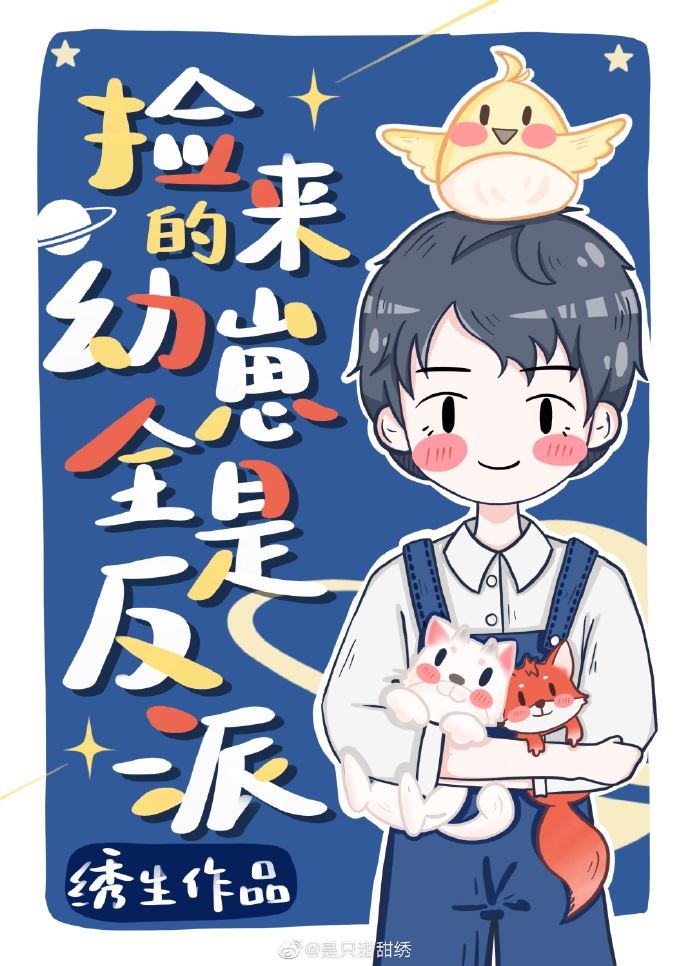
Ruan Shiqing, a military weapons researcher from Earth, transmigrates into the frail body of a malnourished homeless youth on B3024, a desolate garbage disposal planet orbiting the capital star Sikkim in the Galactic Empire. Stranded with only three days of food and no language skills, he relies on his engineering expertise to survive. Following a loud explosion in the junkyards, he discovers a crashed high-tech shuttle and finds a gravely injured white-furred creature hidden inside a sealed pod. Unaware that this is Rong Heng, the Crown Prince of the Ymir race and the Galactic Empire, Ruan Shiqing nurses the injured cub back to health, naming him Snowball and treating the fierce royal as a beloved pet.

Rong Heng, fleeing an assassination ambush orchestrated by his political rivals, had been forced to revert to his vulnerable cub form to survive. He retains his adult consciousness and dignity but is trapped in a small animal body. While initially disgusted by Ruan Shiqing’s poverty and lack of hygiene, Rong Heng slowly adjusts to his situation, recognizing that staying hidden is the safest option. The two form an unlikely bond, with Ruan Shiqing providing care and protection while Rong Heng offers silent companionship and occasional subtle guidance.

Needing money and allies, Ruan Shiqing scavenges valuable components from the crashed Silver Falcon shuttle, including its drive system and engine. He enlists two bear-eared Beastkin brothers, Xiong Fangfang and Xiong Yuanyuan, who were previously bullied by a corrupt shop owner, to help him transport goods and gather information. Using a cheap translation robot, Ruan Shiqing navigates the lawless Subterranean Market, selling salvaged parts and purchasing necessary supplies. His resourcefulness catches the attention of local gangs, leading to confrontations with district bosses Honick and Marlin, whose rivalry forces Ruan Shiqing to stay under the radar.

As Ruan Shiqing studies the world’s technology and politics through books he acquires, he realizes the Galactic Empire is far more complex than his home world. Meanwhile, Rong Heng secretly gathers intelligence on the empire from the inner city, discovering that his father, the Regent, is maneuvering to seize the throne using reports of his death. Rong Heng resolves to reclaim his birthright but must remain hidden on B3024 until he is strong enough to return.

The story reaches a critical turning point during a grand auction in the underground market. Ruan Shiqing plans to sell the Silver Falcon’s engine and drive for a substantial profit. However, he also witnesses the auction of a Nine-Tailed Fox cub, an outcast with red fur and an extra tail, who is being sold into servitude. Moved by her defiance, Ruan Shiqing laments his inability to afford her. Unseen, Rong Heng frees the fox cub from her cage, establishing a connection with another persecuted creature. Simultaneously, Ruan Shiqing successfully appraises his engine and drive, securing a significant sum that will allow him to elevate his status and continue his search for a way back home, or perhaps a new purpose in this unfamiliar galaxy.

Latest Release
DateGroupRelease
2026-09-26knoxt c58
2026-09-26knoxt c57
2026-09-26knoxt c56
2026-09-26knoxt c55
2026-09-26knoxt c54
2026-09-26knoxt c53
2026-09-26knoxt c52
2026-09-26knoxt c51
2026-09-26knoxt c50
2026-09-26knoxt c49
2026-09-26knoxt c48
2026-09-26knoxt c47

Community Reviews

Rating(4 / 5.0, 363votes)
5 stars
126(35%)
4 stars
121(33%)
3 stars
110(30%)
2 stars
6(2%)
1 stars
0(0%)

Popular reviews

... Read More
"Not bad—not bad at all. Look at that popularity. No doubt about it, that's my kid." I need to just sit with this line for a moment. Hector saying this while secretly recording the little dragon cub like some kind of proud dragon dad sneaking evidence... it's comedy gold. The casualness of it, the absolute delusion mixed with genuine affection, the parent bias that even HE can't deny. This single sentence contains more character than most authors could pack into an entire chapter. What makes Hector's voice work so well is that his dialogue is always performing. Even when he's not talking directly to someone, he's putting on a show. The swing scene with Rong Heng is a perfect example. Every line he delivers is loaded with mockery and barely concealed glee. "What, are you planning to stay a cub forever? Just gonna live here and play all day?" He's not actually curious—he's goading, prodding, trying to get a reaction out of someone who refuses to give him one. And Rong Heng? His voice is the exact opposite. Minimal. Telegraphic. Every response is enclosed in brackets like he's typing it faster than he's willing to say it aloud. "[Enjoy your peace while it lasts.]" Five words, maximum disdain, absolutely zero emotion displayed. That contrast between Hector's sprawl and Rong Heng's compression is the entire architecture of their relationship. Then there's the cubs, and their dialogue is nearly absent because they're cubs—the narration does most of the work. But when the little dragon cub shoots up a paw and declares "It's because of the exam!" with total confidence, and the little fox whispers "Even if I get… last place, it's okay?" with such devastating vulnerability—that's dialogue that carries weight because we've earned it through characterization. The narrative voice itself is also doing heavy lifting here. It's sardonic, warm, occasionally brutally honest ("If they got kidnapped, they probably wouldn't even notice until they were already sold"). This omniscient narrator has clearly developed a personality of her own, and she's absolutely essential to making the chapter breathe.
... Read More
Okay, I need to talk about this moment because it genuinely got to me. Remember when Ruan Shiqing had told Yuebai the day before not to let irrelevant people's words weigh on him? And Yuebai was standing there, looking at the red marks on his face, trying to process it? And then this line hit me like a freight train: "The dark clouds in his heart seemed to part, as if the sun had emerged, warming an entire field of flowers." I am not okay. I am genuinely not okay. The way the author described that emotional shift—it wasn't some grand dramatic moment, it was this quiet, internal thing happening as he watched his siblings have fun, as he realized they all looked similar and he belonged. His chest swelled with warmth. He stood straighter. Blue eyes sparkling. Even WITH the scars on his face. And then the dad's words echoed: "To us, you're the most beautiful." Not empty reassurance. SHOWED him through action. That's what made it land. This is the kind of family love I'd cry over. Ruan Shiqing didn't just tell his kid he was beautiful—he proved it by treating them all equally, by drawing marks on all their faces, by making sure none of them felt left out. Yuebai understood it in that moment. And I understood it too, and I was not prepared for the emotional whiplash.
... Read More
Okay, I need to talk about this sequence because it is an absolute masterpiece of pacing. Rong Heng disappears, leaves Hector babysitting on a frozen junk planet, sneaks back to B3024 at 5am—half the book I was wondering where he was going and then BOOM, both he AND Snowball return in the same chapter. The convergence is chef's kiss. But what really got me is how the plot threads tie together. The Blue Star pendant with the tracker? That was planted earlier and now it's the mechanical reason Snowball comes back. I love when authors do that—small setup paying off later. And Ruan Shiqing finding out about it through his own anti-reconnaissance system backdoor, using his genius designer skills to confirm it... he didn't just luck into this. He engineered the discovery. Then the confrontation—Ruan Shiqing pulling two energy rifles and aiming at Rong Heng while casually asking Mo Li to cover for him. The audacity. And 09 immediately neutralizing Mo Li in response. The whole thing reads like a heist movie but it's actually a reunion scene disguised as a standoff. The Hector subplot is brilliant too—being dumped on a nameless frost planet not just as punishment but as strategic forward scouting. And then that moment where he deletes a communication code and mutters about his estate going to someone else and them not attending his funeral. It makes you realize how much damage this war and lifestyle has done to him as a person.
... Read More
Okay, can we just talk about how the author built this scene from quiet domesticity to full-on catastrophe? We start with Ruan Shiqing trimming vines with the little ones. It's so calm. So domestic. 09 making dry comments about "sacrifices" required to keep the young masters happy. The Falling Star Vines described as having tendrils "cascading down like clusters of stars falling into the Milky Way" — that's beautiful imagery for something so simple. Then the dragon cub has been secretly eating gemstones and nothing seems wrong. Just... normal. And then the pain hits. The shift from the little cub whimpering "Heli hurts so much" to a massive black dragon with twenty-meter wings blinding out the sky and SHATTERING the ceiling — the escalation is brutal and I loved every second of it. This specific passage had me picturing it like a film: "His horns already scraping against the ceiling. Worse still, he continued to expand, his size increasing as if he were a balloon being inflated beyond its limits." The image of him pushing THROUGH the roof, upper body breaking into the open sky while the little mermaid tumbles out of his barrel and the little fox is desperately shaking a wing that won't respond — it's chaotic, terrifying, and somehow deeply intimate because we're inside the home being destroyed. The debris raining down, the house trembling, dust stinging Ruan Shiqing's eyes as his vision reddens — not from crying (though maybe later), but from the physical violence of the scene. And then the dragon takes flight, wings creating fierce winds, blotting out the sky one last time before disappearing into the pitch-black night. The before-and-after of that house is almost comical in how completely it's obliterated. One moment it's a warm home; the next it's rubble with a broken wooden barrel and a shattered Blue Star Necklace buried underneath. I am genuinely shook by how efficiently the author went from 'vines look nice' to 'entire house destroyed.'
... Read More
There's something deeply symbolic about all the bed-sharing in this chapter. What started as just Ruan Shiqing and the dog cub now has THREE cubs crammed onto one bed, and Rong Heng too, lying there inhaling their sleep. A bed is supposed to be intimate, private, safe — and yet this is the exact moment Rong Heng receives news that his safety is ending. He's being summoned back to a world of scheming, betrayal, and likely blood. The cubs don't know any of this. They're just happy about a hovercar race. That innocence on display while Rong Heng quietly plans his exit... it's heartbreaking in the quietest way possible. And then the whole mother-situation. The name Rong — pulled from the grandmother, not the father. His mother's belief that nobility isn't determined by race. Her son carrying that lesson forward even as his own father refuses to honor her memory. The author keeps circling back to the idea that the people calling the shots are often the ones who understand least. Siyan married for politics, called his wife heartless because he couldn't handle that she never needed him. Now he's doing the same thing again with Thea Barth and the Naxi Group. History isn't repeating — it's echoing, and Rong Heng is the one who has to figure out how to break the sound.
... Read More
Okay the vendor character is genuinely one of my favorite creations in this story. The way he carries himself—"Hey, it's you! Back so soon? Struck it rich already?"—this is someone who talks fast, sells fast, and doesn't miss a beat. He's got that street-hustler charm that makes every scene he's in more entertaining. And the bargaining? "Three spheres, 1,000 Starcoins" to "Four hundred" to settling at 350? That's not just dialogue, that's character. You can hear his voice, see his expressions, feel his calculation. When Ruan Shiqing calls him out on the Worm Metal lie, the vendor's reaction is perfect: "Fine, you're not easy to fool. But it's nearly as good as Worm Metal, just a hair inferior." He pinches his thumb and forefinger together to demonstrate. Meanwhile Rong Heng's internal monologue is this beautifully dry counterpoint. "Hmph. Always playing the pitiful card." One word. Done. But it tells us everything about how he views the mermaid's behavior and his own opinion of it. The narration itself has this great rhythm too—technical when we're in workshop mode, more flowing during the market scenes, then almost reverent when describing the egg's resilience. The author's voice adapts to the scene without losing consistency, and that's harder to pull off than it sounds.
See all reviews

Custom lists

See all custom Lists